Renee Levine Melammed – författare
Visar alla böcker från författaren Renee Levine Melammed. Handla med fri frakt och snabb leverans.
9 produkter
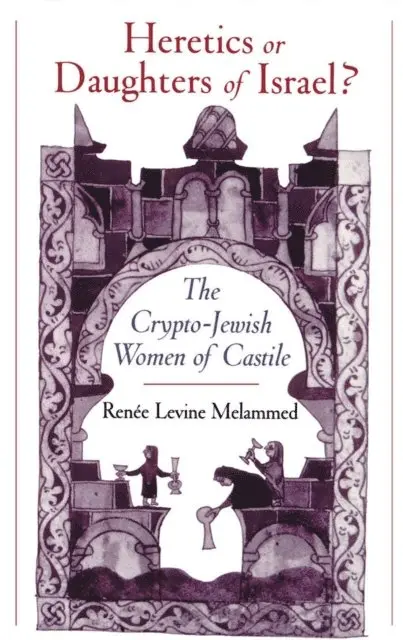
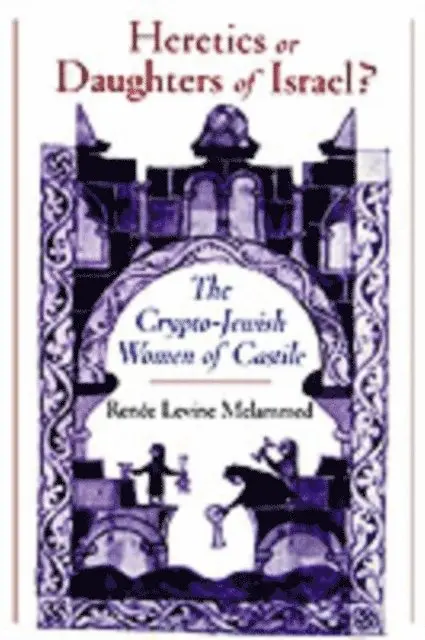
Heretics or Daughters of Israel?
The Crypto-Jewish Women of Castile
E-bok, 1999
529 kr
Lägg i varukorg
Between 1391 and the end of the 15th century, numerous Spanish Jews converted to Christianity, most of them under duress. Before and after 1492, when the Jews were officially expelled from Spain, a significant number of these conversos maintained clandestine ties to Judaism, despite their outward …
Heretics or Daughters of Israel?
The Crypto-Jewish Women of Castile
Inbunden, 1999
2215 kr
Lägg i varukorg
Between 1391 and the end of the 15th century, numerous Spanish Jews converted to Christianity, most of them under duress. Before and after 1492, when the Jews were officially expelled from Spain, a significant number of these conversos maintained clandestine ties to Judaism, despite their outward …
Heretics or Daughters of Israel?
The Crypto-Jewish Women of Castile
Häftad, 2002
667 kr
Lägg i varukorg
Between 1391 and the end of the 15th century, numerous Spanish Jews converted to Christianity, most of them under duress. Before and after 1492, when the Jews were officially expelled from Spain, a significant number of these conversos maintained clandestine ties to Judaism, despite their outward …
A Question of Identity
Iberian Conversos in Historical Perspective
Inbunden, 2004
1771 kr
Lägg i varukorg
In 1391 many of the Jews of Spain were forced to convert to Christianity, creating a new group whose members would be continually seeking a niche for themselves in society. The question of identity was to play a central role in the lives of these and later converts whether of Spanish or Portuguese …
Heretics or Daughters of Israel?
The Crypto-Jewish Women of Castile
E-bok, 1999
529 kr
Lägg i varukorg
Between 1391 and the end of the 15th century, numerous Spanish Jews converted to Christianity, most of them under duress. Before and after 1492, when the Jews were officially expelled from Spain, a significant number of these conversos maintained clandestine ties to Judaism, despite their outward …
Question of Identity
Iberian Conversos in Historical Perspective
E-bok, 2004
1133 kr
Lägg i varukorg
In 1391 many of the Jews of Spain were forced to convert to Christianity, creating a new group whose members would be continually seeking a niche for themselves in society. The question of identity was to play a central role in the lives of these and later converts whether of Spanish or Portuguese …
Question of Identity
Iberian Conversos in Historical Perspective
E-bok, 2004
1133 kr
Lägg i varukorg
In 1391 many of the Jews of Spain were forced to convert to Christianity, creating a new group whose members would be continually seeking a niche for themselves in society. The question of identity was to play a central role in the lives of these and later converts whether of Spanish or Portuguese …
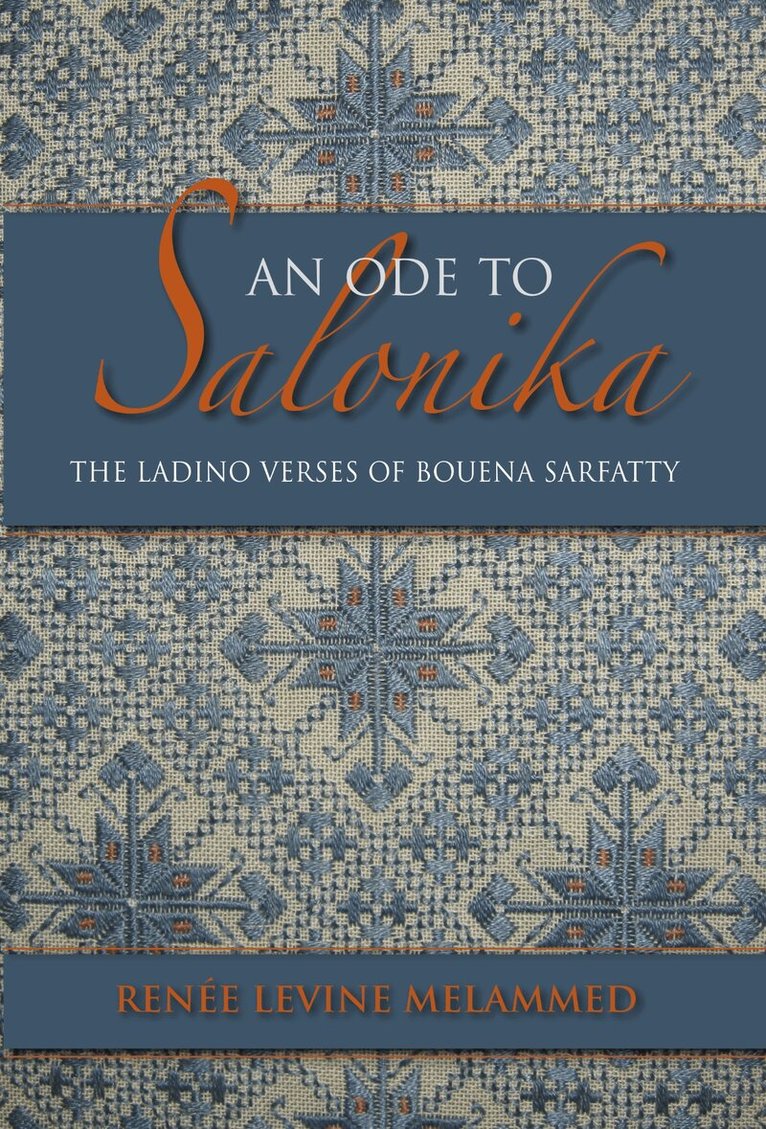
Ode to Salonika
The Ladino Verses of Bouena Sarfatty
Inbunden, 2013
402 kr
Lägg i varukorg
Through the poetry of Bouena Sarfatty (1916-1997), An Ode to Salonika sketches the life and demise of the Sephardi Jewish community that once flourished in this Greek crossroads city. A resident of Salonika who survived the Holocaust as a partisan and later settled in Canada, Sarfatty preserved the …
Ode to Salonika
The Ladino Verses of Bouena Sarfatty
E-bok, 2013
116 kr
Lägg i varukorg
Through the poetry of Bouena Sarfatty (1916-1997), An Ode to Salonika sketches the life and demise of the Sephardi Jewish community that once flourished in this Greek crossroads city. A resident of Salonika who survived the Holocaust as a partisan and later settled in Canada, Sarfatty preserved the …