R.G. Frey - Böcker
Visar alla böcker från författaren R.G. Frey. Handla med fri frakt och snabb leverans.
3 produkter
3 produkter
2 585 kr
Skickas inom 5-8 vardagar
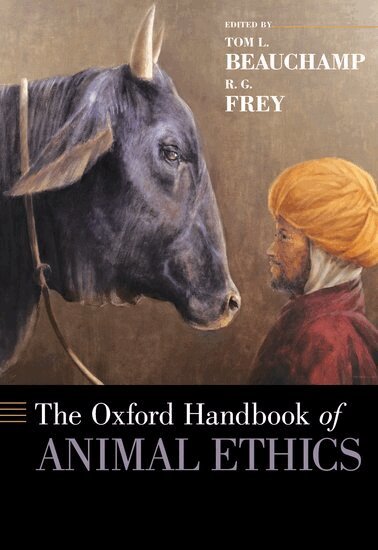
Humans encounter and use animals in a stunning number of ways. The nature of these animals and the justifiability or unjustifiabilitly of human uses of them are the subject matter of this volume. Philosophers have long been intrigued by animal minds and vegetarianism, but only around the last quarter of the twentieth century did a significant philosophical literature begin to be developed on both the scientific study of animals and the ethics of human uses of animals. This literature had a primary focus on discussion of animal psychology, the moral status of animals, the nature and significance of species, and a number of practical problems. This Oxford Handbook is designed to capture the nature of the questions as they stand today and to propose solutions to many of the major problems. Several chapters in this volume explore matters that have never previously been examined by philosophers. The authors of the thirty-five chapters come from a diverse set of philosophical interests in the History of Philosophy, the Philosophy of Mind, the Philosophy of Biology, the Philosophy of Cognitive Science, the Philosophy of Language, Ethical Theory, and Practical Ethics. They explore many theoretical issues about animal minds and an array of practical concerns about animal products, farm animals, hunting, circuses, zoos, the entertainment industry, safety-testing on animals, the status and moral significance of species, environmental ethics, the nature and significance of the minds of animals, and so on. They also investigate what the future may be expected to bring in the way of new scientific developments and new moral problems.This book of original essays is the most comprehensive single volume ever published on animal minds and the ethics of our use of animals.
781 kr
Skickas inom 5-8 vardagar
Humans encounter and use animals in a stunning number of ways. The nature of these animals and the justifiability or unjustifiabilitly of human uses of them are the subject matter of this volume.Philosophers have long been intrigued by animal minds and vegetarianism, but only around the last quarter of the twentieth century did a significant philosophical literature begin to be developed on both the scientific study of animals and the ethics of human uses of animals. This literature had a primary focus on discussion of animal psychology, the moral status of animals, the nature and significance of species, and a number of practical problems. This Oxford Handbook is designed to capture the nature of the questions as they stand today and to propose solutions to many of the major problems. Several chapters in this volume explore matters that have never previously been examined by philosophers.The authors of the thirty-five chapters come from a diverse set of philosophical interests in the History of Philosophy, the Philosophy of Mind, the Philosophy of Biology, the Philosophy of Cognitive Science, the Philosophy of Language, Ethical Theory, and Practical Ethics. They explore many theoretical issues about animal minds and an array of practical concerns about animal products, farm animals, hunting, circuses, zoos, the entertainment industry, safety-testing on animals, the status and moral significance of species, environmental ethics, the nature and significance of the minds of animals, and so on. They also investigate what the future may be expected to bring in the way of new scientific developments and new moral problems.This book of original essays is the most comprehensive single volume ever published on animal minds and the ethics of our use of animals.
516 kr
Skickas inom 10-15 vardagar
Utility and Rights was first published in 1984. Minnesota Archive Editions uses digital technology to make long-unavailable books once again accessible, and are published unaltered from the original University of Minnesota Press editions.At issue in the clash between utilitarianism and the theory of rights is a fundamental question about the theoretical underpinnings of moral and political philosophy. Is this structure to be utility-based—grounded in the general welfare—or is it to be based on individual moral and political rights, as critics of utilitarianism increasingly insist? The argument centers, in part, upon the fact that utilitarianism, with its emphasis upon outcomes and total utility in the world, seems to employ a value theory that offers no protection to persons and their vital interests.The essays in this volume grapple with the main issues in this controversy. They share a common concern with the nature of rights and the ways in which various moral theories can accommodate them; some measure the degree to which utilitarianism can or cannot be modified to include rights. Eight of the eleven essays were written expressly for this book; all of the authors are deeply engaged in the debate over utility and rights, and their essays build upon and extend current thinking on the subject. R. G. Frey's lucid introduction will make the book appropriate for advanced students as well as for scholars in moral, political, and legal theory."One ubiquitous criticism of utilitarianism is that it cannot make sense of moral rights at all. This collection is the first that explicitly addresses these issues, and it marks a major step in the debate."–Dale Jamieson, University of ColoradoR. G. Frey is senior lecturer in philosophy at the University of Liverpool. He is the author of Interests and Rights and Rights, Killing, and Suffering.