Richard Bridgman - Böcker
Visar alla böcker från författaren Richard Bridgman. Handla med fri frakt och snabb leverans.
3 produkter
3 produkter
764 kr
Skickas inom 3-6 vardagar
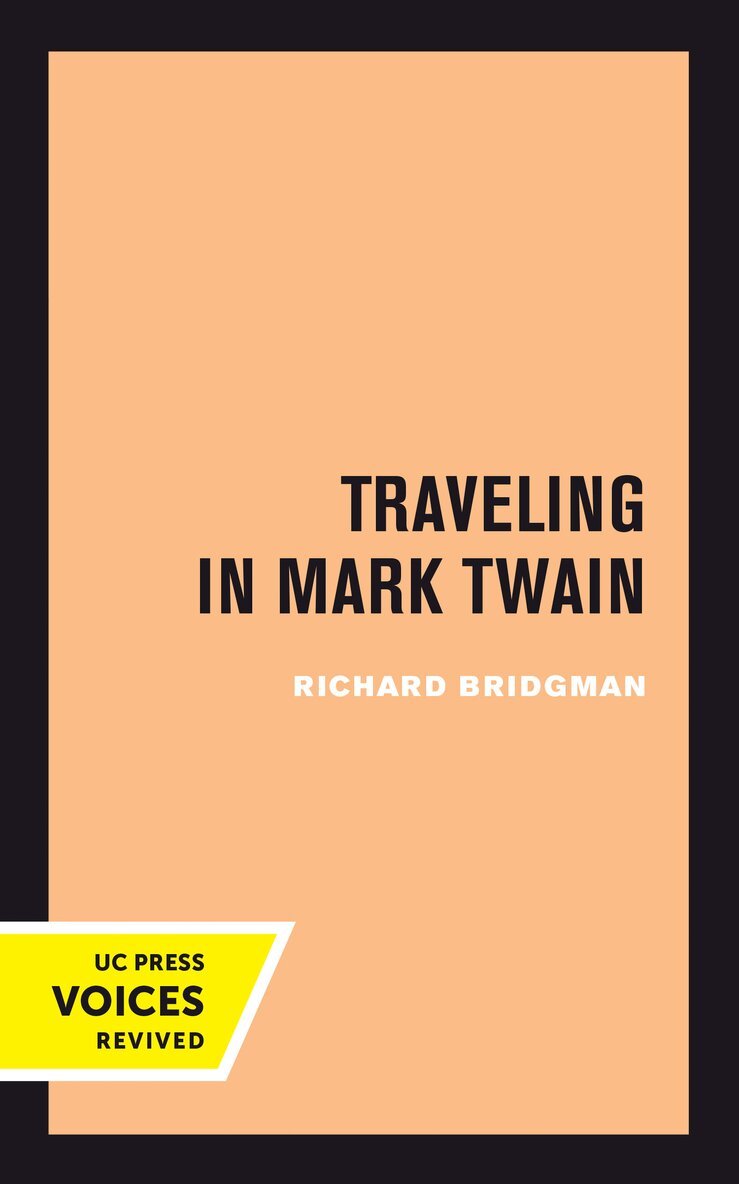
Suffering from wanderlust like many of his countrymen, Mark Twain had the good fortune to be paid to offer his observations in a series of travel letters and books. Curious and indefatigable, he used his incomparable skills to produce the vivid descriptions and humorous commentaries that made his books immensely popular. At the same time, travel writing afforded him the opportunity to engage in more personal explorations. The looseness of the travel narrative enabled Twain to put down virtually whatever came to mind, with little concern about connections. At a time when established values were faltering, this tolerance suited him. His travel books are strings of incidents, anecdotes, descriptions, and the occasional odd detail, all arranged along a geographical line. At any given moment, Twain's anarchistic independence was free to assert itself. The travel books are more than entertaining compilations. They represent serious, if offhand, explorations of Mark Twain's outer and inner worlds and help define him as part of the whole van of modernists moving into the twentieth century.This title is part of UC Press's Voices Revived program, which commemorates University of California Press’s mission to seek out and cultivate the brightest minds and give them voice, reach, and impact. Drawing on a backlist dating to 1893, Voices Revived makes high-quality, peer-reviewed scholarship accessible once again using print-on-demand technology. This title was originally published in 1987.
866 kr
Skickas inom 7-10 vardagar
Suffering from wanderlust like many of his countrymen, Mark Twain had the good fortune to be paid to offer his observations in a series of travel letters and books. Curious and indefatigable, he used his incomparable skills to produce the vivid descriptions and humorous commentaries that made his books immensely popular. At the same time, travel writing afforded him the opportunity to engage in more personal explorations. The looseness of the travel narrative enabled Twain to put down virtually whatever came to mind, with little concern about connections. At a time when established values were faltering, this tolerance suited him. His travel books are strings of incidents, anecdotes, descriptions, and the occasional odd detail, all arranged along a geographical line. At any given moment, Twain's anarchistic independence was free to assert itself. The travel books are more than entertaining compilations. They represent serious, if offhand, explorations of Mark Twain's outer and inner worlds and help define him as part of the whole van of modernists moving into the twentieth century.This title is part of UC Press's Voices Revived program, which commemorates University of California Press’s mission to seek out and cultivate the brightest minds and give them voice, reach, and impact. Drawing on a backlist dating to 1893, Voices Revived makes high-quality, peer-reviewed scholarship accessible once again using print-on-demand technology. This title was originally published in 1987.
315 kr
Skickas inom 10-15 vardagar
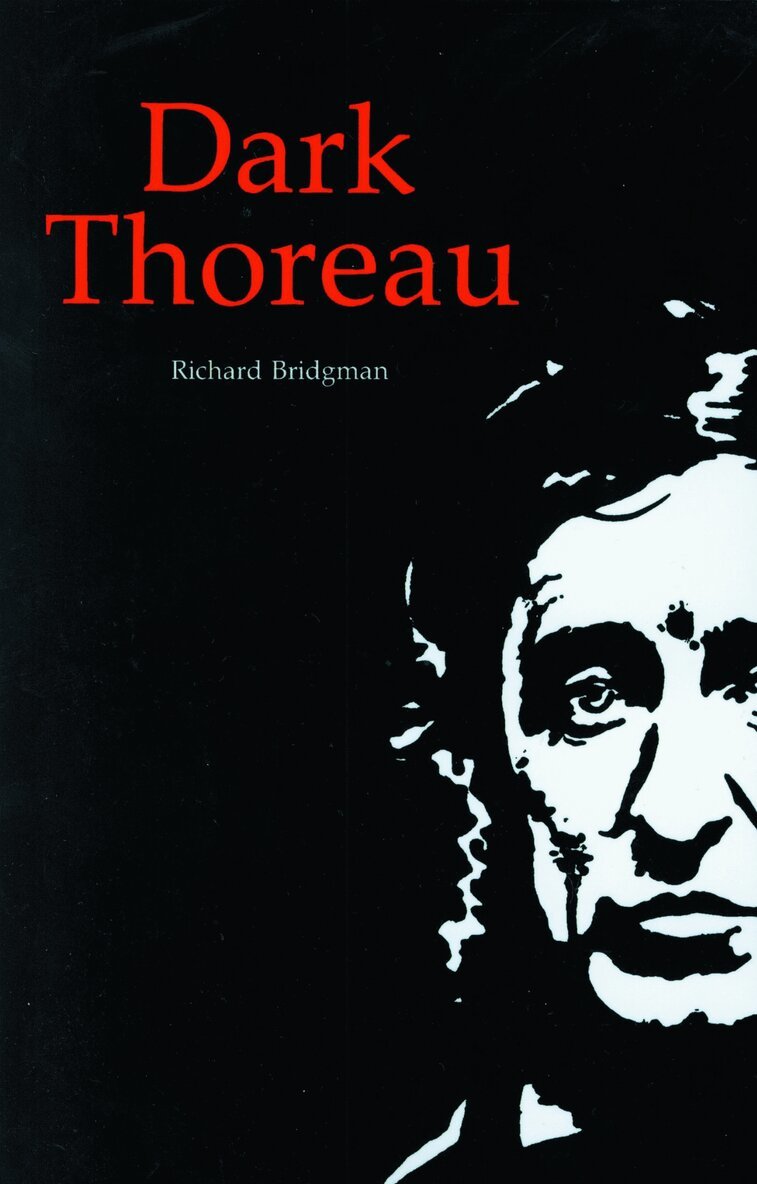
Henry David Thoreau has suffered from a largely uncritical admiration of his roles as naturalist, economist, political theorist, and expository writer. The evidence this book presents substantially modifies our understanding of his performance of those roles. It draws heavily on the largely unknown territory of Thoreau's seven thousand pages of journals as well as his poetry, while at the same time subjecting passages from such familiar work as Walden to fresh interpretation. Dark Thoreau argues that Thoreau elected to associate himself with the American romantic movement as a form of rebellion from a Concord from which he was alienated. However, the affirmations of transcendentalism were often unavailable to him, so that he (and his writing) suffered the tensions of disharmony: animal life proved savage and sensual, the primitive wilderness alarming, and after the Indian failed him, only the militant John Brown furnished a surrogate Thoreau could enthusiastically support. Thoreau's frustrations manifested themselves not only in passive lamentations but also in expressions of aggression.The terms in which he cast his anger were often imagistically violent, involving a desire to injure, suffocate, drown, and blow up that which he despised. Even his most affirmative assertions about the world were likely to be tinged with doubt. Our preoccupation with Thoreau as the symbol of man in harmony with a benign wilderness has tended to divert us from the full dimensions of his mind. The present account of the dark Thoreau will require subsequent readers to add his savagery and pessimism to their sense of the man, to complicate this saint of the woods by accepting his doubt, his anger, and his fallibility.