Richard Brzezinski – författare
Visar alla böcker från författaren Richard Brzezinski. Handla med fri frakt och snabb leverans.
7 produkter
7 produkter
153 kr
Skickas inom 10-15 vardagar
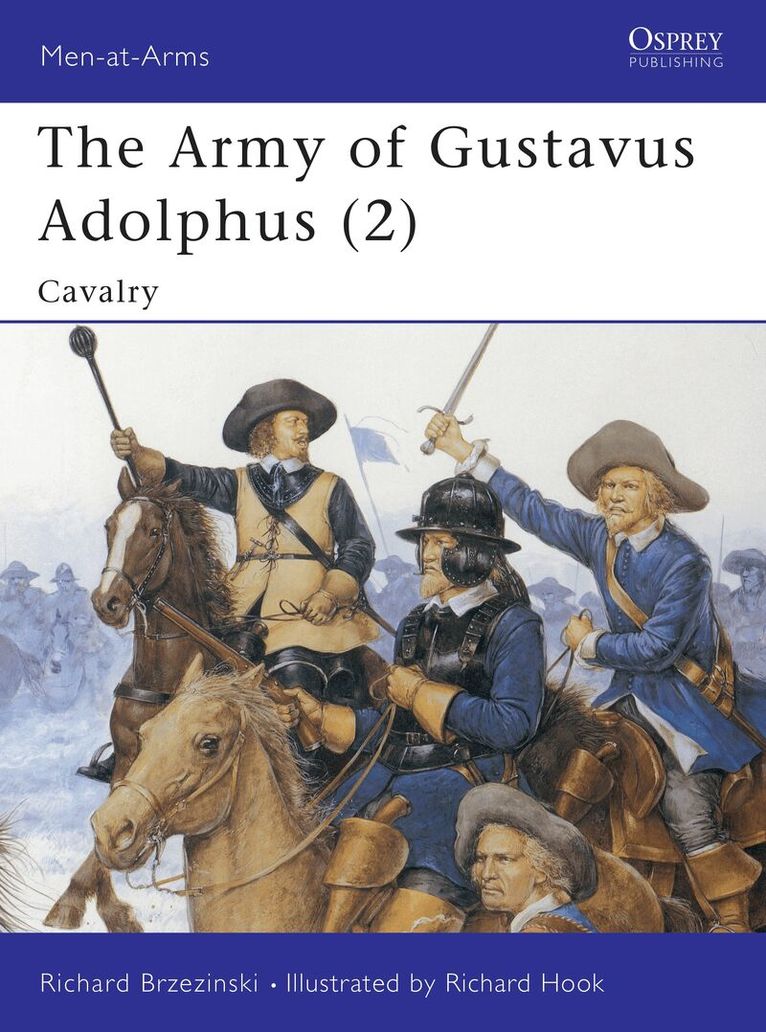
Much of the fame of Gustavus Adolphus has founded upon his cavalry.He is said to have reversed the stagnation of European cavalry warfare, giving it back fluidity and vigour. Like much 'Gustavus mythology', however, the truth may well be quite different. Richard Brzezinski explores the truth behind the myth, in an attempt to find the real story of Gustavus's cavalry.Their organization, arms, armour, tactics and uniforms are examined in a text accompanied by many illustrations, including eight fine full page colour plates by Richard Hook.
172 kr
Skickas inom 10-15 vardagar
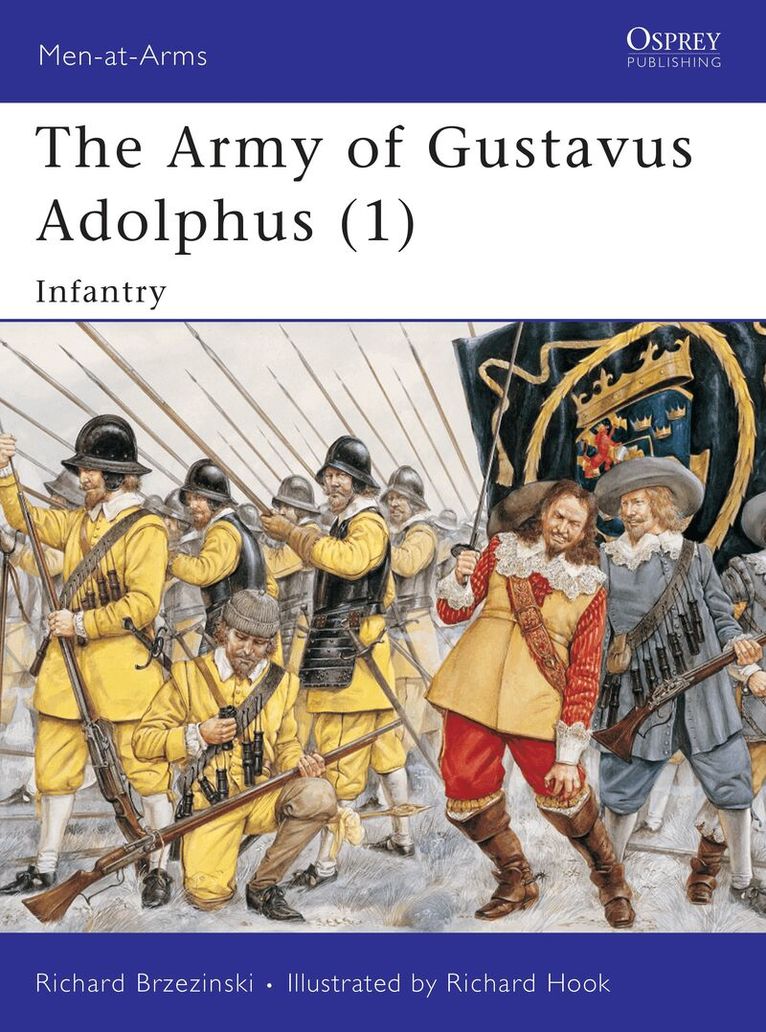
The 'Lion of the North', King Gustavus Adolphus of Sweden, was one of the major players in the Thirty Years War of 1618-48.In 1630 Gustavus - the last champion of the Protestants - crushed the Catholics at Breitenfeld in a victory widely viewed as the fulfilment of a prophecy foretelling the defeat of the eagle (the German Emperor's emblem) by a golden lion. Killed in battle at Lützen only two years later, Gustavus nevertheless won fame for his technical and tactical innovations.The first of two volumes, this book examines the equipment, uniforms and organization of the infantry that comprised Gustavus's army.
153 kr
Skickas inom 10-15 vardagar
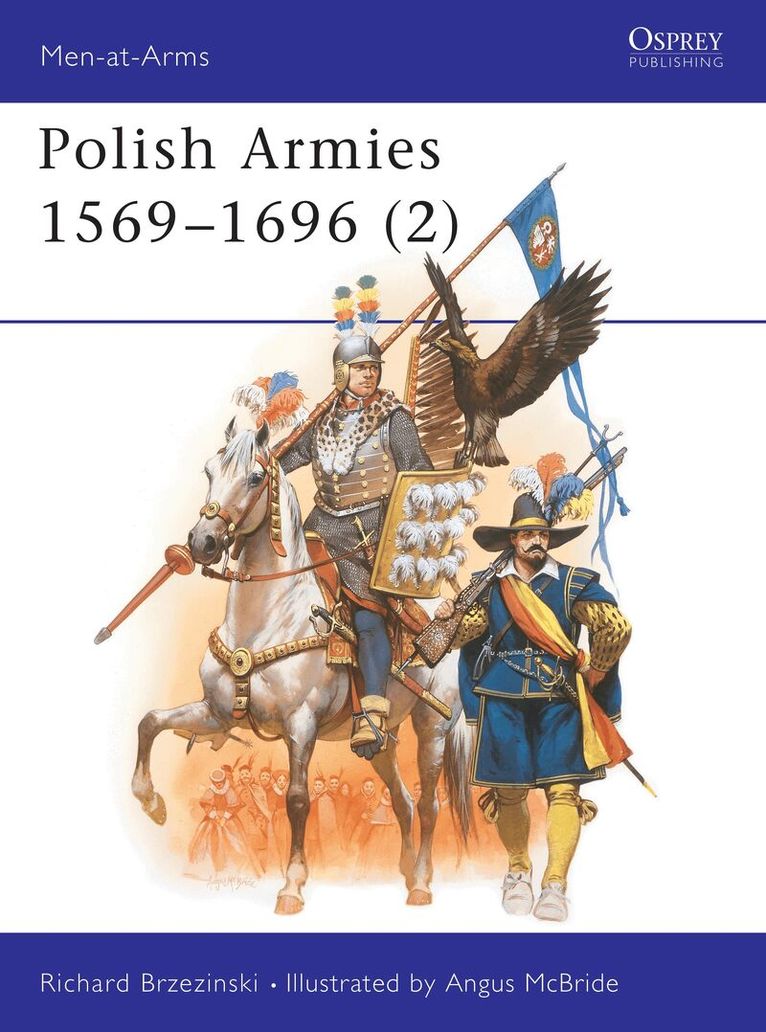
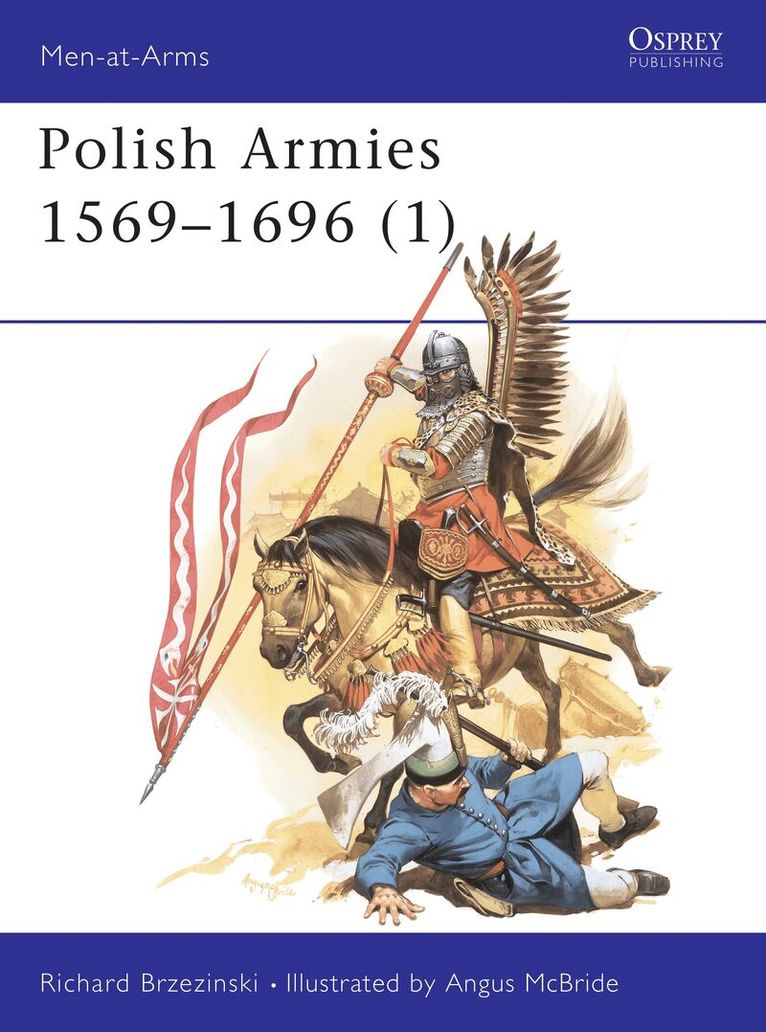
Few people will realise that at one time the Polish state was one of Europe's great powers.One of the chief instruments of her success was undoubtedly her army, which though small can claim many accomplishments and major successes in the 16th and 17th centuries. Richard Brzezinski redresses this imbalance by providing a portrait of Polish armies from 1569-1696, detailing their history, organisation, arms, armour, insignia and dress, accompanied by numerous illustrations and eight superb full page colour plates by Angus McBride.
153 kr
Skickas inom 10-15 vardagar
The 17th century Polish-Lithuanian Commonwealth was almost as varied as modern America.Alongside Slavs lived Lithuanians and other Balts, Germans, Tatars, Armenian merchants, Jewish traders, and even a remarkably large populations of Scots. This variety of cultures had a strong influence on the Polish army. Along with the predominantly Polish and Lithuanian 'winged' hussars served numerous foreigners from both within and outside the Commonwealth: Tatars and Cossacks, Wallachians, Transylvanians, Moldavians, Hungarians, Serbians and Albanians; and from the West, French, Italians, Dutch, Walloons, Swedes and Scots.Richard Brzezinski's companion volume to Men-at-Arms 184 completes his fascinating examination of Polish armies from 1569-1696.
153 kr
Skickas inom 10-15 vardagar
The Sarmatians - one of the many nomadic groups to emerge from the great Eurasian Steppe - crossed the Don in about the 3rd century BC to displace their western neighbours, the Scythians, in the lands north of the Black SeaLater they burst into Asia Minor and Rome's Danube provinces, becoming famous for the prowess of their lance-armed cavalry - first as enemies, and later as allies of Rome. They influenced Rome's adoption of heavy armoured cavalry, and in Roman service they were even posted to Britain.Drawing upon a wide reading of Classical authors and of Russian archaeological publications, this fascinating study is the first major English language attempt to reconstruct their armour, equipment and tactics.
169 kr
Skickas
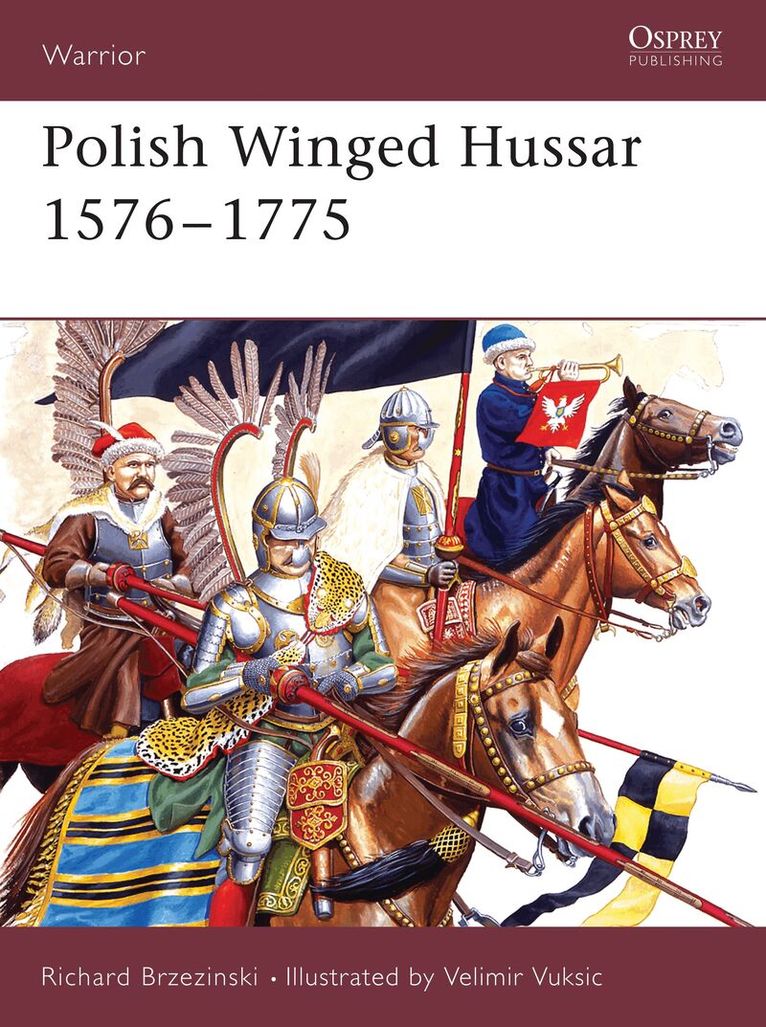
The Polish hussar was, to quote one of many foreign visitors impressed by them, 'without doubt one of the most spectacular soldiers in the world'.Most dramatic of all hussar characteristics were the 'wings' worn on the back or on the saddle; their purpose has been hotly debated. The hussar's main offensive weapon was a 4–5 metre lance (kopia). This title takes a close look at the origins and development of the Polish 'winged' hussars, and using many years' painstaking research drawn from unpublished Polish sources, provides a rounded view of the training, tactics, appearance and experiences of these legendary and fascinating warriors.
192 kr
Skickas inom 10-15 vardagar
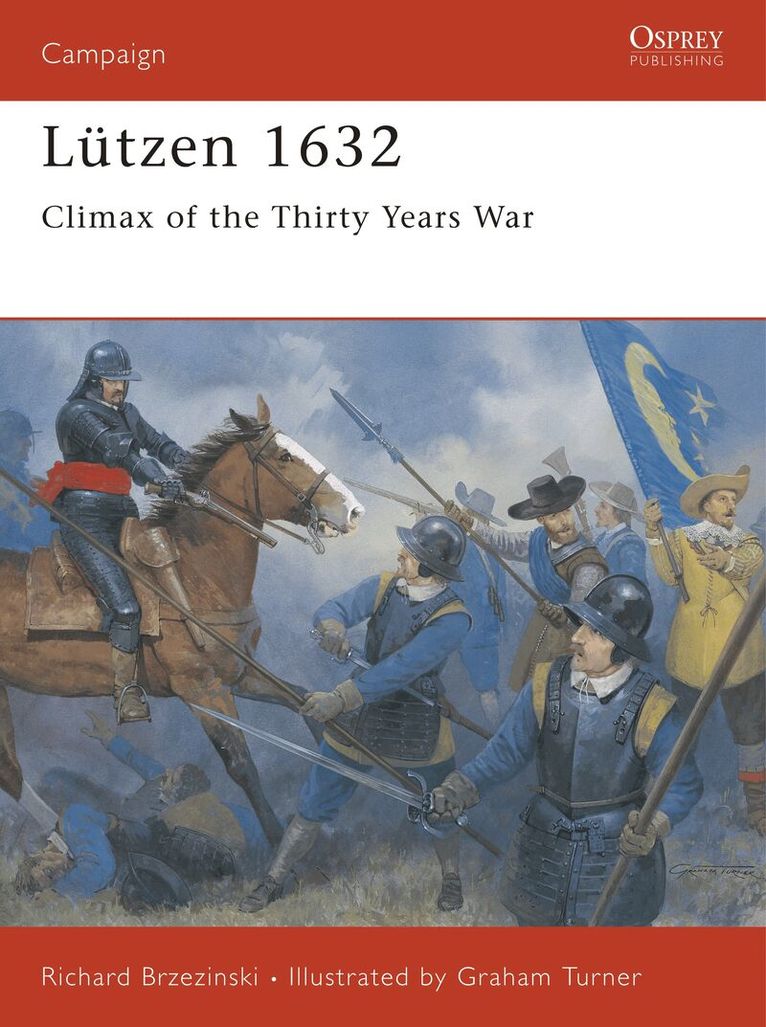
A richly illustrated, compact take on a high-drama battle of the Thirty Years War.The Thirty Years War, a religious conflict between Catholics and Protestants, raged across Europe between 1618 and 1648, devastating huge areas of Germany. By 1632 the Protestant powers were in a desperate situation until King Gustavus Adolphus II of Sweden, 'the Lion of the North', came to their rescue.This book describes how, having smashed one of the two main Catholic armies, he faced the other at Lützen near Leipzig in November 1632. In a nightmare battle fought in thick fog, his Swedish troops locked horns with the Imperial army. It was a bloody clash, in which Gustavus himself demonstrated true courage at the head of his cavalry and one for which he would pay the ultimate price.Complete with illustrations throughout, including special battlescene maps, this slim volume lifts the lid on the battle and its outcome.