Richard C. Fording - Böcker
Visar alla böcker från författaren Richard C. Fording. Handla med fri frakt och snabb leverans.
4 produkter
4 produkter
1 130 kr
Skickas inom 5-8 vardagar
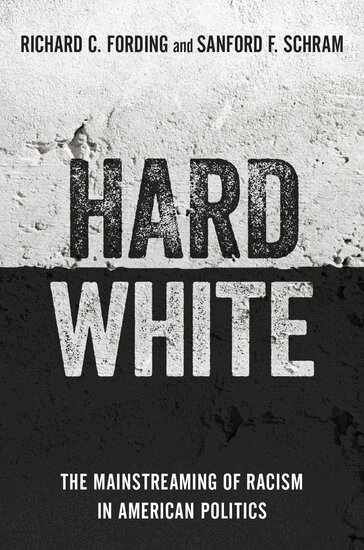
The white nationalist movement in the United States is nothing new. Yet, prior to the 2017 "Unite the Right" rally in Charlottesville, Virginia, many Americans assumed that it existed only on the fringes of our political system, a dark cultural relic pushed out of the mainstream by the victories of the Civil Rights Movement. The events in Charlottesville made clear that we had underestimated the scale of the white nationalist movement; Donald Trump's reaction to it brought home the reality that the movement had gained political clout in the White House. Yet, as this book argues, the mainstreaming of white nationalism did not begin with Trump, but began during the Obama era. Hard White explains how the mainstreaming of white nationalism occurred, pointing to two major shifts in the movement. First, Barack Obama's presidential tenure, along with increases in minority representation, fostered white anxiety about Muslims, Latinx immigrants, and black Americans. While anti-Semitic sentiments remained somewhat on the fringes, hostility toward Muslims, Latinos, and African Americans bubbled up into mainstream conservative views. At the same time, white nationalist leaders shifted their focus and resources from protest to electoral politics, and the book traces the evolution of the movement's political forays from David Duke to the American Freedom Party, the Tea Party, and, finally, the emergence of the Alt-Right. Interestingly it also shows that white hostility peaked in 2012--not 2016. Richard C. Fording and Sanford F. Schram also show that the key to Trump's win was not persuading economically anxious voters to become racially conservative. Rather, Trump mobilized racially hostile voters in the key swing states that flipped from blue to red in 2016. In fact, the authors show that voter turnout among white racial conservatives in the six states that Trump flipped was significantly higher in 2016 compared to 2012. They also show that white racial conservatives were far more likely to participate in the election beyond voting in 2016. However, the rise of white nationalism has also mobilized racial progressives. While the book argues that white extremism will have enduring effects on American electoral politics for some time to come, it suggests that the way forward is to refocus the conversation on social solidarity, concluding with ideas for how to build this solidarity.
268 kr
Skickas
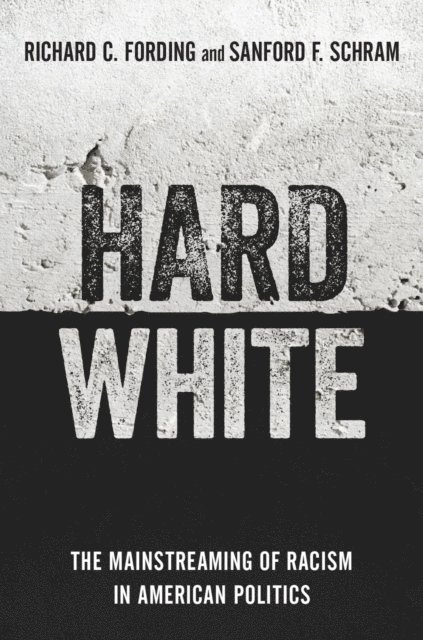
The white nationalist movement in the United States is nothing new. Yet, prior to the 2017 "Unite the Right" rally in Charlottesville, Virginia, many Americans assumed that it existed only on the fringes of our political system, a dark cultural relic pushed out of the mainstream by the victories of the Civil Rights Movement. The events in Charlottesville made clear that we had underestimated the scale of the white nationalist movement; Donald Trump's reaction to it brought home the reality that the movement had gained political clout in the White House. Yet, as this book argues, the mainstreaming of white nationalism did not begin with Trump, but began during the Obama era. Hard White explains how the mainstreaming of white nationalism occurred, pointing to two major shifts in the movement. First, Barack Obama's presidential tenure, along with increases in minority representation, fostered white anxiety about Muslims, Latinx immigrants, and black Americans. While anti-Semitic sentiments remained somewhat on the fringes, hostility toward Muslims, Latinos, and African Americans bubbled up into mainstream conservative views. At the same time, white nationalist leaders shifted their focus and resources from protest to electoral politics, and the book traces the evolution of the movement's political forays from David Duke to the American Freedom Party, the Tea Party, and, finally, the emergence of the Alt-Right. Interestingly it also shows that white hostility peaked in 2012--not 2016. Richard C. Fording and Sanford F. Schram also show that the key to Trump's win was not persuading economically anxious voters to become racially conservative. Rather, Trump mobilized racially hostile voters in the key swing states that flipped from blue to red in 2016. In fact, the authors show that voter turnout among white racial conservatives in the six states that Trump flipped was significantly higher in 2016 compared to 2012. They also show that white racial conservatives were far more likely to participate in the election beyond voting in 2016. However, the rise of white nationalism has also mobilized racial progressives. While the book argues that white extremism will have enduring effects on American electoral politics for some time to come, it suggests that the way forward is to refocus the conversation on social solidarity, concluding with ideas for how to build this solidarity.
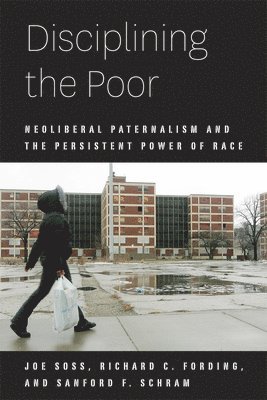
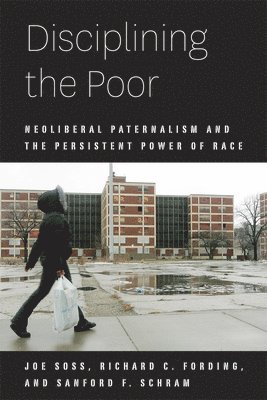
Disciplining the Poor
Neoliberal Paternalism and the Persistent Power of Race
Inbunden, Engelska, 2011
802 kr
Skickas inom 7-10 vardagar
"Disciplining the Poor" lays out the underlying logic of contemporary poverty governance in the United States. The authors argue that poverty governance - how social welfare policy choices get made, how authority gets exercised, and how collective pursuits get organized - has been transformed in the United States by two significant developments. The rise of paternalism has promoted a more directive and supervisory approach to managing the poor. This has intersected with a second development: the rise of neoliberalism as an organizing principle of governance. Neoliberals have redesigned state operations around market principles; to impose market discipline, core state functions - from war to welfare - have been contracted out to private providers. The authors seek to clarify the origins, operations, and consequences of neoliberal paternalism as a mode of poverty governance, tracing its impact from the federal level, to the state and county level, down to the differences in ways frontline case workers take disciplinary actions in individual cases. The book also addresses the complex role race has come to play in contemporary poverty governance.
282 kr
Skickas inom 7-10 vardagar
"Disciplining the Poor" lays out the underlying logic of contemporary poverty governance in the United States. The authors argue that poverty governance - how social welfare policy choices get made, how authority gets exercised, and how collective pursuits get organized - has been transformed in the United States by two significant developments. The rise of paternalism has promoted a more directive and supervisory approach to managing the poor. This has intersected with a second development: the rise of neoliberalism as an organizing principle of governance. Neoliberals have redesigned state operations around market principles; to impose market discipline, core state functions - from war to welfare - have been contracted out to private providers. The authors seek to clarify the origins, operations, and consequences of neoliberal paternalism as a mode of poverty governance, tracing its impact from the federal level, to the state and county level, down to the differences in ways frontline case workers take disciplinary actions in individual cases. The book also addresses the complex role race has come to play in contemporary poverty governance.