Richard Curt Kraus – författare
Visar alla böcker från författaren Richard Curt Kraus. Handla med fri frakt och snabb leverans.
7 produkter
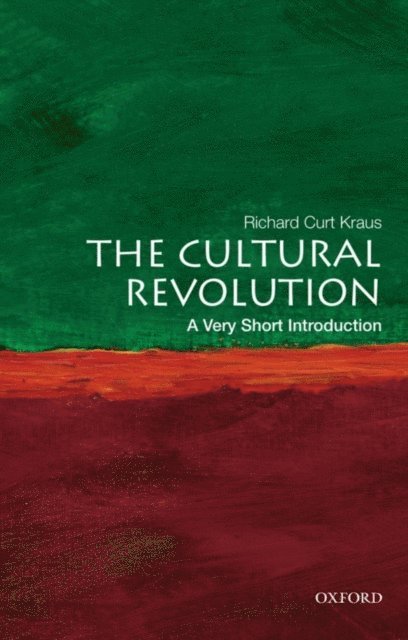
The Cultural Revolution
A Very Short Introduction
Häftad, 2012
116 kr
Lägg i varukorg
China's decade-long Great Proletarian Cultural Revolution shook the politics of China and the world. Even as we approach its fiftieth anniversary, the movement remains so contentious that the Chinese Communist Party still forbids fully open investigation of its origins, development, and conclusion. …
Pianos and Politics in China
Middle-Class Ambitions and the Struggle over Western Music
Inbunden, 1989
2281 kr
Lägg i varukorg
During the Chinese Cultural Revolution's rebellion against foreign influence, the piano, the musical embodiment of Western culture, became the object of intense hostility. In a nation where the world of politics and the world of art are closely linked, Western classical music was considered an …
Pianos and Politics in China
Middle-Class Ambitions and the Struggle over Western Music
E-bok, 1989
1435 kr
Lägg i varukorg
In China, a nation where the worlds of politics and art are closely linked, Western classical music was considered during the cultural revolution to be an imperialist intrusion, in direct conflict with the native aesthetic. In this revealing chronicle of the relationship between music and politics …
Cultural Revolution
A Very Short Introduction
E-bok, 2012
95 kr
Lägg i varukorg
China''s decade-long Great Proletarian Cultural Revolution shook the politics of China and the world. Even as we approach its fiftieth anniversary, the movement remains so contentious that the Chinese Communist Party still forbids fully open investigation of its origins, development, and …
Cultural Revolution
A Very Short Introduction
E-bok, 2012
95 kr
Lägg i varukorg
China''s decade-long Great Proletarian Cultural Revolution shook the politics of China and the world. Even as we approach its fiftieth anniversary, the movement remains so contentious that the Chinese Communist Party still forbids fully open investigation of its origins, development, and …
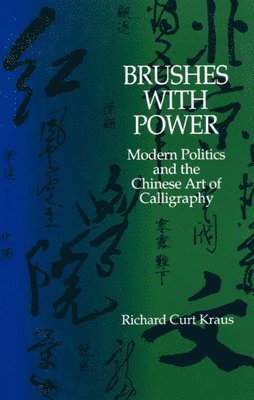
Brushes with Power
Modern Politics and the Chinese Art of Calligraphy
Inbunden, 1991
894 kr
Lägg i varukorg
Chinese calligraphy has traditionally been an emblem of the ruling class and its authority. After a century of mass revolution, what is the fate of this elite art? Richard Kraus explores the relationship beween politics and the art of writing in China today to explicate the complex relationship …
Party and the Arty in China
The New Politics of Culture
Inbunden, 2004
1893 kr
Lägg i varukorg
In this original exploration of the dynamic and potent interface between Chinese culture and politics, Richard Kraus examines the impact of the market on the once-comprehensive system of state patronage of the arts in the PRC. The author uses all genres of art to explore the changing nature of …