Richard Doll - Böcker
Visar alla böcker från författaren Richard Doll. Handla med fri frakt och snabb leverans.
5 produkter
5 produkter
2 121 kr
Skickas inom 7-10 vardagar
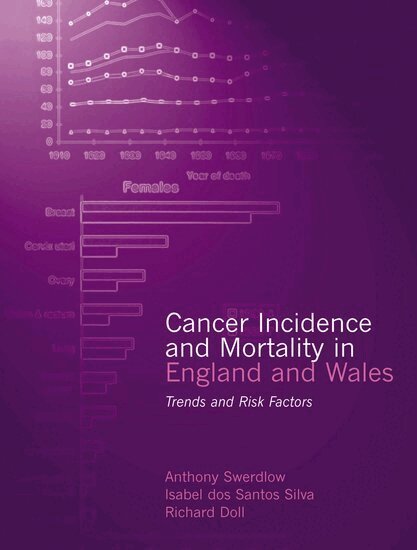
Cancer causes a quarter of all deaths in England and Wales. There is great professional and public interest in cancer trends, but no satisfactory source to which to turn to find information about these trends and explanation of them. It is even more difficult to know where to turn for information on trends in factors causing cancer. This book presents new analyses that bring together for the first time, data on cancer trends in the country since 1868. Detailed consideration is given to the reasons for changes in rates of cancer, in relation to a wide range of risk factors and preventive factors. Data are presented with figures and tables describing long-term trends in more than 50 factors that may affect the risk of cancer, including AIDS, asbestos exposure, cancer screening, childbearing, diet smoking and ultraviolet radiation. Particular attention is given to trends in recent decades, but historical trends are also considered. The book provides a comprehensive unparalleled source of data that are otherwise hard or impossible to find elsewhere and gives new analyses of cancer trends, in easily accessible form, with clear explanation.
693 kr
Skickas inom 10-15 vardagar
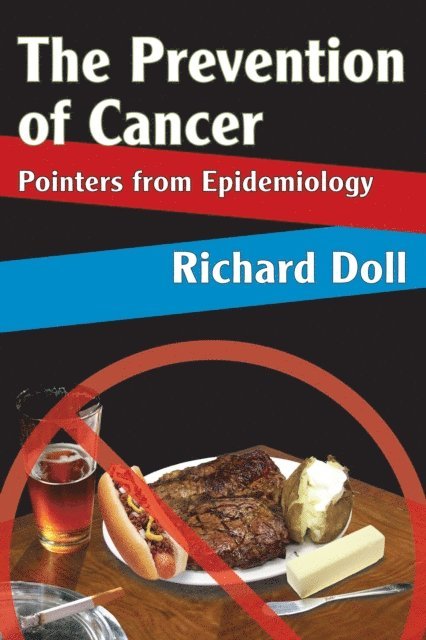
Epidemiological studies show that cancer incidence is far more dependent on the conditions of life than previously supposed. Classically, cancers occurred with heavy exposure to a specific occupational hazard, or were associated with habits. In some instances, research shows, the incidence of cancer falls when the method of work or the associated habit is changed. In short, variation in incidence is now known to be the rule rather than the exception in cancer. No cancer that occurs with even moderate frequency, occurs everywhere and always to the same extent. Sometimes it is even epidemic, similar in scale to an epidemic of infectious disease, but modified by the fact that the induction period may be as much as thirty years.Prevention of cancer is now coming to be regarded as a practicable alternative to its cure. We remain almost totally ignorant of how cancer is produced at the cellular level and, until we know this, our methods of prevention are liable to be cumbersome and inefficient. Ethical considerations and the time scale of the disease make it impossible to obtain experimental evidence in man and what action to take has been determined from observing nature's experiments and by analogy from experiments in animals.The evidence from epidemiological studies is of particular interest. Such studies suggest relationships that would never be thought of in the ordinary course of laboratory work and results that are directly relevant to the problems of human disease. The large numbers at risk and the intensity of the medical care to which people with cancer are subjected, make it possible to recognize relatively small improvements. Such practical decisions, based on information thus obtained, have largely eliminated the risk of cancer due to occupational hazards in several industries.
2 176 kr
Skickas inom 10-15 vardagar
Epidemiological studies show that cancer incidence is far more dependent on the conditions of life than previously supposed. Classically, cancers occurred with heavy exposure to a specific occupational hazard, or were associated with habits. In some instances, research shows, the incidence of cancer falls when the method of work or the associated habit is changed. In short, variation in incidence is now known to be the rule rather than the exception in cancer. No cancer that occurs with even moderate frequency, occurs everywhere and always to the same extent. Sometimes it is even epidemic, similar in scale to an epidemic of infectious disease, but modified by the fact that the induction period may be as much as thirty years.Prevention of cancer is now coming to be regarded as a practicable alternative to its cure. We remain almost totally ignorant of how cancer is produced at the cellular level and, until we know this, our methods of prevention are liable to be cumbersome and inefficient. Ethical considerations and the time scale of the disease make it impossible to obtain experimental evidence in man and what action to take has been determined from observing nature's experiments and by analogy from experiments in animals.The evidence from epidemiological studies is of particular interest. Such studies suggest relationships that would never be thought of in the ordinary course of laboratory work and results that are directly relevant to the problems of human disease. The large numbers at risk and the intensity of the medical care to which people with cancer are subjected, make it possible to recognize relatively small improvements. Such practical decisions, based on information thus obtained, have largely eliminated the risk of cancer due to occupational hazards in several industries.
550 kr
Skickas inom 10-15 vardagar
The suggestion that cancer incidence rates for different parts of the world should be brought together in ~ single volume arose in diSCUssion among mem bers of the Geographical Pathology Committee of the International Union Against Cancer during a symposium in Mexico in .1964. That there was a need for such a volume rapidly became apparent when the directors of cancer registries were asked for their opinion. Of those approached, all but one responded enthusias tically and immediately agreed to contribute. In the event, data have been col lected from 32 cancer registries in 24 countries, and 39 scientists have con tributed personally by describing the character of their registry and by collec ting and submitting figures in a standard way. The form in whiCh the book appears was suggested by a committee of 15 members, which met at the Ciba Foundation in London in May, 1965, and the editors have been guided in their work by the results of the discussions that took place at that meeting. In a few instances, it has not been possible to follow the Committee's advice, for reasons of finance, and the text which was written by the editors may, in some places, have inadvertently misrepresented the Committee's views. The editors, therefore, take full personal responsibility for all defects in both style and scientific presentation.
550 kr
Skickas inom 10-15 vardagar
In 1966, following the Ninth International Cancer Congress in Tokyo, the Commission on Epidemiology and Prevention of the International Union against Cancer formed a new Committee on Cancer Incidence. This Committee met in Lausanne in May 1968 and decided that the monograph on Cancer Incidence in Five Continents, which had been published by the UICC tw~ years previously, had been so useful that a second volume should be published as soon as a suf ficient amount of new material could be collected. The Committee delegated the responsibility for the production of this volume to the Editors of the original monograph and to the Honorary Secretary of the Committee, Dr C. S. Muir. Mr P. Payne, however, was unable to continue in this capacity because of the pressure of other commitments. The Editors have 1eant heavily on the skills and knowledge of Dr A. J. Tuyns and Dr H. Tu1inius, who have been responsible for the preparation of Chapters II and IV respectively and for the collection of a large part of the material presented in them. They are also greatly indebted to Miss J~ Powell of the Birmingham Cancer Registry, who wrote the computer programme for calcu lating the age-specific and standardized incidence rates, in conjunction with Dr J. A. H. Waterhouse, and supervised the operation of the computer, as well as to Mme J.