Richard G. Delisle - Böcker
Visar alla böcker från författaren Richard G. Delisle. Handla med fri frakt och snabb leverans.
11 produkter
11 produkter
Debating Humankind's Place in Nature, 1860-2000
The Nature of Paleoanthropology
Häftad, Engelska, 2006
1 292 kr
Skickas inom 10-15 vardagar
This text, the only one of its kind on the market, surveys the development of the field of human evolution from its inception through today. It provides students with a broad contrast enabling them to fully understand the value and role of current paleoanthropological research.Features:An historical approach - Establishes for students the nature of paleoanthropology through the historical development of the field from 1860 through 2000 and shows students that paleoanthropology is a remarkably progressive field..A focus on the debates in the field of human evolution (especially the phylogenetic or genealogical debates)–Analyzes four distinct debates, presented separately from their inception to the present: 1) Humankind's place among the primates; 2) The place of the australopithecines relative to the human line; 3) Debates on human phylogeny proper; 4) Proposed scenarios of hominization. Presentation and analysis of the viewpoints of over 150 scholars - Gives students a valuable reference work for the future (includes over 1200 references in the bibliography) as well as a comprehensive text for today.For junior/senior courses in Human Evolution and Paleoanthropology in Anthropology departments.
Debating Humankind's Place in Nature, 1860-2000
The Nature of Paleoanthropology
Inbunden, Engelska, 2017
2 712 kr
Skickas inom 10-15 vardagar
This text, the only one of its kind on the market, surveys the development of the field of human evolution from its inception through today. It provides students with a broad contrast enabling them to fully understand the value and role of current paleoanthropological research. Features:An historical approach - Establishes for students the nature of paleoanthropology through the historical development of the field from 1860 through 2000 and shows students that paleoanthropology is a remarkably progressive field.. A focus on the debates in the field of human evolution (especially the phylogenetic or genealogical debates) Analyzes four distinct debates, presented separately from their inception to the present: 1) Humankind's place among the primates; 2) The place of the australopithecines relative to the human line; 3) Debates on human phylogeny proper; 4) Proposed scenarios of hominization. Presentation and analysis of the viewpoints of over 150 scholars - Gives students a valuable reference work for the future (includes over 1200 references in the bibliography) as well as a comprehensive text for today. For junior/senior courses in Human Evolution and Paleoanthropology in Anthropology departments.
1 467 kr
Skickas inom 10-15 vardagar
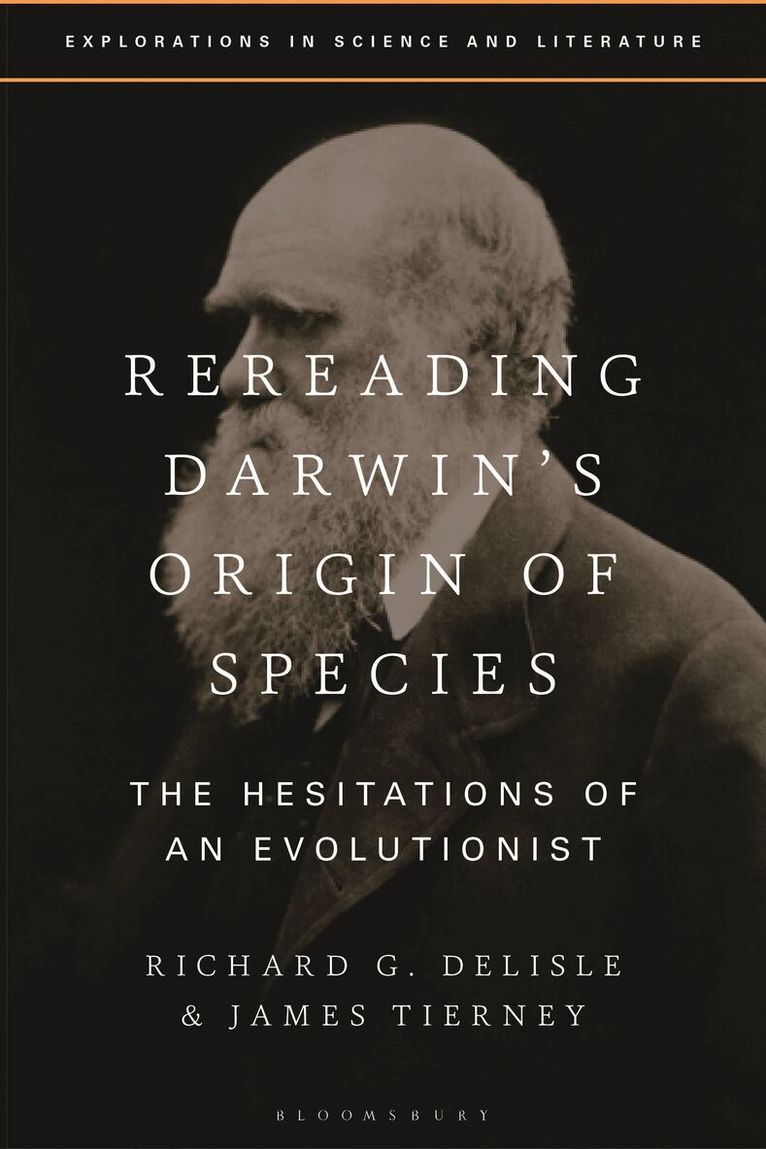
Widely seen as evolution’s founding figure, Charles Darwin is taken by many evolutionists to be the first to propose a truly modern theory of evolution. Darwin’s greatness, however, has obscured the man and his work, at times even to the point of distortion.Accessibly written, this book presents a more nuanced picture and invites us to discover some neglected ambiguities and contradictions in Darwin’s masterwork. Delisle and Tierney show Darwin to be a man who struggled to reconcile the received wisdom of an unchanging natural world with his new ideas about evolution. Arguing that Darwin was unable to break free entirely from his contemporaries’ more traditional outlook, they show his theory to be a fascinating compromise between old and new.Rediscovering this other Darwin – and this other side of On the Origin of Species – helps shed new light on the immensity of the task that lay before 19th century scholars, as well as their ultimate achievements.
469 kr
Skickas inom 10-15 vardagar
Widely seen as evolution’s founding figure, Charles Darwin is taken by many evolutionists to be the first to propose a truly modern theory of evolution. Darwin’s greatness, however, has obscured the man and his work, at times even to the point of distortion.Accessibly written, this book presents a more nuanced picture and invites us to discover some neglected ambiguities and contradictions in Darwin’s masterwork. Delisle and Tierney show Darwin to be a man who struggled to reconcile the received wisdom of an unchanging natural world with his new ideas about evolution. Arguing that Darwin was unable to break free entirely from his contemporaries’ more traditional outlook, they show his theory to be a fascinating compromise between old and new.Rediscovering this other Darwin – and this other side of On the Origin of Species – helps shed new light on the immensity of the task that lay before 19th century scholars, as well as their ultimate achievements.
Del 1 - Evolutionary Biology – New Perspectives on Its Development
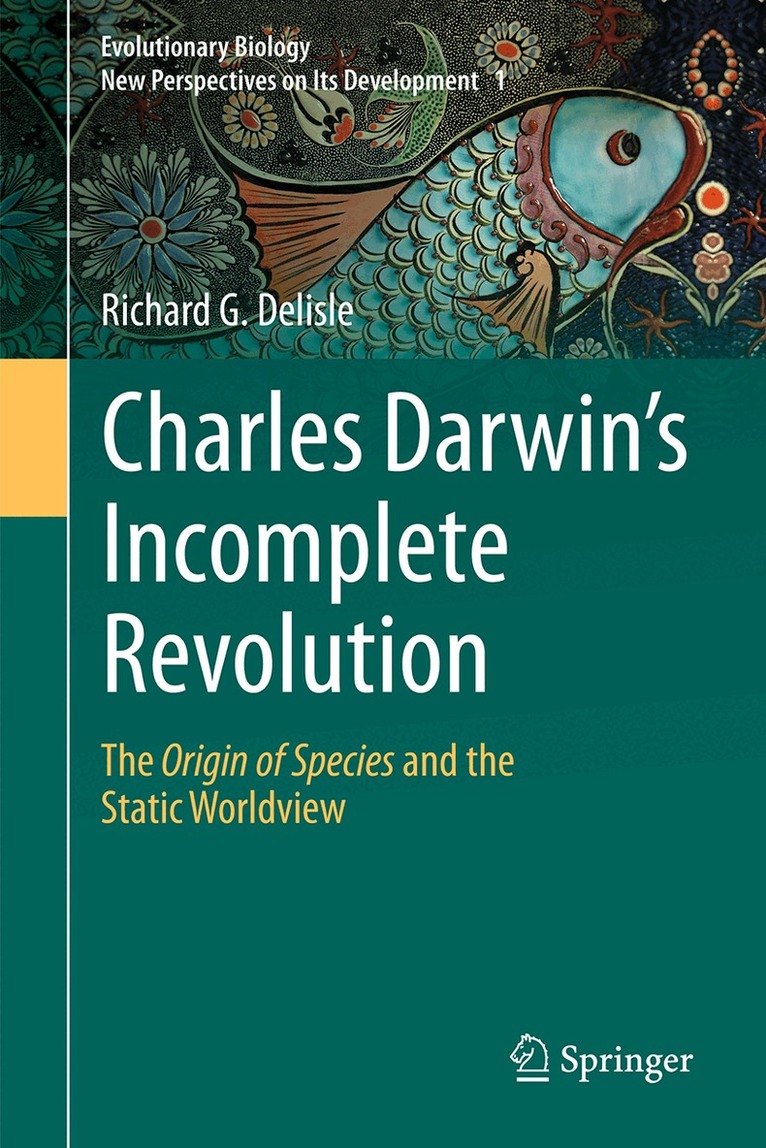
Charles Darwin's Incomplete Revolution
The Origin of Species and the Static Worldview
Inbunden, Engelska, 2019
1 698 kr
Skickas inom 10-15 vardagar
This book offers a thorough reanalysis of Charles Darwin's Origin of Species, which for many people represents the work that alone gave rise to evolutionism. Of course, scholars today know better than that. Yet, few resist the temptation of turning to the Origin in order to support it or reject it in light of their own work. Apparently, Darwin fills the mythical role of a founding figure that must either be invoked or repudiated. The book is an invitation to move beyond what is currently expected of Darwin's magnum opus. Once the rhetorical varnish of Darwin's discourses is removed, one discovers a work of remarkably indecisive conclusions. The book comprises two main theses:(1) The Origin of Species never remotely achieved the theoretical unity to which it is often credited. Rather, Darwin was overwhelmed by a host of phenomena that could not fit into his narrow conceptual framework.(2) In the Origin of Species, Darwin failed at completing the full conversion to evolutionism. Carrying many ill-designed intellectual tools of the 17th and 18th centuries, Darwin merely promoted a special brand of evolutionism, one that prevented him from taking the decisive steps toward an open and modern evolutionism.It makes an interesting read for biologists, historians and philosophers alike.
Del 1 - Evolutionary Biology – New Perspectives on Its Development
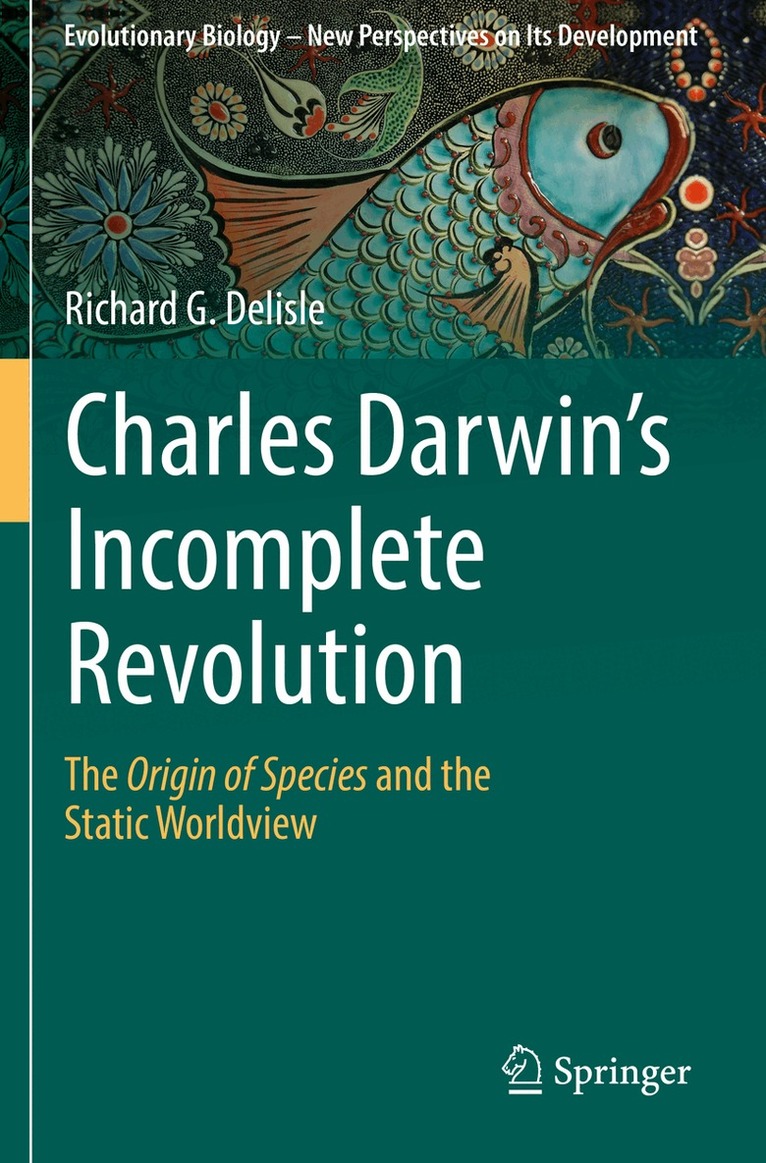
Charles Darwin's Incomplete Revolution
The Origin of Species and the Static Worldview
Häftad, Engelska, 2020
1 223 kr
Skickas inom 10-15 vardagar
This book offers a thorough reanalysis of Charles Darwin's Origin of Species, which for many people represents the work that alone gave rise to evolutionism.
Del 3 - Evolutionary Biology – New Perspectives on Its Development
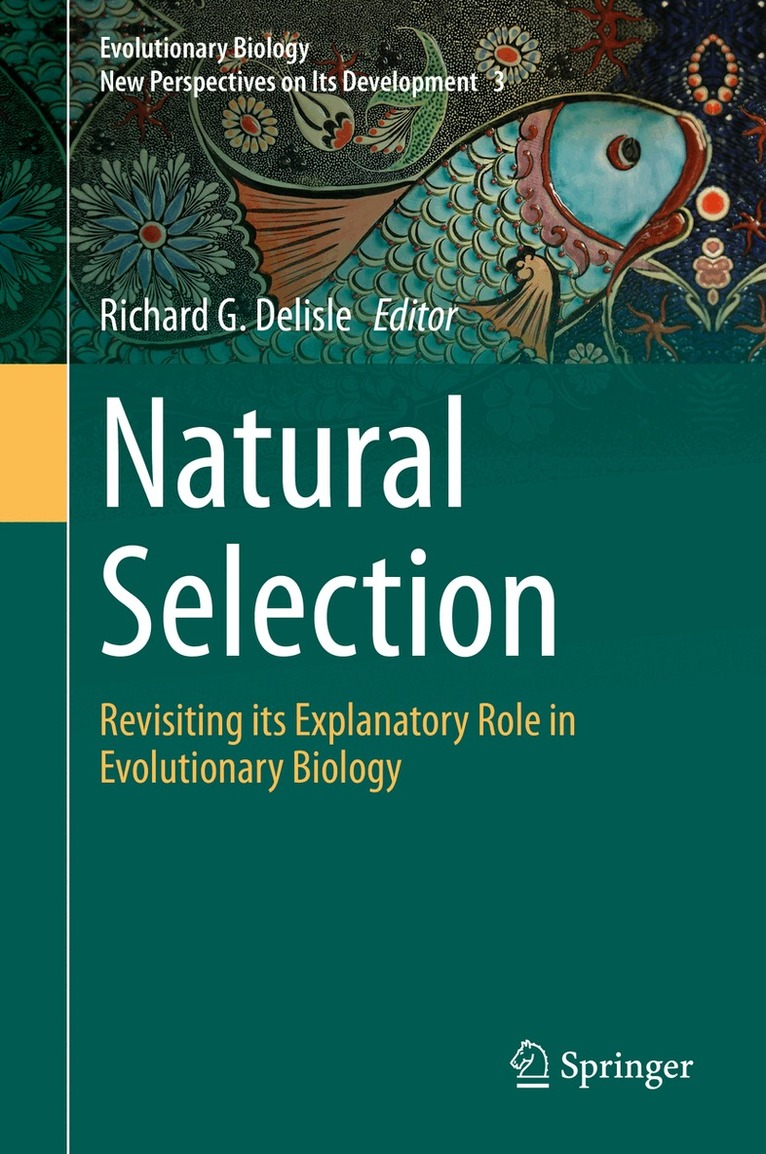
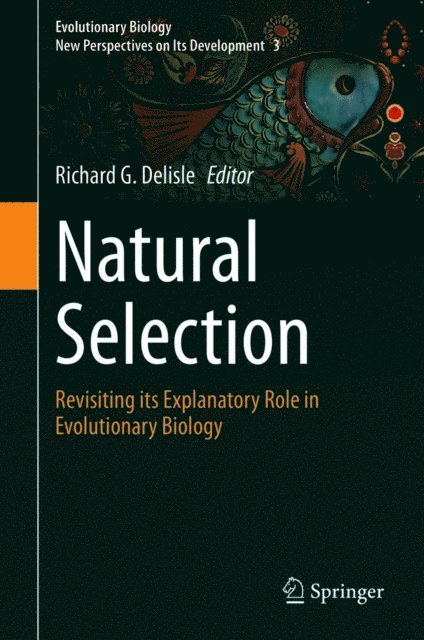
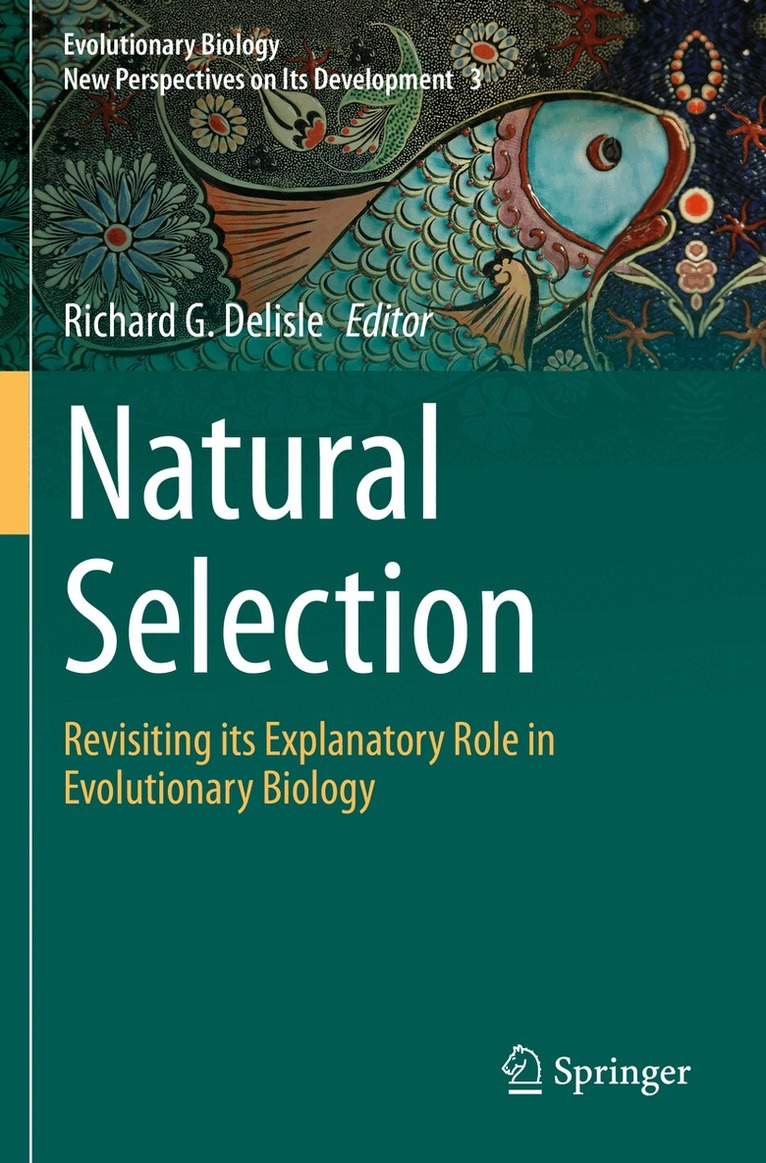
Natural Selection
Revisiting its Explanatory Role in Evolutionary Biology
Inbunden, Engelska, 2021
2 650 kr
Skickas inom 10-15 vardagar
This book contests the general view that natural selection constitutes the explanatory core of evolutionary biology. It invites the reader to consider an alternative view which favors a more complete and multidimensional interpretation.It is common to present the 1930-1960 period as characterized by the rise of the Modern Synthesis, an event structured around two main explanatory commitments: (1) Gradual evolution is explained by small genetic changes (variations) oriented by natural selection, a process leading to adaptation; (2) Evolutionary trends and speciational events are macroevolutionary phenomena that can be accounted for solely in terms of the extension of processes and mechanisms occurring at the previous microevolutionary level. On this view, natural selection holds a central explanatory role in evolutionary theory - one that presumably reaches back to Charles Darwin's Origin of Species - a view also accompanied by the belief that the field of evolutionary biology is organized around a profound divide: theories relying on strong selective factors and those appealing only to weak ones.If one reads the new analyses presented in this volume by biologists, historians and philosophers, this divide seems to be collapsing at a rapid pace, opening an era dedicated to the search for a new paradigm for the development of evolutionary biology. Contrary to popular belief, scholars' position on natural selection is not in itself a significant discriminatory factor between most evolutionists. In fact, the intellectual space is quite limited, if not non-existent, between, on the one hand, "Darwinists", who play down the central role of natural selection in evolutionary explanations, and, on the other hand, "non-Darwinists", who use it in a list of other evolutionary mechanisms.The "mechanism-centered" approach to evolutionary biology is too incomplete to fully make sense of its development. In this book the labels created under the traditional historiography - "Darwinian Revolution", "Eclipse of Darwinism", "Modern Synthesis", "Post-Synthetic Developments" - are thus re-evaluated.This book will not only appeal to researchers working in evolutionary biology, but also to historians and philosophers."
Del 3 - Evolutionary Biology – New Perspectives on Its Development
Natural Selection
Revisiting its Explanatory Role in Evolutionary Biology
Häftad, Engelska, 2022
2 650 kr
Skickas inom 10-15 vardagar
This book contests the general view that natural selection constitutes the explanatory core of evolutionary biology. It invites the reader to consider an alternative view which favors a more complete and multidimensional interpretation.It is common to present the 1930-1960 period as characterized by the rise of the Modern Synthesis, an event structured around two main explanatory commitments: (1) Gradual evolution is explained by small genetic changes (variations) oriented by natural selection, a process leading to adaptation; (2) Evolutionary trends and speciational events are macroevolutionary phenomena that can be accounted for solely in terms of the extension of processes and mechanisms occurring at the previous microevolutionary level. On this view, natural selection holds a central explanatory role in evolutionary theory - one that presumably reaches back to Charles Darwin's Origin of Species - a view also accompanied by the belief that the field of evolutionary biology is organized around a profound divide: theories relying on strong selective factors and those appealing only to weak ones.If one reads the new analyses presented in this volume by biologists, historians and philosophers, this divide seems to be collapsing at a rapid pace, opening an era dedicated to the search for a new paradigm for the development of evolutionary biology. Contrary to popular belief, scholars' position on natural selection is not in itself a significant discriminatory factor between most evolutionists. In fact, the intellectual space is quite limited, if not non-existent, between, on the one hand, "Darwinists", who play down the central role of natural selection in evolutionary explanations, and, on the other hand, "non-Darwinists", who use it in a list of other evolutionary mechanisms.The "mechanism-centered" approach to evolutionary biology is too incomplete to fully make sense of its development. In this book the labels created under the traditional historiography - "Darwinian Revolution", "Eclipse of Darwinism", "Modern Synthesis", "Post-Synthetic Developments" - are thus re-evaluated.This book will not only appeal to researchers working in evolutionary biology, but also to historians and philosophers."
2 121 kr
Skickas inom 10-15 vardagar
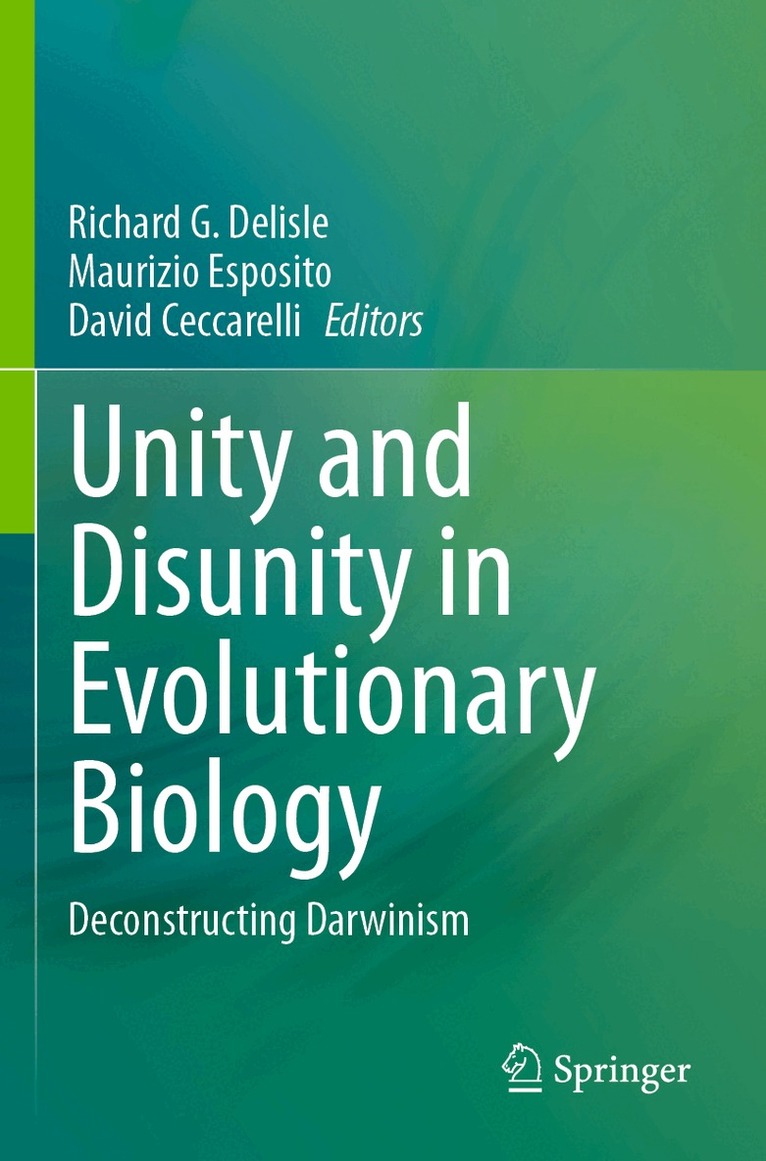
It is not uncommon to see in major areas of research concerned with science that historical studies are accompanied by the rise of complementary or contradictory historiographies. With time, it seems, scholars discover new approaches to study topics, thus questioning old concepts, traditions, periodizations and historical labels. Apparently, this has not been the case in evolutionary thought. In that area, the main historiographic labels such as Darwinian Revolution, Eclipse of Darwinism, and Modern Synthesis have been in place and largely uncontested for about 50 years. Such labels seem to work as irrefutable, and often hidden, premises of many historical reconstructions, philosophical analyses, and scientific conceptualizations.This volume aims to move beyond this state of affair, opening new thinking avenues by revisiting the traditional historiography and laying the groundwork for establishing a “new historiography” that considers the intertwined threads that compose evolutionary biology. Notably, evolutionary studies seem to have been marked by the tension between unification attempts and the proliferation of approaches, methodologies, and styles of thinking. As the contributors to this volume illustrate, research traditions branched off throughout the history of evolutionary thought, before and after Charles Darwin. The resulting complexity challenges traditional thinking categories, throwing a somewhat different light on a more recent label like the Extended Evolutionary Synthesis.More than 40 years after the now classic, The Evolutionary Synthesis: Perspectives on the Unification of Biology (1980), edited by Ernst Mayr and William Provine, the contributors to this volume aim to reevaluate where evolutionary biology stands today.
1 593 kr
Skickas inom 10-15 vardagar
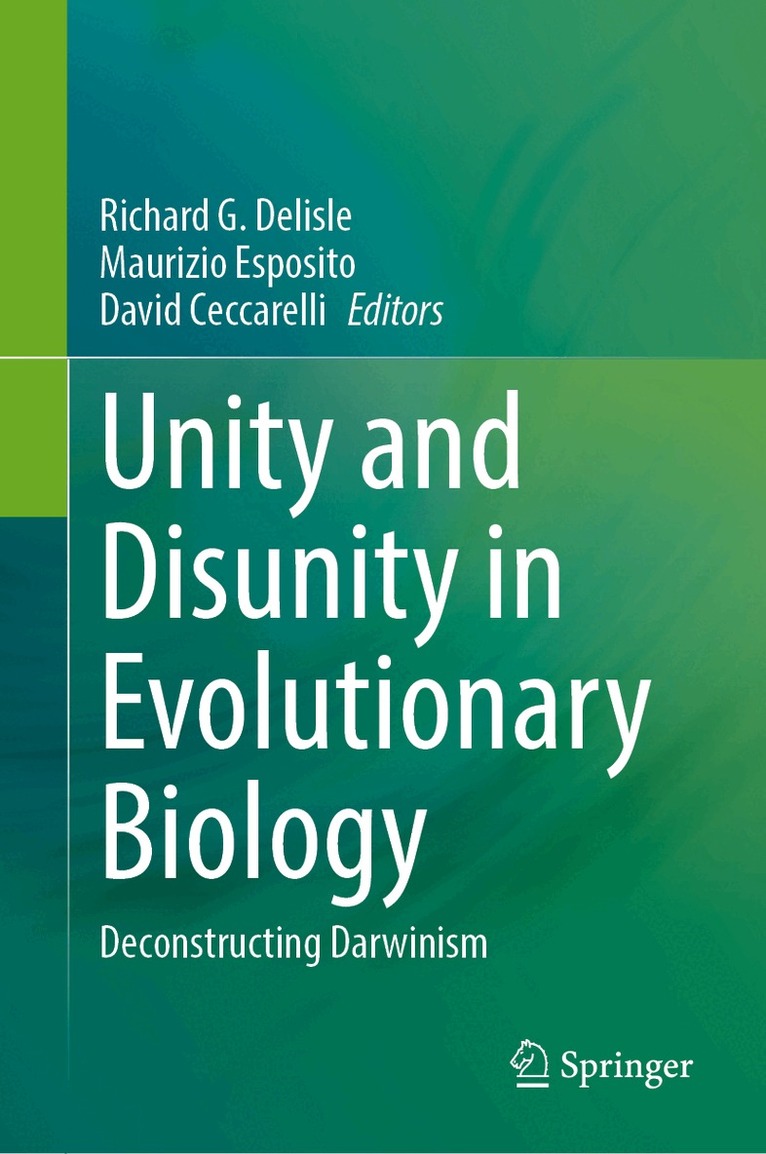
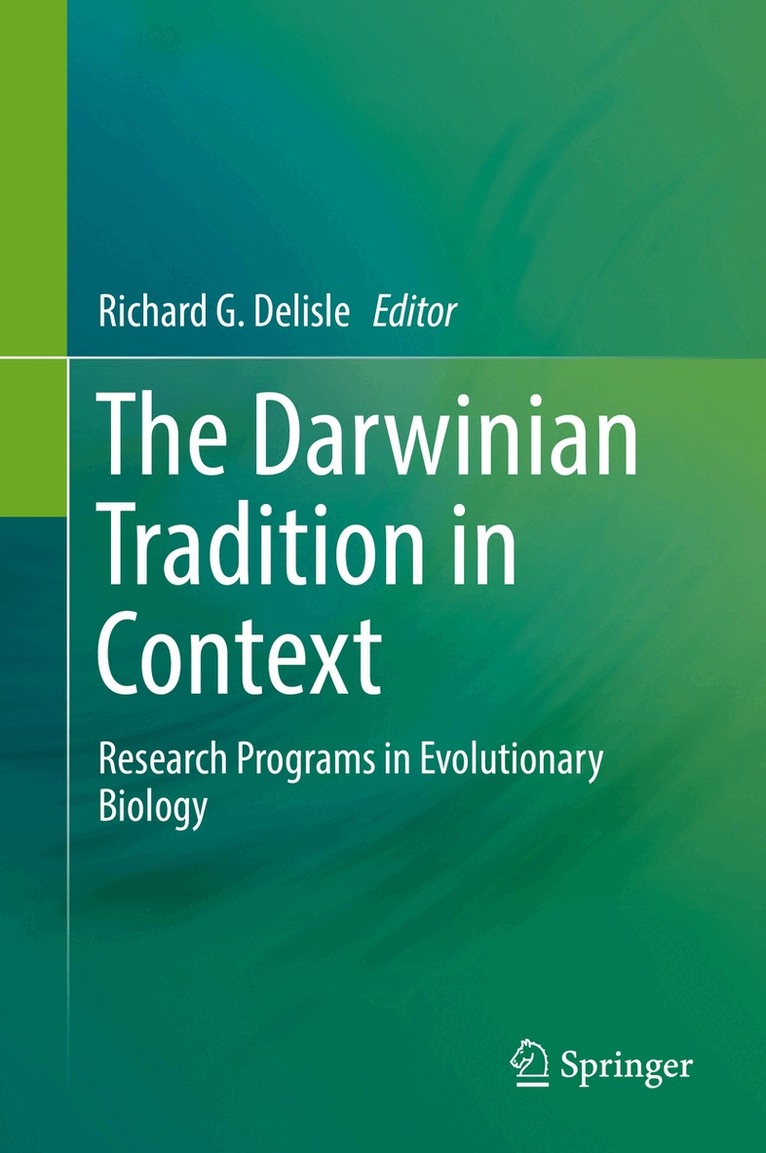
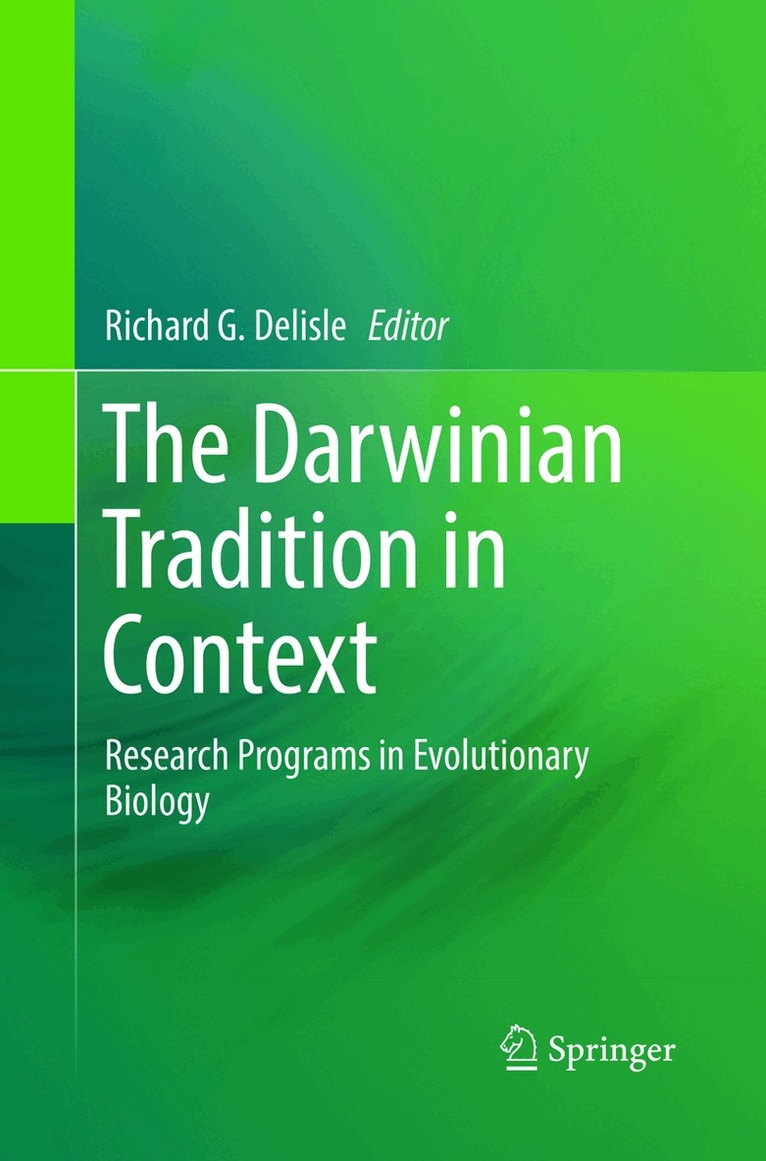
The main goal of this book is to put the Darwinian tradition in context by raising questions such as: How should it be defined? Did it interact with other research programs? Were there any research programs that developed largely independently of the Darwinian tradition? Accordingly, the contributing authors explicitly explore the nature of the relationship between the Darwinian tradition and other research programs running in parallel.In the wake of the Synthetic Theory of Evolution, which was established throughout the 1930s, 1940s, and 1950s, historians and philosophers of biology devoted considerable attention to the Darwinian tradition, i.e., linking Charles Darwin to mid-Twentieth-Century developments in evolutionary biology. Since then, more recent developments in evolutionary biology have challenged, in part or entirely, the heritage of the Darwinian tradition. Not surprisingly, this has in turn been followed by a historiographical “recalibration” on the part of historians and philosophers regarding other research programs and traditions in evolutionary biology. In order to acknowledge this shift, the papers in this book have been arranged on the basis of two main threads:Part I: A perspective that views Darwinism as either being originally pluralistic or having acquired such a pluralistic nature through modifications and borrowings over time.Part II: A perspective blurring the boundaries between non-Darwinian and Darwinian traditions, either by contending that Darwinism itself was never quite as Darwinian as previously assumed, or that non-Darwinian traditions took on board various Darwinian components, when not fertilizing Darwinism directly.Between a Darwinism reaching out to other research programs and non-Darwinian programs reaching out to Darwinism, the least that can be said is that this interweaving of intellectual threads blurs the historiographical field. This volume aims to open vital new avenues for approachingand reflecting on the development of evolutionary biology.
1 593 kr
Skickas inom 10-15 vardagar
The main goal of this book is to put the Darwinian tradition in context by raising questions such as: How should it be defined? Did it interact with other research programs? Were there any research programs that developed largely independently of the Darwinian tradition? Accordingly, the contributing authors explicitly explore the nature of the relationship between the Darwinian tradition and other research programs running in parallel.In the wake of the Synthetic Theory of Evolution, which was established throughout the 1930s, 1940s, and 1950s, historians and philosophers of biology devoted considerable attention to the Darwinian tradition, i.e., linking Charles Darwin to mid-Twentieth-Century developments in evolutionary biology. Since then, more recent developments in evolutionary biology have challenged, in part or entirely, the heritage of the Darwinian tradition. Not surprisingly, this has in turn been followed by a historiographical “recalibration” on the part of historians and philosophers regarding other research programs and traditions in evolutionary biology. In order to acknowledge this shift, the papers in this book have been arranged on the basis of two main threads:Part I: A perspective that views Darwinism as either being originally pluralistic or having acquired such a pluralistic nature through modifications and borrowings over time.Part II: A perspective blurring the boundaries between non-Darwinian and Darwinian traditions, either by contending that Darwinism itself was never quite as Darwinian as previously assumed, or that non-Darwinian traditions took on board various Darwinian components, when not fertilizing Darwinism directly.Between a Darwinism reaching out to other research programs and non-Darwinian programs reaching out to Darwinism, the least that can be said is that this interweaving of intellectual threads blurs the historiographical field. This volume aims to open vital new avenues for approachingand reflecting on the development of evolutionary biology.