
Richard G. Wang – författare
Visar alla böcker från författaren Richard G. Wang. Handla med fri frakt och snabb leverans.
3 produkter
3 produkter
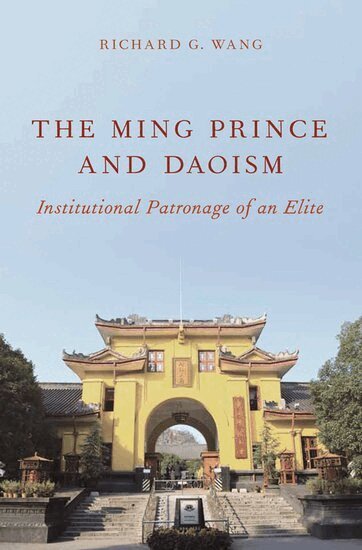
Inbunden, Engelska, 2012
1 200 kr
Skickas inom 5-8 vardagar
Scholars of Daoism in the Ming dynasty (1368-1644) have paid particular attention to the interaction between the court and certain Daoist priests and to the political results of such interaction; the focus has been on either emperors or Daoist masters. Yet in the Ming era a special group of people patronized Daoism and Daoist establishments: these were the members of the imperial clan, who were enfeoffed as princes. In addition to personal belief and self-cultivation, a prince had other reasons to patronize Daoism. As the regional overlords, the Ming princes like other local elites saw financing and organizing temple affairs and rituals, patronizing Daoist priests, or collecting and producing Daoist books as a chance to maintain their influence and show off their power. The prosperity of Daoist institutions, which attracted many worshippers, also demonstrated the princes' political success. Locally the Ming princes played an important cultural role as well by promoting the development of local religions. This book is the first to explore the interaction between Ming princes as religious patrons and local Daoism. Barred by imperial law from any serious political or military engagement, the Ming princes were ex officio managers of state rituals at the local level, with Daoist priests as key performers, and for this reason they became very closely involved in Daoist clerical and liturgical life. By illuminating the role the Ming princes played in local religion, Richard Wang demonstrates in The Ming Prince and Daoism that the princedom served to mediate between official religious policy and the commoners' interests.
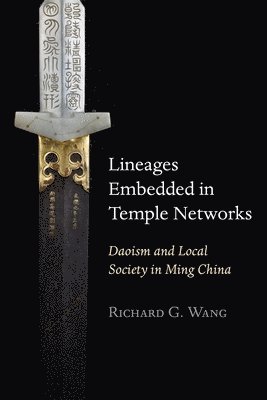
Del 132 - Harvard-Yenching Institute Monograph Series
Lineages Embedded in Temple Networks
Daoism and Local Society in Ming China
Inbunden, Engelska, 2022
548 kr
Skickas inom 5-8 vardagar
Lineages Embedded in Temple Networks explores the key role played by elite Daoists in social and cultural life in Ming China, notably by mediating between local networks—biological lineages, territorial communities, temples, and festivals—and the state. They did this through their organization in clerical lineages—their own empire-wide networks for channeling knowledge, patronage, and resources—and by controlling central temples that were nodes of local social structures.In this book, the only comprehensive social history of local Daoism during the Ming largely based on literary sources and fieldwork, Richard G. Wang delineates the interface between local organizations (such as lineages and temple networks) and central state institutions. The first part provides the framework for viewing Daoism as a social institution in regard to both its religious lineages and its service to the state in the bureaucratic apparatus to implement state orthodoxy. The second part follows four cases to reveal the connections between clerical lineages and local networks. Wang illustrates how Daoism claimed a universal ideology and civilizing force that mediated between local organizations and central state institutions, which in turn brought meaning and legitimacy to both local society and the state.
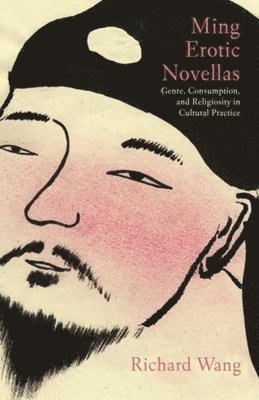
Inbunden, Engelska, 2011
621 kr
Skickas inom 5-8 vardagar
By analyzing a group of literary (wenyan) novellas, this study of late-Ming material culture focuses on an erotic fiction genre, the marketing and consuming strategies behind it, and the Daoist allegory contained within. Richard Wang examines these works and their significance in the development of Ming-Qing fiction in light of the sociology of literature and Ming cultural context. Specific features of the presentation of eroticism in these novellas include the legitimation of sexuality in cosmological thinking, the moralization and politicalization of sexuality, the medical discourse on sexuality, pleasure prescribed by ars erotica, and the religious dimension of sexuality.