Richard Gilman-Opalsky – författare
Visar alla böcker från författaren Richard Gilman-Opalsky. Handla med fri frakt och snabb leverans.
13 produkter
Unbounded Publics
Transgressive Public Spheres, Zapatismo, and Political Theory
Inbunden, 2008
1701 kr
Lägg i varukorg
This book is about the public sphere and the various ways it has been theorized as a driving mechanism for social and political change. Public spheres are the places where people come together to actively engage in new ideas and arguments, where collective interests and a collective political will …
Unbounded Publics
Transgressive Public Spheres, Zapatismo, and Political Theory
Häftad, 2008
713 kr
Lägg i varukorg
This book is about the public sphere and the various ways it has been theorized as a driving mechanism for social and political change. Public spheres are the places where people come together to actively engage in new ideas and arguments, where collective interests and a collective political will …
Against Capital in the Twenty-First Century
A Reader of Radical Undercurrents
Av John Asimakopoulos, Richard Gilman-Opalsky
Häftad, 2018
386 kr
Lägg i varukorg
The problems of capitalism have been studied from Karl Marx to Thomas Piketty. The latter has recently confirmed that the system of capital is deeply bound up in ever-growing inequality without challenging the continuance of that system. Against Capital in the Twenty-First Century presents a …
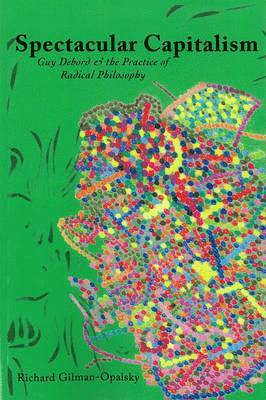
Spectacular Capitalism
Guy Debord & the Practise of Radical Philosophy
Häftad, 2011
179 kr
Lägg i varukorg
Communist Ontologies
An Inquiry into the Construction of New Forms of Life
Av Bruno Gulli, Richard Gilman-Opalsky
Häftad, 2024
219 kr
Lägg i varukorg
With all appropriate modesties and heresies, Bruno Gulli and Richard Gilman-Opalsky think together in the ways of other kindred spirits like Gilles Deleuze and Felix Guattari, bell hooks and Cornel West, Michael Hardt and Antonio Negri, and Stefano Harney and Fred Moten. Gulli and Gilman- Opalsky …
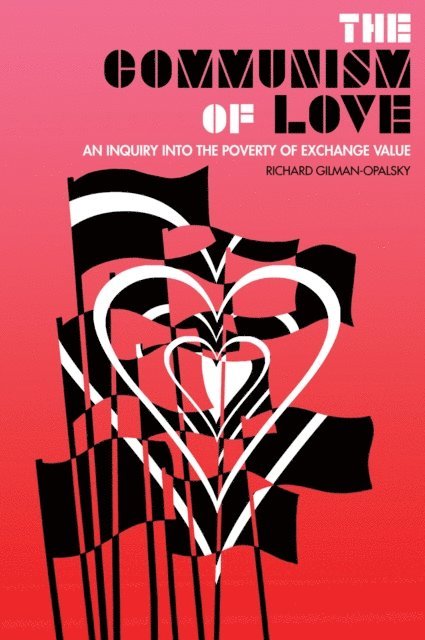
Communism of Love
An Inquiry into the Poverty of Exchange Value
Häftad, 2021
276 kr
Lägg i varukorg
Exploring the meanings and powers of love from ancient Greece to the present day, Richard Gilman-Opalsky argues that what is called 'love' by the best thinkers who have approached the subject is in fact the beating heart of communism - understood as a way of living, not as a form of government. …
Communism of Love
An Inquiry into the Poverty of Exchange Value
E-bok, 2020
285 kr
Lägg i varukorg
Exploring the meanings and powers of love from ancient Greece to the present day, Richard Gilman-Opalsky argues that what is called “love” by the best thinkers who have approached the subject is in fact the beating heart of communism—understood as a way of living, not as a form of government. Along …
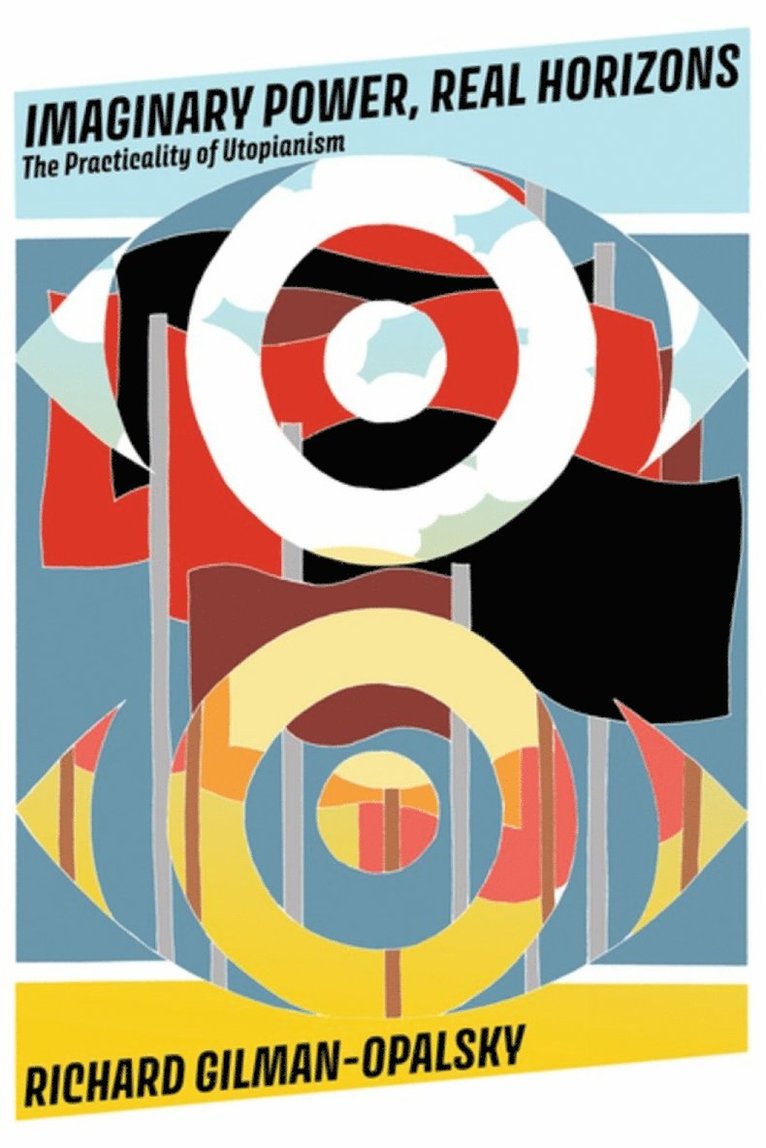
Imaginary Power, Real Horizons
The Practicality of Utopianism
Häftad, 2024
197 kr
Lägg i varukorg
Political theorist and philosopher Richard Gilman-Opalsky's Imaginary Power, Real Horizons is a tribute to the imagination and to its necessity for liberatory struggle. 'Impractical' is the name given to anyone who imagines something radically other than what exists,' he writes. However, many …
Imaginary Power, Real Horizons
The Practicality of Utopianism
E-bok, 2024
278 kr
Lägg i varukorg
A defense of the radical imagination from a scholar of social movements. Political theorist and philosopher Richard Gilman-Opalsky’s Imaginary Power, Real Horizons is a tribute to the imagination and to its necessity for liberatory struggle. “‘Impractical’ is the name given to anyone who imagines …
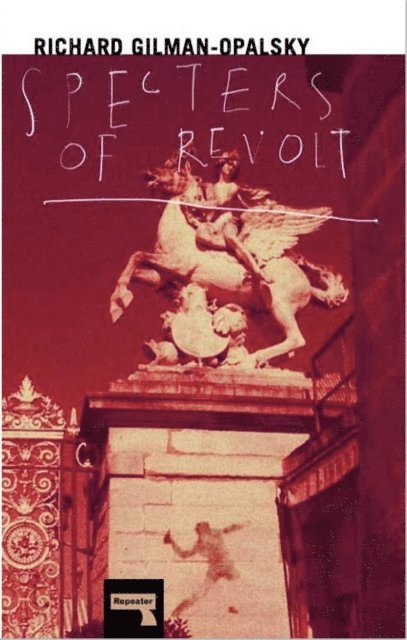
Specters of Revolt
E-bok, 2016
99 kr
Lägg i varukorg
In 1848, Karl Marx declared that a communist specter was haunting Europe. In 1994, Jacques Derrida considered how the spectre of Marx would haunt the post-Cold War world. In Specters of Revolt , Gilman-Opalsky argues that the world is haunted by revolt, by the possibility of events that interrupt …
Against Capital in the Twenty-First Century
A Reader of Radical Undercurrents
Av John Asimakopoulos, Richard Gilman-Opalsky
Inbunden, 2018
1182 kr
Tillfälligt slut
The problems of capitalism have been studied from Karl Marx to Thomas Piketty. The latter has recently confirmed that the system of capital is deeply bound up in ever-growing inequality without challenging the continuance of that system. Against Capital in the Twenty-First Century presents a …
Specters of Revolt
On the Intellect of Insurrection and Philosophy from Below
Häftad, 2016
110 kr
Tillfälligt slut
In 1848, Karl Marx declared that a communist specter was haunting Europe. In 1994, Jacques Derrida considered how the specter of Marx would haunt the post-Cold War world.In Specters of Revolt Gilman-Opalsky argues that the world is haunted by revolt, by the possibility of events that interrupt and …