Richard Grigg - Böcker
Visar alla böcker från författaren Richard Grigg. Handla med fri frakt och snabb leverans.
8 produkter
8 produkter
1 057 kr
Tillfälligt slut
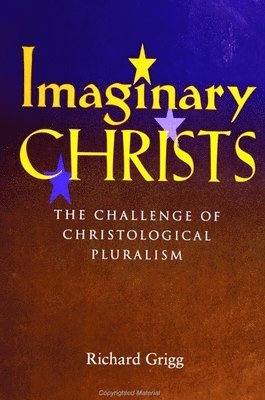
Discusses the issue of christological pluralism—the panoply of competing visions of Christ that exist today—and provides criteria for evaluating these.What should those attracted to the figure of Jesus Christ make of all the different Christs available to them? Amidst today's pluralism, we encounter Christ as liberator, the cosmic Christ, feminist Christs, Black Christs, Christ as the object of mystical longing, and various New Age versions of Christ, to name but a few. Imaginary Christs discusses the challenges arising from christological pluralism and suggests evaluative criteria for sorting through this abundance of competing Christs without falling into either a narrow dogmatism, on the one hand, or an uncritical relativism, on the other.With an eye to the pluralism that has always been part of the Christian tradition, the book investigates the benefits of confronting the Christs of White American churches with Black Christs. It poses important questions about the future of pluralistic christological consciousness, exploring the possibilities of devoting oneself to several genuinely different Christs and the possibilities of combining commitment to the Christ with commitment to another venerable religious figure, such as the Buddha.
356 kr
Tillfälligt slut
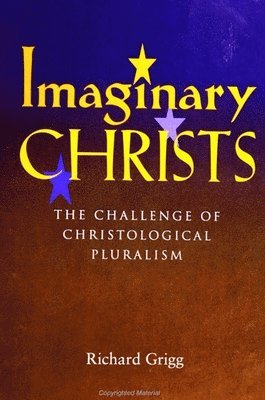
Discusses the issue of christological pluralism—the panoply of competing visions of Christ that exist today—and provides criteria for evaluating these.What should those attracted to the figure of Jesus Christ make of all the different Christs available to them? Amidst today's pluralism, we encounter Christ as liberator, the cosmic Christ, feminist Christs, Black Christs, Christ as the object of mystical longing, and various New Age versions of Christ, to name but a few. Imaginary Christs discusses the challenges arising from christological pluralism and suggests evaluative criteria for sorting through this abundance of competing Christs without falling into either a narrow dogmatism, on the one hand, or an uncritical relativism, on the other.With an eye to the pluralism that has always been part of the Christian tradition, the book investigates the benefits of confronting the Christs of White American churches with Black Christs. It poses important questions about the future of pluralistic christological consciousness, exploring the possibilities of devoting oneself to several genuinely different Christs and the possibilities of combining commitment to the Christ with commitment to another venerable religious figure, such as the Buddha.
1 057 kr
Tillfälligt slut
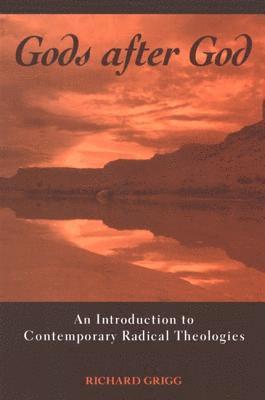
An erudite but eminently readable guide to contemporary radical theologies.Gods after God provides an accessible introduction to a wide range of contemporary radical theologies. Radical theology can be defined as talk about the divine that rejects the notion of God as a supernatural personal consciousness who created the world and who intervenes in it to accomplish his purposes. In addition, radical theologies tend to reject the absolute authority of traditional sources of guidance such as the Bible and the tradition of a church. Richard Grigg demonstrates that there is a discernible stream of radical theologies beginning in the seventeenth century and continuing to the present. He explores a host of rich and lively contemporary radical religious positions, including the radical feminist theology of Mary Daly, the deconstructive theology of Mark C. Taylor, the religious naturalism of Ursula Goodenough and Donald Crosby, the pragmatist approaches of Sallie McFague and Gordon Kaufman, the Taoist interpretation of Jesus of Stephen Mitchell, and the feminist polytheism of Naomi Goldenberg. This in-depth examination asks, in unflinching terms, what challenges radical theologies face and whether they have a realistic chance of surviving in American society.
332 kr
Tillfälligt slut
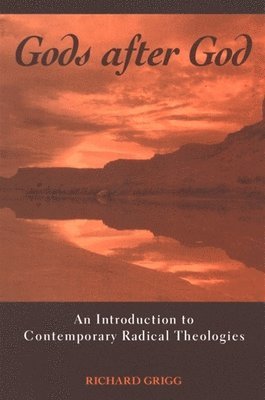
An erudite but eminently readable guide to contemporary radical theologies.Gods after God provides an accessible introduction to a wide range of contemporary radical theologies. Radical theology can be defined as talk about the divine that rejects the notion of God as a supernatural personal consciousness who created the world and who intervenes in it to accomplish his purposes. In addition, radical theologies tend to reject the absolute authority of traditional sources of guidance such as the Bible and the tradition of a church. Richard Grigg demonstrates that there is a discernible stream of radical theologies beginning in the seventeenth century and continuing to the present. He explores a host of rich and lively contemporary radical religious positions, including the radical feminist theology of Mary Daly, the deconstructive theology of Mark C. Taylor, the religious naturalism of Ursula Goodenough and Donald Crosby, the pragmatist approaches of Sallie McFague and Gordon Kaufman, the Taoist interpretation of Jesus of Stephen Mitchell, and the feminist polytheism of Naomi Goldenberg. This in-depth examination asks, in unflinching terms, what challenges radical theologies face and whether they have a realistic chance of surviving in American society.
1 703 kr
Skickas inom 10-15 vardagar
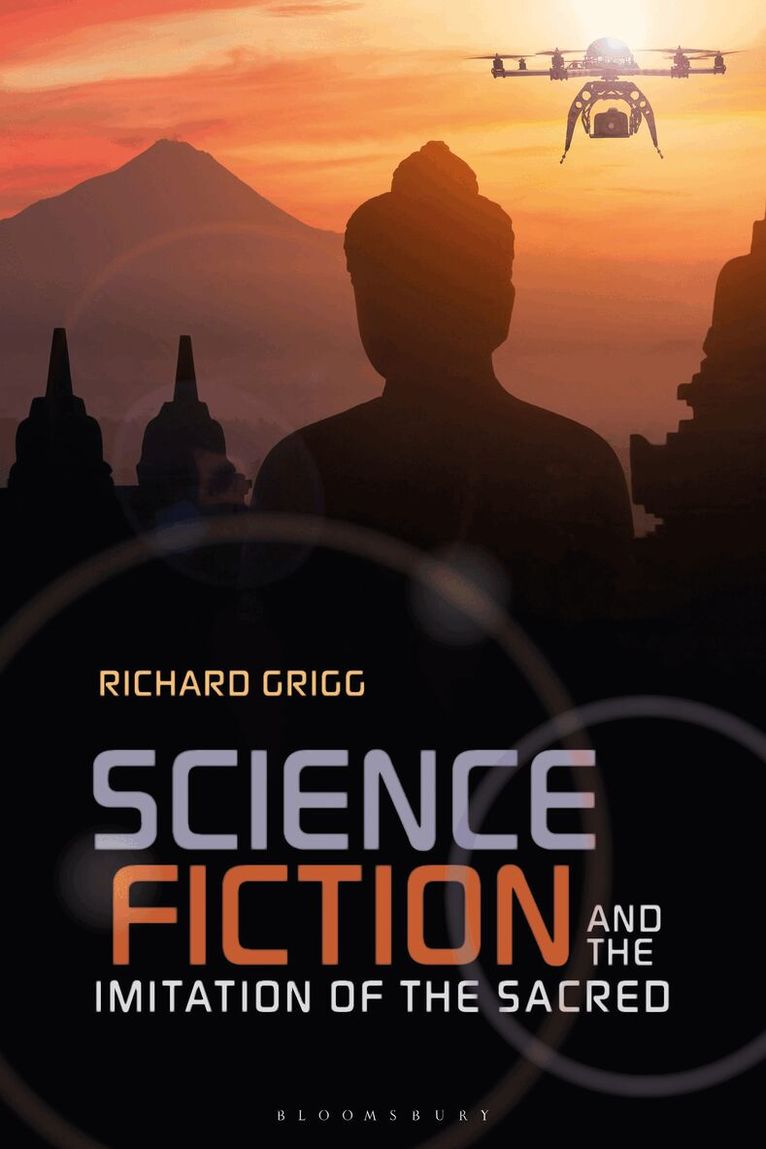
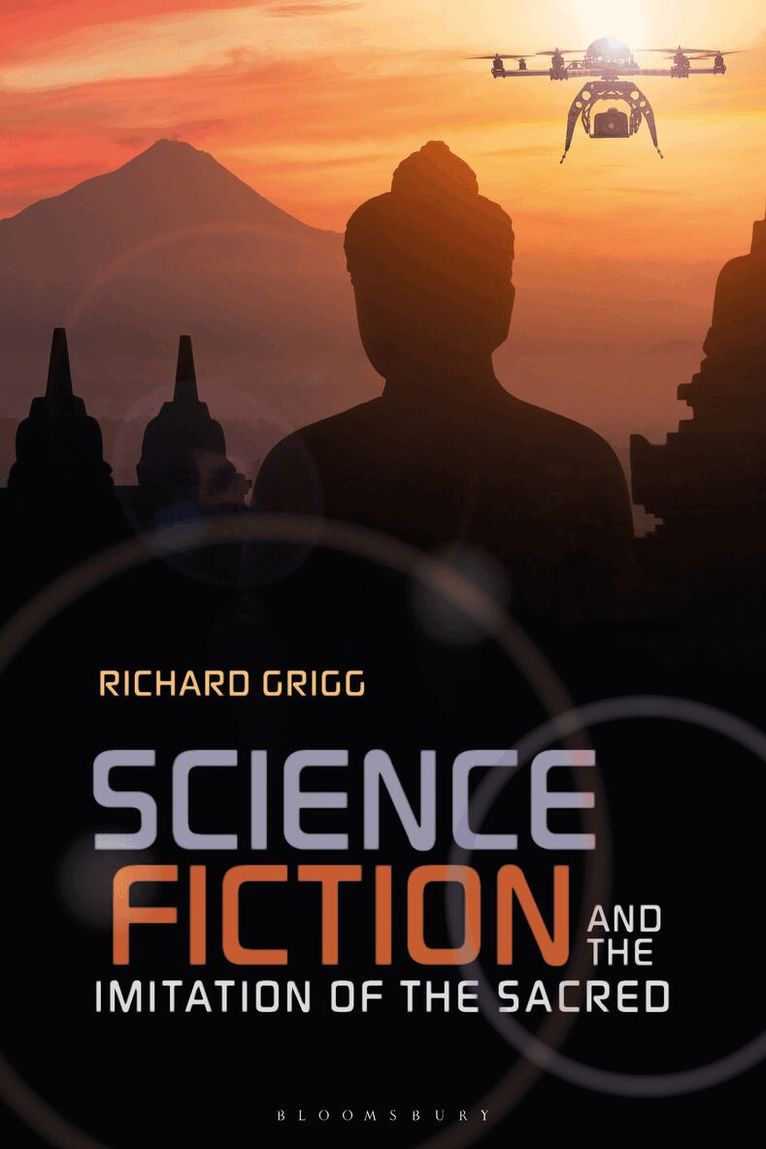
This book examines science fiction’s relationship to religion and the sacred through the lens of significant books, films and television shows. It provides a clear account of the larger cultural and philosophical significance of science fiction, and explores its potential sacrality in today’s secular world by analyzing material such as Ray Bradbury’s classic novel The Martian Chronicles, films The Abyss and 2001: A Space Odyssey, and also the Star Trek universe.Richard Grigg argues that science fiction is born of nostalgia for a truly ‘Other’ reality that is no longer available to us, and that the most accurate way to see the relationship between science fiction and traditional approaches to the sacred is as an imitation of true sacrality; this, he suggests, is the best option in a secular age. He demonstrates this by setting forth five definitions of the sacred and then, in consecutive chapters, investigating particular works of science fiction and showing just how they incarnate those definitions. Science Fiction and the Imitation of the Sacred also considers the qualifiers that suggest that science fiction can only imitate the sacred, not genuinely replicate it, and assesses the implications of this investigation for our understanding of secularity and science fiction.
474 kr
Skickas inom 10-15 vardagar
This book examines science fiction’s relationship to religion and the sacred through the lens of significant books, films and television shows. It provides a clear account of the larger cultural and philosophical significance of science fiction, and explores its potential sacrality in today’s secular world by analyzing material such as Ray Bradbury’s classic novel The Martian Chronicles, films The Abyss and 2001: A Space Odyssey, and also the Star Trek universe.Richard Grigg argues that science fiction is born of nostalgia for a truly ‘Other’ reality that is no longer available to us, and that the most accurate way to see the relationship between science fiction and traditional approaches to the sacred is as an imitation of true sacrality; this, he suggests, is the best option in a secular age. He demonstrates this by setting forth five definitions of the sacred and then, in consecutive chapters, investigating particular works of science fiction and showing just how they incarnate those definitions. Science Fiction and the Imitation of the Sacred also considers the qualifiers that suggest that science fiction can only imitate the sacred, not genuinely replicate it, and assesses the implications of this investigation for our understanding of secularity and science fiction.
232 kr
Skickas inom 5-8 vardagar
1 572 kr
Skickas inom 10-15 vardagar
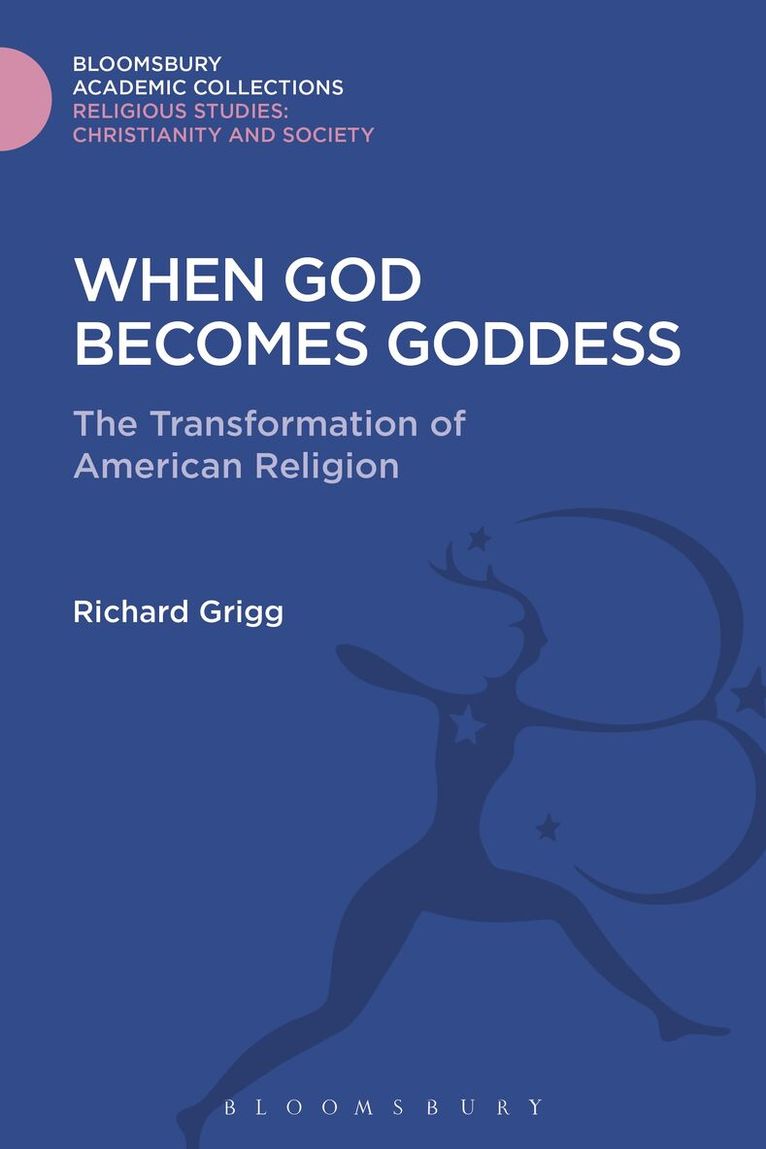
In this closely argued philosophical study, theologian Richard Grigg claims that faith in the United States is changing as traditional religious ideas struggle to survive in a dynamic environment. Whereas a large percentage of Americans still report that they believe in God, Grigg shows that this belief can no longer mean what it used to mean: modern science has taken over much of the cognitive territory that used to belong to religion, and uniquely contemporary problems of theodicy threaten the believer’s sense that God is in fact in his heaven, while all is right with the world. Increasingly, American religion survives only if relegated to the private sphere. And yet a God that is relegated to the private sphere cannot be the God that has formed the centrepiece of the major religions of the West. When God Becomes Goddess suggests that one way in which Americans may keep the traditional Western idea of God alive – paradoxically – is to embrace the Goddess of feminist theology. Collecting a variety of feminist theologies under the rubric of enactment theology, Grigg demonstrates how these theologies offer much more than a critique of patriarchy; indeed, her gender aside, Grigg suggests that the Goddess may create an avenue through which the concept of God might be rescued from the pressing forces of secularization.