Richard H. Armstrong - Böcker
Visar alla böcker från författaren Richard H. Armstrong. Handla med fri frakt och snabb leverans.
3 produkter
3 produkter
720 kr
Skickas inom 3-6 vardagar
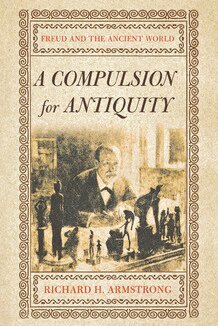
"If psychoanalysis is the return of repressed antiquity, distorted to be sure by modern desire, yet still bearing the telltale traces of the ancient archive, then would not our growing distance from the archive of antiquity also imply that we are in the process of losing our grip on psychoanalysis itself, as Freud conceived it?"—from Chapter 1As he developed his striking new science of the mind, Sigmund Freud had frequent recourse to ancient culture and the historical disciplines that draw on it. A Compulsion for Antiquity fully explores how Freud appropriated figures and themes from classical mythology and how the theory and practice of psychoanalysis paralleled contemporary developments in historiography, archaeology, philology, and the history of religions. Drawing extensively from Freud's private correspondence and other notes and documents, Richard H. Armstrong touches on Freud's indebtedness to Sophocles and the Oedipus complex, his interest in Moses and the Jewish religion, and his travels to Athens and Rome.Armstrong shows how Freud turned to the ancient world to deal with the challenges posed by his own scientific ambitions and how these lessons influenced the way he handled psychic "evidence" and formulated the universal application of what were initially isolated clinical truths. Freud's narrative reconstructions of the past also related to his sense of Jewishness, linking the historical trajectory of psychoanalysis with contemporary central European Jewish culture. Ranging across the breadth of Freud's work, A Compulsion for Antiquity offers fresh insights into the roots of psychoanalysis and fin de siècle European culture, and makes an important contribution to the burgeoning discipline of mnemohistory.
364 kr
Skickas inom 10-15 vardagar
"If psychoanalysis is the return of repressed antiquity, distorted to be sure by modern desire, yet still bearing the telltale traces of the ancient archive, then would not our growing distance from the archive of antiquity also imply that we are in the process of losing our grip on psychoanalysis itself, as Freud conceived it?"—from Chapter 1As he developed his striking new science of the mind, Sigmund Freud had frequent recourse to ancient culture and the historical disciplines that draw on it. A Compulsion for Antiquity fully explores how Freud appropriated figures and themes from classical mythology and how the theory and practice of psychoanalysis paralleled contemporary developments in historiography, archaeology, philology, and the history of religions. Drawing extensively from Freud's private correspondence and other notes and documents, Richard H. Armstrong touches on Freud's indebtedness to Sophocles and the Oedipus complex, his interest in Moses and the Jewish religion, and his travels to Athens and Rome.Armstrong shows how Freud turned to the ancient world to deal with the challenges posed by his own scientific ambitions and how these lessons influenced the way he handled psychic "evidence" and formulated the universal application of what were initially isolated clinical truths. Freud's narrative reconstructions of the past also related to his sense of Jewishness, linking the historical trajectory of psychoanalysis with contemporary central European Jewish culture. Ranging across the breadth of Freud's work, A Compulsion for Antiquity offers fresh insights into the roots of psychoanalysis and fin de siècle European culture, and makes an important contribution to the burgeoning discipline of mnemohistory.
2 172 kr
Skickas inom 7-10 vardagar
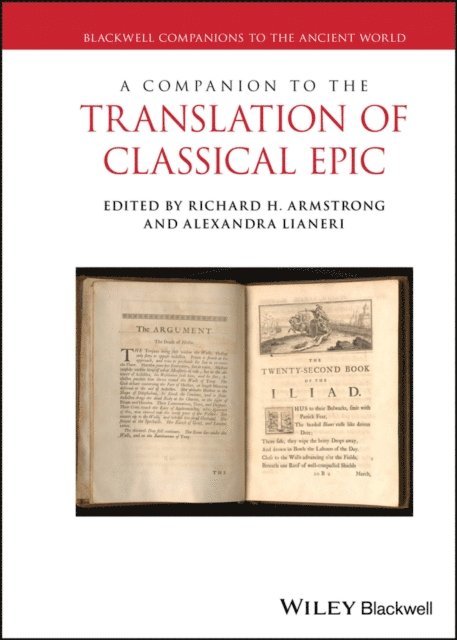
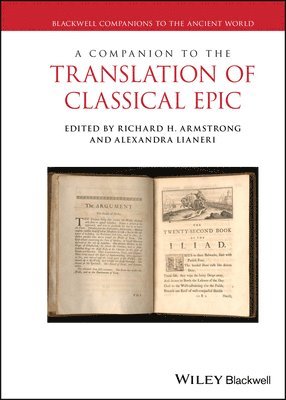
The first volume of its kind to integrate trends in Translation Studies with Classical Reception Studies A Companion to the Translation of Classical Epic provides a comprehensive and wide-ranging account of key debates and case studies centered the translation of Greek and Latin epics. Rather than situating translation studies as a complementary field or an aspect of classical reception, the Companion offers a systematic framework for adapting and incorporating translation studies fully into classical studies. Its many chapters elaborate how translation is a central element in the epic's reception trajectories across the globe and addresses theoretical and methodological concerns arising from this conjunction. The Companion does not just provide a comprehensive overview of the translation theories it covers, but also offers fresh insights into theoretical and methodological issues currently at the top of the interdisciplinary agenda of scholars studying the global routes of ancient epic. In its sections, leading classicists, translation theorists, classical reception scholars, and cultural historians from Europe and North and South America reconfigure questions this research faces today, highlighting methods for an integrated approach. It explores how this integrated perspective responds to key challenges in the study of the epic's reception, emphasizing topics of temporality, gender, agency, community, target-language politics, and material production. A special section also features detailed dialogues with active translators such as Emily Wilson, Stanley Lombardo, and Susanna Braund, who speak extensively and frankly about their work. This is a key volume for all students and scholars who want to engage with research reflecting the contemporary agenda in classical reception, translation studies, and the study of epic in its global literary and cultural routes.