• Fri frakt över 249 kr
  • •
  • Snabba leveranser
  • •
  • Billiga böcker
Kundservice

Du är på sajten för privatpersoner.

Företag, bibliotek eller offentlig verksamhet?

Du handlar på classic.bokus.com, där alla dina funktioner finns intakta.
Till classic.bokus.com
Bokus logotyp. Gå till startsidan.
  • Erbjudanden
  • Nyheter
  • Student
  • Topplistor
  • Barn & ungdom
  • Bokus Play
  • E-böcker
  • Pocketböcker
  • Spel & pussel

10% rabatt på allt med kod: NYSTART10 →

Sidfot

Mina sidor

    Hjälp

    • Kundservice
    • Vanliga frågor och svar
    • Frakt och leverans
    • Retur vid ångerrätt
    • Reklamera vara
    • Betalning
    • Köpvillkor
    • Allmänna villkor
    • Information om webbplatsens tillgänglighet

    Om Bokus

    • Om oss
    • Pressrum
    • För studenter
    • För företag
    • För bibliotek och offentlig verksamhet
    • För leverantörer
    • Hållbarhet

    Populärt

    • Aktuella erbjudanden
    • Presentkort
    • Studentlitteratur
    • Nya böcker
    • Topplistor
    • Signerade böcker
    • Engelska böcker

    Inspiration

    • Boktips
    • BookTok
    • Populära bokserier
    • Barnbokskaraktärer
    • Populära författare
    Logotyp för Bokus
    Följ oss på Facebook (extern länk)Följ oss på Instagram (extern länk)Följ oss på YouTube (extern länk)Följ oss på TikTok (extern länk)
    bokus @ CookiesAnpassa cookiesIntegritetspolicyKöpvillkor
    Till Citymail hemsida (extern länk)Till Budbee hemsida (extern länk)Till Postnord hemsida (extern länk)Till Schenker hemsida (extern länk)Till Early Bird hemsida (extern länk)Till Walleys hemsida (extern länk)
    1. Historia och arkeologi
    2. Historia
    3. Europas historia

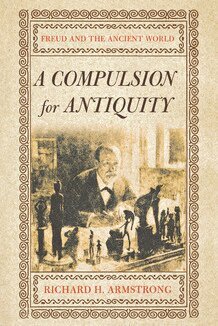
    Compulsion for Antiquity

    Freud and the Ancient World

    AvRichard H. Armstrong

    Häftad, Engelska, 2006

    Del i serien Cornell Studies in the History of Psychiatry

    379 kr

    Beställningsvara. Skickas inom 10-15 vardagar. Fri frakt över 249 kr.

    Fler format och utgåvor

    Inbunden

    723 kr

    Beskrivning

    "If psychoanalysis is the return of repressed antiquity, distorted to be sure by modern desire, yet still bearing the telltale traces of the ancient archive, then would not our growing distance from the archive of antiquity also imply that we are in the process of losing our grip on psychoanalysis itself, as Freud conceived it?"—from Chapter 1As he developed his striking new science of the mind, Sigmund Freud had frequent recourse to ancient culture and the historical disciplines that draw on it. A Compulsion for Antiquity fully explores how Freud appropriated figures and themes from classical mythology and how the theory and practice of psychoanalysis paralleled contemporary developments in historiography, archaeology, philology, and the history of religions. Drawing extensively from Freud's private correspondence and other notes and documents, Richard H. Armstrong touches on Freud's indebtedness to Sophocles and the Oedipus complex, his interest in Moses and the Jewish religion, and his travels to Athens and Rome.Armstrong shows how Freud turned to the ancient world to deal with the challenges posed by his own scientific ambitions and how these lessons influenced the way he handled psychic "evidence" and formulated the universal application of what were initially isolated clinical truths. Freud's narrative reconstructions of the past also related to his sense of Jewishness, linking the historical trajectory of psychoanalysis with contemporary central European Jewish culture. Ranging across the breadth of Freud's work, A Compulsion for Antiquity offers fresh insights into the roots of psychoanalysis and fin de siècle European culture, and makes an important contribution to the burgeoning discipline of mnemohistory.

    Produktinformation

    • Utgivningsdatum:2006-09-18
    • Mått:152 x 229 x 22 mm
    • Vikt:907 g
    • Format:Häftad
    • Språk:Engelska
    • Serie:Cornell Studies in the History of Psychiatry
    • Antal sidor:322
    • Förlag:Cornell University Press
    • ISBN:9780801473333

    Utforska kategorier

    • Europas historia inom Historia och arkeologi
    • Forntidens historia inom Historia och arkeologi
    • Psykologiska teorier och skolor inom Psykologi och pedagogik

    Mer om författaren

    Richard H. Armstrong is Associate Professor of Classical Studies at the University of Houston.

    Recensioner i media

    A most subtle, ingenious and sophisticated intervention into debates concerning Freud's legacy.- Vanda Zajko (Journal of Hellenic Studies) Altogether, a serious, profoundly scholarly, and provocative addition to the growing volume of interdisciplinary literature on psychoanalysis and its evolution.(The Institute for the History of Psychiatry Annual) Intellectual historians will be grateful for this path-breaking humanistic exploration of a subject that has been unduly neglected until now.(American Journal of Psychiatry) This is an important contribution to Freud/psychoanalysis studies and the history of 19th and 20th c. German(-Jewish) Bildungsbürgertum. In many ways it is a superb example of a cross-disciplinary study, for it drives home that while we social scientists may well have gained much from specialization, those scholars able to breach modern disciplinary boundaries can reveal a great deal about our collective historical archive as well as our continuing interest in (the history of) psychoanalysis.- David D. Lee (Journal for the History of the Behavioral Sciences) It is surely no sign of neurosis to find the questions discussed in this book as compelling as they are timely. In an entirely non-clinical sense, everyone engaged in cultural history, cultural studies, and the history of ideas will be anxious to read it.- Paul Bishop (Times Literary Supplement) This wonderfully reasoned, scholarly book eloquently addresses the many meanings to Freud of the ancient statuettes that he collected and cherished. Armstrong sees these statues as symbols of themes that fascinated Freud—for example, Greek and Egyptian culture as a way of understanding the underpinnings of world civilization. The author makes a case for Freud's narrative reconstructions of the past of individuals as related to his own Jewishness, a thorny point for some scholars, Peter Gay among them. Armstrong backs up ideas with close readings of Freud's voluminous correspondence, his formal writings, and the writing of his patients, H.D. among them; all comment on the statuary and Freud's use of them in analytic conversation. Contemplating Freud's education and his worldview in fresh ways, this book puts Freud in historical context. His notions about mythological figures such as Oedipus and his interpretations of Moses, or Leonardo, shed new light on his creation of psychoanalysis. A book for all who are interested in psychoanalysis. Summing Up: Essential.(Choice)