1 571 kr
Cornell Studies in the History of Psychiatry – serie
- Inbunden, Engelska, 2016"With Heinrich Kaan's book we have then what could be called the date of birth, or in any case the date of the emergence, of sexuality and sexual aberrations in the psychiatric field." Michel Foucault, Abnormal: Lectures at the Collège de France, 1974–1975.Heinrich Kaan's fascinating work—part medical treatise, part sexual taxonomy, part activist statement, and part anti-onanist tract—takes us back to the origins of sexology. He links the sexual instinct to the imagination for the first time, creating what Foucault called "a unified field of sexual abnormality." Kaan's taxonomy consists of six sexual aberrations: masturbation, pederasty, lesbian love, necrophilia, bestiality, and the violation of statues. Kaan not only inaugurated the field of sexology, but played a significant role in the regimes of knowledge production and discipline about psychiatric and sexual subjects. As Benjamin Kahan argues in his Introduction, Kaan's text crucially enables us to see how homosexuality replaced masturbation as the central concern of Euro-American sexual regulation. Kaan's work (translated into English for the first time here) opens a new window onto the history of sexuality and the history of sexology and reconfigures our understanding of Richard von Krafft-Ebing's book of the same name, published some forty years later.
- Häftad, Engelska, 2016
398 kr
Skickas inom 10-15 vardagar
"With Heinrich Kaan's book we have then what could be called the date of birth, or in any case the date of the emergence, of sexuality and sexual aberrations in the psychiatric field." Michel Foucault, Abnormal: Lectures at the Collège de France, 1974–1975.Heinrich Kaan's fascinating work—part medical treatise, part sexual taxonomy, part activist statement, and part anti-onanist tract—takes us back to the origins of sexology. He links the sexual instinct to the imagination for the first time, creating what Foucault called "a unified field of sexual abnormality." Kaan's taxonomy consists of six sexual aberrations: masturbation, pederasty, lesbian love, necrophilia, bestiality, and the violation of statues. Kaan not only inaugurated the field of sexology, but played a significant role in the regimes of knowledge production and discipline about psychiatric and sexual subjects. As Benjamin Kahan argues in his Introduction, Kaan's text crucially enables us to see how homosexuality replaced masturbation as the central concern of Euro-American sexual regulation. Kaan's work (translated into English for the first time here) opens a new window onto the history of sexuality and the history of sexology and reconfigures our understanding of Richard von Krafft-Ebing's book of the same name, published some forty years later. - Inbunden, Engelska, 1997
843 kr
Skickas inom 10-15 vardagar
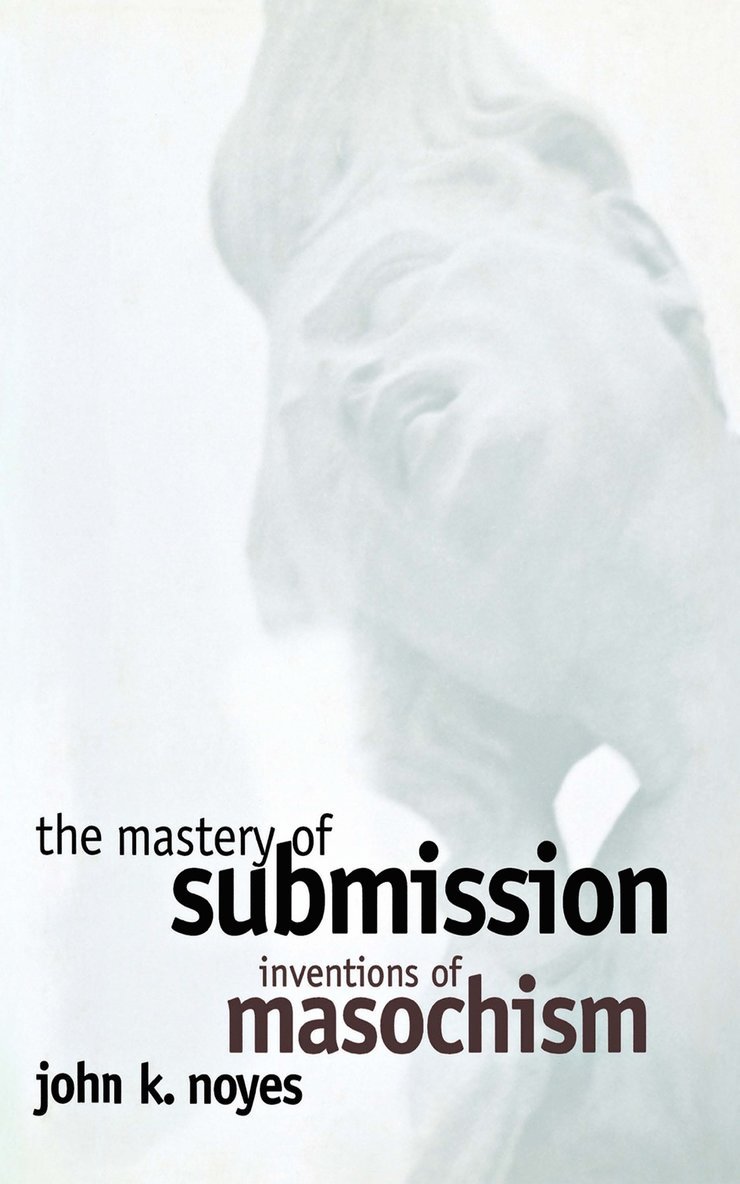
Individuals sometimes derive sexual pleasure from submission to cruel discipline. While that predilection was noted as early as the sixteenth century, masochism was not codified as a concept until 1890. According to John K. Noyes, its invention reflected a crisis in the liberal understanding of subjectivity and sexuality which continues to inform discussions of masochism today. In essence, it remains a political concept.Viennese physician Richard von Krafft-Ebing coined the term masochism, based on the work of Leopold von Sacher-Masoch. Noyes analyzes the social and political problems that inspired the concept, suggesting, for example, that the triumphant expansion of European colonialism was in part animated by an ambivalence in masculine sexuality.Noyes documents the evolution of the concept of masochism with scenes in literature from John Cleland's Fanny Hill through Sacher-Masoch's Venus in Furs and Pauline Reage's Story of 0. Analysis of Freud's vastly influential rereading of masochism precedes an exploration of the work of his successors, including Wilhem Reich, Theodor Reik, Helene Deutsch, and Karen Horney. Noyes suggests that the thematics of feminine masochism emerged only gradually from an exclusively male concept. - Inbunden, Engelska, 1997
722 kr
Skickas inom 10-15 vardagar
What would bring a physician to conclude that sterilization is appropriate treatment for the mentally ill and mentally handicapped? Using archival sources, Ian Robert Dowbiggin documents the involvement of both American and Canadian psychiatrists in the eugenics movement of the early twentieth century. He explains why professional men and women committed to helping those less fortunate than themselves arrived at such morally and intellectually dubious conclusions. Psychiatrists at the end of the nineteenth century felt professionally vulnerable, Dowbiggin explains, because they were under intense pressure from state and provincial governments and from other physicians to reform their specialty. Eugenic ideas, which dominated public health policy making, seemed the best vehicle for catching up with the progress of science. Among the prominent psychiatrist-eugenicists Dowbiggin considers are G. Alder Blumer, Charles Kirk Clarke, Thomas Salmon, Clare Hincks, and William Partlow. Tracing psychiatric support for eugenics throughout the interwar years, Dowbiggin pays special attention to the role of psychiatrists in the fierce debates about immigration policy. His examination of psychiatry's unfortunate flirtation with eugenics elucidates how professional groups come to think and act along common lines within specific historical contexts. - Inbunden, Engelska, 1998
1 571 kr
Skickas inom 10-15 vardagar
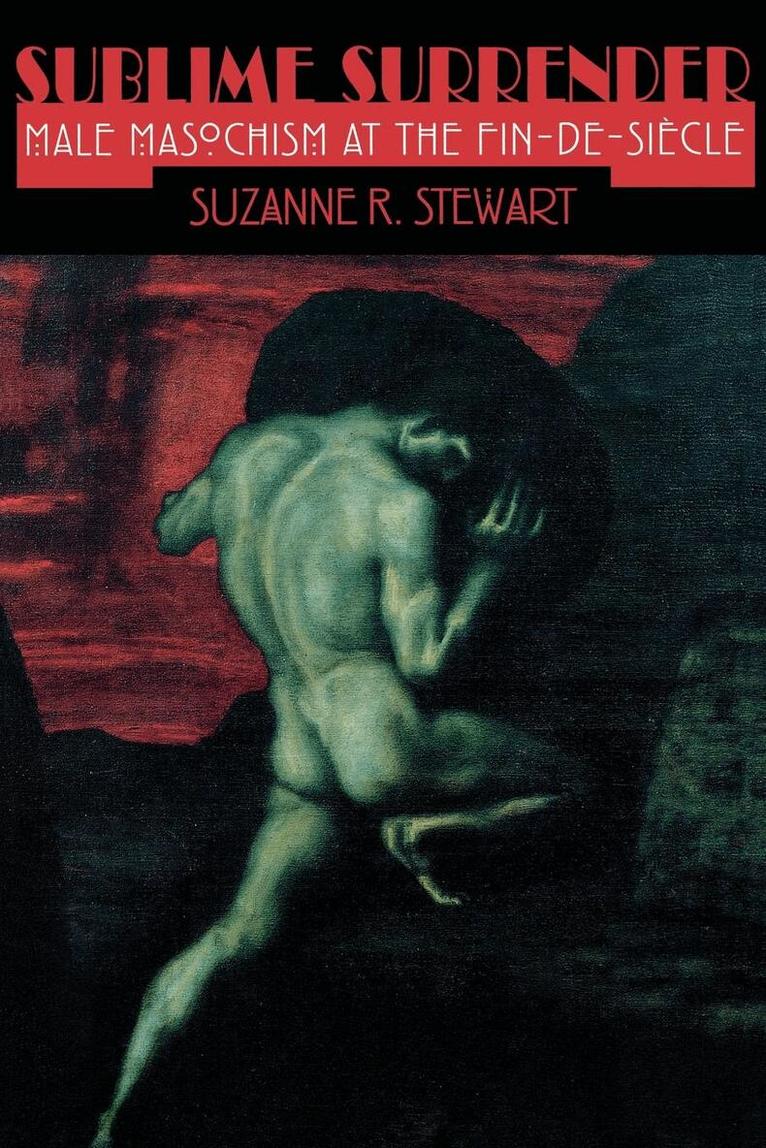
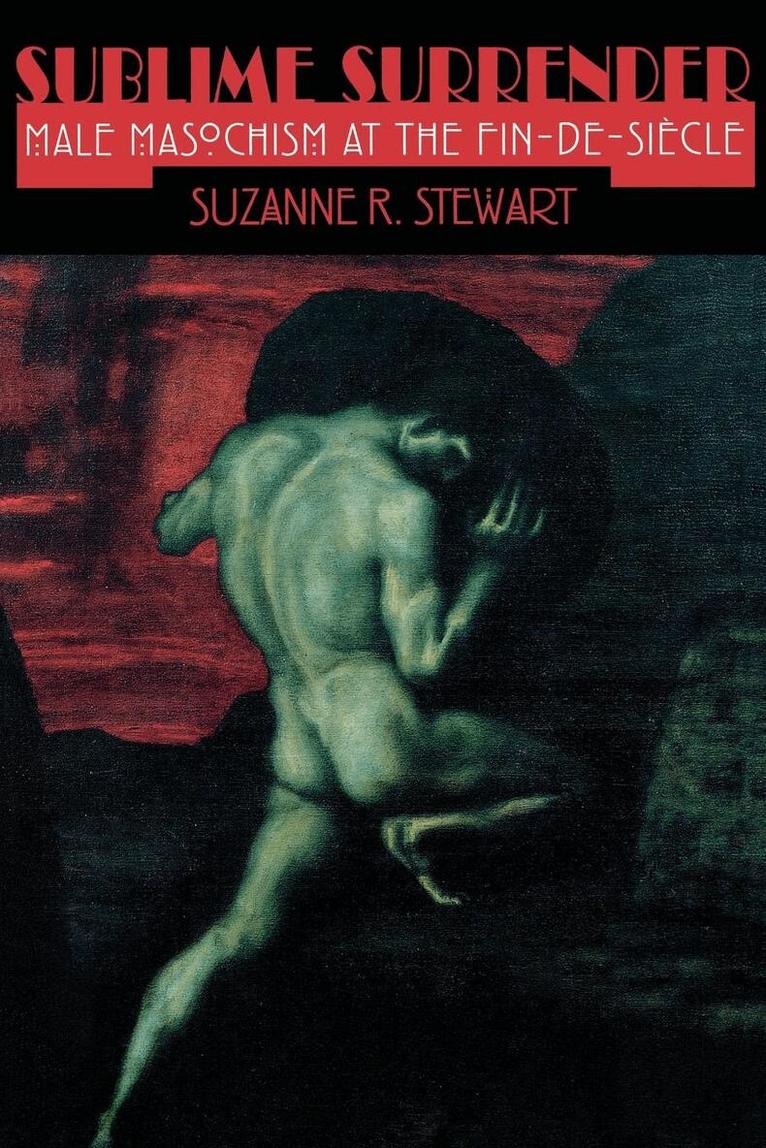
When Heinrich Heine left his sick bed in 1848 and stumbled to the Louvre to fall before a statue of the goddess of beauty and lie in the pitying, cold glance she seemed to cast on his prostrate body, he defined a recurring motif of the second half of the nineteenth century, according to Suzanne R. Stewart. Directing her attention to the voice of the shriveled male body at beauty's feet, she investigates the discourse by and about men that took hold in the German-speaking world between 1870 and 1940 and that articulated masculinity as and through its own marginalization. Male masochism, she suggests, was a rhetorical strategy through which men asserted their cultural and political authority paradoxically by embracing the notion that they were (and always had been) wounded and suffering. Stewart demonstrates and develops her contentions through close readings of the work of Leopold von Sacher-Masoch, Richard Wagner, and Sigmund Freud, in each case showing that the very act through which men sacrificed themselves to women comprised the essence of the new male subject "deeply penetrated by relations of political and sexual power." Masochistic scenarios, whether in literature, music, the visual arts, or medicalized diagnoses of the fin-de-siècle malaise, stage the male as one who submits, as Stewart explains, "to an aestheticized and eroticized gaze and voice." - Inbunden, Engelska, 2002
1 859 kr
Skickas inom 10-15 vardagar
In a stunning fusion of literary criticism and intellectual history, Peter L. Rudnytsky explores the dialectical interplay between literature and psychoanalysis by reading key psychoanalytic texts in a variety of genres. He maps the origins of the contemporary relational tradition in the lives and work of three of Freud's most brilliant and original disciples—Otto Rank, Sándor Ferenczi, and Georg Groddeck. Rudnytsky, a scholar with an unsurpassed knowledge of the world of clinical psychoanalysis, espouses the "relational turn" as an alternative to both ego psychology and postmodernism.Rudnytsky seeks to alter the received view of the psychoanalytic landscape, in which the towering figure of Freud has continued to obscure the achievements of his followers who individually resisted and collectively went beyond him. Reading Psychoanalysis offers the most detailed and comprehensive treatments available in English of such classic texts as Freud's case of Little Hans, Rank's The Incest Theme in Literature and Legend, and Groddeck's The Book of the It. Rudnytsky's argument for object relations theory concludes by boldly affirming the possibility of a "consilience" between scientific and hermeneutic modes of knowledge. - Inbunden, Engelska, 2003
750 kr
Skickas inom 10-15 vardagar
Paul Lerner traces the intertwined histories of trauma and male hysteria in German society and psychiatry and shows how these concepts were swept up into debates about Germany's national health, economic productivity, and military strength in the years surrounding World War I. From a growing concern with industrial accidents in the 1880s through the shell shock "epidemic" of the war, male hysteria seemed to bespeak the failings of German masculinity. In response, psychiatrists struggled to turn male-hysterical bodies into fit workers and loyal political subjects.Medical approaches to trauma valorized work and productivity as standards of male health, and psychiatric treatment—whether through hypnosis, electric current, or suggestion—concentrated on turning debilitated soldiers into symptom-free workers. These concerns endured through the Weimar period, as "nervous veterans" competed for disability compensation amid the republic's political crises and economic upheavals.Hysterical Men shows how wartime psychiatry furthered the process of medical rationalization. Lerner views this not as a precursor to the brutalities of Nazi-era psychiatry, but rather as characteristic of a more general medicalized modernity. The author asserts, however, that psychiatry's continual skepticism toward trauma resonated powerfully with the radical right's celebration of war and violence and its supposedly salutary effects on men and nations. - Inbunden, Engelska, 2003
1 079 kr
Skickas inom 10-15 vardagar
The psychiatric profession in Germany changed radically from the mid-nineteenth century to the beginning of World War I. In a book that demonstrates his extensive archival knowledge and an impressive command of the primary literature, Eric J. Engstrom investigates the history of university psychiatric clinics in Imperial Germany from 1867 to 1914, emphasizing the clinical practices and professional debates surrounding the development of these institutions and their impact on the course of German psychiatry.The rise of university psychiatric clinics reflects, Engstrom tells us, a shift not only in asylum culture, but also in the ways in which social, political, and economic issues deeply influenced the practice of psychiatry. Equally convincing is Engstrom's argument that psychiatrists were responding to and working to shape the rapidly changing perceptions of madness in Imperial Germany. In a series of case studies, the book focuses on a number of important clinical spaces such as the laboratory, the ward, the lecture hall, and the polyclinic. Engstrom argues that within these spaces clinics developed their own disciplinary economies and that their emergence was inseparably intertwined with jurisdictional contests between competing scientific, administrative, didactic, and sociopolitical agendas. - Inbunden, Engelska, 2005
668 kr
Skickas inom 10-15 vardagar
"Electra's story is essentially a tale of murder, revenge, and violence. In the ancient myth of Atreus, Agamemnon returns home from battle and receives no hero's welcome. Instead, he is greeted with an ax, murdered in his bath by his wife, Clytemnestra, and her lover-accomplice, Aegisthus. Electra chooses anger over sorrow and stops at nothing to ensure that her mother pays. In revenge, Electra, with the help of her brother, orchestrates a brutal and bloody matricide, and her reward is the restitution of her father's good name. Amid all this chaos, Electra, Agamemnon's princess daughter, must bear the humiliation of being treated as a slave girl and labeled a madwoman."—from the IntroductionAlmost everyone knows about Oedipus and his mother, and many readers would put the Oedipus myth at the forefront of Western collective mythology. In Electra after Freud, Jill Scott leaves that couple behind and argues convincingly for the primacy of the countermyth of Agamemnon and his daughter. Through a lens of Freudian and feminist psychoanalysis, this book views renderings of the Electra myth in twentieth-century literature and culture.Scott reads several pivotal texts featuring Electra to demonstrate what she calls "a narrative revolt" against the dominance of Oedipus as archetype. Situating the Electra myth within a framework of psychoanalysis, medicine, opera, and dance, Scott investigates the heroine's role at the intersections of history and the feminine, eros and thanatos, hysteria and melancholia. Scott analyzes Electra adaptations by H.D., Hofmannsthal and Strauss, Musil, and Plath and highlights key moments in the telling and reception of the Electra myth in the modern imagination. - Inbunden, Engelska, 2005
723 kr
Skickas inom 3-6 vardagar
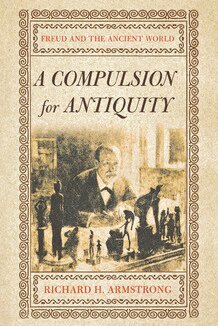
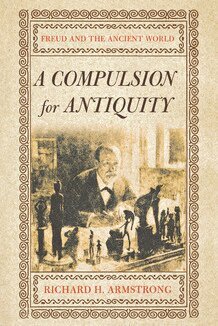
"If psychoanalysis is the return of repressed antiquity, distorted to be sure by modern desire, yet still bearing the telltale traces of the ancient archive, then would not our growing distance from the archive of antiquity also imply that we are in the process of losing our grip on psychoanalysis itself, as Freud conceived it?"—from Chapter 1As he developed his striking new science of the mind, Sigmund Freud had frequent recourse to ancient culture and the historical disciplines that draw on it. A Compulsion for Antiquity fully explores how Freud appropriated figures and themes from classical mythology and how the theory and practice of psychoanalysis paralleled contemporary developments in historiography, archaeology, philology, and the history of religions. Drawing extensively from Freud's private correspondence and other notes and documents, Richard H. Armstrong touches on Freud's indebtedness to Sophocles and the Oedipus complex, his interest in Moses and the Jewish religion, and his travels to Athens and Rome.Armstrong shows how Freud turned to the ancient world to deal with the challenges posed by his own scientific ambitions and how these lessons influenced the way he handled psychic "evidence" and formulated the universal application of what were initially isolated clinical truths. Freud's narrative reconstructions of the past also related to his sense of Jewishness, linking the historical trajectory of psychoanalysis with contemporary central European Jewish culture. Ranging across the breadth of Freud's work, A Compulsion for Antiquity offers fresh insights into the roots of psychoanalysis and fin de siècle European culture, and makes an important contribution to the burgeoning discipline of mnemohistory. - Inbunden, Engelska, 2005
1 665 kr
Skickas inom 10-15 vardagar
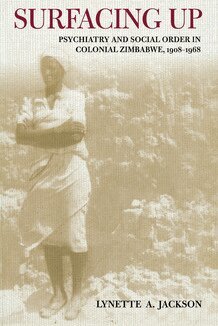
Focusing on the history of the Ingutsheni Lunatic Asylum (renamed a mental hospital after 1933), situated near Bulawayo in the former Southern Rhodesia, Surfacing Up explores the social, cultural, and political history of the colony that became Zimbabwe after gaining its independence in 1980. The phrase "surfacing up" was drawn from a conversation Lynette A. Jackson had with a psychiatric nurse who used the concept to explain what brought African potential patients into the psychiatric system. Jackson uses Ingutsheni as a reference point for the struggle to "domesticate" Africa and its citizens after conquest. Drawing on the work of Frantz Fanon, Jackson maintains that the asylum in Southern Rhodesia played a significant role in maintaining the colonial social order. She supports Fanon's claim that colonial psychiatric hospitals were repositories for those of "indocile nature" or for those who failed to fit "the social background of the colonial type."Through reconstruction and reinterpretation of patient narratives, Jackson shows how patients were diagnosed, detained, and deemed recovered. She draws on psychiatric case files to analyze the changing economic, social, and environmental conditions of the colonized, the varying needs of the white settlers, and the shifting boundaries between these two communities. She seeks to extend and enrich our understanding of how a significant institution changed the way citizens and subjects experienced the colonial social order. - Inbunden, Engelska, 2010
335 kr
Skickas inom 3-6 vardagar
Photographs shaped the view of the world in turn-of-the-century Central Europe, bringing images of everything from natural and cultural history to masterpieces of Greek sculpture into homes and offices. Sigmund Freud's library—no exception to this trend—was filled with individual photographs and images in books. According to Mary Bergstein, these photographs also profoundly shaped Freud's thinking in ways that were no less important because they may have been involuntary and unconscious. In Mirrors of Memory, lavishly illustrated with reproductions of the photos from Freud's voluminous collection, she argues that studying the man and his photographs uncovers a key to the origins of psychoanalysis. In Freud's era, photographs were viewed as transparent windows revealing objective truth but at the same time were highly subjective, resembling a kind of dream-memory. Thus, a photo of a ruined temple both depicted the particular place and conveyed a sense of loss, oblivion, of time passing and past, and provided entry into the language of the psychoanalytic project. Bergstein seeks to understand how various kinds of photographs—of sculptures; archaeological sites in Greece, Rome, and Egypt; medical conditions; ethnographic scenes—fed into Freud's thinking as he elaborated the concepts of psychoanalysis. The result is a book that makes a significant contribution to our understanding of early twentieth century visual culture even as it shows that photography shaped the ways in which the great archaeologist of the human mind saw and thought about the world. - Inbunden, Engelska, 2013
1 665 kr
Skickas inom 10-15 vardagar
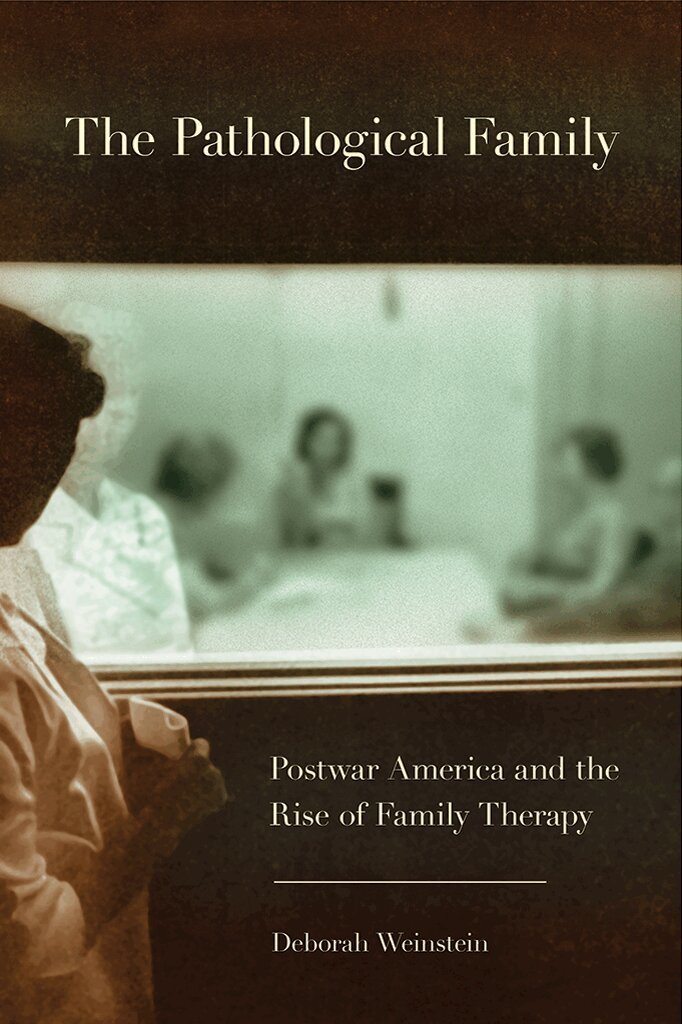
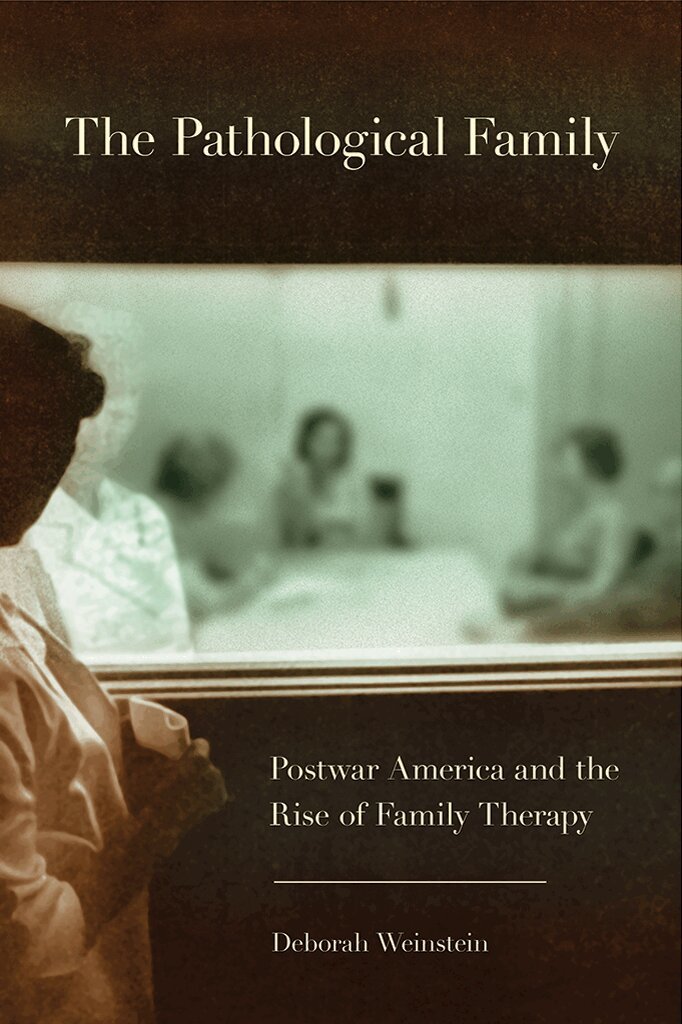
While iconic popular images celebrated family life during the 1950s and 1960s, American families were simultaneously regarded as potentially menacing sources of social disruption. The history of family therapy makes the complicated power of the family at midcentury vividly apparent. Clinicians developed a new approach to psychotherapy that claimed to locate the cause and treatment of mental illness in observable patterns of family interaction and communication rather than in individual psyches. Drawing on cybernetics, systems theory, and the social and behavioral sciences, they ambitiously aimed to cure schizophrenia and stop juvenile delinquency. With particular sensitivity to the importance of scientific observation and visual technologies such as one-way mirrors and training films in shaping the young field, The Pathological Family examines how family therapy developed against the intellectual and cultural landscape of postwar America. As Deborah Weinstein shows, the midcentury expansion of America's therapeutic culture and the postwar fixation on family life profoundly affected one another. Family therapists and other postwar commentators alike framed the promotion of democracy in the language of personality formation and psychological health forged in the crucible of the family. As therapists in this era shifted their clinical gaze to whole families, they nevertheless grappled in particular with the role played by mothers in the onset of their children's aberrant behavior. Although attitudes toward family therapy have shifted during intervening generations, the relations between family and therapeutic culture remain salient today. - Inbunden, Engelska, 2015
636 kr
Skickas inom 10-15 vardagar
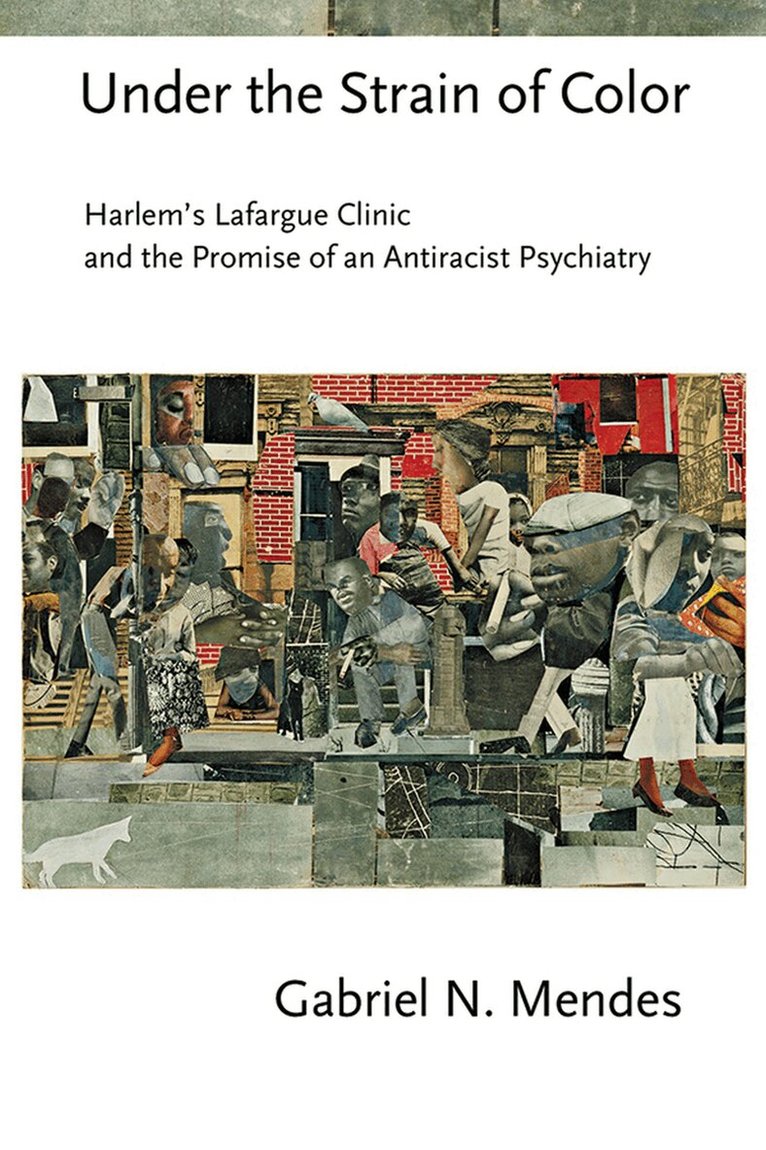
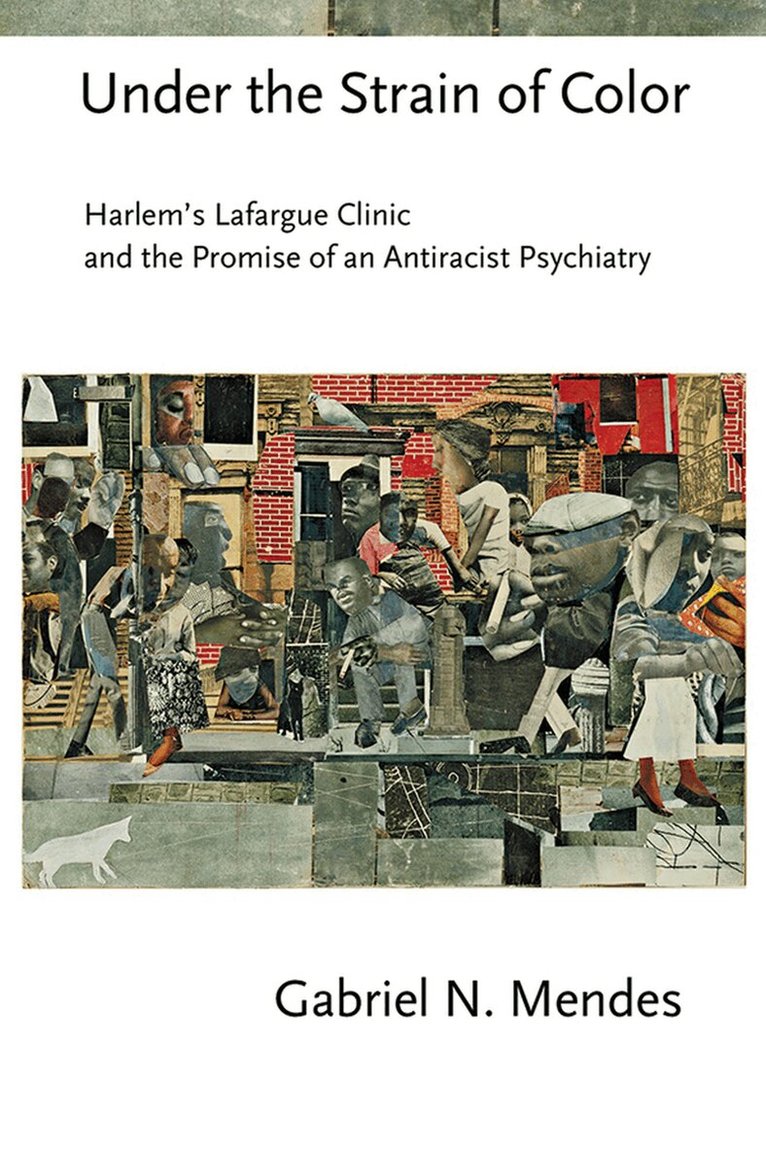
In Under the Strain of Color, Gabriel N. Mendes recaptures the history of Harlem's Lafargue Mental Hygiene Clinic, a New York City institution that embodied new ways of thinking about mental health, race, and the substance of citizenship. The result of a collaboration among the psychiatrist and social critic Dr. Fredric Wertham, the writer Richard Wright, and the clergyman Rev. Shelton Hale Bishop, the clinic emerged in the context of a widespread American concern with the mental health of its citizens. Mendes shows the clinic to have been simultaneously a scientific and political gambit, challenging both a racist mental health care system and supposedly color-blind psychiatrists who failed to consider the consequences of oppression in their assessment and treatment of African American patients. Employing the methods of oral history, archival research, textual analysis, and critical race philosophy, Under the Strain of Color contributes to a growing body of scholarship that highlights the interlocking relationships among biomedicine, institutional racism, structural violence, and community health activism. - Häftad, Engelska, 2006
379 kr
Skickas inom 10-15 vardagar
"If psychoanalysis is the return of repressed antiquity, distorted to be sure by modern desire, yet still bearing the telltale traces of the ancient archive, then would not our growing distance from the archive of antiquity also imply that we are in the process of losing our grip on psychoanalysis itself, as Freud conceived it?"—from Chapter 1As he developed his striking new science of the mind, Sigmund Freud had frequent recourse to ancient culture and the historical disciplines that draw on it. A Compulsion for Antiquity fully explores how Freud appropriated figures and themes from classical mythology and how the theory and practice of psychoanalysis paralleled contemporary developments in historiography, archaeology, philology, and the history of religions. Drawing extensively from Freud's private correspondence and other notes and documents, Richard H. Armstrong touches on Freud's indebtedness to Sophocles and the Oedipus complex, his interest in Moses and the Jewish religion, and his travels to Athens and Rome.Armstrong shows how Freud turned to the ancient world to deal with the challenges posed by his own scientific ambitions and how these lessons influenced the way he handled psychic "evidence" and formulated the universal application of what were initially isolated clinical truths. Freud's narrative reconstructions of the past also related to his sense of Jewishness, linking the historical trajectory of psychoanalysis with contemporary central European Jewish culture. Ranging across the breadth of Freud's work, A Compulsion for Antiquity offers fresh insights into the roots of psychoanalysis and fin de siècle European culture, and makes an important contribution to the burgeoning discipline of mnemohistory. - Häftad, Engelska, 2009
507 kr
Skickas inom 10-15 vardagar
Paul Lerner traces the intertwined histories of trauma and male hysteria in German society and psychiatry and shows how these concepts were swept up into debates about Germany's national health, economic productivity, and military strength in the years surrounding World War I. From a growing concern with industrial accidents in the 1880s through the shell shock "epidemic" of the war, male hysteria seemed to bespeak the failings of German masculinity. In response, psychiatrists struggled to turn male-hysterical bodies into fit workers and loyal political subjects.Medical approaches to trauma valorized work and productivity as standards of male health, and psychiatric treatment—whether through hypnosis, electric current, or suggestion—concentrated on turning debilitated soldiers into symptom-free workers. These concerns endured through the Weimar period, as "nervous veterans" competed for disability compensation amid the republic's political crises and economic upheavals.Hysterical Men shows how wartime psychiatry furthered the process of medical rationalization. Lerner views this not as a precursor to the brutalities of Nazi-era psychiatry, but rather as characteristic of a more general medicalized modernity. The author asserts, however, that psychiatry's continual skepticism toward trauma resonated powerfully with the radical right's celebration of war and violence and its supposedly salutary effects on men and nations. - Häftad, Engelska, 2013
450 kr
Skickas inom 10-15 vardagar
While iconic popular images celebrated family life during the 1950s and 1960s, American families were simultaneously regarded as potentially menacing sources of social disruption. The history of family therapy makes the complicated power of the family at midcentury vividly apparent. Clinicians developed a new approach to psychotherapy that claimed to locate the cause and treatment of mental illness in observable patterns of family interaction and communication rather than in individual psyches. Drawing on cybernetics, systems theory, and the social and behavioral sciences, they ambitiously aimed to cure schizophrenia and stop juvenile delinquency. With particular sensitivity to the importance of scientific observation and visual technologies such as one-way mirrors and training films in shaping the young field, The Pathological Family examines how family therapy developed against the intellectual and cultural landscape of postwar America. As Deborah Weinstein shows, the midcentury expansion of America's therapeutic culture and the postwar fixation on family life profoundly affected one another. Family therapists and other postwar commentators alike framed the promotion of democracy in the language of personality formation and psychological health forged in the crucible of the family. As therapists in this era shifted their clinical gaze to whole families, they nevertheless grappled in particular with the role played by mothers in the onset of their children's aberrant behavior. Although attitudes toward family therapy have shifted during intervening generations, the relations between family and therapeutic culture remain salient today. - Häftad, Engelska, 2003
364 kr
Skickas inom 10-15 vardagar
What would bring a physician to conclude that sterilization is appropriate treatment for the mentally ill and mentally handicapped? Using archival sources, Ian Robert Dowbiggin documents the involvement of both American and Canadian psychiatrists in the eugenics movement of the early twentieth century. He explains why professional men and women committed to helping those less fortunate than themselves arrived at such morally and intellectually dubious conclusions. Psychiatrists at the end of the nineteenth century felt professionally vulnerable, Dowbiggin explains, because they were under intense pressure from state and provincial governments and from other physicians to reform their specialty. Eugenic ideas, which dominated public health policy making, seemed the best vehicle for catching up with the progress of science. Among the prominent psychiatrist-eugenicists Dowbiggin considers are G. Alder Blumer, Charles Kirk Clarke, Thomas Salmon, Clare Hincks, and William Partlow. Tracing psychiatric support for eugenics throughout the interwar years, Dowbiggin pays special attention to the role of psychiatrists in the fierce debates about immigration policy. His examination of psychiatry's unfortunate flirtation with eugenics elucidates how professional groups come to think and act along common lines within specific historical contexts. - Häftad, Engelska, 1998
519 kr
Skickas inom 10-15 vardagar
When Heinrich Heine left his sick bed in 1848 and stumbled to the Louvre to fall before a statue of the goddess of beauty and lie in the pitying, cold glance she seemed to cast on his prostrate body, he defined a recurring motif of the second half of the nineteenth century, according to Suzanne R. Stewart. Directing her attention to the voice of the shriveled male body at beauty's feet, she investigates the discourse by and about men that took hold in the German-speaking world between 1870 and 1940 and that articulated masculinity as and through its own marginalization. Male masochism, she suggests, was a rhetorical strategy through which men asserted their cultural and political authority paradoxically by embracing the notion that they were (and always had been) wounded and suffering. Stewart demonstrates and develops her contentions through close readings of the work of Leopold von Sacher-Masoch, Richard Wagner, and Sigmund Freud, in each case showing that the very act through which men sacrificed themselves to women comprised the essence of the new male subject "deeply penetrated by relations of political and sexual power." Masochistic scenarios, whether in literature, music, the visual arts, or medicalized diagnoses of the fin-de-siècle malaise, stage the male as one who submits, as Stewart explains, "to an aestheticized and eroticized gaze and voice." - Häftad, Engelska, 2002
503 kr
Skickas inom 10-15 vardagar
In a stunning fusion of literary criticism and intellectual history, Peter L. Rudnytsky explores the dialectical interplay between literature and psychoanalysis by reading key psychoanalytic texts in a variety of genres. He maps the origins of the contemporary relational tradition in the lives and work of three of Freud's most brilliant and original disciples—Otto Rank, Sándor Ferenczi, and Georg Groddeck. Rudnytsky, a scholar with an unsurpassed knowledge of the world of clinical psychoanalysis, espouses the "relational turn" as an alternative to both ego psychology and postmodernism.Rudnytsky seeks to alter the received view of the psychoanalytic landscape, in which the towering figure of Freud has continued to obscure the achievements of his followers who individually resisted and collectively went beyond him. Reading Psychoanalysis offers the most detailed and comprehensive treatments available in English of such classic texts as Freud's case of Little Hans, Rank's The Incest Theme in Literature and Legend, and Groddeck's The Book of the It. Rudnytsky's argument for object relations theory concludes by boldly affirming the possibility of a "consilience" between scientific and hermeneutic modes of knowledge. - Häftad, Engelska, 2005
550 kr
Skickas inom 10-15 vardagar
Focusing on the history of the Ingutsheni Lunatic Asylum (renamed a mental hospital after 1933), situated near Bulawayo in the former Southern Rhodesia, Surfacing Up explores the social, cultural, and political history of the colony that became Zimbabwe after gaining its independence in 1980. The phrase "surfacing up" was drawn from a conversation Lynette A. Jackson had with a psychiatric nurse who used the concept to explain what brought African potential patients into the psychiatric system. Jackson uses Ingutsheni as a reference point for the struggle to "domesticate" Africa and its citizens after conquest. Drawing on the work of Frantz Fanon, Jackson maintains that the asylum in Southern Rhodesia played a significant role in maintaining the colonial social order. She supports Fanon's claim that colonial psychiatric hospitals were repositories for those of "indocile nature" or for those who failed to fit "the social background of the colonial type."Through reconstruction and reinterpretation of patient narratives, Jackson shows how patients were diagnosed, detained, and deemed recovered. She draws on psychiatric case files to analyze the changing economic, social, and environmental conditions of the colonized, the varying needs of the white settlers, and the shifting boundaries between these two communities. She seeks to extend and enrich our understanding of how a significant institution changed the way citizens and subjects experienced the colonial social order. - Häftad, Engelska, 2021
264 kr
Skickas inom 10-15 vardagar
In Under the Strain of Color, Gabriel N. Mendes recaptures the history of Harlem's Lafargue Mental Hygiene Clinic, a New York City institution that embodied new ways of thinking about mental health, race, and the substance of citizenship. The result of a collaboration among the psychiatrist and social critic Dr. Fredric Wertham, the writer Richard Wright, and the clergyman Rev. Shelton Hale Bishop, the clinic emerged in the context of a widespread American concern with the mental health of its citizens. Mendes shows the clinic to have been simultaneously a scientific and political gambit, challenging both a racist mental health care system and supposedly color-blind psychiatrists who failed to consider the consequences of oppression in their assessment and treatment of African American patients. Employing the methods of oral history, archival research, textual analysis, and critical race philosophy, Under the Strain of Color contributes to a growing body of scholarship that highlights the interlocking relationships among biomedicine, institutional racism, structural violence, and community health activism.