• Fri frakt över 249 kr
  • •
  • Snabba leveranser
  • •
  • Billiga böcker
Kundservice

Du är på sajten för privatpersoner.

Företag, bibliotek eller offentlig verksamhet?

Du handlar på classic.bokus.com, där alla dina funktioner finns intakta.
Till classic.bokus.com
Bokus logotyp. Gå till startsidan.
  • Erbjudanden
  • Nyheter
  • Student
  • Topplistor
  • Barn & ungdom
  • Bokus Play
  • E-böcker
  • Pocketböcker
  • Spel & pussel

10% rabatt på allt med kod: NYSTART10 →

Sidfot

Mina sidor

    Hjälp

    • Kundservice
    • Vanliga frågor och svar
    • Frakt och leverans
    • Retur vid ångerrätt
    • Reklamera vara
    • Betalning
    • Köpvillkor
    • Allmänna villkor
    • Information om webbplatsens tillgänglighet

    Om Bokus

    • Om oss
    • Pressrum
    • För studenter
    • För företag
    • För bibliotek och offentlig verksamhet
    • För leverantörer
    • Hållbarhet

    Populärt

    • Aktuella erbjudanden
    • Presentkort
    • Studentlitteratur
    • Nya böcker
    • Topplistor
    • Signerade böcker
    • Engelska böcker

    Inspiration

    • Boktips
    • BookTok
    • Populära bokserier
    • Barnbokskaraktärer
    • Populära författare
    Logotyp för Bokus
    Följ oss på Facebook (extern länk)Följ oss på Instagram (extern länk)Följ oss på YouTube (extern länk)Följ oss på TikTok (extern länk)
    bokus @ CookiesAnpassa cookiesIntegritetspolicyKöpvillkor
    Till Citymail hemsida (extern länk)Till Budbee hemsida (extern länk)Till Postnord hemsida (extern länk)Till Schenker hemsida (extern länk)Till Early Bird hemsida (extern länk)Till Walleys hemsida (extern länk)
    1. Medicin
    2. Medicin: allmänt
    3. Medicinhistoria

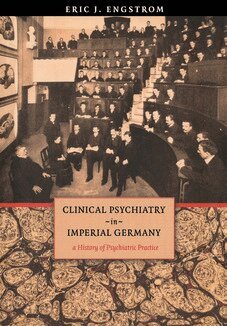
    Clinical Psychiatry in Imperial Germany

    A History of Psychiatric Practice

    AvEric J. Engstrom

    Inbunden, Engelska, 2003

    Del i serien Cornell Studies in the History of Psychiatry

    1 079 kr

    Beställningsvara. Skickas inom 10-15 vardagar. Fri frakt över 249 kr.

    Beskrivning

    The psychiatric profession in Germany changed radically from the mid-nineteenth century to the beginning of World War I. In a book that demonstrates his extensive archival knowledge and an impressive command of the primary literature, Eric J. Engstrom investigates the history of university psychiatric clinics in Imperial Germany from 1867 to 1914, emphasizing the clinical practices and professional debates surrounding the development of these institutions and their impact on the course of German psychiatry.The rise of university psychiatric clinics reflects, Engstrom tells us, a shift not only in asylum culture, but also in the ways in which social, political, and economic issues deeply influenced the practice of psychiatry. Equally convincing is Engstrom's argument that psychiatrists were responding to and working to shape the rapidly changing perceptions of madness in Imperial Germany. In a series of case studies, the book focuses on a number of important clinical spaces such as the laboratory, the ward, the lecture hall, and the polyclinic. Engstrom argues that within these spaces clinics developed their own disciplinary economies and that their emergence was inseparably intertwined with jurisdictional contests between competing scientific, administrative, didactic, and sociopolitical agendas.

    Produktinformation

    • Utgivningsdatum:2003-12-24
    • Mått:155 x 238 x 25 mm
    • Vikt:617 g
    • Format:Inbunden
    • Språk:Engelska
    • Serie:Cornell Studies in the History of Psychiatry
    • Antal sidor:320
    • Förlag:Cornell University Press
    • ISBN:9780801441950

    Utforska kategorier

    • Medicinhistoria inom Medicin
    • Psykiatri inom Medicin

    Mer om författaren

    Eric J. Engstrom is Research Associate at the Center for Human and Health Sciences at the Humboldt University in Berlin. He has published several books, including Knowledge and Power: Perspectives in the History of Psychiatry and Psychiatry in the 19th Century (Psychiatrie im 19. Jahrhundert). He is also editor of a multivolume edition of the writings of the German psychiatrist Emil Kraepelin.

    Recensioner i media

    Engstrom... reveals how the various dimensions of academic psychiatry—its cognitive content, its treatment and research practices, its curriculum, its tools, its workspaces (clinics, laboratories, lecture halls), and its institutional (medical departments, universities, mental health care in general) and political and social contexts—were all closely interrelated.... Engstrom's interpretations are... nicely detailed.- Harry Oosterhuis, University of Maastricht (Journal of the History of the Behavioral Sciences) The primary focus of Eric J. Engstrom's book on psychiatry in Germany from roughly the mid nineteenth century to the First World War is the tension between alienists—clinicians whom Engstrom defines as 'an ambiguous blend of physician, judge, father and teacher,' resident with their 'family' of staff and patients in large isolated rural asylums—and the new breed of 'scientific' psychiatrists based in urban clinics affiliated to university medical schools. This tension—never entirely resolved—led to a fundamental shift in asylum culture.... Engstrom must be given credit for achieving what he set out to do. He is a very thorough, undogmatic historian and the book is formidably footnoted and referenced. The prose is serviceable and straightforward, and, while it features much jargon from the social sciences, is never deformed by it.(Times Literary Supplement) Engstrom... has produced a fascinating history of the professionalizing of psychiatric practice in modern Germany in this extensively researched book.(Choice) Here we get a detailed look at the beginnings of the professionalization of psychiatry in Germany in the nineteenth century, a concomitant of the medicalization of madness that took place at the same time.- Michale Beldoch (Cornell Studies in the History of Psychiatry, 2003-2004) The nineteenth century can rightly be called the century of medicine and biology. With the support of national and provincial governments, clinical medicine and the human sciences flourished in Germany. By century's end, scholars in fields such as pathology, neurology, epidemiology, and experimental psychology could lay claim to being the best in the world. In no other field was the influence of German medicine and science more palpable than in psychiatry.... Eric Engstrom's book is the first to explore this important moment in the intellectual and social history of Germany. With Engstrom, this rather daunting venture is in able hands. To those scholars working in the field of the history of German psychiatry, Engstrom is well-known as a thoughtful and insightful historian, particularly well-informed about the scope of archival materials available to scholars.- Greg Eghigian, Penn State University (H-Soz-u-Kult)