Richard J Huggett - Böcker
Visar alla böcker från författaren Richard J Huggett. Handla med fri frakt och snabb leverans.
3 produkter
3 produkter
204 kr
Tillfälligt slut
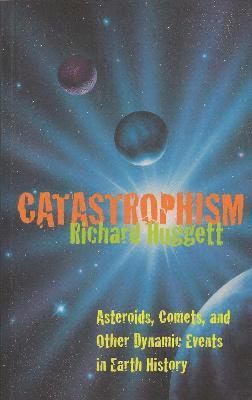
One of the most dramatic intellectual events of the last decade has been the stunning re-emergence of the catastrophist paradigm in the biological and earth sciences From killer asteroids to emergent viruses, it has become evident that the history of life on earth has been shaped-far more than previous orthodoxies would allow ... by extreme events and non-linear processes. The old "uniformitarian" dogma of steady-rate evolution has been decisively challenged by the research of contemporary neo-catastrophists like Stephen Jay Gould, David Raup, Stuart Ross Taylor, Ursula Marvin and Kenneth Hsu. Whether debating the origin of the moon or the current human impact on the biosphere, they urge us to recognize the radically event- or chance-driven structure of natural history.Surveying these various theories of uniformitarian and neo-catastrophist thought in a clear and accessible fashion, and seeking a path towards a new and workable synthesis, Richard Hugget provides a superb introduction to the ideas which have defined the way we look at the world.
536 kr
Skickas inom 10-15 vardagar
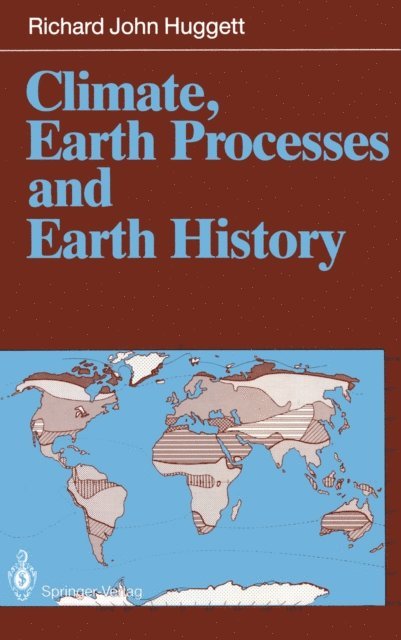
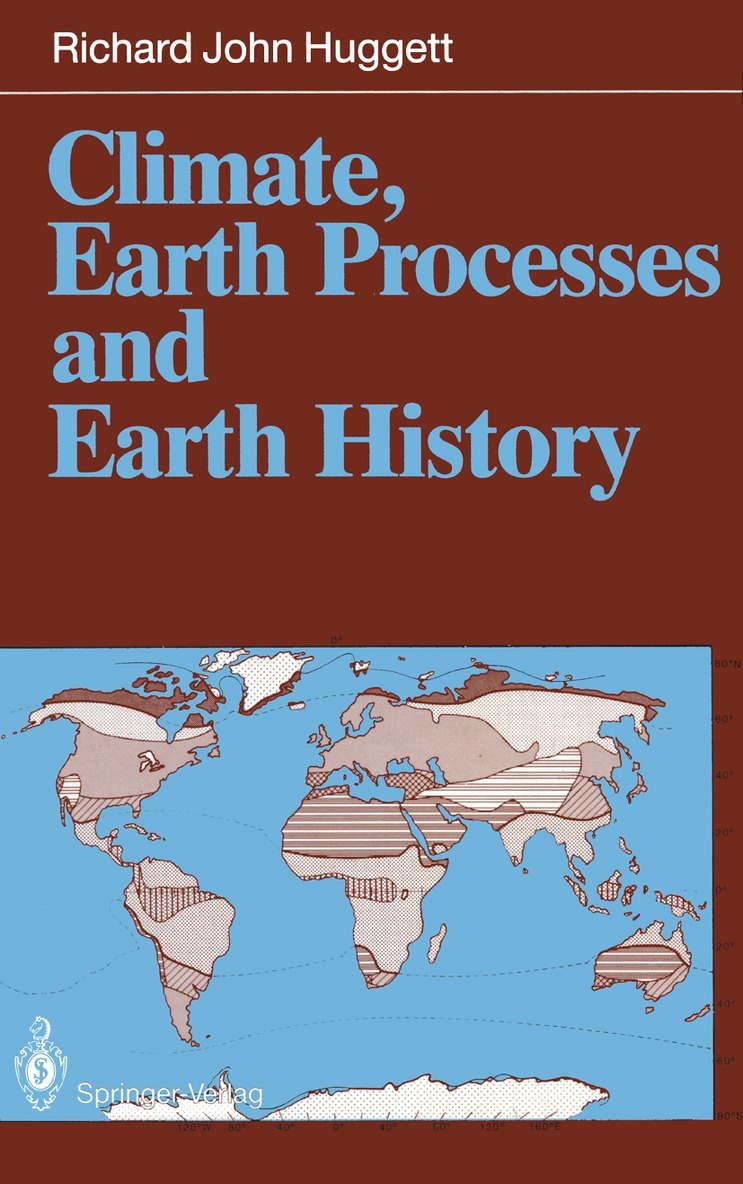
Today, climate-related processes and problems are referred to as Global Change by nearly everyone including scientists, politicians, and economists; citizens worldwide are anxious about the often ob served disorientation of our environment under the influence of man. Better information on the Earth's natural systems and their possible alterations is necessary. The topic itself is so wide that sound scien tific descriptions of it as a whole are rare. For the non-specialist infor mation from relevant fields is not easy to obtain; and often, the pro gnostic models presented are contradictory and even for specialists difficult to evaluate. Therefore, this book on Climate, Earth Processes and Earth History by Richard Huggett fills an important gap. It discusses the great, climate-related areas of the Earth's environment. The atmosphere, the hydrosphere, the sediments as products of weathering and geomorphic processes, the relief as landforms and soils, and the biosphere are thoroughly treated as the prominent sub systems which are greatly affected by climate. These subsystems not only control the visual and internal aspects of our landscapes, but they are themselves especially influenced by climatic changes which can be due to either changes in the natural system or anthropogenic changes. Thus, our landscapes will be subject to significant altera tions, if climatic variations exceed certain thresholds. The plan for the present book by Richard Huggett was originally discussed in regard to the Springer Series on Physical Environment.
1 064 kr
Skickas inom 10-15 vardagar
Discussions of "systems" and the "systems approach" tend to fall into one of two categories: the panegyrical and the disparaging. Scholars who praise the systems approach do so in the belief that it is a powerful and precise method of study. Scholars who try to shoot it down fail to see any advantage in it; indeed, many deem it periIicious. Van Dyne (1980, p. 889) records a facetious comment he once heard, the gist of which ran: "In instances where there are from one to two variables in a study you have a science, where there are from four to seven variables you have an art, and where there are more than seven variables you have a system". This tilt at the systems approach is mild indeed compared with the com ments of an anonymous reviewer of a paper by myself concerned with the systems approach as applied to the soil. The reviewer stated bluntly that he or she had no time for an approach which falsifies and belittles work that has been done and is of no use for future work. My summary of the paper opened with the seemingly innocuous sentence "The notion of the soil as a system is placed on a . formal footing by couching it in terms of dynamical systems theory".