Richard Lenzi – författare
Visar alla böcker från författaren Richard Lenzi. Handla med fri frakt och snabb leverans.
3 produkter
3 produkter
611 kr
Skickas inom 3-6 vardagar
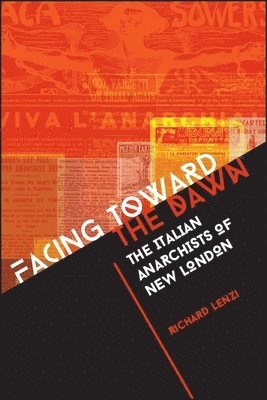
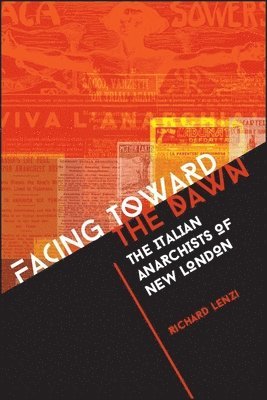
Examines the history of the Italian anarchist movement in New London, Connecticut.In the early twentieth century, the Italian American radical movement thrived in industrial cities throughout the United States, including New London, Connecticut. Facing toward the Dawn tells the history of the vibrant anarchist movement that existed in New London's Fort Trumbull neighborhood for seventy years. Comprised of immigrants from the Marche region of Italy, especially the city of Fano, the Fort Trumbull anarchists fostered a solidarity subculture based on mutual aid and challenged the reigning forces of capitalism, the state, and organized religion. They began as a circle within the ideological camp of Errico Malatesta and evolved into one of the core groupings within the wing of the movement supporting Luigi Galleani. Their manifold activities ranged from disseminating propaganda to participating in the labor movement; they fought fascists in the streets, held countless social events such as festas, theatrical performances, picnics and dances, and hosted militant speakers, including Emma Goldman. Focusing on rank-and-file militants-carpenters, stonemasons, fishermen, housewives-rather than well-known figures, Richard Lenzi offers a microhistory of an ethnic radical group during the heyday of labor radicalism in the United States. He also places that history in the context of the larger radical movement, the Italian American community, and greater American society, as it moved from the Gilded Age to the New Deal and beyond.
1 088 kr
Tillfälligt slut
Examines the history of the Italian anarchist movement in New London, Connecticut.In the early twentieth century, the Italian American radical movement thrived in industrial cities throughout the United States, including New London, Connecticut. Facing toward the Dawn tells the history of the vibrant anarchist movement that existed in New London's Fort Trumbull neighborhood for seventy years. Comprised of immigrants from the Marche region of Italy, especially the city of Fano, the Fort Trumbull anarchists fostered a solidarity subculture based on mutual aid and challenged the reigning forces of capitalism, the state, and organized religion. They began as a circle within the ideological camp of Errico Malatesta and evolved into one of the core groupings within the wing of the movement supporting Luigi Galleani. Their manifold activities ranged from disseminating propaganda to participating in the labor movement; they fought fascists in the streets, held countless social events such as festas, theatrical performances, picnics and dances, and hosted militant speakers, including Emma Goldman. Focusing on rank-and-file militants-carpenters, stonemasons, fishermen, housewives-rather than well-known figures, Richard Lenzi offers a microhistory of an ethnic radical group during the heyday of labor radicalism in the United States. He also places that history in the context of the larger radical movement, the Italian American community, and greater American society, as it moved from the Gilded Age to the New Deal and beyond.
1 855 kr
Kommande
Brings Connecticut suffragist and socialist Emily Pierson out of the shadows, exploring her role in the social and political movements that shook America from the 1910s to the Cold War.At once the story of a largely forgotten local firebrand of left politics in Connecticut, Yankee Radical chronicles the life and activism of Emily Miller Pierson. Born in Cromwell, Connecticut, Pierson was the scion of a wealthy family that owned an industrial-scale horticultural firm. After graduating from Vassar College in 1907, she immersed herself in the suffrage movement, becoming the primary ground-level organizer and strategist in her state. During the 1930s, she raised her political involvement to a new level, as Connecticut's most prominent supporter of the Communist Party and the Soviet Union, and later China. Her activities as a spokesperson, leader, and "financial angel" of the left over three decades earned her FBI surveillance and a spot on the US government's Security Index for possible detention. Still, she clung fiercely to her radical beliefs up until her death at the age of eighty-nine. Drawing on Pierson's papers and FBI file, Richard Lenzi offers an in-depth look at the political and social setting in which Pierson operated, from the development of industrial unionism in the state to McCarthyism and the Cold War.