Richard Maddox – författare
Visar alla böcker från författaren Richard Maddox. Handla med fri frakt och snabb leverans.
4 produkter
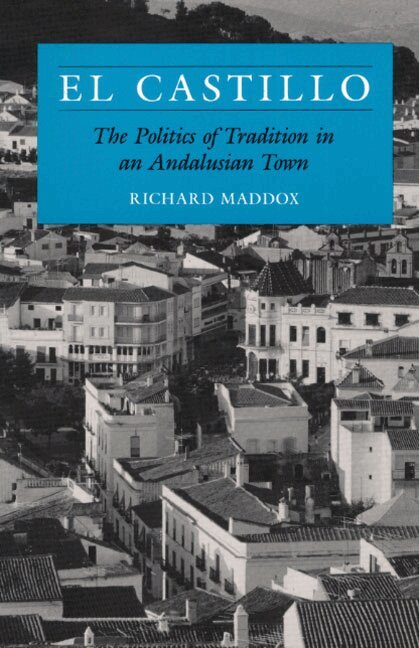
El Castillo
The Politics of Tradition in an Andalusian Town
Häftad, 1993
329 kr
Lägg i varukorg
In his innovative ethnographic history of the southwestern Spanish town of Aracena, Richard Maddox explores how tradition has been authored, what it has authorized, and to what extent it has been authoritative. His investigation of the cultural, political, and religious discourses and practices of …
Trial of a Cause Between Richard Maddox, Gent., Plaintiff, and Dr. M----y [Morley] Defendent, Physician, and Man-midwife, Before Sir Michael Foster, Knt. ... at Guildhall, London, March 2, 1754 ... In an Action Upon the Case, Brought by The...
Av Richard Maddox, Hendrik Van 1651-1724 Deventer m. fl.
Häftad, 2021
191 kr
Lägg i varukorg
Best of All Possible Islands
Seville's Universal Exposition, the New Spain, and the New Europe
Inbunden, 2004
1144 kr
Tillfälligt slut
Uses the world's fair of 1992 to spotlight changes in the political cultures of Spain and Europe.The 1992 world's fair in Seville serves as a vantage point from which to examine Spain's developing democracy and Europe's emerging unification, according to Richard Maddox in The Best of All Possible …
![Richard Maddox, Hendrik Van 1651-1724 Deventer, Defendent M----Y - Trial of a Cause Between Richard Maddox, Gent., Plaintiff, and Dr. M----y [Morley] Defendent, Physician, and Man-midwife, Before Sir Michael Foster, Knt. ... at Guildhall, London, March 2, 1754 ... In an Action Upon the Case, Brought by The..., Häftad. Tillgänglighet: Lägg i varukorg](https://image.bokus.com/images2/9781013701511_766)