Richard McKirahan - Böcker
Visar alla böcker från författaren Richard McKirahan. Handla med fri frakt och snabb leverans.
5 produkter
5 produkter
2 557 kr
Skickas inom 10-15 vardagar
This valuable work of reference provides a comprehensive bibliography on all scholarly work that was published on Plato and Socrates during the years 1958-73. It thus forms an important addition to Harold Cherniss’s bibliography, which covered the years 1950-7. The author has sought to include all materials primarily concerned with Socrates and Plato, together with other works which make a contribution to our understanding of the two philosophers. The bibliography is arranged by topic and there are cross-references at the end of each section. The works in each category are arranged chronologically and then alphabetically (by author) within each year. An effort has been made to distinguish when a book has had more than one edition and when an article has been reprinted. Additionally the author has listed reviews of books and dissertations as these have come to his attention.
671 kr
Skickas inom 10-15 vardagar
This valuable work of reference provides a comprehensive bibliography on all scholarly work that was published on Plato and Socrates during the years 1958-73. It thus forms an important addition to Harold Cherniss’s bibliography, which covered the years 1950-7. The author has sought to include all materials primarily concerned with Socrates and Plato, together with other works which make a contribution to our understanding of the two philosophers. The bibliography is arranged by topic and there are cross-references at the end of each section. The works in each category are arranged chronologically and then alphabetically (by author) within each year. An effort has been made to distinguish when a book has had more than one edition and when an article has been reprinted. Additionally the author has listed reviews of books and dissertations as these have come to his attention.
2 012 kr
Skickas inom 10-15 vardagar
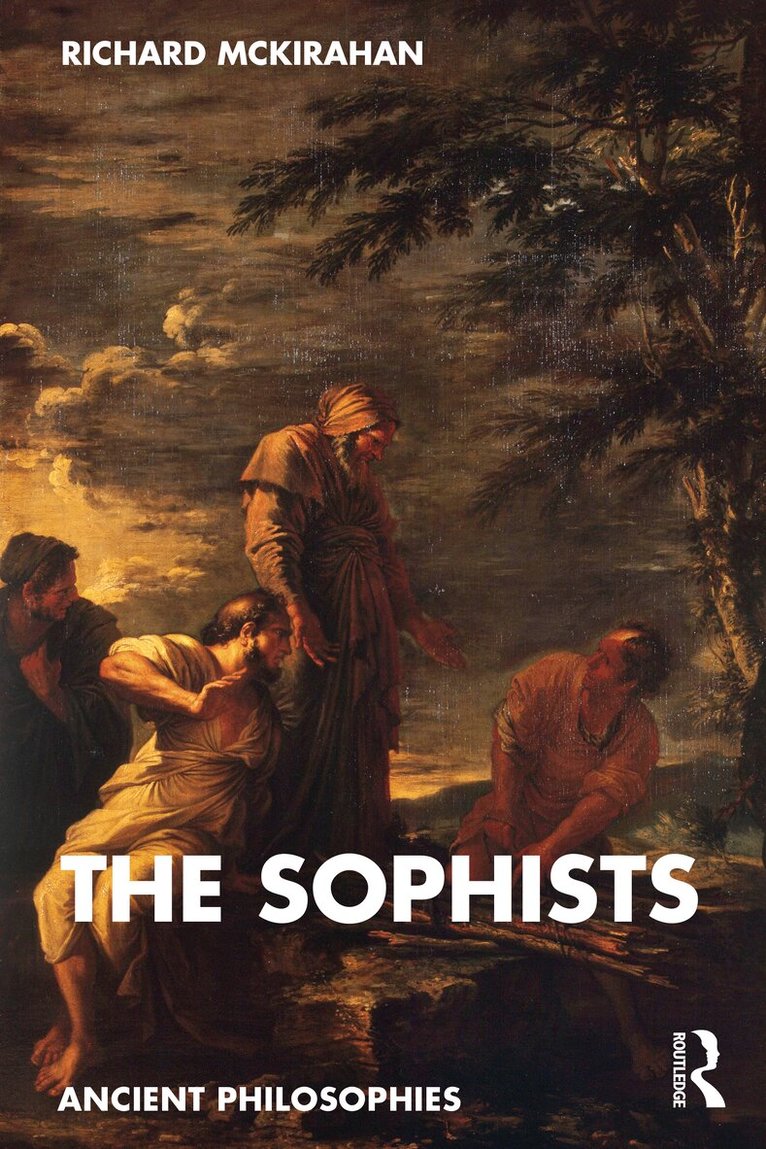
This book offers a new way of looking at the fifth-century BCE Sophists, rejecting the bad reputation they have had since antiquity and presenting them as individuals rather than a “movement,” each with his own specialty and personality as revealed through the scant surviving evidence.It provides an account of the Sophists of this period that explains the historical and social developments that led to their prominence and popularity, demonstrating the reasons for their importance and for their seeming disappearance in the fourth century BCE. Restricted to discussion of the few Sophists for whom there are surviving quotations or other texts, The Sophists avoids generalizations often found in other books. It contains accurate translations of most of the surviving material, which forms the secure possible basis for understanding the Sophists as individuals in their various roles, not only as educators but also as ambassadors and pioneers in other fields. After a general introduction, the following chapters present each of the Sophists individually, followed by three chapters that present topics treated by more than one Sophist, such as Logos, Definition and the Nomos-Phusis contrast. The final three chapters reveal the way three important intellectuals of the fourth century (Plato, his rival Isocrates and Aristotle) dealt with the Sophists. An appendix contains several longer passages or works in their entirety in translation, allowing readers to have access to the original source materials and develop their own interpretations.This thorough treatment of the fifth-century Sophists is of interest to scholars working on the subject and on ancient Greek philosophy more broadly, while also being accessible to undergraduate students and the general public interested in the topic.
551 kr
Skickas inom 10-15 vardagar
This book offers a new way of looking at the fifth-century BCE Sophists, rejecting the bad reputation they have had since antiquity and presenting them as individuals rather than a “movement,” each with his own specialty and personality as revealed through the scant surviving evidence.It provides an account of the Sophists of this period that explains the historical and social developments that led to their prominence and popularity, demonstrating the reasons for their importance and for their seeming disappearance in the fourth century BCE. Restricted to discussion of the few Sophists for whom there are surviving quotations or other texts, The Sophists avoids generalizations often found in other books. It contains accurate translations of most of the surviving material, which forms the secure possible basis for understanding the Sophists as individuals in their various roles, not only as educators but also as ambassadors and pioneers in other fields. After a general introduction, the following chapters present each of the Sophists individually, followed by three chapters that present topics treated by more than one Sophist, such as Logos, Definition and the Nomos-Phusis contrast. The final three chapters reveal the way three important intellectuals of the fourth century (Plato, his rival Isocrates and Aristotle) dealt with the Sophists. An appendix contains several longer passages or works in their entirety in translation, allowing readers to have access to the original source materials and develop their own interpretations.This thorough treatment of the fifth-century Sophists is of interest to scholars working on the subject and on ancient Greek philosophy more broadly, while also being accessible to undergraduate students and the general public interested in the topic.
2 206 kr
Skickas inom 5-8 vardagar
The purpose of the conference “On Pythagoreanism”, held in Brasilia in 2011, was to bring together leading scholars from all over the world to define the status quaestionis for the ever-increasing interest and research on Pythagoreanism in the 21st century. The papers included in this volume exemplify the variety of topics and approaches now being used to understand the polyhedral image of one of the most fascinating and long-lasting intellectual phenomena in Western history. Cornelli’s paper opens the volume by charting the course of Pythagorean studies over the past two centuries. The remaining contributions range chronologically from Pythagoras and the early Pythagoreans of the archaic period (6th-5th centuries BCE) through the classical, hellenistic and late antique periods, to the eighteenth century. Thematically they treat the connections of Pythagoreanism with Orphism and religion, with mathematics, metaphysics and epistemology and with politics and the Pythagorean way of life.