Richard Ohmann - Böcker
Visar alla böcker från författaren Richard Ohmann. Handla med fri frakt och snabb leverans.
4 produkter
4 produkter
619 kr
Skickas inom 3-6 vardagar
When it first appeared in 1976, this groundbreaking exploration of the influences of capitalism on the profession of English touched a nerve among educators and inspired Library Journal to declare, "This book should be read by all thoughtful Americans." Now, 20 years later, in a substantial new introduction that recontextualizes the book, Richard Ohmann addresses the critical furor over its initial publication, evaluates his own arguments in the aftermath of the Cold War, and locates the profession of English in the thick of the hotly contested culture wars. A remarkably prescient book whose claims have withstood two decades of fierce debate, English in America is widely considered to be as relevant today as ever. Wise, witty, and urbane, it has much to teach all students of English.
342 kr
Skickas inom 7-10 vardagar
What is the true value of a college education?In this thought-provoking book, acclaimed cultural critic and professor of literature Richard Ohmann and noted critical scholar and pedagogue Ira Shor challenge the widely accepted notion of the "college premium": the economic advantage associated with obtaining a college degree. The authors show how the idea of a college premium is often merely a myth that furthers the commercialization of education. Drawing on historical analysis and keen insights, they expose the underlying neoliberal ideology that has transformed universities into vehicles for profit-driven corporations. They argue that the college premium confirms class hierarchies in the United States while claiming to apply to everyone. This compelling narrative uncovers the reshaping of our perception of the value of higher education. From the casualization of academic labor to the mounting burden of student debt, from the erosion of academic freedoms to the rise of vocational curricula, Ohmann and Shor connect the dots to illustrate how economic imperatives have influenced university life. Is College Worth It? is a must-read for students, parents, policymakers, and anyone concerned with the future of education. Ohmann and Shor's erudite analysis challenges conventional wisdom and offers a fresh perspective on the true meaning and worth of a college education.
163 kr
Skickas inom 5-8 vardagar
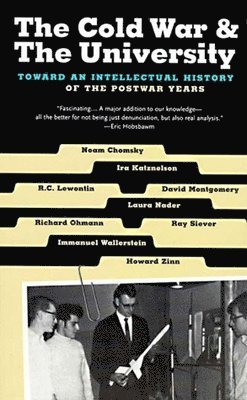
The years following 1945 witnessed a massive change in American intellectual thought and in the life of American universities. The effort to mobilize intellectual talent during the war established new links between the government and the academy. After the war, many of those who had worked with the military or the Office of Strategic Studies took jobs in the burgeoning post-war structure of university-based military research and intelligence agencies, bringing large infusions of government money into many fields. The essays in this text explore what happened to the university in these years and why. They show the many ways existing disciplines, such as anthropology, were affected by the Cold War ethos, and discuss the rise of new fields, such as area studies, and the changing nature of dissent and academic freedom during and since the Cold War.
383 kr
Tillfälligt slut
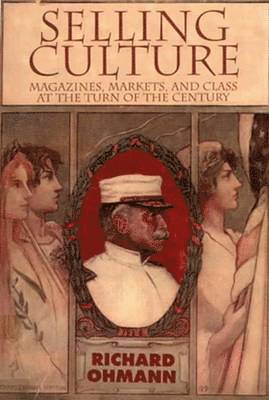
When did mass culture first appear in the United States? How was it conceived, produced and disseminated? Who were the main players in its manufacture? Richard Ohmann argues persuasively that the pivotal juncture came at the turn of the twentieth century when magazines began to reach large audiences and to depend heavily on advertising revenues. Mass circulation of magazines, combined with the rise of brand name products, facilitated the emergence of a homogenized mass culture (one produced by the few for the many in the name of profit) for the first time. This epochal change in the making of culture took place through the energy and innovations of diverse agents - publishers, readers, ad men, merchandisers-acting to achieve disparate but compatible goals. Ohmann shows how their efforts succeeded because they answered to the needs of big business at a time when industrial capitalism's greatest achievements had led to its deepest crisis. Knitting together social and economic history with literary criticism and cultural theory, Ohmann develops a powerful new account of consumer society and of the social class in which it first took root.