Richard Rashke - Böcker
Visar alla böcker från författaren Richard Rashke. Handla med fri frakt och snabb leverans.
7 produkter
7 produkter
266 kr
Skickas inom 11-20 vardagar
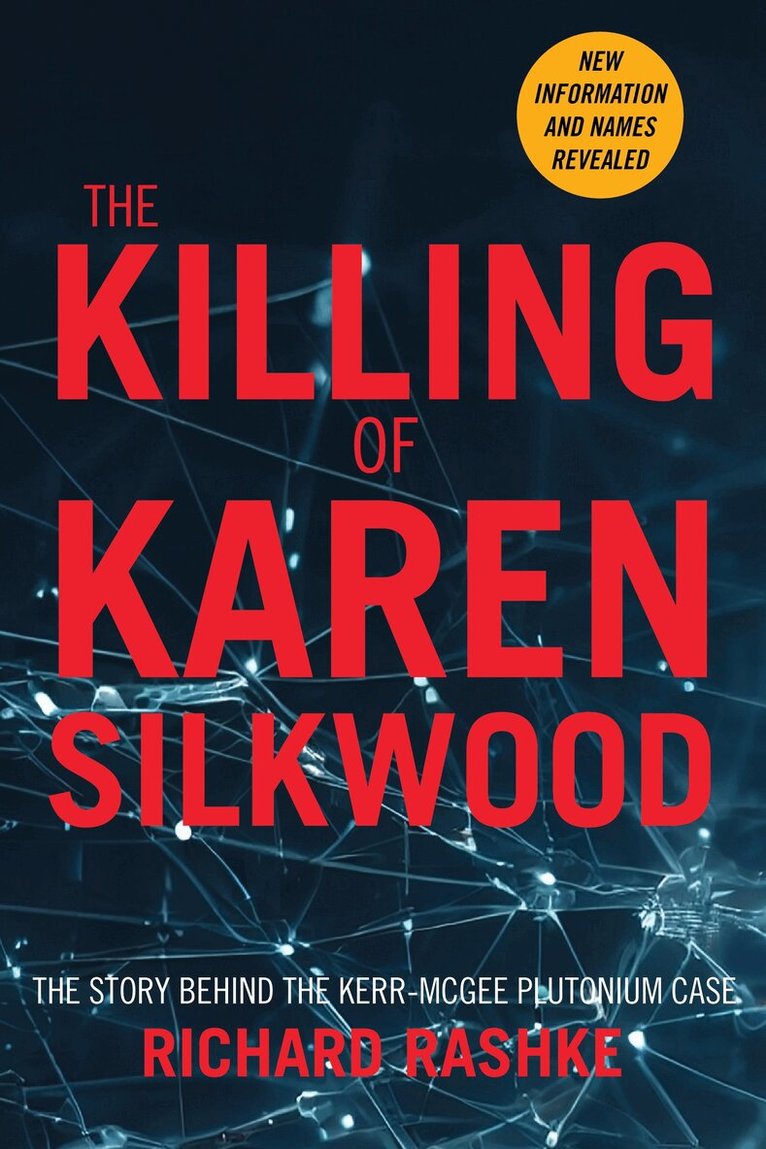
Karen Silkwood, an employee of the Kerr-McGee plutonium processing plant, was killed in a car crash on her way to deliver important documents to a newspaper reporter in 1974. Silkwood was a union activist concerned about health and safety issues at the plant, and her death at age twenty-eight was considered by many to be highly suspicious. Was it Kerr-McGee's revenge on a troublesome whistle-blower? Or was it part of a much larger conspiracy reaching from the Atomic Energy Commission to the FBI and the CIA?Richard Rashke leads us through the myriad of charges and countercharges, theories and facts, and reaches conclusions based solely on the evidence in hand. Originally published in 1981, his book offers a vivid, edgy picture of the tensions that racked this country in the 1970s. However, the volume is not only an important historical document. Complex, fascinating characters populate this compelling insider's view of the nuclear industry. The issues it explores—whistle-blowers, worker safety, the environment, and nuclear vulnerability—have not lost relevance today, twenty-six years after Silkwood's white Honda Civic was found trapped in a concrete culvert near Oklahoma City.For this second edition, Rashke has added a Preface and three short chapters that explore what has been learned about Silkwood since the book's original publication, explain what happened to the various actors in the drama, and discuss the long-term effects of the events around Silkwood's death.
299 kr
Skickas inom 5-8 vardagar
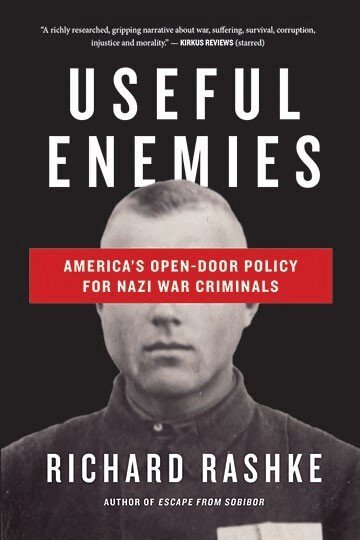
Useful Enemies
John Demjanjuk and America's Open-Door Policy for Nazi War Criminals
Inbunden, Engelska, 2013
264 kr
Tillfälligt slut
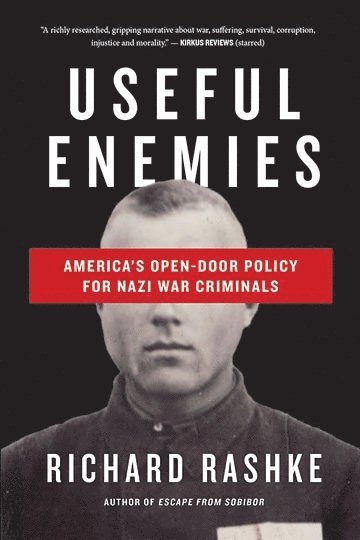
John “Iwan” Demjanjuk was at the center of one of history’s most complex war crimes trials. But why did it take almost sixty years for the United States to bring him to justice as a Nazi collaborator? The answer lies in the annals of the Cold War, when fear and paranoia drove American politicians and the U.S. military to recruit “useful” Nazi war criminals to work for the United States in Europe as spies and saboteurs, and to slip them into America through loopholes in U.S. immigration policy. During and after the war, that same immigration policy was used to prevent thousands of Jewish refugees from reaching the shores of America. The long and twisted saga of John Demjanjuk, a postwar immigrant and auto mechanic living a quiet life in Cleveland until 1977, is the final piece in the puzzle of American government deceit. The White House, the Departments of War and State, the FBI and the CIA supported policies that harbored Nazi war criminals and actively worked to hide and shelter them from those who dared to investigate and deport them. The heroes in this story are men and women such as Congresswoman Elizabeth Holtzman and Justice Department prosecutor Eli Rosenbaum, who worked for decades to hold hearings, find and investigate alleged Nazi war criminals, and successfully prosecute them for visa fraud. But it was not until the conviction of John Demjanjuk in Munich in 2011 as an SS camp guard serving at the Sobibor death camp that this story of deceit can be told for what it is: a shameful chapter in American history. Riveting and deeply researched, Useful Enemies is the account of one man’s criminal past and its devastating consequences, and the story of how America sacrificed its moral authority in the wake of history’s darkest moment.
Useful Enemies
John Demjanjuk and America's Open-Door Policy for Nazi War Criminals
Häftad, Engelska, 2015
163 kr
Tillfälligt slut
John “Iwan” Demjanjuk was at the center of one of history’s most complex war crimes trials. But why did it take almost sixty years for the United States to bring him to justice as a Nazi collaborator? The answer lies in the annals of the Cold War, when fear and paranoia drove American politicians and the U.S. military to recruit “useful” Nazi war criminals to work for the United States in Europe as spies and saboteurs, and to slip them into America through loopholes in U.S. immigration policy. During and after the war, that same immigration policy was used to prevent thousands of Jewish refugees from reaching the shores of America. The long and twisted saga of John Demjanjuk, a postwar immigrant and auto mechanic living a quiet life in Cleveland until 1977, is the final piece in the puzzle of American government deceit. The White House, the Departments of War and State, the FBI and the CIA supported policies that harbored Nazi war criminals and actively worked to hide and shelter them from those who dared to investigate and deport them. The heroes in this story are men and women such as Congresswoman Elizabeth Holtzman and Justice Department prosecutor Eli Rosenbaum, who worked for decades to hold hearings, find and investigate alleged Nazi war criminals, and successfully prosecute them for visa fraud. But it was not until the conviction of John Demjanjuk in Munich in 2011 as an SS camp guard serving at the Sobibor death camp that this story of deceit can be told for what it is: a shameful chapter in American history. Riveting and deeply researched, Useful Enemies is the account of one man’s criminal past and its devastating consequences, and the story of how America sacrificed its moral authority in the wake of history’s darkest moment.
138 kr
Tillfälligt slut
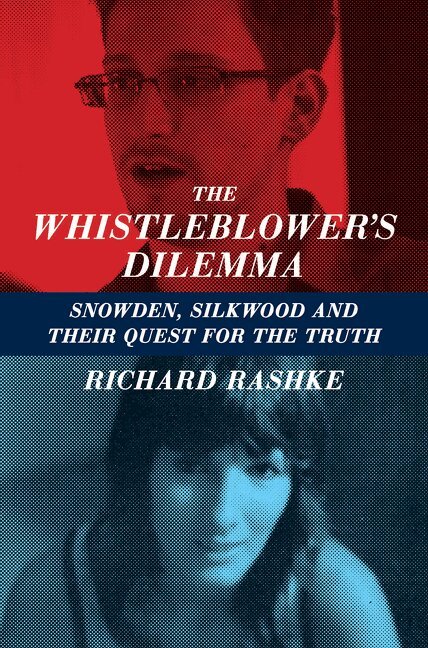
In June of 2013, Edward Snowden, a 29-year-old former CIA employee, thrust himself into the spotlight when he leaked thousands of top secret National Security Agency (NSA) documents to the journalist, Glen Greenwald. Immediately branded as a whistleblower, Snowden reignited an international debate about private citizens who reveal government secrets that should be exposed but may endanger the lives of citizens. Like the late Karen Silkwood, whose death in a car accident while bringing incriminating evidence against her employer to a meeting with a New York Times reporter, is still a mystery, Snowden was intent upon revealing the controversial practices of his employer, a government contractor. Rightly or wrongly, Snowden and Silkwood believed that their revelations would save lives. In his riveting, thought-provoking book, Richard Rashke weaves between the lives of these two controversial figures and creates a narrative context for a discussion of what constitutes a citizen's duty to reveal or not to reveal.He asks the question: can our government regulators, our politicians, our military-intelligence and our profit-oriented corporations be trusted to protect us from harm as well as safeguard our privacy?
191 kr
Skickas inom 5-8 vardagar
For this edition, Rashke has added a preface and three short chapters that explore what has been released and learned about the Silkwood case since the book's original publication.Karen Silkwood, an employee of the Kerr-McGee plutonium processing plant, was killed in a car crash on her way to deliver important documents to a newspaper reporter in 1974. Silkwood was a union activist concerned about health and safety issues at the plant, and her death at age 28 was considered by many to be highly suspicious. Was it Kerr-McGee's revenge on a troublesome whistle-blower? Or was it part of a much larger conspiracy reaching from the Atomic Energy Commission to the FBI and the CIA? Richard Rashke leads us through the myriad of charges and countercharges, theories and facts, and reaches conclusions based solely on the evidence in hand. Originally published in 1981, his audiobook offers a vivid, edgy picture of the tensions that racked this country in the 1970s. Now updated, with never-before-revealed names and content, this new volume is an important historical document. Complex, fascinating characters populate this compelling insider's view of the nuclear industry. The issues it explores - whistle-blowers, worker safety, the environment, and nuclear vulnerability - have not lost relevance today, 26 years after Silkwood's white Honda Civic was found trapped in a concrete culvert near Oklahoma City. Rashke fully explores and explains what happened to the various actors in the drama, and discusses the long-term effects of the events around Silkwood's death.Karen Silkwood is recognized by many as the original "Whistler-Blower". Current events should impel every curious reader to pick up this investigation to better understand how power, politics, and greed still influence America's business interests.
338 kr
Skickas inom 5-8 vardagar