Richard Ronald - Böcker
Visar alla böcker från författaren Richard Ronald. Handla med fri frakt och snabb leverans.
11 produkter
11 produkter
2 103 kr
Skickas inom 10-15 vardagar
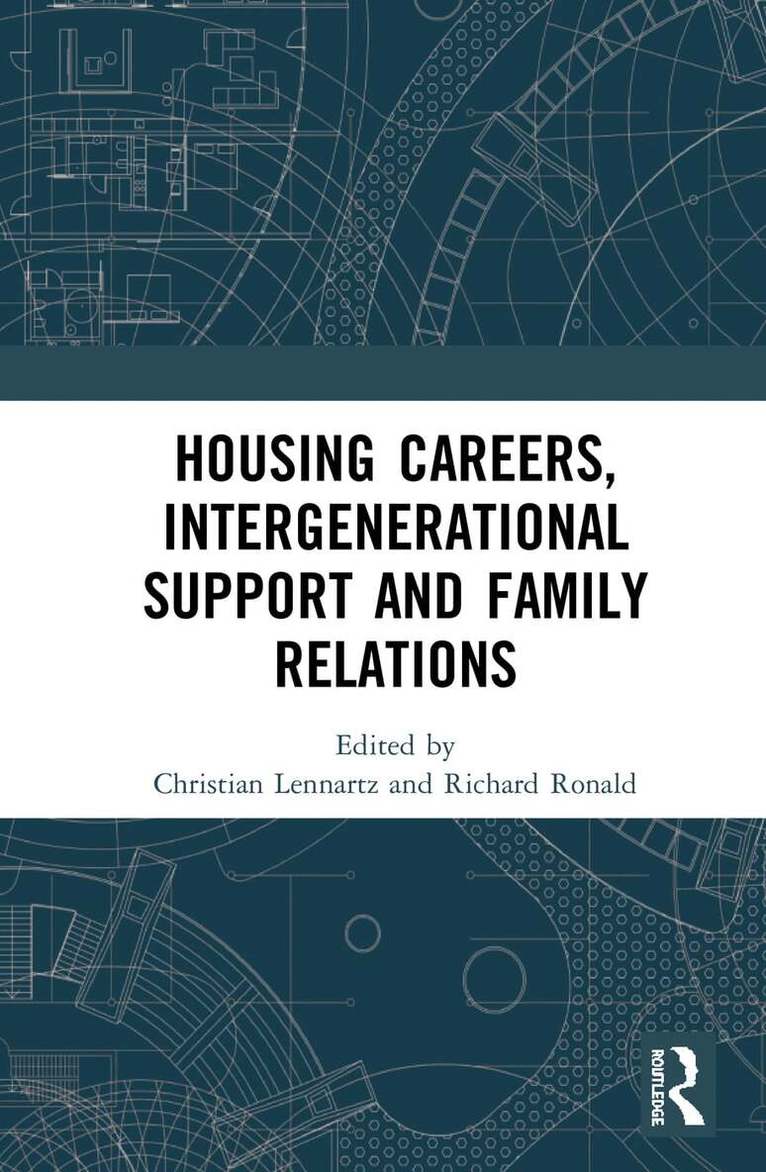
In this comprehensive volume, authors from across the social sciences explore how housing wealth transfers have impacted the integration of families, society and the economy, with a focus on the (re)negotiation of the ‘generational contract’. While housing has always been central to the realization and reproduction of families, more recently, the mutual embedding of home and family has become more obvious as realignments in housing markets, employment and welfare states have worked together to undermine housing access for new households, enhancing intergenerational interdependencies. More families have thus become involved in smoothening the routes of younger adult members into and up the ‘housing ladder’.While intergenerational support appears to have become much more widespread, it remains highly differentiated across countries, cities and regions, as well as uneven between social and income classes. This book addresses the increasing role that family support, and intergenerational transfers in particular, are playing in sustaining the formation of new households and the transition of young adults towards social and economic autonomy. The authors draw on diverse international cases and a variety of methodologies in order to advance our understanding of housing as a key driver of contemporary social relations and inequalities.Chapters 1, 4, 6, 7, 8, and 9 of this book are freely available as downloadable Open Access PDFs at https://www.taylorfrancis.com under a Creative Commons Attribution-Non Commercial-No Derivatives (CC-BY-NC-ND) 4.0 license (Chapters 1, 6, 8, and 9) and a Creative Commons Attribution (CC-BY) 4.0 license (Chapters 4 and 7).
1 943 kr
Skickas inom 10-15 vardagar
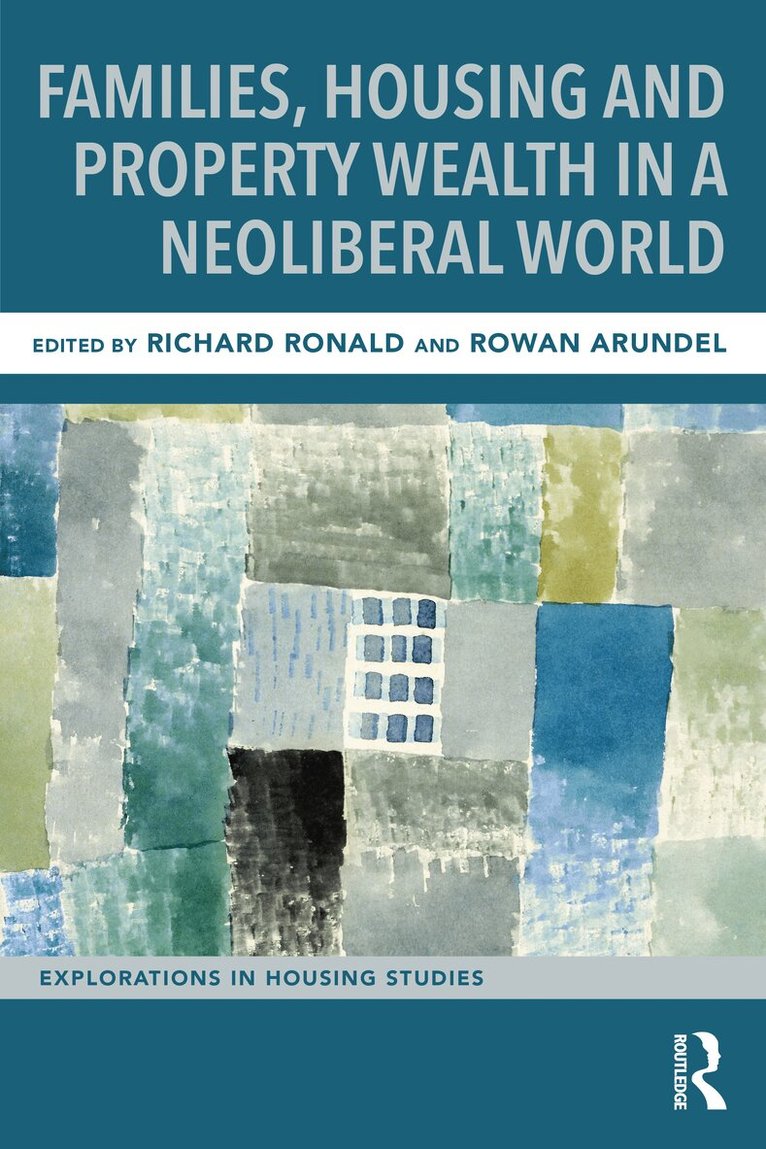
The twenty-first century has so far been characterized by ongoing realignments in the organization of the economy around housing and real estate. Markets have boomed and bust and boomed again with residential property increasingly a focus of wealth accumulation practices. While analyses have largely focussed on global flows of capital and large institutions, families have served as critical actors. Housing properties are family goods that shape how members interact, organise themselves, and deal with the vicissitudes of everyday economic life. Families have, moreover, increasingly mobilized around their homes as assets, aligning household transitions and practices towards the accumulation of property wealth. The capacities of different families to realise this, however, are highly uneven with housing conditions becoming increasingly central to growing inequalities and processes of social stratification. This book addresses changing relationships between families and their homes over the latest period of neo-liberalization. The book confronts how transformations in households, life-course transitions, kinship and intergenerational relations shape, and are being shaped by, the shifting role of property markets in social and economic processes. The chapters explore this in terms of different aspects of home, family life and socioeconomic change across varied national contexts.
617 kr
Skickas inom 10-15 vardagar
In this comprehensive volume, authors from across the social sciences explore how housing wealth transfers have impacted the integration of families, society and the economy, with a focus on the (re)negotiation of the ‘generational contract’. While housing has always been central to the realization and reproduction of families, more recently, the mutual embedding of home and family has become more obvious as realignments in housing markets, employment and welfare states have worked together to undermine housing access for new households, enhancing intergenerational interdependencies. More families have thus become involved in smoothening the routes of younger adult members into and up the ‘housing ladder’. While intergenerational support appears to have become much more widespread, it remains highly differentiated across countries, cities and regions, as well as uneven between social and income classes. This book addresses the increasing role that family support, and intergenerational transfers in particular, are playing in sustaining the formation of new households and the transition of young adults towards social and economic autonomy. The authors draw on diverse international cases and a variety of methodologies in order to advance our understanding of housing as a key driver of contemporary social relations and inequalities. Chapter 1 of this book is freely available as a downloadable Open Access PDF under a Creative Commons Attribution-Non Commercial-No Derivatives 3.0 license. https://s3-us-west-2.amazonaws.com/tandfbis/rt-files/docs/Open+Access+Chapters/9780367262822_oachapter1.pdfChapter 6 of this book is freely available as a downloadable Open Access PDF under a Creative Commons Attribution-Non Commercial-No Derivatives 3.0 license. https://s3-us-west-2.amazonaws.com/tandfbis/rt-files/docs/Open+Access+Chapters/9780367262822_oachapter6.pdfChapter 9 of this book is freely available as a downloadable Open Access PDF under a Creative Commons Attribution-Non Commercial-No Derivatives 3.0 license. https://s3-us-west-2.amazonaws.com/tandfbis/rt-files/docs/Open+Access+Chapters/9780367262822_oachapter9.pdfChapter 8 of this book is freely available as a downloadable Open Access PDF under a Creative Commons Attribution-Non Commercial-No Derivatives 3.0 license. https://s3-us-west-2.amazonaws.com/tandfbis/rt-files/docs/Open+Access+Chapters/9780367262822_oachapter8.pdf
2 223 kr
Skickas inom 10-15 vardagar
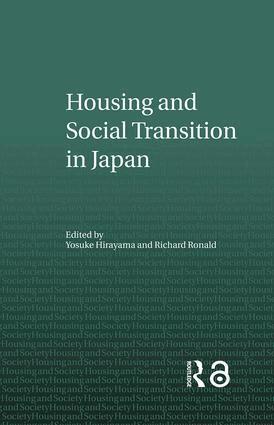
Bringing together a number of perspectives on the Japanese housing system, Housing and Social Transition in Japan provides a comprehensive, challenging and theoretically developed account of the dynamic role of the housing system during a period of unprecedented social and economic change in one of the most enigmatic social, political, and economic systems of the modern world.While Japan demonstrates many of the characteristics of some western housing and social systems, including mass homeownership and consumption-based lifestyles, extensive economic growth and rapid urban modernization has been achieved in balance with traditional social values and the maintenance of the family system. Helpfully divided into three sections, Housing and Social Transition in Japan:explores the dynamics of the development of the housing system in post-war Japandeals with social issues related to housing in terms of social aging, family relations, gender and inequalityaddresses the Japanese housing system and social change in relation to comparative and theoretical frameworks. As well as providing challenges and insights for the academic community at large, this book also provides a good introduction to the study of Japan and its housing, economic, social and welfare system generally.
2 155 kr
Skickas inom 10-15 vardagar
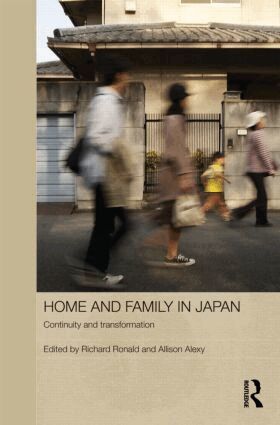
In the Japanese language the word ‘ie’ denotes both the materiality of homes and family relations within. The traditional family and family house - often portrayed in ideal terms as key foundations of Japanese culture and society - have been subject to significant changes in recent years. This book comprehensively addresses various aspects of family life and dwelling spaces, exploring how homes, household patterns and kin relations are reacting to contemporary social, economic and urban transformations, and the degree to which traditional patterns of both houses and households are changing. The book contextualises the shift from the hegemonic post-war image of standard family life, to the nuclear family and to a situation now where Japanese homes are more likely to include unmarried singles; childless couples; divorcees; unmarried adult children and elderly relatives either living alone or in nursing homes. It discusses how these new patterns are both reinforcing and challenging typical understandings of Japanese family life.
2 558 kr
Skickas inom 10-15 vardagar
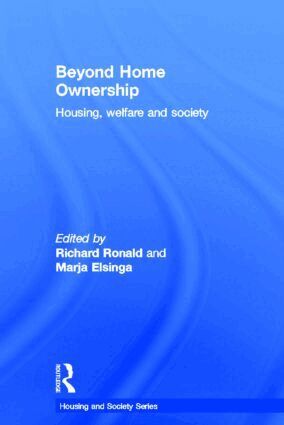
In context of ongoing transformations in housing markets and socioeconomic conditions, this book focuses on past, current and future roles of home ownership in social policies and welfare practices. It considers owner-occupied housing in terms of diverse meanings and manifestations, but in particular the part played by housing tenure in the political, socioeconomic and demographic changes that have characterized the pre- and post-crisis era. The intensified promotion of home ownership in recent decades helped stimulate an increasing orientation towards the private consumption of housing, not only as a home, but also an asset – or possibly speculative vehicle – that enhances household economic capacity and can be transferred to children or other family, or even exchanged for other goods. The latest global financial crisis, however, made it clear that owner-occupied housing markets and mortgage sectors have become deeply embedded in networks of socioeconomic interdependency and risk. This collection engages with numerous debates on housing and society in a range of developed societies from North America to Asia-Pacific to North, South, East and West Europe. Interdisciplinary contributors draw upon diverse empirical data to explore how housing and home ownership has become so embedded in polity, economy and household welfare conditions in various social and cultural contexts. Another concern is what lies beyond home ownership considering the integration of housing systems with economic growth and social stability appears to be unravelling. This volume speaks to public debates concerning the future of housing markets, policy and tenure, providing deep and provocative insights for academics, students and professionals alike.
753 kr
Skickas inom 10-15 vardagar
In context of ongoing transformations in housing markets and socioeconomic conditions, this book focuses on past, current and future roles of home ownership in social policies and welfare practices. It considers owner-occupied housing in terms of diverse meanings and manifestations, but in particular the part played by housing tenure in the political, socioeconomic and demographic changes that have characterized the pre- and post-crisis era. The intensified promotion of home ownership in recent decades helped stimulate an increasing orientation towards the private consumption of housing, not only as a home, but also an asset – or possibly speculative vehicle – that enhances household economic capacity and can be transferred to children or other family, or even exchanged for other goods. The latest global financial crisis, however, made it clear that owner-occupied housing markets and mortgage sectors have become deeply embedded in networks of socioeconomic interdependency and risk. This collection engages with numerous debates on housing and society in a range of developed societies from North America to Asia-Pacific to North, South, East and West Europe. Interdisciplinary contributors draw upon diverse empirical data to explore how housing and home ownership has become so embedded in polity, economy and household welfare conditions in various social and cultural contexts. Another concern is what lies beyond home ownership considering the integration of housing systems with economic growth and social stability appears to be unravelling. This volume speaks to public debates concerning the future of housing markets, policy and tenure, providing deep and provocative insights for academics, students and professionals alike.
671 kr
Skickas inom 10-15 vardagar
Bringing together a number of perspectives on the Japanese housing system, Housing and Social Transition in Japan provides a comprehensive, challenging and theoretically developed account of the dynamic role of the housing system during a period of unprecedented social and economic change in one of the most enigmatic social, political, and economic systems of the modern world.While Japan demonstrates many of the characteristics of some western housing and social systems, including mass homeownership and consumption-based lifestyles, extensive economic growth and rapid urban modernization has been achieved in balance with traditional social values and the maintenance of the family system. Helpfully divided into three sections, Housing and Social Transition in Japan:explores the dynamics of the development of the housing system in post-war Japandeals with social issues related to housing in terms of social aging, family relations, gender and inequalityaddresses the Japanese housing system and social change in relation to comparative and theoretical frameworks. As well as providing challenges and insights for the academic community at large, this book also provides a good introduction to the study of Japan and its housing, economic, social and welfare system generally.
671 kr
Skickas inom 10-15 vardagar
In the Japanese language the word ‘ie’ denotes both the materiality of homes and family relations within. The traditional family and family house - often portrayed in ideal terms as key foundations of Japanese culture and society - have been subject to significant changes in recent years. This book comprehensively addresses various aspects of family life and dwelling spaces, exploring how homes, household patterns and kin relations are reacting to contemporary social, economic and urban transformations, and the degree to which traditional patterns of both houses and households are changing. The book contextualises the shift from the hegemonic post-war image of standard family life, to the nuclear family and to a situation now where Japanese homes are more likely to include unmarried singles; childless couples; divorcees; unmarried adult children and elderly relatives either living alone or in nursing homes. It discusses how these new patterns are both reinforcing and challenging typical understandings of Japanese family life.
594 kr
Skickas inom 10-15 vardagar
The twenty-first century has so far been characterized by ongoing realignments in the organization of the economy around housing and real estate. Markets have boomed and bust and boomed again with residential property increasingly a focus of wealth accumulation practices. While analyses have largely focussed on global flows of capital and large institutions, families have served as critical actors. Housing properties are family goods that shape how members interact, organise themselves, and deal with the vicissitudes of everyday economic life. Families have, moreover, increasingly mobilized around their homes as assets, aligning household transitions and practices towards the accumulation of property wealth. The capacities of different families to realise this, however, are highly uneven with housing conditions becoming increasingly central to growing inequalities and processes of social stratification. This book addresses changing relationships between families and their homes over the latest period of neo-liberalization. The book confronts how transformations in households, life-course transitions, kinship and intergenerational relations shape, and are being shaped by, the shifting role of property markets in social and economic processes. The chapters explore this in terms of different aspects of home, family life and socioeconomic change across varied national contexts.
1 867 kr
Skickas inom 7-10 vardagar
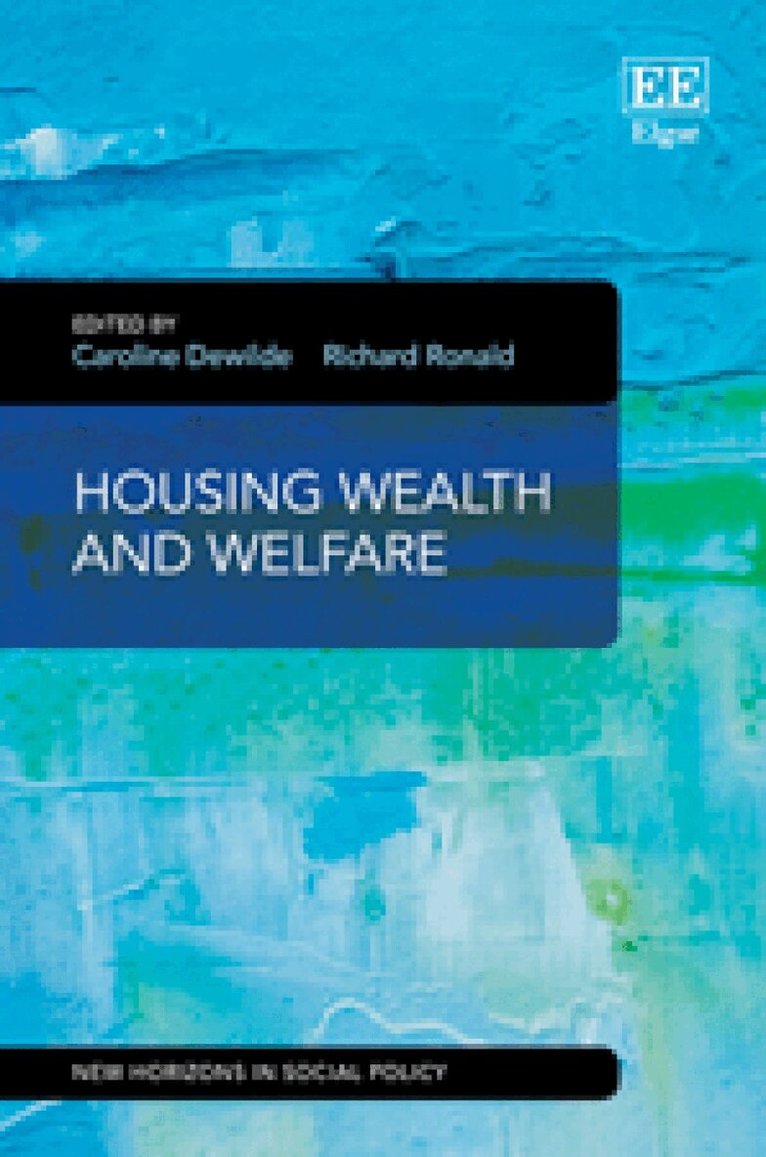
Both growth and unevenness in the distribution of housing wealth have become characteristic of advanced societies in recent decades. This book examines, in various contexts, how central housing property ownership has become to household well-being as well as in reshaping social, economic and political relations.Expert contributors analyze the critical interactions between housing and wealth that lie at the heart of contemporary forms of capitalism, especially its global, neoliberal incarnation. Comparing and contrasting case studies from across the European continent, this book illustrates how these interactions are reshaping the function of housing as a welfare object, including how the financialisation and commodification of housing in the twenty-first-century has transformed its role and amplified distributional outcomes. Practical and engaging, Housing Wealth and Welfare is a must-read for researchers and students of housing studies, social policy, sociology, social geography and political science. It will also appeal to policy makers within national and supra-national organisations and institutions such as the European Union, Housing Europe and the International Monetary Fund.Contributors include: B. Bengtsson, S. Buchholz, C. Dewilde, J. Doling, T.P. Gerber, K. Kolb, S. Köppe, C. Lennartz, S. Mandic, M. Mrzel, M. Norris, R. Ronald, H. Ruonavaara, B.A. Searle, A.M. Soaita, J. Sørvoll, A. Wallace, J.R. Zavisca