Richard Ruppel - Böcker
Visar alla böcker från författaren Richard Ruppel. Handla med fri frakt och snabb leverans.
4 produkter
4 produkter
1 544 kr
Skickas inom 10-15 vardagar
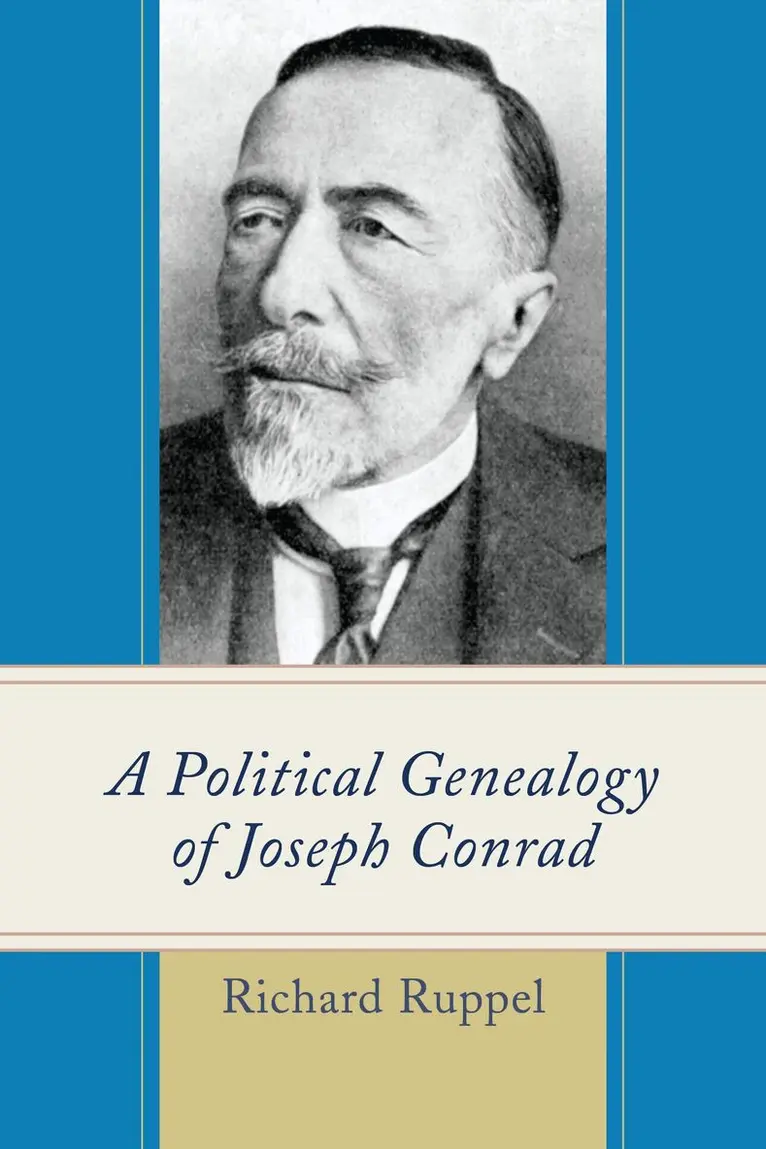
Józef Teodor Konrad Korzeniowski, who gradually transformed himself into the English writer, Joseph Conrad, was a mercurial personality. He left Poland for the sea, though he had no experience with salt water. He left the Polish language for French, and then for English. He attempted suicide at the age of twenty. He invested in various schemes and lost his inheritance. He married an English typist nearly sixteen years younger than himself with whom he had nothing in common. He worked as a writer though he made no money through all the years of his most important work and though he experienced terrible psychological breakdowns after completing each novel. He was warm with his friends, ingratiating with influential strangers, but also intensely irritable and easily offended.His work is as varied and changeable as his personality, from his first two, emotionally intense Malay novels, to the stolid and confident Nigger of the “Narcissus” and “Typhoon”; from the coldly ironic “Outpost of Progress” to the nightmarishly subjective Heart of Darkness; from the leisurely, panoramic visions of Nostromo to the tautly nervous, claustrophobic ironies in The Secret Agent. Despite the extraordinary thematic and tonal range of his work, critics have imposed a stable political perspective on his fiction—most often an organic conservatism, influenced by his Polish background. This is understandable; until recently, a critic’s role has been to impose order on an artist’s creations. The approach in this book is different. Drawing on the work of Michel Foucault and Jean-Francois Lyotard, especially on the latter’s critique of what he called “the grand narrative,” A Political Genealogy of Joseph Conrad shows how Conrad’s politics were always radically contingent on audience, contemporary events, and, especially, genre. While the political perspective in each of his stories and novels may be more-or-less coherent and consistent, there is no consistency throughout his work. A Political Genealogy of Joseph Conrad is the first book devoted exclusively to Conrad’s politics since the 1960s.
653 kr
Skickas inom 10-15 vardagar
Józef Teodor Konrad Korzeniowski, who gradually transformed himself into the English writer, Joseph Conrad, was a mercurial personality. He left Poland for the sea, though he had no experience with salt water. He left the Polish language for French, and then for English. He attempted suicide at the age of twenty. He invested in various schemes and lost his inheritance. He married an English typist nearly sixteen years younger than himself with whom he had nothing in common. He worked as a writer though he made no money through all the years of his most important work and though he experienced terrible psychological breakdowns after completing each novel. He was warm with his friends, ingratiating with influential strangers, but also intensely irritable and easily offended.His work is as varied and changeable as his personality, from his first two, emotionally intense Malay novels, to the stolid and confident Nigger of the “Narcissus” and “Typhoon”; from the coldly ironic “Outpost of Progress” to the nightmarishly subjective Heart of Darkness; from the leisurely, panoramic visions of Nostromo to the tautly nervous, claustrophobic ironies in The Secret Agent. Despite the extraordinary thematic and tonal range of his work, critics have imposed a stable political perspective on his fiction—most often an organic conservatism, influenced by his Polish background. This is understandable; until recently, a critic’s role has been to impose order on an artist’s creations. The approach in this book is different. Drawing on the work of Michel Foucault and Jean-Francois Lyotard, especially on the latter’s critique of what he called “the grand narrative,” A Political Genealogy of Joseph Conrad shows how Conrad’s politics were always radically contingent on audience, contemporary events, and, especially, genre. While the political perspective in each of his stories and novels may be more-or-less coherent and consistent, there is no consistency throughout his work. A Political Genealogy of Joseph Conrad is the first book devoted exclusively to Conrad’s politics since the 1960s.
Del 16149 - Lecture Notes in Computer Science
Skin Image Analysis, and Computer-Aided Pelvic Imaging for Female Health
10th International Workshop, ISIC 2025, and First International Workshop, CAPI 2025, Held in Conjunction with MICCAI 2025, Daejeon, South Korea, September 23, 2025, Proceedings
Häftad, Engelska, 2025
812 kr
Skickas inom 7-10 vardagar
This book constitutes the refereed joint proceedings of the First International Workshop on Computer-Aided Pelvic Imaging for Female Health, CAPI 2025, and the 10th International Workshop on Skin Image Analysis, ISIC 2025, held in conjunction with the 28th International Conference on Medical Imaging and Computer-Assisted Intervention, MICCAI 2025, in , Daejeon, South Korea, in September 2025.The 7 full papers and 1 short paper presented at CAPI 2025, and the 6 full papers presented at ISIC 2018 were carefully reviewed and selected.CAPI 2025 focuses on women’s reproductive health by linking the growing community with researchers working in Computer Assisted Intervention.ISIC 2025 focuses on advancements and knowledge dissemination in the field of skin image analysis, raising awareness and interest for these socially valuable tasks.
1 532 kr
Kommande
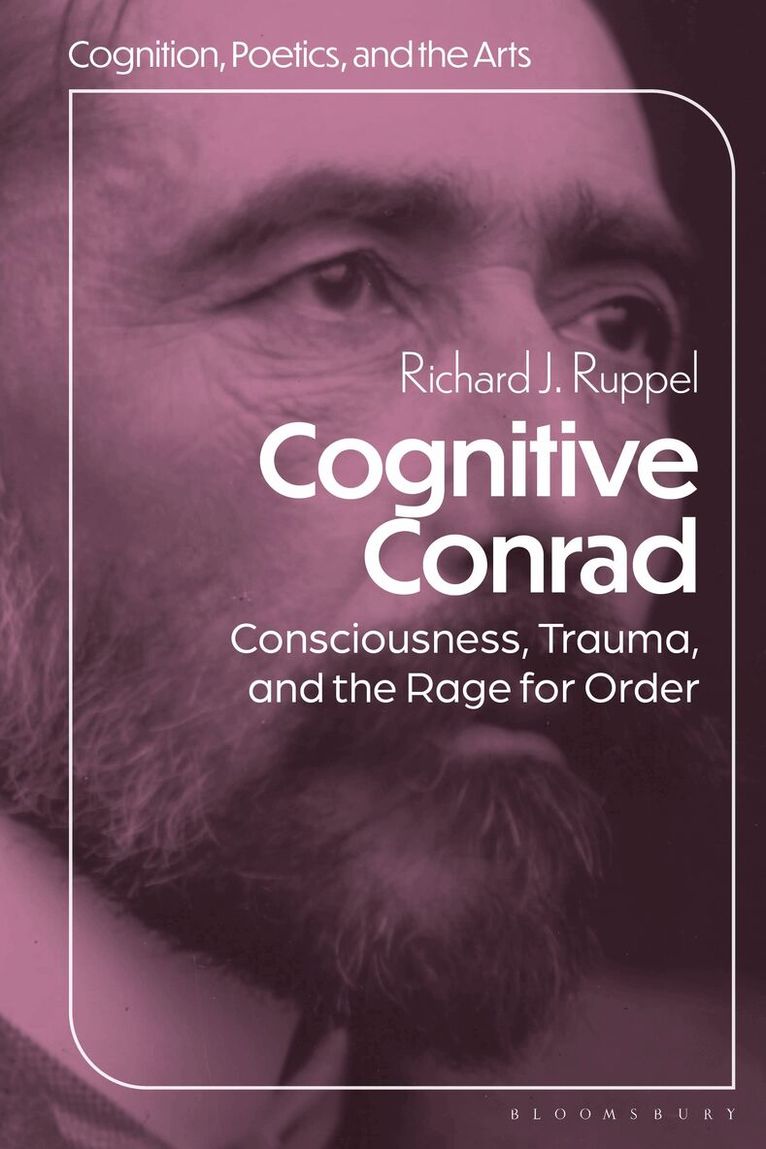
Uncovers how Joseph Conrad's narratives reflect the cognitive studies of his day but also anticipate our own contemporary understandings of consciousness, trauma, and the human need for order. Cognitive Conrad demonstrates the interpretive power of cognitive literary studies and historicism in the most important works of Joseph Conrad. It highlights how Conrad's fiction reflects the complexities of human consciousness, trauma, and the relentless human drive to impose a coherent form on a world that, ultimately, lacks any dependable order independent of individual, human constructions. Through a detailed examination of Conrad's characters and their psychological landscapes – in a wide range of fiction, such as Lord Jim, Under Western Eyes, and various short stories – Richard Ruppel reveals how the novelist anticipated modern cognitive theories and the science of trauma. He also discusses the profound connections between Conrad's fiction and the work of 19th-century scientists like Hermann Helmholtz, who influenced Conrad's portrayal of perception and consciousness. Cognitive Conrad asserts the power of the arts and humanities to supplement and correct the sciences, which most often look to generalize and categorize. It argues that one key role of the arts – often articulated poignantly in Conrad’s greatest work – is to highlight the anomalous, to champion the peculiar.