Richard Scullion – författare
Visar alla böcker från författaren Richard Scullion. Handla med fri frakt och snabb leverans.
14 produkter
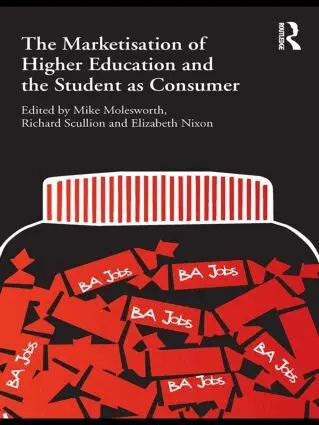
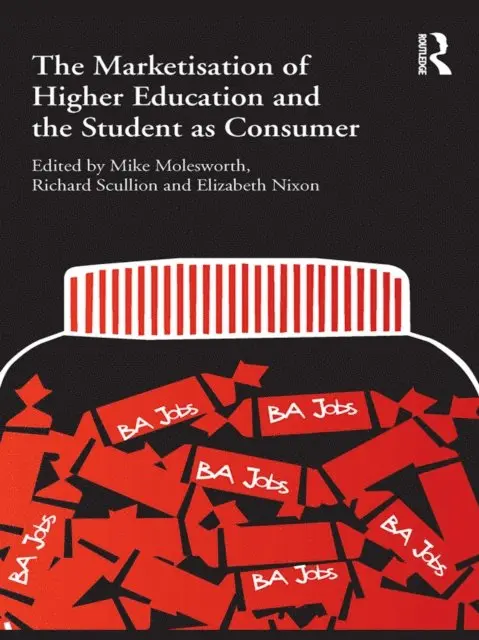
Marketisation of Higher Education and the Student as Consumer
Av Gareth King, Mike Molesworth m. fl.
Inbunden, 2010
2068 kr
Lägg i varukorg
Until recently government policy in the UK has encouraged an expansion of Higher Education to increase participation and with an express aim of creating a more educated workforce. This expansion has led to competition between Higher Education institutions, with students increasingly positioned as …
Marketisation of Higher Education and the Student as Consumer
Av Gareth King, Mike Molesworth m. fl.
Häftad, 2010
600 kr
Lägg i varukorg
Until recently government policy in the UK has encouraged an expansion of Higher Education to increase participation and with an express aim of creating a more educated workforce. This expansion has led to competition between Higher Education institutions, with students increasingly positioned as …
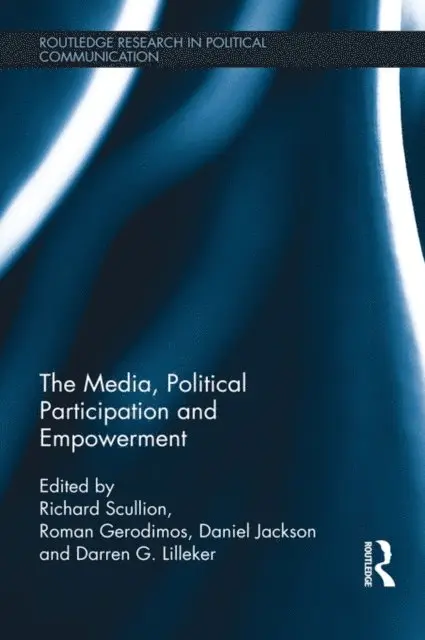
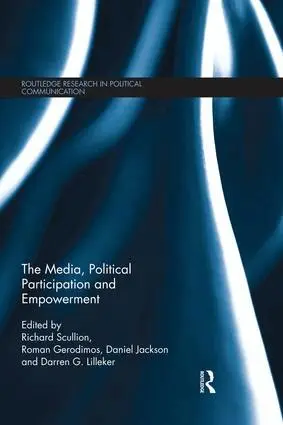
Media, Political Participation and Empowerment
Av Richard Scullion, Roman Gerodimos m. fl.
Inbunden, 2013
2506 kr
Lägg i varukorg
Technological, cultural and economic forces are transforming political communication, posing challenges and opportunities for politicians and media organisations, while at the same time many governments and civil society express concerns about the extent and nature of political empowerment and …
Marketing of Political Parties
Political Marketing at the 2005 General Election
Av Darren Lilleker, Nigel Jackson m. fl.
Inbunden, 2006
1099 kr
Lägg i varukorg
What is political marketing and how does it work? This question sits at the heart of this book. Using the British General Election of 2005 as a case study, this collection focuses on three important elements: the products offered by the parties; the campaign communication; and the perceptions, …
marketing of political parties
Political marketing at the 2005 general election
Av Darren Lilleker, Nigel Jackson m. fl.
Häftad, 2006
334 kr
Lägg i varukorg
What is political marketing and how does it work? This question sits at the heart of this book. Using the British General Election of 2005 as a case study, this collection focuses on three important elements: the products offered by the parties; the campaign communication; and the perceptions, …
Media, Political Participation and Empowerment
Av Darren Lilleker, Daniel Jackson m. fl.
E-bok, 2013
983 kr
Lägg i varukorg
Technological, cultural and economic forces are transforming political communication, posing challenges and opportunities for politicians and media organisations, while at the same time many governments and civil society express concerns about the extent and nature of political empowerment and …
Media, Political Participation and Empowerment
Av Darren Lilleker, Daniel Jackson m. fl.
E-bok, 2013
1004 kr
Lägg i varukorg
Technological, cultural and economic forces are transforming political communication, posing challenges and opportunities for politicians and media organisations, while at the same time many governments and civil society express concerns about the extent and nature of political empowerment and …
Marketisation of Higher Education and the Student as Consumer
Av Elizabeth Nixon, Richard Scullion m. fl.
E-bok, 2010
707 kr
Lägg i varukorg
Until recently government policy in the UK has encouraged an expansion of Higher Education to increase participation and with an express aim of creating a more educated workforce. This expansion has led to competition between Higher Education institutions, with students increasingly positioned as …
Marketisation of Higher Education and the Student as Consumer
Av Elizabeth Nixon, Richard Scullion m. fl.
E-bok, 2010
707 kr
Lägg i varukorg
Until recently government policy in the UK has encouraged an expansion of Higher Education to increase participation and with an express aim of creating a more educated workforce. This expansion has led to competition between Higher Education institutions, with students increasingly positioned as …
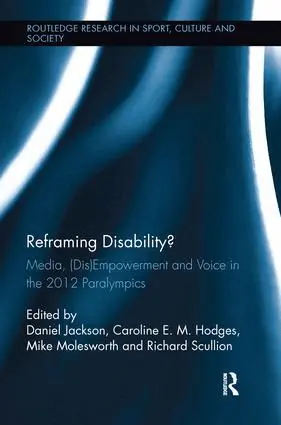
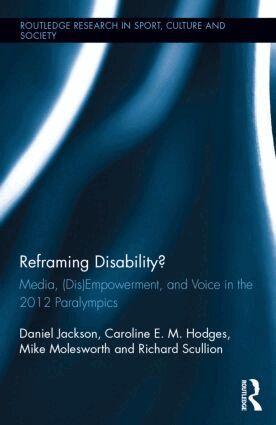
Reframing Disability?
Media, (Dis)Empowerment, and Voice in the 2012 Paralympics
Av Daniel Jackson, Caroline E.M. Hodges m. fl.
Häftad, 2017
824 kr
Lägg i varukorg
The London 2012 Paralympic Games - the biggest, most accessible and best-attended games in the Paralympics' 64-year history - came with an explicit aim to "transform the perception of disabled people in society," and use sport to contribute to "a better world for all people with a disability." This …
Reframing Disability?
Media, (Dis)Empowerment, and Voice in the 2012 Paralympics
Av Daniel Jackson, Caroline E.M. Hodges m. fl.
Inbunden, 2014
2515 kr
Lägg i varukorg
The London 2012 Paralympic Games - the biggest, most accessible and best-attended games in the Paralympics' 64-year history - came with an explicit aim to "transform the perception of disabled people in society," and use sport to contribute to "a better world for all people with a disability." This …
Media, Political Participation and Empowerment
Av Richard Scullion, Roman Gerodimos m. fl.
Häftad, 2014
853 kr
Lägg i varukorg
Technological, cultural and economic forces are transforming political communication, posing challenges and opportunities for politicians and media organisations, while at the same time many governments and civil society express concerns about the extent and nature of political empowerment and …
Reframing Disability?
Media, (Dis)Empowerment, and Voice in the 2012 Paralympics
Av Richard Scullion, Mike Molesworth m. fl.
E-bok, 2014
949 kr
Lägg i varukorg
The London 2012 Paralympic Games - the biggest, most accessible and best-attended games in the Paralympics'' 64-year history - came with an explicit aim to "transform the perception of disabled people in society," and use sport to contribute to "a better world for all people with a disability." …
Reframing Disability?
Media, (Dis)Empowerment, and Voice in the 2012 Paralympics
Av Richard Scullion, Mike Molesworth m. fl.
E-bok, 2014
970 kr
Lägg i varukorg
The London 2012 Paralympic Games - the biggest, most accessible and best-attended games in the Paralympics'' 64-year history - came with an explicit aim to "transform the perception of disabled people in society," and use sport to contribute to "a better world for all people with a disability." …