Richmond L. Clow - Böcker
Visar alla böcker från författaren Richmond L. Clow. Handla med fri frakt och snabb leverans.
5 produkter
5 produkter
2 627 kr
Skickas inom 10-15 vardagar
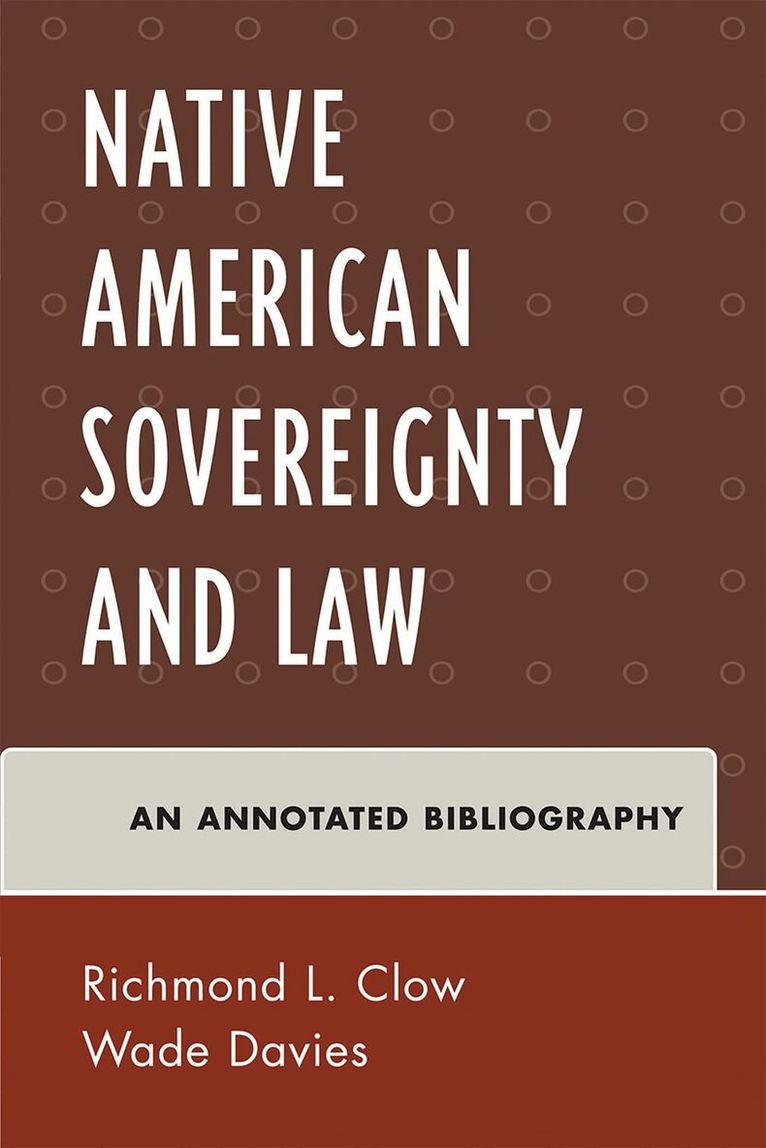
American Indian Sovereignty and Law: An Annotated Bibliography covers a wide variety of topics and includes sources dealing with federal Indian policy, federal and tribal courts, criminal justice, tribal governance, religious freedoms, economic development, and numerous sub-topics related to tribal and individual rights. While primarily focused on the years 1900 to the present, many sources are included that focus on the 19th century or earlier.The annotations included in this reference will help researchers know enough about the arguments and contents of each source to determine its usefulness. Whenever a clear central argument is made in an article or book, it is stated in the entry, unless that argument is made implicit by the title of that entry. Each annotation also provides factual information about the primary topic under discussion. In some cases, annotations list topics that compose a significant portion of an author's discussion but are not obvious from the title of the entry. American Indian Sovereignty and Law will be extremely useful in both studying Native American topics and researching current legal and political actions affecting tribal sovereignty.
469 kr
Tillfälligt slut
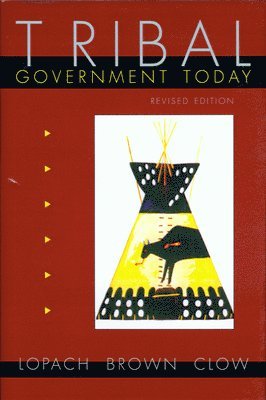
An account of Fourth World peoples within a First World nation, TRIBAL GOVERNMENT TODAY is a critical analysis of the contemporary progress of Indian tribes toward self-government and economic sufficiency. Focusing on seven reservations in Montana representing the diverse opportunities and problems facing Indian tribes in the West, this book approaches tribal government from the twin perspectives of reservation politics and the legal context within which reservation conflicts must be solved. Unlike previous studies of Indian politics, Tribal Government Today is neither a critique of American Indian policy over the years nor an analysis of federal, state, and tribal jurisdictional ambiguities. The authors -- a political scientist, a lawyer, and a historian -- focus instead on the distinctive political culture that has evolved on each reservation in terms of the reservation settings, governmental structures and procedures, and a particular brand of politics.
295 kr
Tillfälligt slut
283 kr
Skickas inom 3-6 vardagar
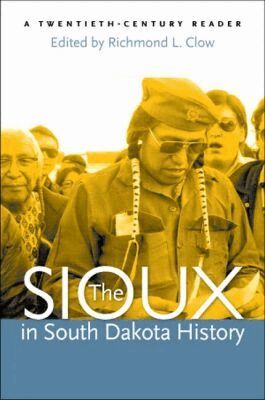
These thirteen essays, taken from the pages of South Dakota History, the quarterly journal of the South Dakota State Historical Society, explore modern American Indian political and cultural life. In five themed sections, contributors examine the tremendous changes the Sioux experienced during the twentieth century. The political and social ramifications of land heirship, the damming of the Missouri River, and shifting federal policies are among topics discussed. Health care, recreation, and education are viewed through the windows of a psychiatric facility, reservation rodeos, and the experiences of a day-school teacher. The tumultuous build-up to the violence at Wounded Knee in 1973 is covered as well, along with issues surrounding land allotment and efforts to eradicate tuberculosis. Editor Richmond L. Clow contributes an introduction and afterword providing context for the essays and suggesting avenues for further study.Contributors: Harry H. Anderson, Roger Bromert, Richmond L. Clow, Joshua Garrett-Davis, Frederick E. Hoxie, Michael L. Lawson, Allison Fuss Mellis, Akim D. Reinhardt, Scott Riney, Steven C. Schulte, Don Southerton, Laura Woodworth-Ney.
342 kr
Skickas inom 7-10 vardagar
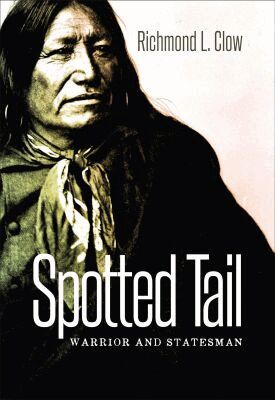
As a prominent leader of the Sicangu Lakotas during a time of conflict and change, Spotted Tail (1823–1881) left his mark on the Northern Great Plains. He was not a hereditary chief but developed his standing over time, first proving himself a capable warrior and later a persuasive negotiator. As white settlers encroached on Indian lands in ever-greater numbers, Spotted Tail decided to forgo engaging in prolonged conflicts with the United States, including those led by Red Cloud and Crazy Horse. Instead, he determined to negotiate with the United States to secure a homeland, education, employment, and other necessities essential to the future of his people. Had Spotted Tail chosen to fight, Captain John G. Bourke wrote in 1891, “neither North nor South Dakota, Wyoming nor Montana might now be on the map.”Not all Lakotas agreed with his philosophy, and his tactics, heavy-handed at times, earned him enemies. On 5 August 1881, Crow Dog, a fellow Sicangu leader on the Rosebud Indian Reservation, shot and killed Spotted Tail, ending years of rivalry. Even in death, Spotted Tail continued to have an impact as Crow Dog’s conviction for his murder made its way to the United States Supreme Court, ultimately impacting tribal sovereignty. In the first full biography of Spotted Tail since the 1960s, Richmond L. Clow uses firsthand accounts from tribal and nontribal sources, government records, and published works to establish Spotted Tail as both a warrior and a statesman. The author’s voluminous research into contemporary news accounts, including interviews with Spotted Tail, provides a wealth of information about his views and actions that, until now, have been remarkably underutilised.