Rick Warner – författare
Visar alla böcker från författaren Rick Warner. Handla med fri frakt och snabb leverans.
6 produkter
6 produkter
1 009 kr
Skickas inom 5-8 vardagar
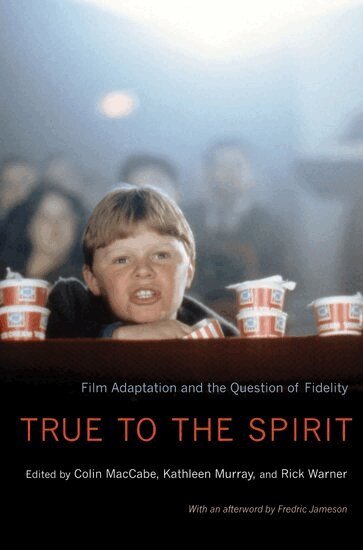
Adaptation persists as a major area of inquiry in both film and literary studies. Over the past two decades, scholars have extended the debate well beyond George Bluestone's influential Novels into Film (1957) by taking into account such concerns as intertextuality and different forms of narrative enabled through new media. A dominant trend has been to dispense straight away with questions of fidelity and "faithfulness," the assumption being that such views are naïve, moralistic, and rooted in a cultural prejudice against the audiovisual. While acknowledging the merits of this position--namely its complication of the one-way "page-to-screen" perspective--this collection seeks to put the question of fidelity back into play. The essays explore the ways in which the newer, more sophisticated approaches can still accommodate forms of fidelity between two or more texts without having to reinscribe untenable distinctions between "original" and "copy," and without having to argue from a strict media essentialist position that stages an impasse between linguistic and cinematic means of articulation. In addition, the scholars in this volume seek to recognize and account for fidelity's cultural currency among filmmakers and audiences alike, no matter how impossible fidelity might be in a literal sense. The selected essays offer an opportunity to showcase both well established adaptation scholars (Laura Mulvey, Dudley Andrew, Tom Gunning and James Naremore) and emerging voices in the field.
444 kr
Skickas inom 5-8 vardagar
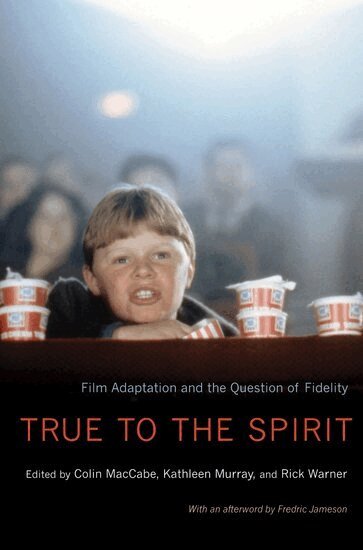
Adaptation persists as a major area of inquiry in both film and literary studies. Over the past two decades, scholars have extended the debate well beyond George Bluestone's influential Novels into Film (1957) by taking into account such concerns as intertextuality and different forms of narrative enabled through new media. A dominant trend has been to dispense straight away with questions of fidelity and "faithfulness," the assumption being that such views are naïve, moralistic, and rooted in a cultural prejudice against the audiovisual. While acknowledging the merits of this position--namely its complication of the one-way "page-to-screen" perspective--this collection seeks to put the question of fidelity back into play. The essays explore the ways in which the newer, more sophisticated approaches can still accommodate forms of fidelity between two or more texts without having to reinscribe untenable distinctions between "original" and "copy," and without having to argue from a strict media essentialist position that stages an impasse between linguistic and cinematic means of articulation. In addition, the scholars in this volume seek to recognize and account for fidelity's cultural currency among filmmakers and audiences alike, no matter how impossible fidelity might be in a literal sense. The selected essays offer an opportunity to showcase both well established adaptation scholars (Laura Mulvey, Dudley Andrew, Tom Gunning and James Naremore) and emerging voices in the field.
1 183 kr
Skickas inom 7-10 vardagar
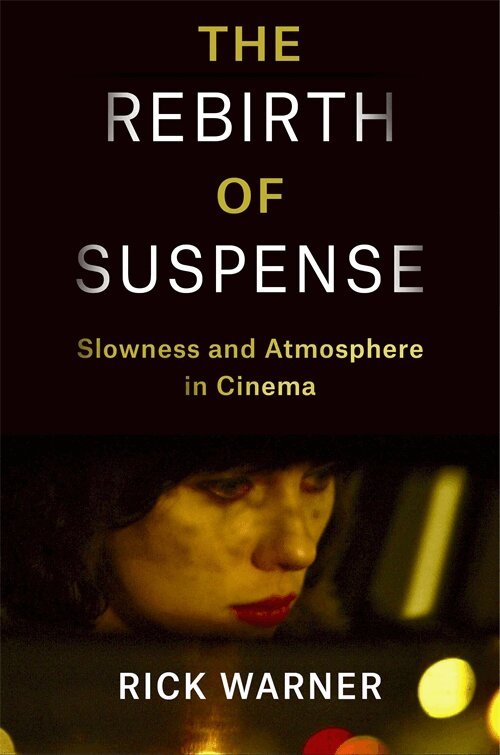
Longlist, 2025 Moving Image Book Award, Kraszna-Krausz FoundationWinner, 2025 Choice Outstanding Academic TitleBronze Medal, 2025 Eiffel Award - Cinema Interpretation, Eiffel FoundationTypically, films are suspenseful when they keep us on the edge of our seats, when glimpses of a turning doorknob, a ticking clock, or a looming silhouette quicken our pulses. Exemplified by Alfred Hitchcock’s masterworks and the countless thrillers they influenced, such films captivate viewers with propulsive plots that spur emotional investment in the fates of protagonists. Suspense might therefore seem to be a curious concept to associate with art films featuring muted characters, serene landscapes, and unrushed rhythms, in which plot is secondary to mood and tone.This ambitious and wide-ranging book offers a redefinition of suspense by considering its unlikely incarnations in the contemporary films that have been called “slow cinema.” Rick Warner shows how slowness builds suspense through atmospheric immersion, narrative sparseness, and the withholding of information, causing viewers to oscillate among boredom, curiosity, and dread. He focuses on works in which suspense arises where the boundaries between art cinema and popular genres—such as horror, thriller, science fiction, and gothic melodrama—become indefinite, including Chantal Akerman’s La captive, Apichatpong Weerasethakul’s Memoria, Jonathan Glazer’s Under the Skin, Kelly Reichardt’s Night Moves, Lucrecia Martel’s Zama, Kiyoshi Kurosawa’s Creepy, and David Lynch’s Twin Peaks: The Return. Warner investigates the pivotal role of sound in generating suspense and traces how the experience of suspense has changed in the era of digital streaming. The Rebirth of Suspense develops a fresh theory, history, typology, and analysis of suspense that casts new light on the workings of films across global cinema.
301 kr
Skickas inom 7-10 vardagar
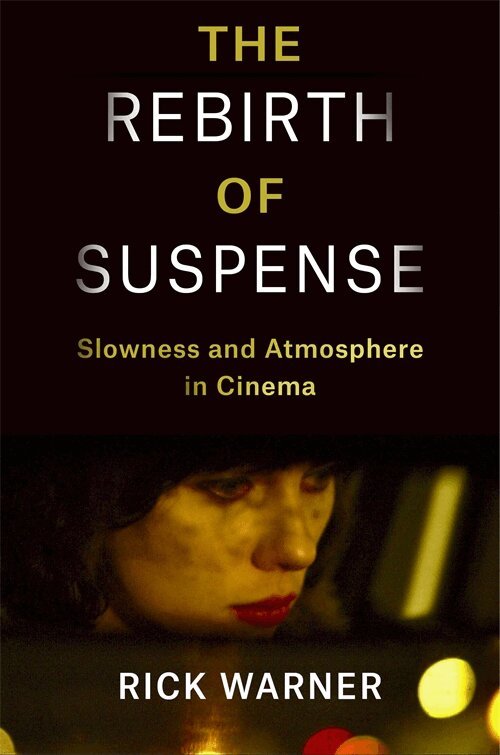
Longlist, 2025 Moving Image Book Award, Kraszna-Krausz FoundationWinner, 2025 Choice Outstanding Academic TitleBronze Medal, 2025 Eiffel Award - Cinema Interpretation, Eiffel FoundationTypically, films are suspenseful when they keep us on the edge of our seats, when glimpses of a turning doorknob, a ticking clock, or a looming silhouette quicken our pulses. Exemplified by Alfred Hitchcock’s masterworks and the countless thrillers they influenced, such films captivate viewers with propulsive plots that spur emotional investment in the fates of protagonists. Suspense might therefore seem to be a curious concept to associate with art films featuring muted characters, serene landscapes, and unrushed rhythms, in which plot is secondary to mood and tone.This ambitious and wide-ranging book offers a redefinition of suspense by considering its unlikely incarnations in the contemporary films that have been called “slow cinema.” Rick Warner shows how slowness builds suspense through atmospheric immersion, narrative sparseness, and the withholding of information, causing viewers to oscillate among boredom, curiosity, and dread. He focuses on works in which suspense arises where the boundaries between art cinema and popular genres—such as horror, thriller, science fiction, and gothic melodrama—become indefinite, including Chantal Akerman’s La captive, Apichatpong Weerasethakul’s Memoria, Jonathan Glazer’s Under the Skin, Kelly Reichardt’s Night Moves, Lucrecia Martel’s Zama, Kiyoshi Kurosawa’s Creepy, and David Lynch’s Twin Peaks: The Return. Warner investigates the pivotal role of sound in generating suspense and traces how the experience of suspense has changed in the era of digital streaming. The Rebirth of Suspense develops a fresh theory, history, typology, and analysis of suspense that casts new light on the workings of films across global cinema.
413 kr
Skickas inom 7-10 vardagar
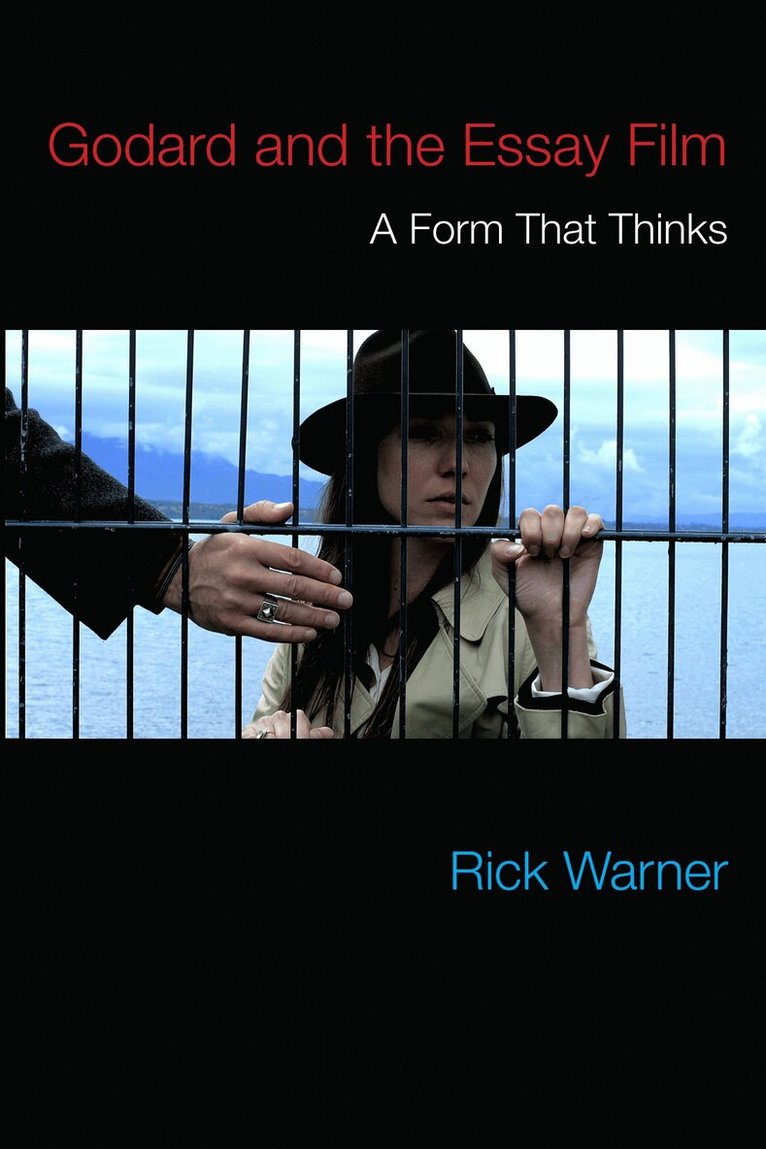
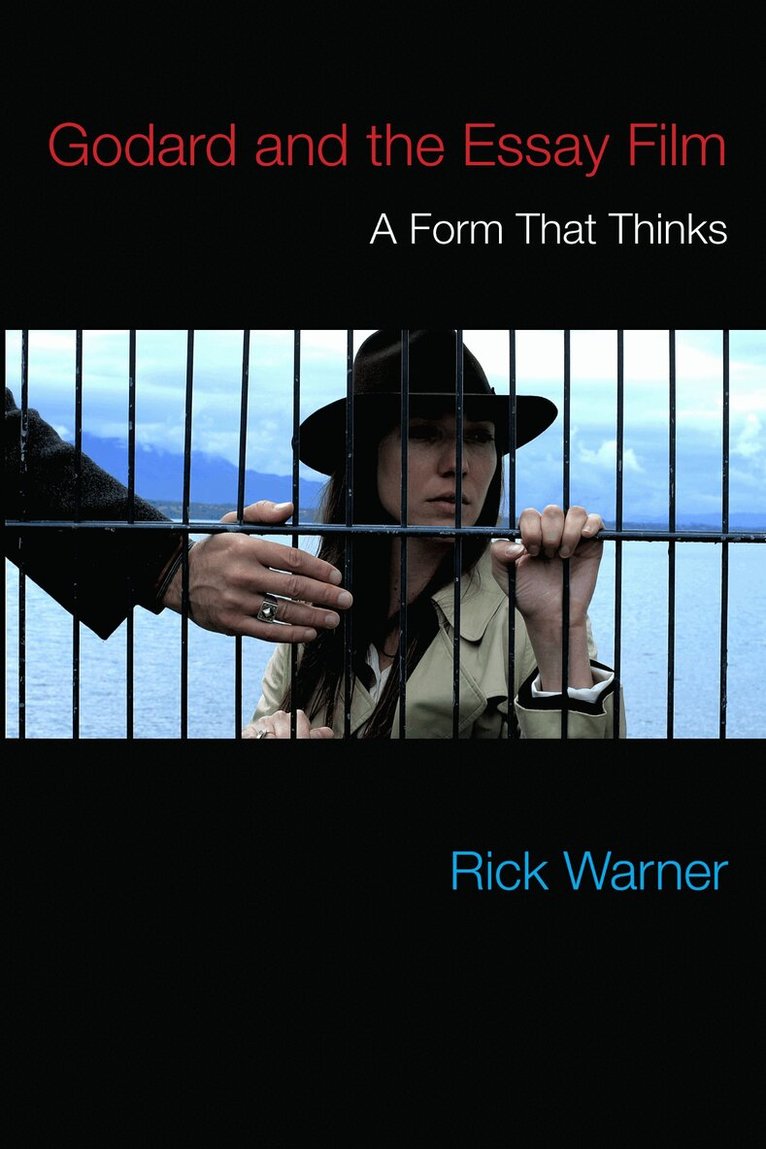
Godard and the Essay Film offers a history and analysis of the essay film, one of the most significant forms of intellectual filmmaking since the end of World War II. Warner incisively reconsiders the defining traits and legacies of this still-evolving genre through a groundbreaking examination of the vast and formidable oeuvre of Jean-Luc Godard.The essay film has often been understood by scholars as an eccentric development within documentary, but Warner shows how an essayistic process of thinking can materialize just as potently within narrative fiction films, through self-critical investigations into the aesthetic, political, and philosophical resources of the medium. Studying examples by Godard and other directors, such as Orson Welles, Chris Marker, Agnès Varda, and Harun Farocki, Warner elaborates a fresh account of essayistic reflection that turns on the imaginative, constructive role of the viewer.Through fine-grained analyses, this book contributes the most nuanced description yet of the relational interface between viewer and screen in the context of the essay film. Shedding new light on Godard's work, from the 1960s to the 2010s, in film, television, video, and digital stereoscopy, Warner distills an understanding of essayistic cinema as a shared exercise of critical rumination and perceptual discovery.
1 143 kr
Skickas inom 10-15 vardagar
Godard and the Essay Film offers a history and analysis of the essay film, one of the most significant forms of intellectual filmmaking since the end of World War II. Warner incisively reconsiders the defining traits and legacies of this still-evolving genre through a groundbreaking examination of the vast and formidable oeuvre of Jean-Luc Godard.The essay film has often been understood by scholars as an eccentric development within documentary, but Warner shows how an essayistic process of thinking can materialize just as potently within narrative fiction films, through self-critical investigations into the aesthetic, political, and philosophical resources of the medium. Studying examples by Godard and other directors, such as Orson Welles, Chris Marker, Agnès Varda, and Harun Farocki, Warner elaborates a fresh account of essayistic reflection that turns on the imaginative, constructive role of the viewer.Through fine-grained analyses, this book contributes the most nuanced description yet of the relational interface between viewer and screen in the context of the essay film. Shedding new light on Godard's work, from the 1960s to the 2010s, in film, television, video, and digital stereoscopy, Warner distils an understanding of essayistic cinema as a shared exercise of critical rumination and perceptual discovery.