Rik Van Nieuwenhove - Böcker
Visar alla böcker från författaren Rik Van Nieuwenhove. Handla med fri frakt och snabb leverans.
11 produkter
11 produkter
1 213 kr
Skickas inom 5-8 vardagar
Contemplation, according to Thomas Aquinas, is the central goal of our life. This study considers the epistemological and metaphysical foundations of the contemplative act; the nature of the active and contemplative lives in light of Aquinas's Dominican calling; the role of faith, charity, and the gifts of the Holy Spirit in contemplation; and contemplation and the beatific vision. Rik Van Nieuwenhove argues that Aquinas espouses a profoundly intellective notion of contemplation in the strictly speculative sense, which culminates in a non-discursive moment of insight (intuitus simplex). In marked contrast to his contemporaries Aquinas therefore rejects a sapiential or affective brand of theology. He also employs a broader notion of contemplation, which can be enjoyed by all Christians, in which the gifts of the Holy Spirit are of central importance. Thomas Aquinas and Contemplation will appeal to readers interested in this key aspect of Aquinas's thought. Van Nieuwenhove provides a lucid account of central aspects of Aquinas's metaphysics, epistemology, theology, and spirituality. He also offers new insights into the nature of the theological discipline as Aquinas sees it, and how theology relates to philosophy.
1 734 kr
Kommande
The Oxford Handbook of Apophatic Theology offers the most comprehensive overview, in any language, of apophatic or negative theology. Apophaticism is not a distinct branch of theology but refers, rather, to an indispensable feature of engaging in any theological discourse and spiritual practices (usually involving a transformation of the self) that remain sensitive to the radical otherness and unknowability of God. The first part of the Handbook examines the religious and philosophical sources of apophatic theology, i.e., its biblical and Platonic origins. These biblical and philosophical sources became gradually crystalized in specific and plural traditions which are covered in Part II, where authors pay specific attention to the Church Fathers (East and West), major authors from medieval Islam, Judaism, and Christianity (from Eriugena to Julian of Norwich); and from the Reformation and Renaissance to the twentieth century (from Cusanus and Luther to Simone Weil and Erich Przywara). In a final section, key systematic-theological issues are considered, such as apophaticism and its relation to the theology of creation, Trinity, liturgy, and eschatology. This rich collection of essays demonstrates that apophasis is not an armchair exercise in negation, as it is popularly conceived, but a mental discipline, an ascetical practice, embedded in various religious traditions, whose ultimate purpose is our deification (theosis).
1 070 kr
Skickas inom 10-15 vardagar
Jan van Ruusbroec (1293–1381), a Flemish mystical theologian, was one of the most original Trinitarian thinkers in the medieval West. Yet, his works—written in Middle-Dutch—have remained relatively unknown. In this book, Rik Van Nieuwenhove presents the first major study in English of Ruusbroec's thought. Van Nieuwenhove explores in detail Ruusbroec's theology of the Trinity, his anthropology, Christology, and his understanding of union with God.Van Nieuwenhove's study reveals that Ruusbroec, while incorporating aspects of the rich theological and spiritual tradition that preceded him, wrote at the beginning of a modern age in which mystical theology changed radically in nature. Ruusbroec claimed that the divine Persons are subject to an eternal dynamic of procession or out-going from the Father, on the one hand, and returning to the shared divine essence, on the other. The human person is called to participate in this continuous ebbing and flowing by leading a life that combines contemplation and charitable activity. Ruusbroec argued that mysticism should be interpreted in terms of a transformation of the human person rather than in terms of an immediate experience of God.Jan van Ruusbroec, Mystical Theologian of the Trinity is an innovative, original study of one of late medieval theology's undiscovered treasures. Written in clear, accessible language, this new interpretation of Ruusbroec's theology will appeal to all those interested in mysticism, medieval theology, and the doctrine of the Trinity.
259 kr
Skickas inom 10-15 vardagar
Jan van Ruusbroec (1293–1381), a Flemish mystical theologian, was one of the most original Trinitarian thinkers in the medieval West. Yet, his works—written in Middle-Dutch—have remained relatively unknown. In this book, Rik Van Nieuwenhove presents the first major study in English of Ruusbroec's thought. Van Nieuwenhove explores in detail Ruusbroec's theology of the Trinity, his anthropology, Christology, and his understanding of union with God.Van Nieuwenhove's study reveals that Ruusbroec, while incorporating aspects of the rich theological and spiritual tradition that preceded him, wrote at the beginning of a modern age in which mystical theology changed radically in nature. Ruusbroec claimed that the divine Persons are subject to an eternal dynamic of procession or out-going from the Father, on the one hand, and returning to the shared divine essence, on the other. The human person is called to participate in this continuous ebbing and flowing by leading a life that combines contemplation and charitable activity. Ruusbroec argued that mysticism should be interpreted in terms of a transformation of the human person rather than in terms of an immediate experience of God.Jan van Ruusbroec, Mystical Theologian of the Trinity is an innovative, original study of one of late medieval theology's undiscovered treasures. Written in clear, accessible language, this new interpretation of Ruusbroec's theology will appeal to all those interested in mysticism, medieval theology, and the doctrine of the Trinity.
472 kr
Skickas inom 10-15 vardagar
This is an in-depth study of every major aspect of Thomas Aquinas' theology. Contributors offer fresh and compelling readings of Aquinas on the Trinity, creation theology, theory of analogy, anthropology, predestination and human freedom, evil and original sin, Christology and grace, soteriology, eschatology, sacramentology, ecclesiology, moral theology, the relation between theology and philosophy, and scriptural exegesis.Contributors to The Theology of Thomas Aquinas come from seven different countries and a variety of specialties within the discipline of theology. Their diverse perspectives add considerable merit to the depth and breadth of this project. Contributors both outline the thought of Aquinas in its own right and bring it into dialogue with present theological concerns. The high quality of these essays make this volume an invaluable reference tool.This book will establish itself as the best scholarly introduction to the theology of Thomas Aquinas. It belongs on the bookshelf of every theologian and Thomistic scholar, and it will be read with appreciation by students and scholars alike.
360 kr
Skickas inom 7-10 vardagar
Over the last decade there has been a resurgence of writing on the Trinity, indicating a renewal of ideas and debate concerning this key element of Christian theology. This introduction challenges the standard account of a decline and revival in Trinitarian theology, taking into account recent, alternative readings of the theological tradition by Lewis Ayres and Michel Barnes amongst other scholars. By clearly analysing the scope of these new approaches, the authors establish the importance of a considered understanding of the Trinity, resisting the notion of separating faith and reason and identifying theology's link to spirituality. Their account also eschews the easy stereotypes of Western Christianity's supposedly more Unitarian approach as opposed to the more Trinitarian view of the East. Offering an overview of the main people and themes in Trinitarian theology past and present, this book thus provides an accessible, comprehensive guide for students and scholars alike.
679 kr
Skickas inom 7-10 vardagar
Over the last decade there has been a resurgence of writing on the Trinity, indicating a renewal of ideas and debate concerning this key element of Christian theology. This introduction challenges the standard account of a decline and revival in Trinitarian theology, taking into account recent, alternative readings of the theological tradition by Lewis Ayres and Michel Barnes amongst other scholars. By clearly analysing the scope of these new approaches, the authors establish the importance of a considered understanding of the Trinity, resisting the notion of separating faith and reason and identifying theology's link to spirituality. Their account also eschews the easy stereotypes of Western Christianity's supposedly more Unitarian approach as opposed to the more Trinitarian view of the East. Offering an overview of the main people and themes in Trinitarian theology past and present, this book thus provides an accessible, comprehensive guide for students and scholars alike.
1 498 kr
Kommande
Broad in scope yet focused, scholarly yet written in an accessible and lucid manner, Providence, Evil and Salvation, perhaps uniquely, addresses key questions in contemporary theology from a broadly Thomist perspective: What is providence and how can it be squared with evil and suffering? What is sin? How can we construe a meaningful account of original sin in a post-Darwinian context? How does Christ address our self-inflicted alienation from God? How do we appropriate Christ's salvation through faith, hope, and love, and participation in the sacramental life? On the interface of historical and constructive-systematic theology, with a pastoral concern throughout, Rik Van Nieuwenhove offers both experts and readers who are not familiar with the thought of Thomas Aquinas a unique insight into his theology - and why it matters today, not just for scholarly debates but for how we should live our lives.
549 kr
Kommande
Broad in scope yet focused, scholarly yet written in an accessible and lucid manner, Providence, Evil and Salvation, perhaps uniquely, addresses key questions in contemporary theology from a broadly Thomist perspective: What is providence and how can it be squared with evil and suffering? What is sin? How can we construe a meaningful account of original sin in a post-Darwinian context? How does Christ address our self-inflicted alienation from God? How do we appropriate Christ's salvation through faith, hope, and love, and participation in the sacramental life? On the interface of historical and constructive-systematic theology, with a pastoral concern throughout, Rik Van Nieuwenhove offers both experts and readers who are not familiar with the thought of Thomas Aquinas a unique insight into his theology - and why it matters today, not just for scholarly debates but for how we should live our lives.
383 kr
Skickas inom 7-10 vardagar
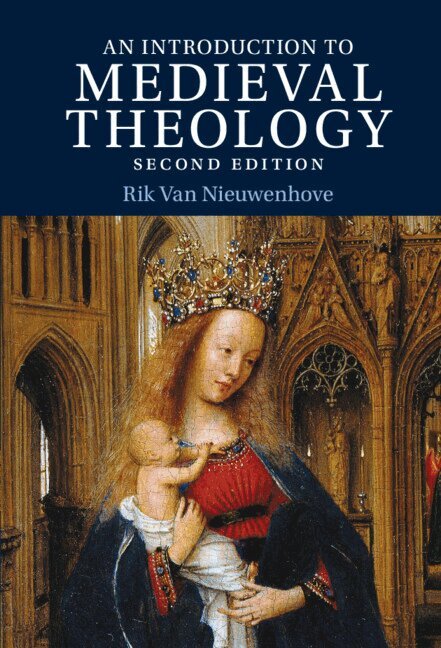
This classic book, now in a second, expanded edition, is an invitation to think along with major theologians and spiritual authors, men and women from the time of St Augustine to the end of the fourteenth century, who profoundly challenge our (post-)modern assumptions. Medieval theology was radically theocentric, Trinitarian, Scriptural, and sacramental, yet it also operated with a rich notion of human understanding. In a post-modern setting, when modern views on 'autonomous reason' are increasingly questioned, it is fruitful to re-engage with pre-modern thinkers who did not share our modern and post-modern presuppositions. Their different perspective does not antiquate their thought; on the contrary, it makes them profoundly challenging and enriching for theology today. This survey introduces readers to key theologians of the period and explores themes of the relationship between faith and reason; the mystery of the Trinity; soteriology; Christian love; and the transcendent thrust of medieval thought.
1 084 kr
Skickas inom 7-10 vardagar
This classic book, now in a second, expanded edition, is an invitation to think along with major theologians and spiritual authors, men and women from the time of St Augustine to the end of the fourteenth century, who profoundly challenge our (post-)modern assumptions. Medieval theology was radically theocentric, Trinitarian, Scriptural, and sacramental, yet it also operated with a rich notion of human understanding. In a post-modern setting, when modern views on 'autonomous reason' are increasingly questioned, it is fruitful to re-engage with pre-modern thinkers who did not share our modern and post-modern presuppositions. Their different perspective does not antiquate their thought; on the contrary, it makes them profoundly challenging and enriching for theology today. This survey introduces readers to key theologians of the period and explores themes of the relationship between faith and reason; the mystery of the Trinity; soteriology; Christian love; and the transcendent thrust of medieval thought.