Rike Sitas – författare
Visar alla böcker från författaren Rike Sitas. Handla med fri frakt och snabb leverans.
5 produkter
5 produkter
Häftad, Engelska, 2023
363 kr
Skickas inom 5-8 vardagar
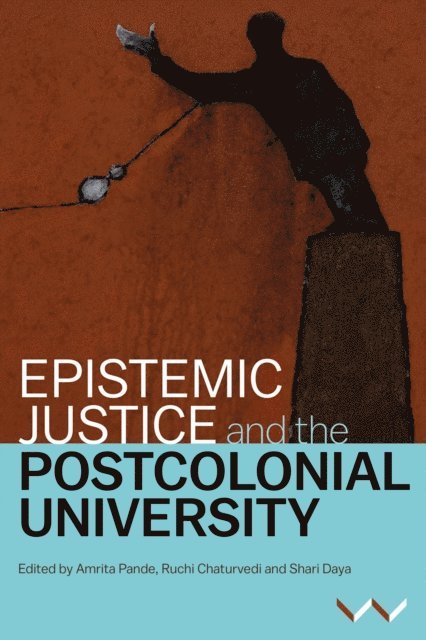
This book addresses urgent current debates on decolonisation by offering reimagined teaching and learning interventions for obtaining greater epistemic justice in the contemporary postcolonial university.At a time when debates on decolonisation have gained urgency in academic, civic and public spaces, this interdisciplinary collection by authors based at the University of Cape Town, South Africa, serves as a valuable archive documenting and reflecting on a turbulent period in South African higher education. It is an important resource for academics looking to grasp debates on decoloniality both in South Africa, and in university and teaching spaces further afield. Calling for concerted and collaborative work towards greater epistemic justice across diverse disciplines, the book puts forward a new vision of the postcolonial university as one that enables excellent teaching and learning, undertaken in a spirit of critical consciousness and reciprocity.
E-bok
PDF, Engelska, 2023362 kr
Läs direkt efter köp
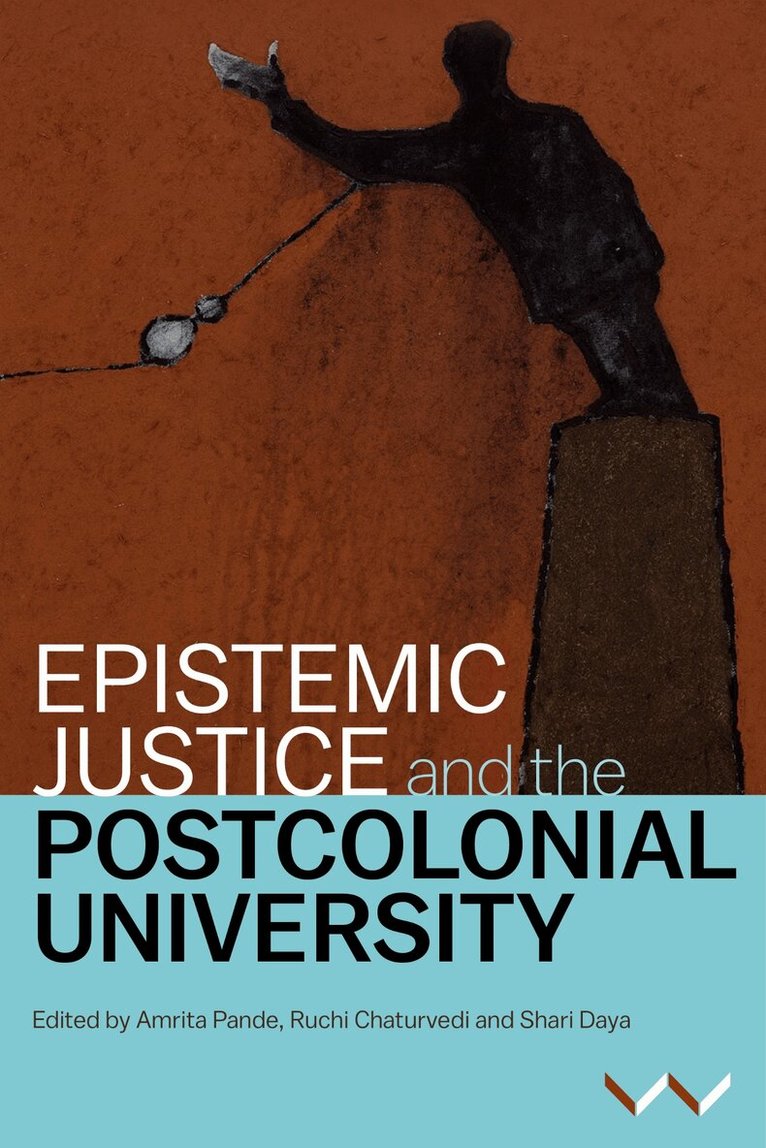
Across the world, universities are grappling with the colonial legacies that have shaped them. That struggle is especially vital in South Africa where the Rhodes Must Fall and Fees Must Fall movements have catalysed decolonial activism and discourse against the legacy of apartheid in higher education. This collection asks what epistemic justice might look like in teaching, learning and research across multiple academic disciplines. Each author writes from first-hand experience of teaching at the University of Cape Town, an institution that was and remains a key site of complicity with and resistance against settler colonialism, apartheid, and their ongoing oppressions. The contributors trace power relations that are embedded in various teaching and learning spaces at UCT, asking critical questions about the kinds of subjects and objects of knowledge that are produced by their disciplines. Further, they explore new ideas, texts, and intellectual and pedagogical practices that can help academics interrogate, challenge and transform the dominant power relations in the South African academy. Collectively, these chapters work to imagine new subjects of knowledge in the postcolonial university through an ethic of epistemic justice. At a time when debates on decolonisation have gained urgency in academic, civic and public spaces, this interdisciplinary collection serves as a valuable archive documenting and reflecting on a turbulent period in South African higher education. It is an important resource for academics looking to grasp debates on decoloniality both in South Africa, and in university and teaching spaces further afield. Calling for concerted and collaborative work towards greater epistemic justice across diverse disciplines, the book puts forward a new vision of the postcolonial university as one that enables excellent teaching and learning, undertaken in a spirit of critical consciousness and reciprocity.
E-bok
Engelska, 2023362 kr
Läs direkt efter köp
Across the world, universities are grappling with the colonial legacies that have shaped them. That struggle is especially vital in South Africa where the Rhodes Must Fall and Fees Must Fall movements have catalysed decolonial activism and discourse against the legacy of apartheid in higher education. This collection asks what epistemic justice might look like in teaching, learning and research across multiple academic disciplines. Each author writes from first-hand experience of teaching at the University of Cape Town, an institution that was and remains a key site of complicity with and resistance against settler colonialism, apartheid, and their ongoing oppressions. The contributors trace power relations that are embedded in various teaching and learning spaces at UCT, asking critical questions about the kinds of subjects and objects of knowledge that are produced by their disciplines. Further, they explore new ideas, texts, and intellectual and pedagogical practices that can help academics interrogate, challenge and transform the dominant power relations in the South African academy. Collectively, these chapters work to imagine new subjects of knowledge in the postcolonial university through an ethic of epistemic justice. At a time when debates on decolonisation have gained urgency in academic, civic and public spaces, this interdisciplinary collection serves as a valuable archive documenting and reflecting on a turbulent period in South African higher education. It is an important resource for academics looking to grasp debates on decoloniality both in South Africa, and in university and teaching spaces further afield. Calling for concerted and collaborative work towards greater epistemic justice across diverse disciplines, the book puts forward a new vision of the postcolonial university as one that enables excellent teaching and learning, undertaken in a spirit of critical consciousness and reciprocity.
E-bok
PDF, Engelska, 2025443 kr
Läs direkt efter köp
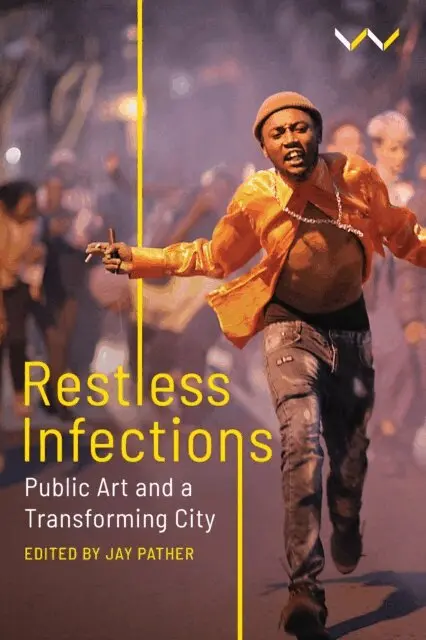
Restless Infections is an innovative collection of critical essays exploring artistic interventions in urban spaces, focusing on place-making and the politics of space in post-colonial South Africa. The title refers to Cape Town’s popular Infecting the City public art festival and the persistent state of restlessness of a city still grappling with the legacies of colonialism, inequality and racial segregation. The concept of ‘restlessness’ provides a critical tool for understanding public space in a country desiring economic and political stability, as expressed through transient art forms such as Santu Mofokeng’s billboard photography. The volume shifts the focus of public art discourse in South Africa from static forms like monuments and statues to dynamic, temporary interventions, offering fresh perspectives on public art as an interactive, community-engaged practice. The interventions engage with protest, public intimacy, audience interaction and the disrupted topography of apartheid cities. Through an examination of seminal artworks, contributors address diverse forms of expression that range from site-specific performances, immersive installations, film and photography to online performances. They introduce new perspectives on public sphere performance, such as Khanyisile Mbongwa’s re-imagining of township alleyways for public encounters and Mbongeni Mtshali’s study of everyday performances that challenge colonial and neo-colonial spatial organisation. The book is divided into three sections: The Restless City, Public Art for Multiple Publics, and Land, Home, Belonging. It features both critical essays and visual documentation of the powerful, often temporary public artworks, providing readers with an opportunity to explore cutting-edge artistic practices that tackle global issues like inequality, segregation, and public space reclamation. Restless Infections reads public spheres through a multi- and interdisciplinary lens, and makes a strong contribution to our understanding of the complexities of public art in South Africa. It will appeal to academics, students, and practitioners across the fields of art, cultural studies and social justice.
E-bok
Engelska, 2025443 kr
Läs direkt efter köp
Restless Infections is an innovative collection of critical essays exploring artistic interventions in urban spaces, focusing on place-making and the politics of space in post-colonial South Africa. The title refers to Cape Town’s popular Infecting the City public art festival and the persistent state of restlessness of a city still grappling with the legacies of colonialism, inequality and racial segregation. The concept of ‘restlessness’ provides a critical tool for understanding public space in a country desiring economic and political stability, as expressed through transient art forms such as Santu Mofokeng’s billboard photography. The volume shifts the focus of public art discourse in South Africa from static forms like monuments and statues to dynamic, temporary interventions, offering fresh perspectives on public art as an interactive, community-engaged practice. The interventions engage with protest, public intimacy, audience interaction and the disrupted topography of apartheid cities. Through an examination of seminal artworks, contributors address diverse forms of expression that range from site-specific performances, immersive installations, film and photography to online performances. They introduce new perspectives on public sphere performance, such as Khanyisile Mbongwa’s re-imagining of township alleyways for public encounters and Mbongeni Mtshali’s study of everyday performances that challenge colonial and neo-colonial spatial organisation. The book is divided into three sections: The Restless City, Public Art for Multiple Publics, and Land, Home, Belonging. It features both critical essays and visual documentation of the powerful, often temporary public artworks, providing readers with an opportunity to explore cutting-edge artistic practices that tackle global issues like inequality, segregation, and public space reclamation. Restless Infections reads public spheres through a multi- and interdisciplinary lens, and makes a strong contribution to our understanding of the complexities of public art in South Africa. It will appeal to academics, students, and practitioners across the fields of art, cultural studies and social justice.