Amrita Pande - Böcker
Visar alla böcker från författaren Amrita Pande. Handla med fri frakt och snabb leverans.
6 produkter
6 produkter
1 059 kr
Skickas inom 7-10 vardagar
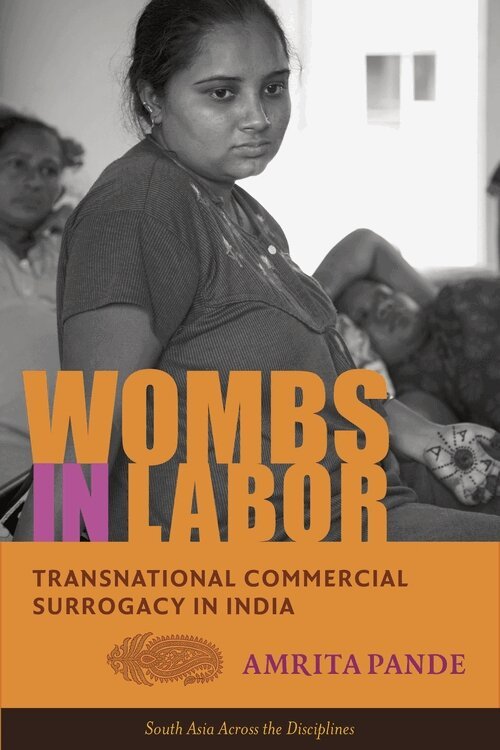
Surrogacy is India's new form of outsourcing, as couples from all over the world hire Indian women to bear their children for a fraction of the cost of surrogacy elsewhere with little to no government oversight or regulation. In the first detailed ethnography of India's surrogacy industry, Amrita Pande visits clinics and hostels and speaks with surrogates and their families, clients, doctors, brokers, and hostel matrons in order to shed light on this burgeoning business and the experiences of the laborers within it. From recruitment to training to delivery, Pande's research focuses on how reproduction meets production in surrogacy and how this reflects characteristics of India's larger labor system. Pande's interviews prove surrogates are more than victims of disciplinary power, and she examines the strategies they deploy to retain control over their bodies and reproductive futures. While some women are coerced into the business by their families, others negotiate with clients and their clinics to gain access to technologies and networks otherwise closed to them. As surrogates, the women Pande meets get to know and make the most of advanced medical discoveries.They traverse borders and straddle relationships that test the boundaries of race, class, religion, and nationality. Those who focus on the inherent inequalities of India's surrogacy industry believe the practice should be either banned or strictly regulated. Pande instead advocates for a better understanding of this complex labor market, envisioning an international model of fair-trade surrogacy founded on openness and transparency in all business, medical, and emotional exchanges.
266 kr
Skickas inom 7-10 vardagar
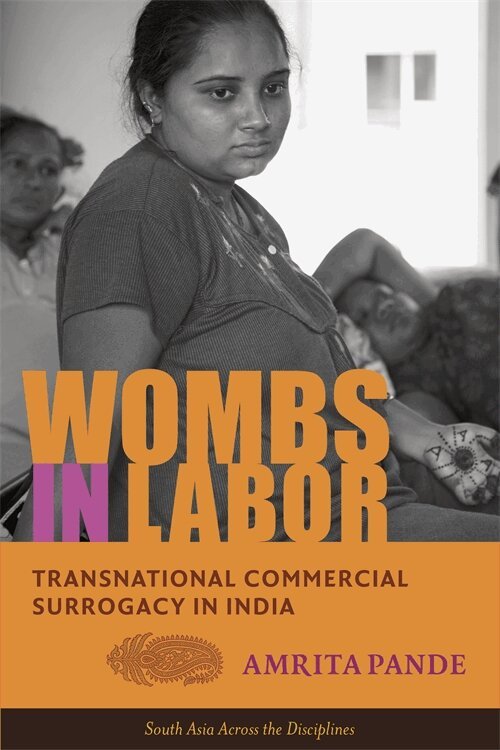
Surrogacy is India's new form of outsourcing, as couples from all over the world hire Indian women to bear their children for a fraction of the cost of surrogacy elsewhere with little to no government oversight or regulation. In the first detailed ethnography of India's surrogacy industry, Amrita Pande visits clinics and hostels and speaks with surrogates and their families, clients, doctors, brokers, and hostel matrons in order to shed light on this burgeoning business and the experiences of the laborers within it. From recruitment to training to delivery, Pande's research focuses on how reproduction meets production in surrogacy and how this reflects characteristics of India's larger labor system. Pande's interviews prove surrogates are more than victims of disciplinary power, and she examines the strategies they deploy to retain control over their bodies and reproductive futures. While some women are coerced into the business by their families, others negotiate with clients and their clinics to gain access to technologies and networks otherwise closed to them. As surrogates, the women Pande meets get to know and make the most of advanced medical discoveries.They traverse borders and straddle relationships that test the boundaries of race, class, religion, and nationality. Those who focus on the inherent inequalities of India's surrogacy industry believe the practice should be either banned or strictly regulated. Pande instead advocates for a better understanding of this complex labor market, envisioning an international model of fair-trade surrogacy founded on openness and transparency in all business, medical, and emotional exchanges.
Birth Controlled
Selective Reproduction and Neoliberal Eugenics in South Africa and India
Inbunden, Engelska, 2022
815 kr
Skickas
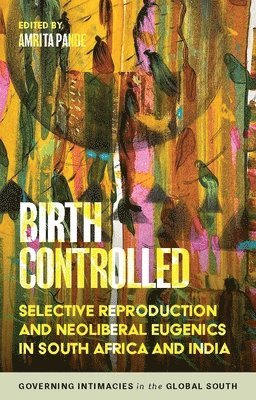
Birth controlled analyses the world of selective reproduction – the politics of who gets to legitimately reproduce the future – through a cross-cultural analysis of three modes of ‘controlling’ birth: contraception, reproductive violence and repro-genetic technologies. It argues that as fertility rates decline worldwide, the fervour to control fertility, and fertile bodies, does not dissipate; what evolves is the preferred mode of control. Although new technologies like those that assist conception or allow genetic selection may appear to be an antithesis of other violent versions of population control, this book demonstrates that both are part of the same continuum. All population control policies target and vilify women (Black women in particular), and coerce them into subjecting their bodies to state and medical surveillance; Birth controlled argues that assisted reproductive technologies and repro-genetic technologies employ a similar and stratified burden of blame and responsibility based on gender, race, class and caste. To empirically and historically ground the analysis, the book includes contributions from two postcolonial nations, South Africa and India, examining interactions between the history of colonialism and the economics of neoliberal markets and their influence on the technologies and politics of selective reproduction.The book provides a critical, interdisciplinary and cutting-edge dialogue around the interconnected issues that shape reproductive politics in an ostensibly ‘post-population control’ era. The contributions draw on a breadth of disciplines ranging from gender studies, sociology, medical anthropology, politics and science and technology studies to theology, public health and epidemiology, facilitating an interdisciplinary dialogue around the interconnected modes of controlling birth and practices of neo-eugenics.
Birth Controlled
Selective Reproduction and Neoliberal Eugenics in South Africa and India
Häftad, Engelska, 2024
364 kr
Skickas inom 5-8 vardagar
This book analyses the world of selective reproduction by a critical analysis of three modes of controlling birth, namely contraception, reproductive violence, and repro-genetic technologies. All population control policies target and vilify women (Black women in particular), and coerce them into subjecting their bodies to state and medical surveillance; Birth controlled argues that assisted reproductive technologies and repro-genetic technologies employ a similar and stratified burden of blame and responsibility based on gender, race, class and caste.The book draws on gender studies, sociology, medical anthropology, politics, science and technology studies, theology, public health and epidemiology to provides a critical, interdisciplinary and cutting-edge dialogue around the interconnected issues that shape reproductive politics in an ostensibly ‘post-population control’ era.
352 kr
Skickas inom 7-10 vardagar
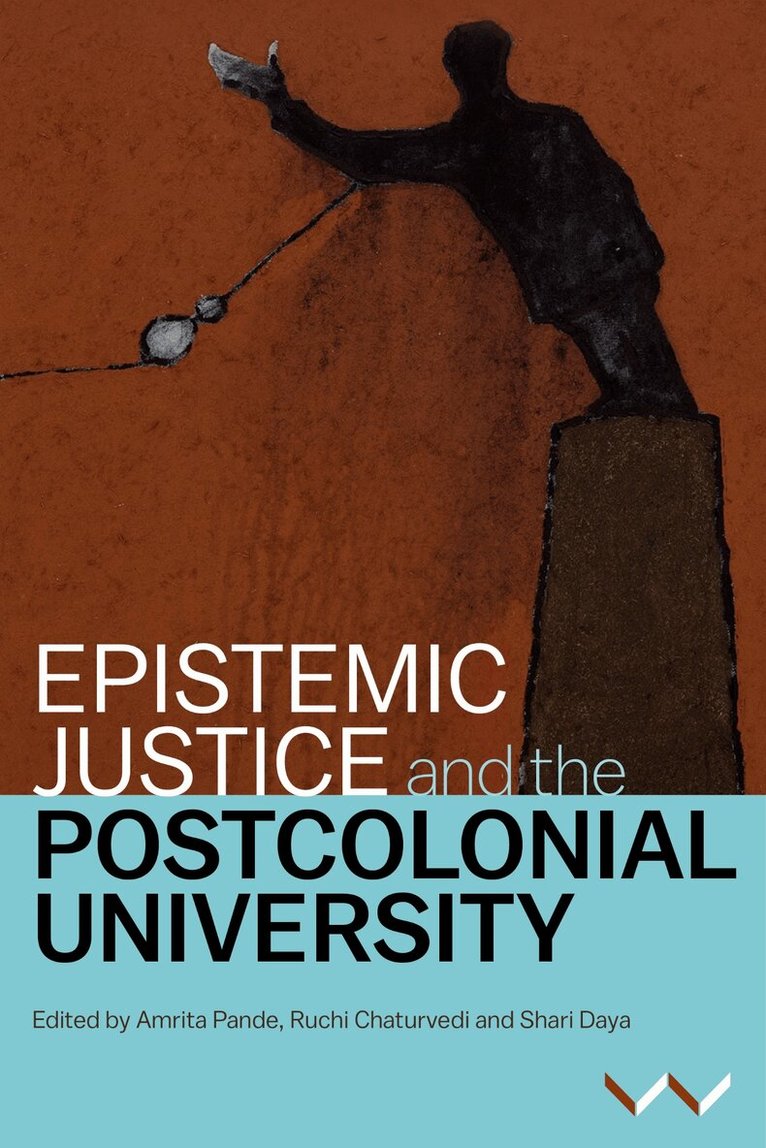
This book addresses urgent current debates on decolonisation by offering reimagined teaching and learning interventions for obtaining greater epistemic justice in the contemporary postcolonial university.At a time when debates on decolonisation have gained urgency in academic, civic and public spaces, this interdisciplinary collection by authors based at the University of Cape Town, South Africa, serves as a valuable archive documenting and reflecting on a turbulent period in South African higher education. It is an important resource for academics looking to grasp debates on decoloniality both in South Africa, and in university and teaching spaces further afield. Calling for concerted and collaborative work towards greater epistemic justice across diverse disciplines, the book puts forward a new vision of the postcolonial university as one that enables excellent teaching and learning, undertaken in a spirit of critical consciousness and reciprocity.
573 kr
Skickas inom 7-10 vardagar