Ari Sitas – författare
Visar alla böcker från författaren Ari Sitas. Handla med fri frakt och snabb leverans.
9 produkter
9 produkter
E-bok
PDF, Engelska, 2017386 kr
Läs direkt efter köp
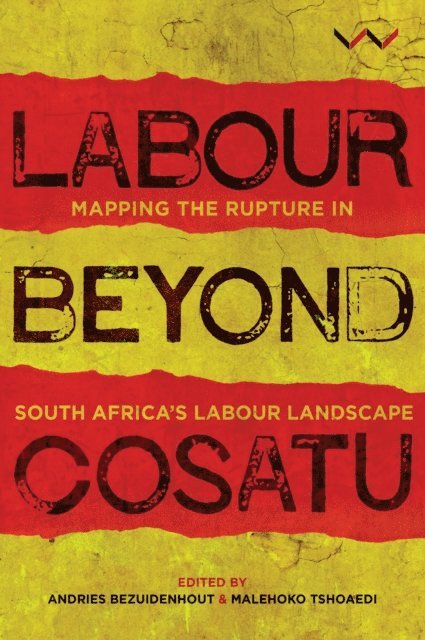
Labour Beyond Cosatu is the fourth volume in the series Taking Democracy Seriously – a ground-breaking, textured and nuanced study on workers and democracy – which was established in the 1990s. The series looks at members of trade unions affiliated to the Congress of South African Trade Unions (Cosatu) and provides a rich database of trade union members and research conducted over the past twenty years. It is one of the very few such resources available to researchers anywhere in the world. Labour Beyond Cosatu paints a complex picture. The 12 chapters of the volume explore various rebellions and conflicts in the trade union sector, starting with the National Union of Mineworkers (NUM) and rivalries between Cosatu affiliates. Unpacking the conflicts between state-sector and private-sector workers, contributors look at the impact of generational and educational shifts, seen by some commentators as proof that Cosatu is now ‘middle class’. The book also raises the issue of gender in the unions by usefully locating the controversy around charges levelled at Zwelinzima Vavi in 2013 in the larger context of serious problems in the gender politics within parts of Cosatu. Refuting the image of a union federation solidly committed to the ANC, Labour Beyond Cosatu presents evidence of a sharp decline in support for the ANC within Cosatu, and growing scepticism towards the Alliance. It shows that attempts to understand the labour movement in South Africa in the future will need to include research of smaller, independent unions and social movements. The volume’s contributors make a major contribution to key debates on labour and democracy, providing new material that can potentially shift the discussion in important ways. This book will be of great value to students and researchers in Industrial Sociology, Political Studies, Industrial Psychology and Economics and Management.
E-bok
Engelska, 2017386 kr
Läs direkt efter köp
Labour Beyond Cosatu is the fourth volume in the series Taking Democracy Seriously – a ground-breaking, textured and nuanced study on workers and democracy – which was established in the 1990s. The series looks at members of trade unions affiliated to the Congress of South African Trade Unions (Cosatu) and provides a rich database of trade union members and research conducted over the past twenty years. It is one of the very few such resources available to researchers anywhere in the world. Labour Beyond Cosatu paints a complex picture. The 12 chapters of the volume explore various rebellions and conflicts in the trade union sector, starting with the National Union of Mineworkers (NUM) and rivalries between Cosatu affiliates. Unpacking the conflicts between state-sector and private-sector workers, contributors look at the impact of generational and educational shifts, seen by some commentators as proof that Cosatu is now ‘middle class’. The book also raises the issue of gender in the unions by usefully locating the controversy around charges levelled at Zwelinzima Vavi in 2013 in the larger context of serious problems in the gender politics within parts of Cosatu. Refuting the image of a union federation solidly committed to the ANC, Labour Beyond Cosatu presents evidence of a sharp decline in support for the ANC within Cosatu, and growing scepticism towards the Alliance. It shows that attempts to understand the labour movement in South Africa in the future will need to include research of smaller, independent unions and social movements. The volume’s contributors make a major contribution to key debates on labour and democracy, providing new material that can potentially shift the discussion in important ways. This book will be of great value to students and researchers in Industrial Sociology, Political Studies, Industrial Psychology and Economics and Management.
Häftad, Engelska, 2023
366 kr
Skickas inom 5-8 vardagar
This book addresses urgent current debates on decolonisation by offering reimagined teaching and learning interventions for obtaining greater epistemic justice in the contemporary postcolonial university.At a time when debates on decolonisation have gained urgency in academic, civic and public spaces, this interdisciplinary collection by authors based at the University of Cape Town, South Africa, serves as a valuable archive documenting and reflecting on a turbulent period in South African higher education. It is an important resource for academics looking to grasp debates on decoloniality both in South Africa, and in university and teaching spaces further afield. Calling for concerted and collaborative work towards greater epistemic justice across diverse disciplines, the book puts forward a new vision of the postcolonial university as one that enables excellent teaching and learning, undertaken in a spirit of critical consciousness and reciprocity.
E-bok
PDF, Engelska, 2023375 kr
Läs direkt efter köp
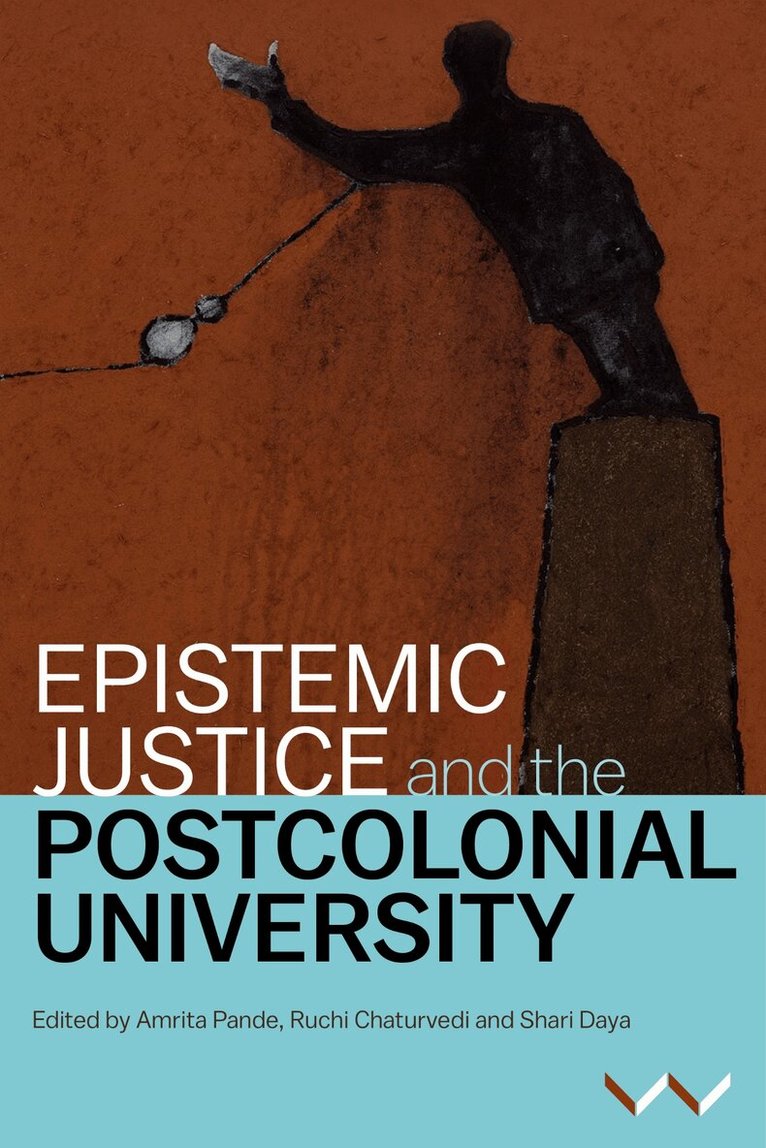
Across the world, universities are grappling with the colonial legacies that have shaped them. That struggle is especially vital in South Africa where the Rhodes Must Fall and Fees Must Fall movements have catalysed decolonial activism and discourse against the legacy of apartheid in higher education. This collection asks what epistemic justice might look like in teaching, learning and research across multiple academic disciplines. Each author writes from first-hand experience of teaching at the University of Cape Town, an institution that was and remains a key site of complicity with and resistance against settler colonialism, apartheid, and their ongoing oppressions. The contributors trace power relations that are embedded in various teaching and learning spaces at UCT, asking critical questions about the kinds of subjects and objects of knowledge that are produced by their disciplines. Further, they explore new ideas, texts, and intellectual and pedagogical practices that can help academics interrogate, challenge and transform the dominant power relations in the South African academy. Collectively, these chapters work to imagine new subjects of knowledge in the postcolonial university through an ethic of epistemic justice. At a time when debates on decolonisation have gained urgency in academic, civic and public spaces, this interdisciplinary collection serves as a valuable archive documenting and reflecting on a turbulent period in South African higher education. It is an important resource for academics looking to grasp debates on decoloniality both in South Africa, and in university and teaching spaces further afield. Calling for concerted and collaborative work towards greater epistemic justice across diverse disciplines, the book puts forward a new vision of the postcolonial university as one that enables excellent teaching and learning, undertaken in a spirit of critical consciousness and reciprocity.
E-bok
Engelska, 2023375 kr
Läs direkt efter köp
Across the world, universities are grappling with the colonial legacies that have shaped them. That struggle is especially vital in South Africa where the Rhodes Must Fall and Fees Must Fall movements have catalysed decolonial activism and discourse against the legacy of apartheid in higher education. This collection asks what epistemic justice might look like in teaching, learning and research across multiple academic disciplines. Each author writes from first-hand experience of teaching at the University of Cape Town, an institution that was and remains a key site of complicity with and resistance against settler colonialism, apartheid, and their ongoing oppressions. The contributors trace power relations that are embedded in various teaching and learning spaces at UCT, asking critical questions about the kinds of subjects and objects of knowledge that are produced by their disciplines. Further, they explore new ideas, texts, and intellectual and pedagogical practices that can help academics interrogate, challenge and transform the dominant power relations in the South African academy. Collectively, these chapters work to imagine new subjects of knowledge in the postcolonial university through an ethic of epistemic justice. At a time when debates on decolonisation have gained urgency in academic, civic and public spaces, this interdisciplinary collection serves as a valuable archive documenting and reflecting on a turbulent period in South African higher education. It is an important resource for academics looking to grasp debates on decoloniality both in South Africa, and in university and teaching spaces further afield. Calling for concerted and collaborative work towards greater epistemic justice across diverse disciplines, the book puts forward a new vision of the postcolonial university as one that enables excellent teaching and learning, undertaken in a spirit of critical consciousness and reciprocity.
Häftad, Engelska, 2016
468 kr
Skickas inom 5-8 vardagar
Inbunden, Engelska, 2020
435 kr
Skickas inom 5-8 vardagar
Inbunden, Engelska, 2022
606 kr
Skickas inom 5-8 vardagar
Inbunden, Engelska, 2024
333 kr
Skickas inom 5-8 vardagar