Rita Matulionytė – författare
Visar alla böcker från författaren Rita Matulionytė. Handla med fri frakt och snabb leverans.
5 produkter
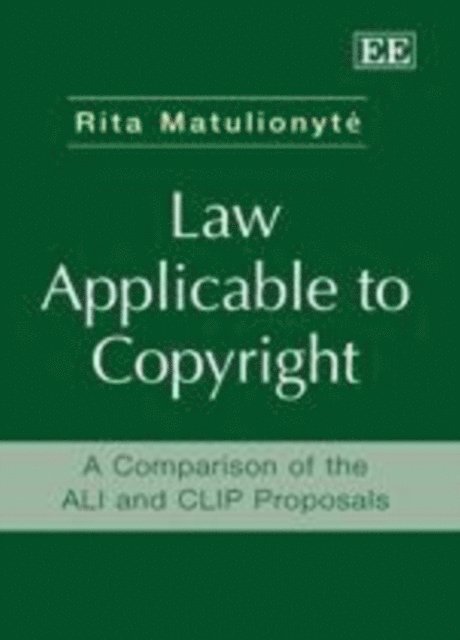
Law Applicable to Copyright
A Comparison of the ALI and CLIP Proposals
Inbunden, 2011
1760 kr
Lägg i varukorg
This book discusses the problems of applicable law in international copyright infringement cases and examines the solutions proposed to them in the recent projects by the American Law Institute (ALI) and the European Max Planck Group for Conflict of Laws and Intellectual Property (CLIP). In …
Law Applicable to Copyright
A Comparison of the ALI and CLIP Proposals
E-bok, 2011
422 kr
Lägg i varukorg
This book discusses the problems of applicable law in international copyright infringement cases and examines the solutions proposed to them in the recent projects by the American Law Institute (ALI) and the European Max Planck Group for Conflict of Laws and Intellectual Property (CLIP). In …
Cambridge Handbook of Facial Recognition in the Modern State
Av Monika Zalnieriute, Rita Matulionyte
E-bok, 2024
2369 kr
Lägg i varukorg
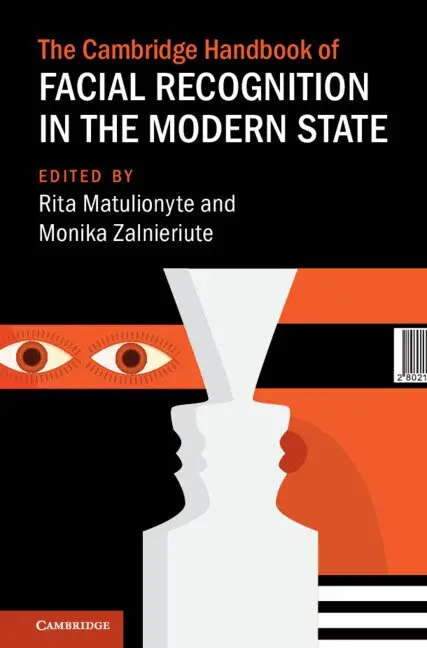
The Cambridge Handbook of Facial Recognition in the Modern State
Av Rita Matulionyte, Monika Zalnieriute
Inbunden, 2024
2382 kr
Lägg i varukorg
In situations ranging from border control to policing and welfare, governments are using automated facial recognition technology (FRT) to collect taxes, prevent crime, police cities and control immigration. FRT involves the processing of a person's facial image, usually for identification, …
Cambridge Handbook of Facial Recognition in the Modern State
Av Monika Zalnieriute, Rita Matulionyte
E-bok, 2024
2369 kr
Lägg i varukorg