• Fri frakt över 249 kr
  • •
  • Snabba leveranser
  • •
  • Billiga böcker
Kundservice

Du är på sajten för privatpersoner.

Företag, bibliotek eller offentlig verksamhet?

Du handlar på classic.bokus.com, där alla dina funktioner finns intakta.
Till classic.bokus.com
Bokus logotyp. Gå till startsidan.
  • Erbjudanden
  • Nyheter
  • Student
  • Topplistor
  • Barn & ungdom
  • Bokus Play
  • E-böcker
  • Pocketböcker
  • Spel & pussel

10% studentrabatt med kod TERM26

Sidfot

Mina sidor

    Hjälp

    • Kundservice
    • Vanliga frågor och svar
    • Frakt och leverans
    • Retur vid ångerrätt
    • Reklamera vara
    • Betalning
    • Köpvillkor
    • Allmänna villkor
    • Information om webbplatsens tillgänglighet

    Om Bokus

    • Om oss
    • Pressrum
    • För studenter
    • För företag
    • För bibliotek och offentlig verksamhet
    • För leverantörer
    • Hållbarhet

    Populärt

    • Aktuella erbjudanden
    • Presentkort
    • Studentlitteratur
    • Nya böcker
    • Topplistor
    • Signerade böcker
    • Engelska böcker

    Inspiration

    • Boktips
    • BookTok
    • Populära bokserier
    • Barnbokskaraktärer
    • Populära författare
    Logotyp för Bokus
    Följ oss på Facebook (extern länk)Följ oss på Instagram (extern länk)Följ oss på YouTube (extern länk)Följ oss på TikTok (extern länk)
    bokus @ CookiesAnpassa cookiesIntegritetspolicyKöpvillkor
    Till Citymail hemsida (extern länk)Till Budbee hemsida (extern länk)Till Postnord hemsida (extern länk)Till Schenker hemsida (extern länk)Till Early Bird hemsida (extern länk)Till Walleys hemsida (extern länk)
    1. Data och IT
    2. Informationsteknik: allmänt

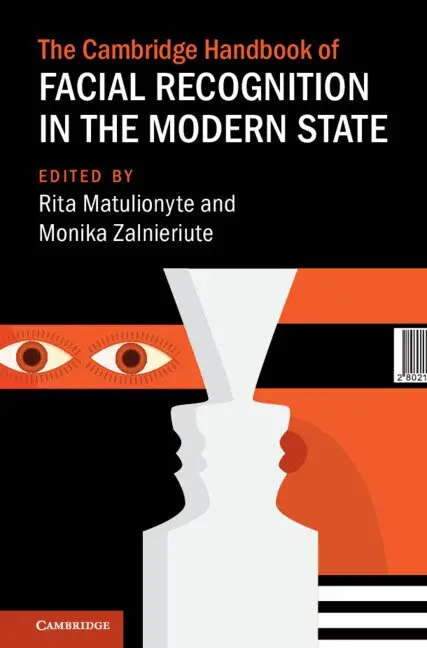
    The Cambridge Handbook of Facial Recognition in the Modern State

    AvRita Matulionyte,Monika Zalnieriute

    Inbunden, Engelska, 2024

    Del i serien Cambridge Law Handbooks

    2 013 kr

    Beställningsvara. Skickas inom 10-15 vardagar. Fri frakt över 249 kr.

    Beskrivning

    In situations ranging from border control to policing and welfare, governments are using automated facial recognition technology (FRT) to collect taxes, prevent crime, police cities and control immigration. FRT involves the processing of a person's facial image, usually for identification, categorisation or counting. This ambitious handbook brings together a diverse group of legal, computer, communications, and social and political science scholars to shed light on how FRT has been developed, used by public authorities, and regulated in different jurisdictions across five continents. Informed by their experiences working on FRT across the globe, chapter authors analyse the increasing deployment of FRT in public and private life. The collection argues for the passage of new laws, rules, frameworks, and approaches to prevent harms of FRT in the modern state and advances the debate on scrutiny of power and accountability of public authorities which use FRT. This book is also available as Open Access on Cambridge Core.

    Produktinformation

    • Utgivningsdatum:2024-04-04
    • Mått:159 x 235 x 22 mm
    • Vikt:590 g
    • Format:Inbunden
    • Språk:Engelska
    • Serie:Cambridge Law Handbooks
    • Antal sidor:306
    • Förlag:Cambridge University Press
    • ISBN:9781009321198

    Utforska kategorier

    • Informationsteknik: allmänt inom Data och IT
    • Juridisk teknik inom Juridik

    Mer om författaren

    Rita Matulionyte is an associate professor at Macquarie University Law School and a Senior Fellow at the Lithuanian Centre for Social Sciences. An international expert in intellectual property and technology law, she has published over 60 papers in the field, co-authored commissioned reports to the European Patent Office, and the governments of South Korea and Australia. Monika Zalnieriute is a senior lecturer (associate professor) at the University of New South Wales, Sydney and is a Senior Fellow at the Lithuanian Centre for Social Sciences. Her research on law and technology has been translated to German, Russian and Mandarin, and is widely drawn upon by scholars and organisations such as the Council of Europe, the World Bank, the European Parliament, and WHO. She is the co-editor of Money, Power and AI (Cambridge, 2023).

    Innehållsförteckning

    • Introduction: facial recognition in the modern state Rita Matulionyte and Monika Zalnieriute; Part I. FRT in Context: Technical and Legal Challenges: 1. Facial recognition technology: key issues and emerging concerns Neil Selwyn, Mark Andrejevic, Chris O'Neill, Xin Gu and Gavin Smith; 2. FRT 101: technical insights Ali Akbari; 3. FRT in 'bloom': beyond single origin narratives Simon Michael Taylor; 4. Transparency of facial recognition technology and trade secrets Rita Matulionyte; 5. Privacy's loose grip on facial recognition: law and the operational image Jake Goldenfein; 6. Facial recognition technology and potential for bias and discrimination Marcus Smith and Monique Mann; 7. Power and protest: FRT and public space surveillance Monika Zalnieriute; 8. Faces of war: Russia's invasion of Ukraine and military use of FRT Agne Limante; Part II. FRT Across the Globe: Jurisdictional Perspectives: 9. Government use of FRT under European law Simone Kuhlmann; 10. European biometric surveillance, concrete rules and uniform enforcement: beyond regulatory abstraction and local enforcement Paul De Hert and Georgios Bouchagiar; 11. Lawfulness and police use of facial recognition in the UK: Article 8 ECHR and Bridges v South Wales Police Nora Ni Loideain; 12. Does Big Brother exist? Face recognition technology in the United Kingdom Giulia Gentile; 13. Facial recognition technologies in the public sector: observations from Germany Andreas Engeli; 14. Central-Eastern Europe perspective to FRT regulation: a case study of Lithuania Eglė Kavoliūnaitė-Ragauskienė; 15. An overview of facial recognition technology regulation in the United States Mailyn Fidler and Justin (Gus) Hurwitz; 16. regulating facial recognition in brazil: legal and policy perspectives Luca Belli, Walter Britto Gaspar, Nicolo Zingales; 17. FRT regulation in China Jyh-An Lee and Peng Zhou; 18. Principled regulation of facial recognition technology: a view from Australia and New Zealand Nessa Lynch and Liz Campbell; 19. Morocco's governance of cities and borders: AI-enhanced surveillance, facial recognition and human rights Sylvia I. Bergh, Issam Cherrat, Francesco Colin, Katharina Natter and Ben Wagner.