Robert A. Huttenback - Böcker
Visar alla böcker från författaren Robert A. Huttenback. Handla med fri frakt och snabb leverans.
7 produkter
7 produkter
684 kr
Skickas inom 3-6 vardagar
British Relations with Sind 1799-1843: An Anatomy of Imperialism explores the complex and evolving dynamics of British policy and intervention in Sind during a critical period of imperial expansion. This meticulously researched volume examines the shifting priorities of the British East India Company, from initial commercial interests to broader geopolitical strategies shaped by fears of invasion and global rivalries. It uncovers the nuanced interactions between British officials and the ruling Talpur dynasty, culminating in the annexation of Sind under Sir Charles Napier—a pivotal event often mythologized in British imperial history.This work situates the annexation within the broader context of 19th-century British imperialism, interrogating the paradox of territorial expansion despite official opposition to it. Rich with historical detail, it delves into the region's strategic significance, tracing its history as a contested crossroads of invasion and culture. By providing a compelling narrative and analysis of British motivations, strategies, and outcomes, the book offers valuable insights into the anatomy of imperial expansion in South Asia and beyond. Essential reading for scholars of British imperial history and South Asian studies, this book sheds light on a critical episode in the shaping of the modern subcontinent.This title is part of UC Press's Voices Revived program, which commemorates University of California Press’s mission to seek out and cultivate the brightest minds and give them voice, reach, and impact. Drawing on a backlist dating to 1893, Voices Revived makes high-quality, peer-reviewed scholarship accessible once again using print-on-demand technology. This title was originally published in 1962.
1 513 kr
Skickas inom 3-6 vardagar
British Relations with Sind 1799-1843: An Anatomy of Imperialism explores the complex and evolving dynamics of British policy and intervention in Sind during a critical period of imperial expansion. This meticulously researched volume examines the shifting priorities of the British East India Company, from initial commercial interests to broader geopolitical strategies shaped by fears of invasion and global rivalries. It uncovers the nuanced interactions between British officials and the ruling Talpur dynasty, culminating in the annexation of Sind under Sir Charles Napier—a pivotal event often mythologized in British imperial history.This work situates the annexation within the broader context of 19th-century British imperialism, interrogating the paradox of territorial expansion despite official opposition to it. Rich with historical detail, it delves into the region's strategic significance, tracing its history as a contested crossroads of invasion and culture. By providing a compelling narrative and analysis of British motivations, strategies, and outcomes, the book offers valuable insights into the anatomy of imperial expansion in South Asia and beyond. Essential reading for scholars of British imperial history and South Asian studies, this book sheds light on a critical episode in the shaping of the modern subcontinent.This title is part of UC Press's Voices Revived program, which commemorates University of California Press’s mission to seek out and cultivate the brightest minds and give them voice, reach, and impact. Drawing on a backlist dating to 1893, Voices Revived makes high-quality, peer-reviewed scholarship accessible once again using print-on-demand technology. This title was originally published in 1962.
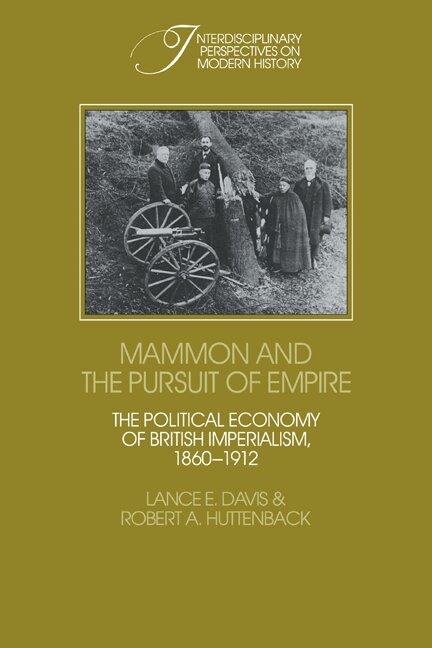
Mammon and the Pursuit of Empire
The Political Economy of British Imperialism, 1860-1912
Häftad, Engelska, 2009
563 kr
Skickas inom 7-10 vardagar
Historians have so far made few attempts to assess directly the costs and benefits of Britain's investment in empire. This book presents answers to some of the key questions about the economics of imperialism: how large was the flow of finance to the empire? How great were the profits on empire investment? What were the social costs of maintaining the empire? Who received the profits, and who bore the costs? The authors show that colonial finance did not dominate British capital markets; returns from empire investment were not high in comparison to earnings in the domestic and foreign sectors; there is no evidence of continued exploitative profits; and empire profits were earned at a substantial cost to the taxpayer. They depict British imperialism as a mechanism to effect an income transfer from the tax-paying middle class to the elites in which the ownership of imperial enterprise was heavily concentrated, with some slight net transfer to the colonies in the process.
Mammon and the Pursuit of Empire
The Political Economy of British Imperialism, 1860-1912
Inbunden, Engelska, 1987
1 702 kr
Skickas inom 7-10 vardagar
Historians have so far made few attempts to assess directly the costs and benefits of Britain's investment in empire. This book presents answers to some of the key questions about the economics of imperialism: how large was the flow of finance to the empire? How great were the profits on empire investment? What were the social costs of maintaining the empire? Who received the profits, and who bore the costs? The authors show that colonial finance did not dominate British capital markets; returns from empire investment were not high in comparison to earnings in the domestic and foreign sectors; there is no evidence of continued exploitative profits; and empire profits were earned at a substantial cost to the taxpayer. They depict British imperialism as a mechanism to effect an income transfer from the tax-paying middle class to the elites in which the ownership of imperial enterprise was heavily concentrated, with some slight net transfer to the colonies in the process.
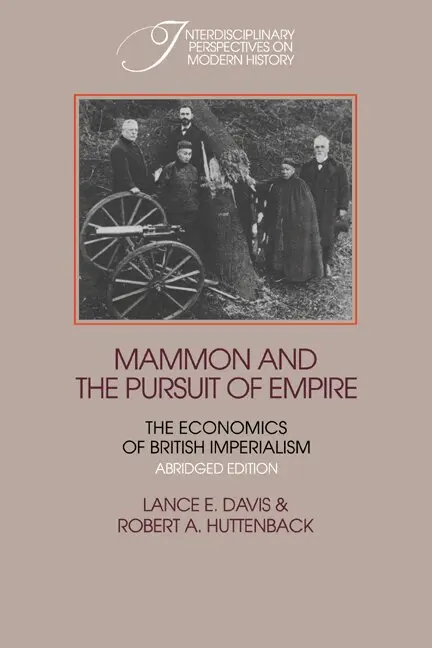
Mammon and the Pursuit of Empire Abridged Edition
The Economics of British Imperialism
Häftad, Engelska, 1988
590 kr
Skickas inom 7-10 vardagar
Historians have so far made few attempts to assess directly the costs and benefits of Britain's investment in empire. This book presents answers to some of the key questions about the economics of imperialism: how large was the flow of finance to the empire? How great were the profits on empire investment? What were the social costs of maintaining the empire? Who received the profits, and who bore the costs? The authors show that colonial finance did not dominate British capital markets; returns from empire investment were not high in comparison to earnings in the domestic and foreign sectors; there is no evidence of continued exploitative profits; and empire profits were earned at a substantial cost to the taxpayer. They depict British imperialism as a mechanism to effect an income transfer from the tax-paying middle class to the elites in which the ownership of imperial enterprise was heavily concentrated, with some slight net transfer to the colonies in the process.
468 kr
Skickas inom 3-6 vardagar
311 kr
Skickas inom 3-6 vardagar