Robert A. Kagan - Böcker
Visar alla böcker från författaren Robert A. Kagan. Handla med fri frakt och snabb leverans.
10 produkter
10 produkter
620 kr
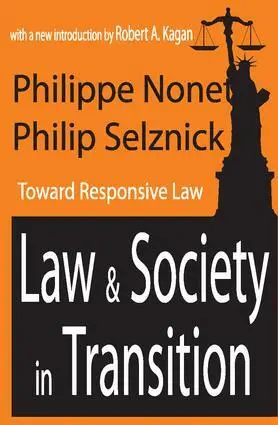
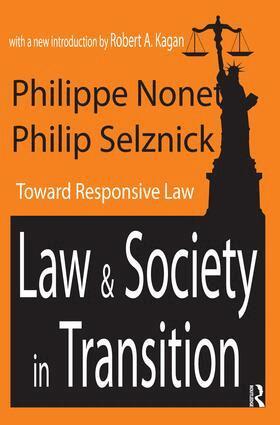
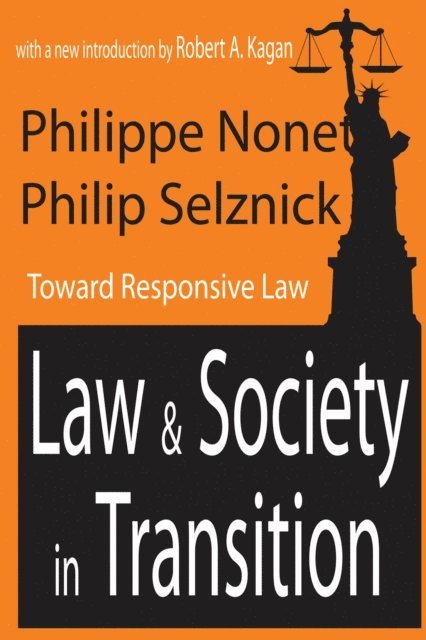
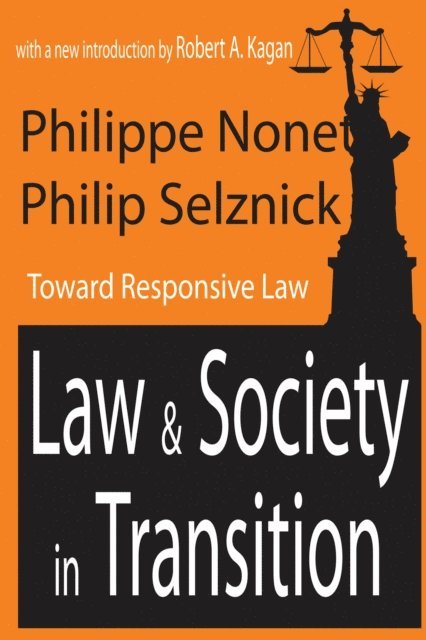
Year by year, law seems to penetrate ever larger realms of social, political, and economic life, generating both praise and blame. Nonet and Selznick's Law and Society in Transition explains in accessible language the primary forms of law as a social, political, and normative phenomenon. They illustrate with great clarity the fundamental difference between repressive law, riddled with raw conflict and the accommodation of special interests, and responsive law, the reasoned effort to realize an ideal of polity. To make jurisprudence relevant, legal, political, and social theory must be reintegrated. As a step in this direction, Nonet and Selznick attempt to recast jurisprudential issues in a social science perspective. They construct a valuable framework for analyzing and assessing the worth of alternative modes of legal ordering. The volume's most enduring contribution is the authors' typology-repressive, autonomous, and responsive law. This typology of law is original and especially useful because it incorporates both political and jurisprudential aspects of law and speaks directly to contemporary struggles over the proper place of law in democratic governance. In his new introduction, Robert A. Kagan recasts this classic text for the contemporary world. He sees a world of responsive law in which legal institutions-courts, regulatory agencies, alternative dispute resolution bodies, police departments-are periodically studied and redesigned to improve their ability to fulfill public expectations. Schools, business corporations, and governmental bureaucracies are more fully pervaded by legal values. Law and Society in Transition describes ways in which law changes and develops. It is an inspiring vision of a politically responsive form of governance, of special interest to those in sociology, law, philosophy, and politics.
Del 1 - California Series in Law, Politics, and Society
Regulatory Encounters
Multinational Corporations and American Adversarial Legalism
Häftad, Engelska, 2000
531 kr
Skickas inom 3-6 vardagar
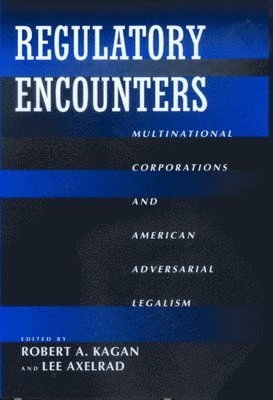
"Regulatory Encounters" reports on a path-breaking study of how government regulation of business in the United States differs in practice from regulation in other economically advanced democracies. In each of ten in-depth case studies, the contributors to this volume compare a particular multinational corporation's experience with parallel regulatory regimes in the United States and in Japan, Canada, Great Britain, Germany, The Netherlands, and the European Union, noting precisely which regulatory precautions were actually implemented in each country.The regulatory systems analyzed include aspects of environmental protection, product safety, debt collection, employees' rights, and patent protection. The studies in "Regulatory Encounters" indicate that the adversarial and legalistic character of American regulation imposes higher costs and delays on economic activity than comparable regulatory regimes in other economically advanced democracies, and often does not generate higher levels of protection for the public.
Dynamics of Regulatory Change
How Globalization Affects National Regulatory Policies
Häftad, Engelska, 2004
591 kr
Skickas inom 3-6 vardagar
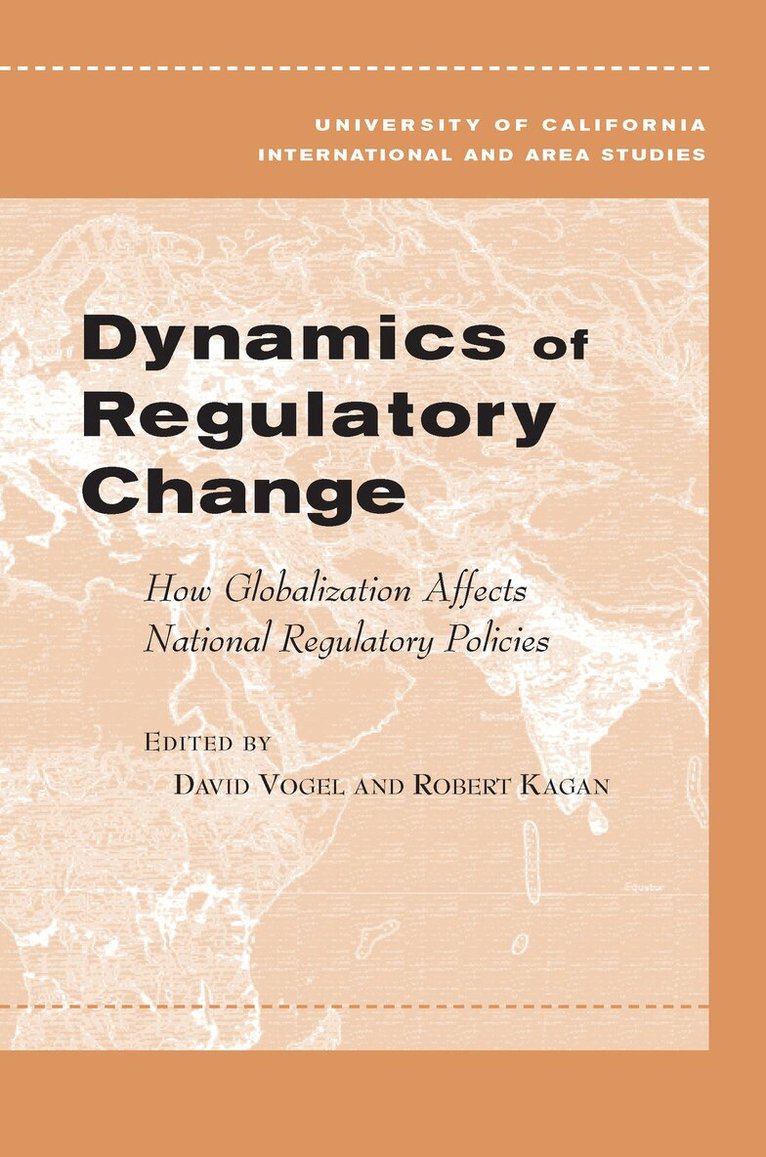
Critics of globalization claim that economic liberalization leads to a lowering of regulatory standards. As capital and corporations move more freely across national boundaries, a race to the bottom results as governments are forced to weaken labor and environmental standards to retain current contracts or attract new business. The essays in this volume argue that, on the contrary, under certain circumstances global economic integration can actually lead to the strengthening of consumer and environmental standards. This volume extends the argument of David Vogel's book Trading Up, which discussed environmental standards, by focusing on the impact of globalization on labor rights, women's rights and capital market regulations.
261 kr
Skickas inom 7-10 vardagar
In the first edition of this groundbreaking book, Robert Kagan explained why America is much more adversarial—likely to rely on legal threats and lawsuits—than other economically advanced countries, with more prescriptive laws, more costly adjudications, and more severe penalties. This updated edition also addresses the rise of the conservative legal movement and anti-statism in the Republican party, which have put in sharp relief the virtues of adversarial legalism in its ability to empower citizens, lawyers, and judges to mount challenges to the arbitrary or unlawful exercise of government authority.“This is a wonderful piece of work, richly detailed and beautifully written. It is the best, sanest, and most comprehensive evaluation and critique of the American way of law that I have seen. Every serious scholar concerned with justice and efficiency, and every policymaker who is serious about improving the American legal order, should read this trenchant and exciting book.”—Lawrence Friedman, Stanford University“A tour de force. It is an elegantly written, consistently insightful analysis and critique of the American emphasis on litigation and punitive sanctions in the policy and administrative process.”—Charles R. Epp, Law and Society Review
894 kr
Skickas inom 10-15 vardagar
This book describes a century of tremendous legal change, of inspiring legal developments, and profound failures. The twentieth century took the United States from the Progressive Era's optimism about law and social engineering to current concerns about a hyperlegalistic society, from philosophical idealism to the implementation of democracy, the rule of law, and the idea of human rights throughout the world. At the same time, law maintained its status as the key language of governance in the United States, the most "legal" of all countries, which has succeeded in making its version of the state a point of reference around the globe.
1 401 kr
Skickas inom 10-15 vardagar
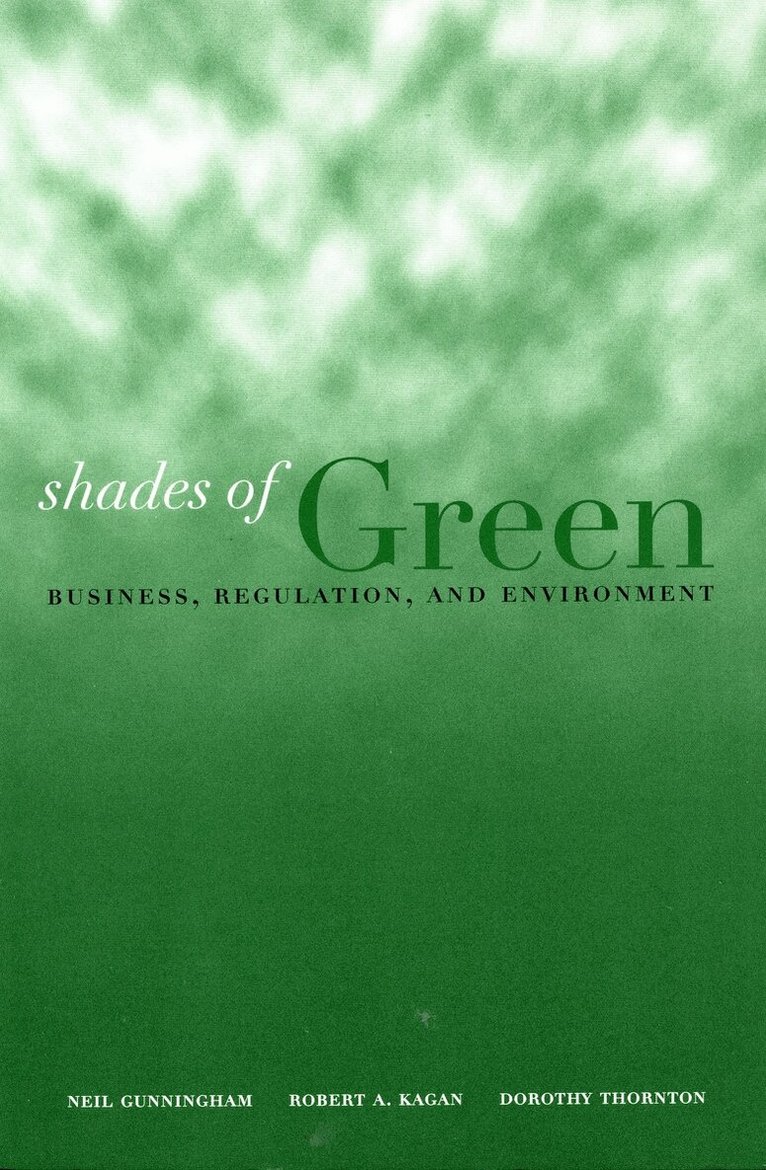
How much does regulation matter in shaping corporate behavior? This pathbreaking, in-depth study of fourteen pulp manufacturing mills in the United States, Canada, Australia, and New Zealand reveals that steadily tightening regulatory standards have been crucial for raising environmental performance. But while all firms have shown improvement, some have improved more than others, many going substantially beyond compliance.What explains the variation in compliance? It's not necessarily the differences in regulation in each country. Rather, variation is accounted for by the complex interaction between tightening regulations and a social license to operate (especially pressures from community and environmental activists), economic constraints, and differences in corporate environmental management style. Shades of Green provides the most extensive and systematic empirical study to date of why firms achieve the levels of environmental performance that they do.
324 kr
Skickas inom 7-10 vardagar
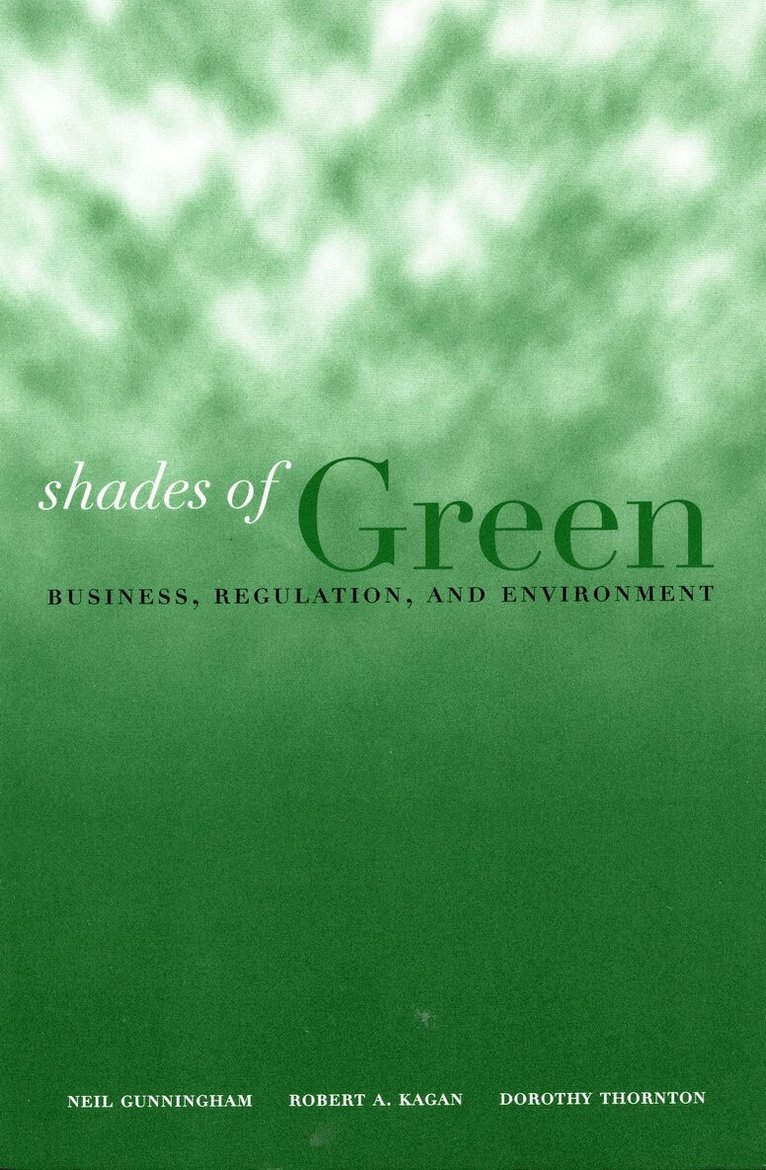
How much does regulation matter in shaping corporate behavior? This pathbreaking, in-depth study of fourteen pulp manufacturing mills in the United States, Canada, Australia, and New Zealand reveals that steadily tightening regulatory standards have been crucial for raising environmental performance. But while all firms have shown improvement, some have improved more than others, many going substantially beyond compliance.What explains the variation in compliance? It's not necessarily the differences in regulation in each country. Rather, variation is accounted for by the complex interaction between tightening regulations and a social license to operate (especially pressures from community and environmental activists), economic constraints, and differences in corporate environmental management style. Shades of Green provides the most extensive and systematic empirical study to date of why firms achieve the levels of environmental performance that they do.
939 kr
Skickas inom 7-10 vardagar
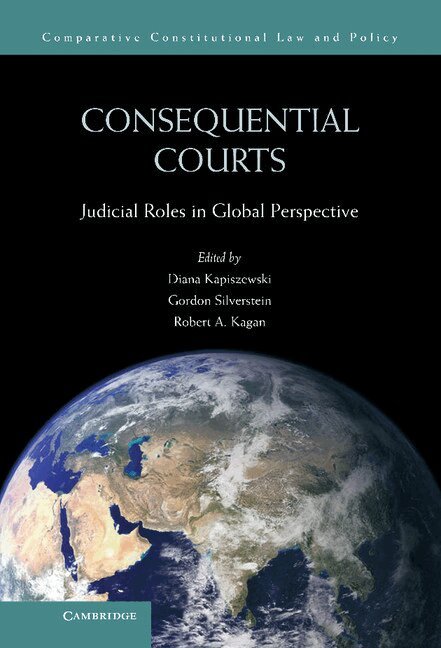
In the early twenty-first century, courts have become versatile actors in the governance of many constitutional democracies, and judges play a variety of roles in politics and policy making. Assembling papers penned by academic specialists on high courts around the world, and presented during a year-long Andrew W. Mellon Foundation John E. Sawyer Seminar at the University of California, Berkeley, this volume maps the roles in governance that courts are undertaking and the ways they have come to matter in the political life of their nations. It offers empirically rich accounts of dramatic judicial actions in the Americas, Europe, the Middle East and Asia, exploring the political conditions and judicial strategies that have fostered those assertions of power and evaluating when and how courts' performance of new roles has been politically consequential. By focusing on the content and consequences of judicial power, the book advances a new agenda for the comparative study of courts.
377 kr
Skickas inom 7-10 vardagar
In the early twenty-first century, courts have become versatile actors in the governance of many constitutional democracies, and judges play a variety of roles in politics and policy making. Assembling papers penned by academic specialists on high courts around the world, and presented during a year-long Andrew W. Mellon Foundation John E. Sawyer Seminar at the University of California, Berkeley, this volume maps the roles in governance that courts are undertaking and the ways they have come to matter in the political life of their nations. It offers empirically rich accounts of dramatic judicial actions in the Americas, Europe, the Middle East and Asia, exploring the political conditions and judicial strategies that have fostered those assertions of power and evaluating when and how courts' performance of new roles has been politically consequential. By focusing on the content and consequences of judicial power, the book advances a new agenda for the comparative study of courts.
2 300 kr
Skickas inom 10-15 vardagar
Year by year, law seems to penetrate ever larger realms of social, political, and economic life, generating both praise and blame. Nonet and Selznick's Law and Society in Transition explains in accessible language the primary forms of law as a social, political, and normative phenomenon. They illustrate with great clarity the fundamental difference between repressive law, riddled with raw conflict and the accommodation of special interests, and responsive law, the reasoned effort to realize an ideal of polity. To make jurisprudence relevant, legal, political, and social theory must be reintegrated. As a step in this direction, Nonet and Selznick attempt to recast jurisprudential issues in a social science perspective. They construct a valuable framework for analyzing and assessing the worth of alternative modes of legal ordering. The volume's most enduring contribution is the authors' typology-repressive, autonomous, and responsive law. This typology of law is original and especially useful because it incorporates both political and jurisprudential aspects of law and speaks directly to contemporary struggles over the proper place of law in democratic governance. In his new introduction, Robert A. Kagan recasts this classic text for the contemporary world. He sees a world of responsive law in which legal institutions-courts, regulatory agencies, alternative dispute resolution bodies, police departments-are periodically studied and redesigned to improve their ability to fulfill public expectations. Schools, business corporations, and governmental bureaucracies are more fully pervaded by legal values. Law and Society in Transition describes ways in which law changes and develops. It is an inspiring vision of a politically responsive form of governance, of special interest to those in sociology, law, philosophy, and politics.