Robert A. Maxwell – författare
Visar alla böcker från författaren Robert A. Maxwell. Handla med fri frakt och snabb leverans.
7 produkter
Art of Medieval Urbanism
Parthenay in Romanesque Aquitaine
Inbunden, 2008
1533 kr
Lägg i varukorg
The Art of Medieval Urbanism examines the role of monumental sculpture and architecture in the medieval cityscape, offering a pathbreaking interpretation of the relationships among art, architecture, and the history of urbanism. In the first study of its kind, Robert Maxwell shifts attention away …
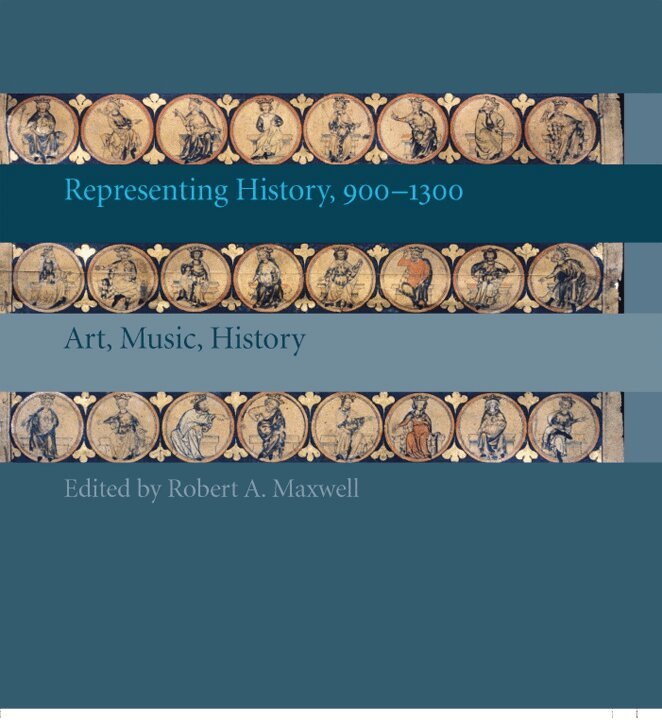
Representing History, 900–1300
Art, Music, History
Inbunden, 2010
1298 kr
Lägg i varukorg
Modern scholarship, particularly historical studies, has long acknowledged the importance of the past to medieval conceptions of the present. This volume brings art history and music into dialogue with historical studies. The essays draw out the strategies shared by these fields in the realm of …
Memory of Past Acts
Picturing Presence, Loss, and History in Illuminated Cartularies, C. 1050-1220
Inbunden, 2026
1920 kr
Lägg i varukorg
Drug Discovery
A Casebook and Analysis
Av Robert A. Maxwell, Shohreh B. Eckhardt
Inbunden, 1990
1693 kr
Lägg i varukorg
This treatise had its origins in the authors' strong opinion that the discovery of new drugs, especially of innovative therapeutic agents, really does not happen as a spontaneous sequel to investiga tive research, no matter how penetrating such research may be. Rather, it seemed to us that the …
Drug Discovery
A Casebook and Analysis
Av Shohreh B. Eckhardt, Robert A. Maxwell
E-bok, 2012
2127 kr
Lägg i varukorg
This treatise had its origins in the authors'' strong opinion that the discovery of new drugs, especially of innovative therapeutic agents, really does not happen as a spontaneous sequel to investiga tive research, no matter how penetrating such research may be. Rather, it seemed to us that the …
Drug Discovery
A Casebook and Analysis
Av Robert A. Maxwell, Shohreh B. Eckhardt
Häftad, 2012
1693 kr
Lägg i varukorg
This treatise had its origins in the authors' strong opinion that the discovery of new drugs, especially of innovative therapeutic agents, really does not happen as a spontaneous sequel to investiga tive research, no matter how penetrating such research may be. Rather, it seemed to us that the …