Robert A. Mundell – författare
Visar alla böcker från författaren Robert A. Mundell. Handla med fri frakt och snabb leverans.
5 produkter
5 produkter
Inbunden, Engelska, 2000
1 674 kr
Skickas inom 10-15 vardagar
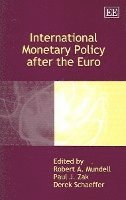
The introduction of the euro was an important event for the world economy and the international political system. For the first time in history, a substantial group of European countries-eleven of the fifteen members of the European Union including three members of the G-7-have voluntarily agreed to replace their national currencies with a single currency. The euro area has already become established as the second largest currency area in the world and will therefore become a major player in the international monetary system. The creation of the euro poses a number of interesting questions. Will the euro be a strong or a weak currency? Will the euro challenge the leading position hitherto held by the United States dollar and would sharing of the burdens and advantages of reserve currency status improve or worsen the stability of the international monetary system? How will the euro affect US relations with Europe? Does the formation of the euro intensify European integration in other fields? Is a bi-polar international monetary system viable? These and other issues motivated the Luxembourg Institute for European and International Studies and the Pierre Werner Foundation to organize an international conference in Luxembourg on December 3-4, 1998, on the eve of the birth of the euro. At the outset we were aware that the issue of the euro went far beyond pure economics. Money, after all, is too important a subject to be left to economists.
Häftad, Engelska, 2012
1 674 kr
Skickas inom 10-15 vardagar
The introduction of the euro was an important event for the world economy and the international political system. For the first time in history, a substantial group of European countries-eleven of the fifteen members of the European Union including three members of the G-7-have voluntarily agreed to replace their national currencies with a single currency. The euro area has already become established as the second largest currency area in the world and will therefore become a major player in the international monetary system. The creation of the euro poses a number of interesting questions. Will the euro be a strong or a weak currency? Will the euro challenge the leading position hitherto held by the United States dollar and would sharing of the burdens and advantages of reserve currency status improve or worsen the stability of the international monetary system? How will the euro affect US relations with Europe? Does the formation of the euro intensify European integration in other fields? Is a bi-polar international monetary system viable? These and other issues motivated the Luxembourg Institute for European and International Studies and the Pierre Werner Foundation to organize an international conference in Luxembourg on December 3-4, 1998, on the eve of the birth of the euro. At the outset we were aware that the issue of the euro went far beyond pure economics. Money, after all, is too important a subject to be left to economists.
E-bok
PDF, Engelska, 20122 110 kr
Läs direkt efter köp
The introduction of the euro was an important event for the world economy and the international political system. For the first time in history, a substantial group of European countries-eleven of the fifteen members of the European Union including three members of the G-7-have voluntarily agreed to replace their national currencies with a single currency. The euro area has already become established as the second largest currency area in the world and will therefore become a major player in the international monetary system. The creation of the euro poses a number of interesting questions. Will the euro be a strong or a weak currency? Will the euro challenge the leading position hitherto held by the United States dollar and would sharing of the burdens and advantages of reserve currency status improve or worsen the stability of the international monetary system? How will the euro affect US relations with Europe? Does the formation of the euro intensify European integration in other fields? Is a bi-polar international monetary system viable? These and other issues motivated the Luxembourg Institute for European and International Studies and the Pierre Werner Foundation to organize an international conference in Luxembourg on December 3-4, 1998, on the eve of the birth of the euro. At the outset we were aware that the issue of the euro went far beyond pure economics. Money, after all, is too important a subject to be left to economists.
Inbunden, Engelska, 2002
1 708 kr
Skickas inom 5-8 vardagar
Under the direction of Nobel laureate Robert A. Mundell and Paul J. Zak, eminent contributors to Monetary Stability and Economic Growth offer a unique insight into the way that economists analyse the causes of money (mis) management in the US, Latin America, Europe and Japan, and prescribe stabilising reforms. Their lively discussion provides answers to various questions including: How does monetary stability affect economic growth?How can nations best achieve monetary stability?When is monetary union desirable?Which anchors for monetary stability are likely to be most effective?How will the euro affect financial markets and the international monetary system?Is international monetary reform possible, and how can it be achieved?The mechanisms that link monetary policy - including foreign exchange regimes and the international monetary system - to economic performance are examined, and the ways in which countries can stimulate economic growth are explored. This superb narrative volume, brought alive by the debate between leading economists, is contextualised by the editors' excellent introduction. It will be of immense interest to students, researchers and teachers of macroeconomics and financial economics as well as professional economists.
Inbunden, Engelska, 2005
1 759 kr
Skickas inom 5-8 vardagar
This fascinating book, a dialogue by leading economists, offers an extensive review of the impact of the introduction of the euro on the international monetary system. The authors dissect the impact of the euro on living standards in developed and developing countries, the growth of the Euro zone, the role of the International Monetary Fund, and the function of gold in the international monetary system. Also discussed is the design of a new international financial architecture and its impact on the wealth of nations. The critique is frank, entertaining, and sometimes conflicting, empowering the reader to draw his or her own conclusions. Offering a comprehensive review, this book will have great appeal for economists, especially those working on international monetary policy and theory. Students will also find this book of value.