• Fri frakt över 249 kr
  • •
  • Snabba leveranser
  • •
  • Billiga böcker
Kundservice

Du är på sajten för privatpersoner.

Företag, bibliotek eller offentlig verksamhet?

Du handlar på classic.bokus.com, där alla dina funktioner finns intakta.
Till classic.bokus.com
Bokus logotyp. Gå till startsidan.
  • Erbjudanden
  • Nyheter
  • Student
  • Topplistor
  • Barn & ungdom
  • Bokus Play
  • E-böcker
  • Pocketböcker
  • Spel & pussel

Må bättre, för mindre! Upp till 50% rabatt på hälsoböcker

Sidfot

Mina sidor

    Hjälp

    • Kundservice
    • Vanliga frågor och svar
    • Frakt och leverans
    • Retur vid ångerrätt
    • Reklamera vara
    • Betalning
    • Köpvillkor
    • Allmänna villkor
    • Information om webbplatsens tillgänglighet

    Om Bokus

    • Om oss
    • Pressrum
    • För studenter
    • För företag
    • För bibliotek och offentlig verksamhet
    • För leverantörer
    • Hållbarhet

    Populärt

    • Aktuella erbjudanden
    • Presentkort
    • Studentlitteratur
    • Nya böcker
    • Topplistor
    • Signerade böcker
    • Engelska böcker

    Inspiration

    • Boktips
    • BookTok
    • Populära bokserier
    • Barnbokskaraktärer
    • Populära författare
    Logotyp för Bokus
    Följ oss på Facebook (extern länk)Följ oss på Instagram (extern länk)Följ oss på YouTube (extern länk)Följ oss på TikTok (extern länk)
    bokus @ CookiesAnpassa cookiesIntegritetspolicyKöpvillkor
    Till Citymail hemsida (extern länk)Till Budbee hemsida (extern länk)Till Postnord hemsida (extern länk)Till Schenker hemsida (extern länk)Till Early Bird hemsida (extern länk)Till Walleys hemsida (extern länk)
    1. Ekonomi och Ledarskap
    2. Nationalekonomi
    3. Internationell ekonomi

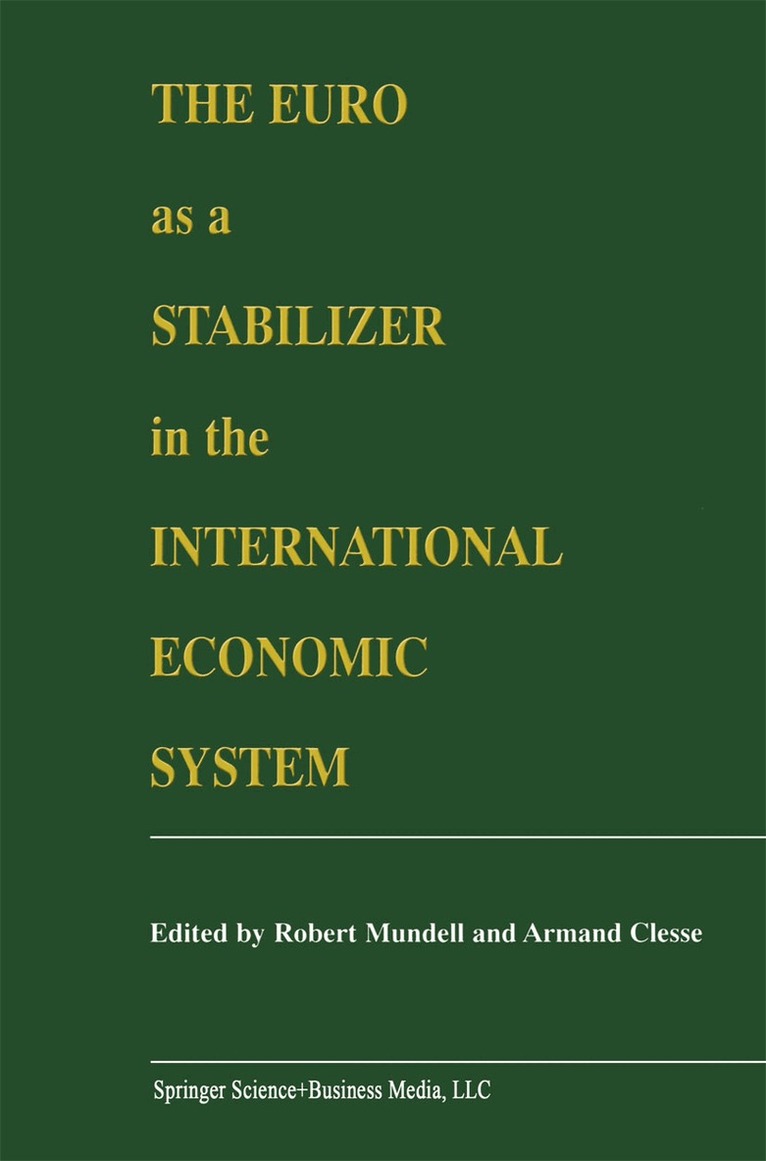
    Euro as a Stabilizer in the International Economic System

    AvRobert A. Mundell,Armand Clesse

    Häftad, Engelska, 2012

    1 674 kr

    Beställningsvara. Skickas inom 10-15 vardagar. Fri frakt över 249 kr.

    Beskrivning

    The introduction of the euro was an important event for the world economy and the international political system. For the first time in history, a substantial group of European countries-eleven of the fifteen members of the European Union including three members of the G-7-have voluntarily agreed to replace their national currencies with a single currency. The euro area has already become established as the second largest currency area in the world and will therefore become a major player in the international monetary system. The creation of the euro poses a number of interesting questions. Will the euro be a strong or a weak currency? Will the euro challenge the leading position hitherto held by the United States dollar and would sharing of the burdens and advantages of reserve currency status improve or worsen the stability of the international monetary system? How will the euro affect US relations with Europe? Does the formation of the euro intensify European integration in other fields? Is a bi-polar international monetary system viable? These and other issues motivated the Luxembourg Institute for European and International Studies and the Pierre Werner Foundation to organize an international conference in Luxembourg on December 3-4, 1998, on the eve of the birth of the euro. At the outset we were aware that the issue of the euro went far beyond pure economics. Money, after all, is too important a subject to be left to economists.

    Produktinformation

    • Utgivningsdatum:2012-10-26
    • Mått:155 x 235 x 27 mm
    • Vikt:727 g
    • Format:Häftad
    • Språk:Engelska
    • Antal sidor:441
    • Förlag:Springer-Verlag New York Inc.
    • ISBN:9781461370079

    Utforska kategorier

    • Internationell ekonomi inom Ekonomi och Ledarskap
    • Ekonomisk politik inom Ekonomi och Ledarskap
    • Makroekonomi inom Ekonomi och Ledarskap

    Innehållsförteckning

    • I: The Viability of the Euro.- 1. A New Bi-Polarity?.- 2. The Theoretical and Historical Perspectives on the Emergence of the Euro.- 3. External Relations of the Euro Area.- 4. The International Political Implications of the Euro.- 5. The Euro and the Stability of the International Monetary System.- II: Management of the Euro.- 6. The Euro and Its Consequences for Global Capital Markets.- 7. Impact of the Euro on Members and Non-Members.- 8. Exchange Rate Policy-Making in the Euro Area: Lessons From Trade?.- 9. Reinforcing European Integration to Promote the Euro: A Range of Policy Options.- 10. Currency Crises and Capital Controls in Emerging Countries: The Case of the African CFA Franc and Its Euro Future.- III: The Euro in the International Economy.- 11. Key Currencies After the Euro.- 12. The Political Economy of the Euro as an International Currency.- 13. The Prospect for Global Monetary Bilingualism.- 14. The Euro and the Outsiders: The Case of the Swiss Franc.- 15. The Euro and the Dollar: Currency Competition, Competitiveness and Policy Coordination.- 16. The Impact of the Euro on the International Stability: A Chinese Perspective.- IV: Conference Sessions.- Session 1: Monetary Leadership and Economic Stability: The Lessons of the Pound and the Dollar.- Session 2: Monetary Leadership and Economic Stability in a Globalizing World.- Session 3: The Emergence of the Euro and Its Future Position vis-à-vis Other Leading Currencies.- Session 4: The Impact of the Euro on International Stability.- Session 5: The Institutional Implications of the Euro.- Session 6: What Should Be the Euro’s International Role?.- V: Keynote Session.- Conference Participants.- Pictures Taken at the Conference.- Index of Contributors.