E-bok, Engelska, 2012
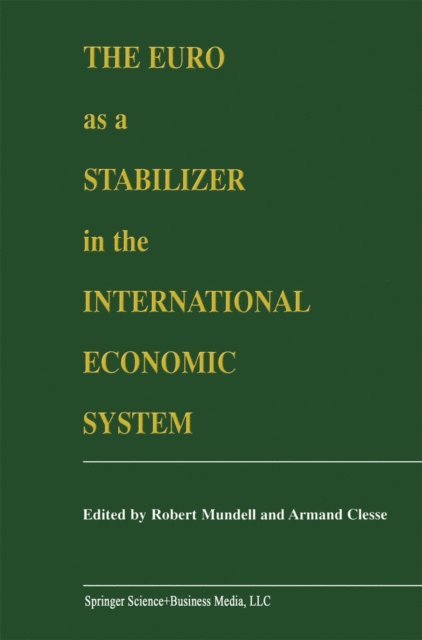
Euro as a Stabilizer in the International Economic System
Av Armand Clesse, Robert A. Mundell
2127 kr
Läs direkt i Bokus Reader – eller ladda ned till din enhet (PDF kräver ofta zoom och scroll på små skärmar).
Beskrivning
The introduction of the euro was an important event for the world economy and the international political system. For the first time in history, a substantial group of European countries-eleven of the fifteen members of the European Union including three members of the G-7-have voluntarily agreed to replace their national currencies with a single currency. The euro area has already become established as the second largest currency area in the world and will therefore become a major player in the international monetary system. The creation of the euro poses a number of interesting questions. Will the euro be a strong or a weak currency? Will the euro challenge the leading position hitherto held by the United States dollar and would sharing of the burdens and advantages of reserve currency status improve or worsen the stability of the international monetary system? How will the euro affect US relations with Europe? Does the formation of the euro intensify European integration in other fields? Is a bi-polar international monetary system viable? These and other issues motivated the Luxembourg Institute for European and International Studies and the Pierre Werner Foundation to organize an international conference in Luxembourg on December 3-4, 1998, on the eve of the birth of the euro. At the outset we were aware that the issue of the euro went far beyond pure economics. Money, after all, is too important a subject to be left to economists.
Produktinformation
- Utgivningsdatum: 2012-12-06
- Språk: Engelska
- Filformat: PDF
- Kopieringsskydd: LCP
- ISBN: 9781461544579
- Förlag: Springer US
Utforska kategorier
Betyg & recensioner
0 recensioner
Inga recensioner tillgängliga.