Robert Agnew – författare
Visar alla böcker från författaren Robert Agnew. Handla med fri frakt och snabb leverans.
11 produkter
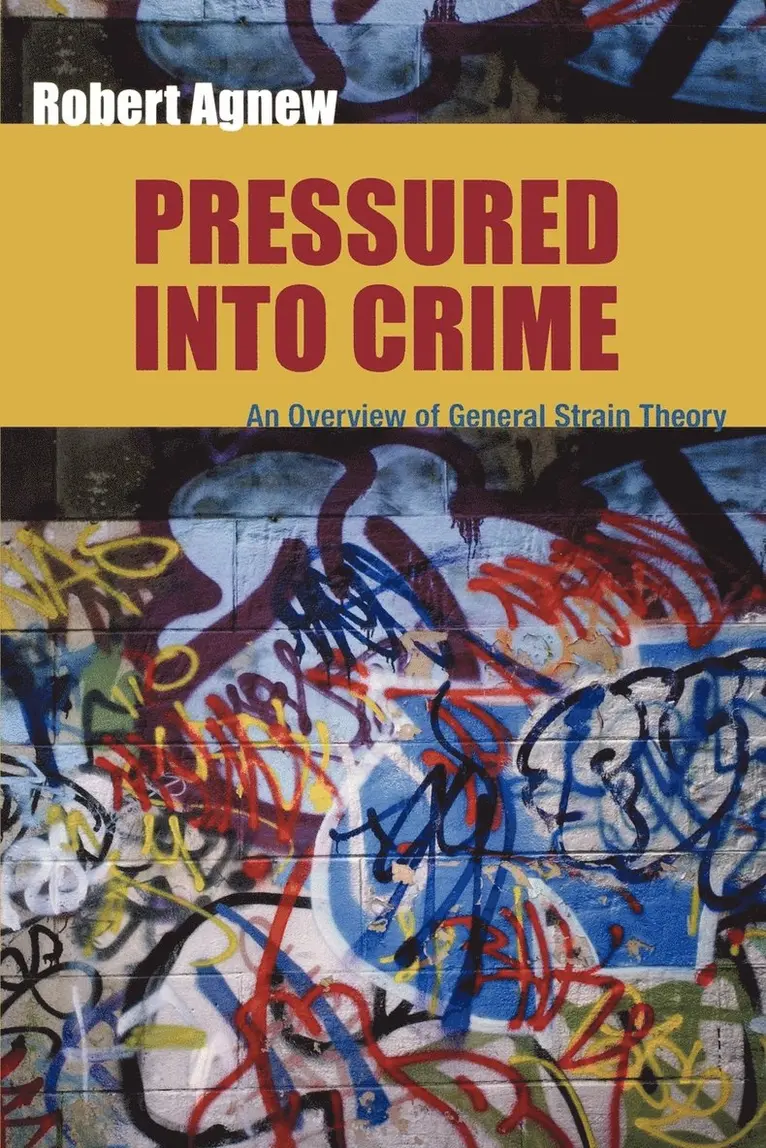
Pressured Into Crime
An Overview of General Strain Theory
Av Robert Agnew
Häftad, 2010
2257 kr
Lägg i varukorg
Pressured Into Crime: An Overview of General Strain Theory by Robert Agnew provides an overview of general strain theory (GST), one of the leading explanations of crime and delinquency, developed by author Robert Agnew. Written to be student-friendly, Pressured Into Crime features numerous …
Criminological Theory: Past to Present
Av Francis T. Cullen, Robert Agnew
Häftad
1598 kr
Lägg i varukorg
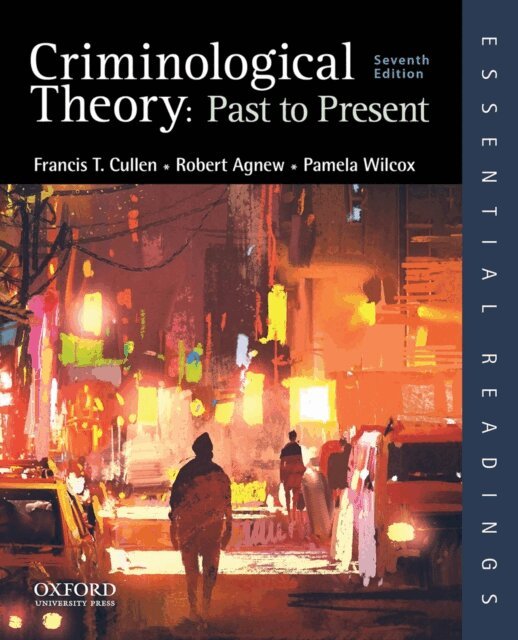
Criminological Theory: Past to Present
Av Pamela Wilcox, Robert Agnew m. fl.
E-bok, 2021
827 kr
Lägg i varukorg
Criminological Theory: Past to Present by Francis T. Cullen, Roben Agnew, and Pamela Wilcox is a comprehensive and authoritative reader for upper-level undergraduate and graduate courses in criminological theory. An Introduction precedes each Part, as well as each individual reading, situating the …
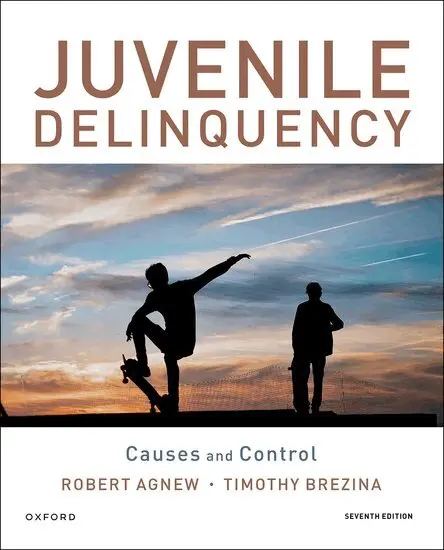
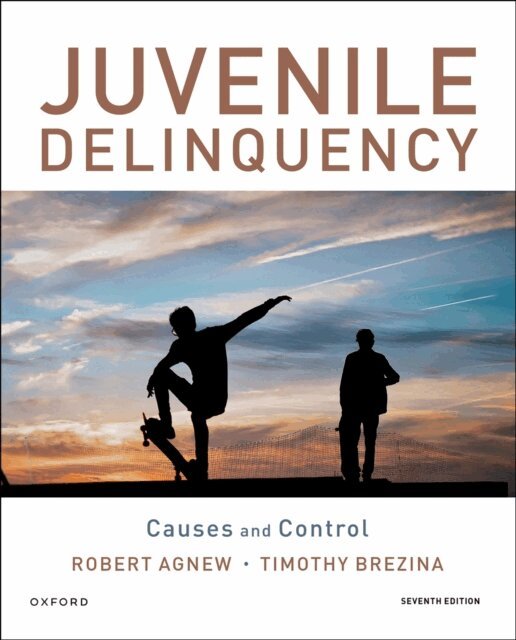
Juvenile Delinquency: Causes and Control
Av Robert Agnew
Häftad, 2023
1920 kr
Lägg i varukorg
Offers a clear and concise overview of the latest theories and research on the causes and control of delinquency. The text is organized around three major questions: What is the nature and extent of delinquency? What are the causes of delinquency? What strategies should we employ to control …
Juvenile Delinquency
Causes and Control
Av Timothy Brezina, Robert Agnew
E-bok, 2022
1003 kr
Lägg i varukorg
Now in its seventh edition, Juvenile Delinquency: Causes and Control offers a clear and concise overview of the latest theories and research on the causes and control of delinquency. The text is organized around three major questions: What is the nature and extent of delinquency? What are the …
Anomie, Strain and Subcultural Theories of Crime
Av Joanne M. Kaufman, Robert Agnew
Inbunden, 2010
4545 kr
Lägg i varukorg
Anomie, strain and subcultural theories are among the leading theories of crime. Anomie theories state that crime results from the failure of society to regulate adequately the behavior of individuals, particularly the efforts of individuals to achieve monetary success. Strain theories focus on the …
Of Crime and Criminality
The Use of Theory in Everyday Life
Av Robert Agnew, Sally Simpson
Häftad, 2000
2371 kr
Lägg i varukorg
This collection of original essays is an innovative, effective way to teach crime theory to undergraduates. Each essay brings an important crime theory to life by applying that theory to a current crime event or topic of interest to students. An original introductory essay by Don Gibbons explains …
Toward a Unified Criminology
Integrating Assumptions About Crime, People and Society
Av Robert Agnew
Inbunden, 2011
969 kr
Lägg i varukorg
Why do people commit crimes? How do we control crime? The theories that criminologists use to answer these questions are built on a number of underlying assumptions, including those about the nature of crime, free will, human nature, and society. These assumptions have a fundamental impact on …
Toward a Unified Criminology
Integrating Assumptions About Crime, People and Society
Av Robert Agnew
Häftad, 2011
427 kr
Lägg i varukorg
Why do people commit crimes? How do we control crime? The theories that criminologists use to answer these questions are built on a number of underlying assumptions, including those about the nature of crime, free will, human nature, and society. These assumptions have a fundamental impact on …
Anomie, Strain and Subcultural Theories of Crime
Av Joanne M. Kaufman, Robert Agnew
E-bok, 2017
831 kr
Lägg i varukorg
Anomie, strain and subcultural theories are among the leading theories of crime. Anomie theories state that crime results from the failure of society to regulate adequately the behavior of individuals, particularly the efforts of individuals to achieve monetary success. Strain theories focus on the …
Anomie, Strain and Subcultural Theories of Crime
Av Joanne M. Kaufman, Robert Agnew
E-bok, 2017
831 kr
Lägg i varukorg
Anomie, strain and subcultural theories are among the leading theories of crime. Anomie theories state that crime results from the failure of society to regulate adequately the behavior of individuals, particularly the efforts of individuals to achieve monetary success. Strain theories focus on the …