Robert Bracey - Böcker
Visar alla böcker från författaren Robert Bracey. Handla med fri frakt och snabb leverans.
3 produkter
3 produkter
1 136 kr
Skickas inom 3-6 vardagar
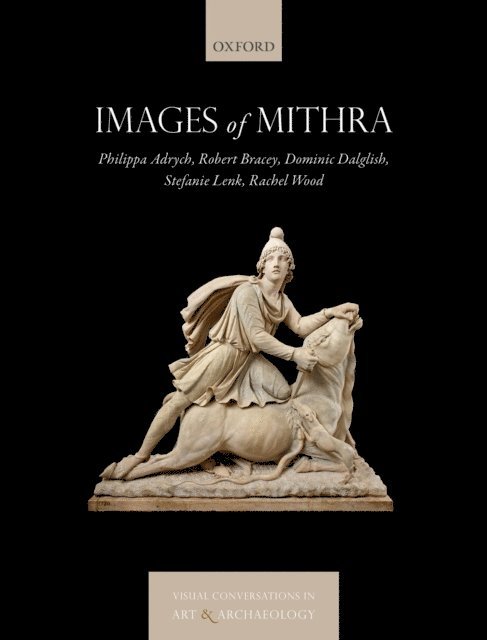
With a history of use extending back to Vedic texts of the second millennium BC, derivations of the name Mithra appear in the Roman Empire, across Sasanian Persia, and in the Kushan Empire of southern Afghanistan and northern India during the first millennium AD. Even today, this name has a place in Yazidi and Zoroastrian religion. But what connection have Mihr in Persia, Miiro in Kushan Bactria, and Mithras in the Roman Empire to one another?Over the course of the volume, specialists in the material culture of these diverse regions explore appearances of the name Mithra from six distinct locations in antiquity. In a subversion of the usual historical process, the authors begin not from an assessment of texts, but by placing images of Mithra at the heart of their analysis. Careful consideration of each example's own context, situating it in the broader scheme of religious traditions and on-going cultural interactions, is key to this discussion. Such an approach opens up a host of potential comparisons and interpretations that are often side-lined in historical accounts.What Images of Mithra offers is a fresh approach to the ways in which gods were labelled and depicted in the ancient world. Through an emphasis on material culture, a more nuanced understanding of the processes of religious formation is proposed in what is but the first part of the Visual Conversations series.
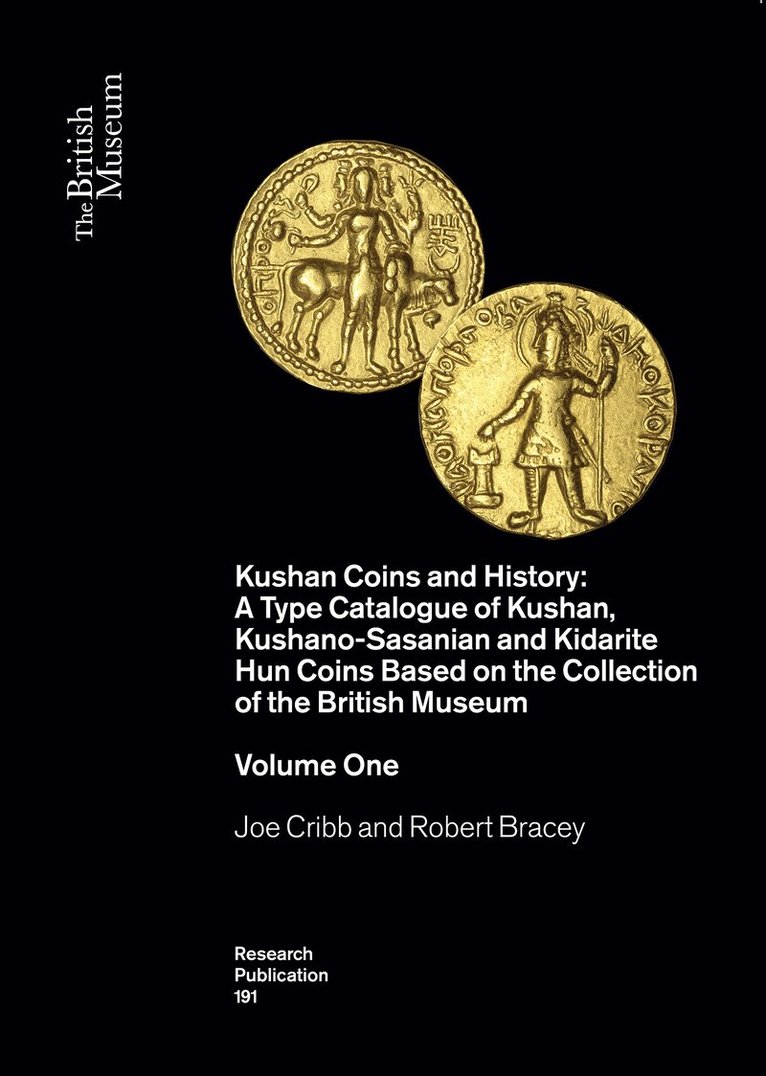
Kushan Coins and History
A Type of Catalogue of Kushan, Kushano-Sasasian and Kidarite Hun Coins Based on the Collection of the British Museum (Two Volumes)
Häftad, Engelska, 2025
821 kr
Skickas
The coinage of the Kushan kings (1st to 4th centuries) and of their immediate successors the Sasanian Kushanshahs (3rd−4th centuries) and the Kidarite Hun Kushanshahs (4th−5th centuries) are a key component of our understanding of the history of ancient Afghanistan, Pakistan, northern India, Tajikistan and Uzbekistan during the early centuries AD. Modern knowledge of each of these kingdoms began with the discovery of their coins. Research continues to reveal new aspects of the political structure of these states, their geographical extent, the religious affinities of their rulers and the development of scripts and languages in the region. This landmark publication will give a comprehensive account of Kushan, Kushano-Sasanian and Kidarite Hun coinages, as well as put them into a wider historical and cultural context.
680 kr
Skickas
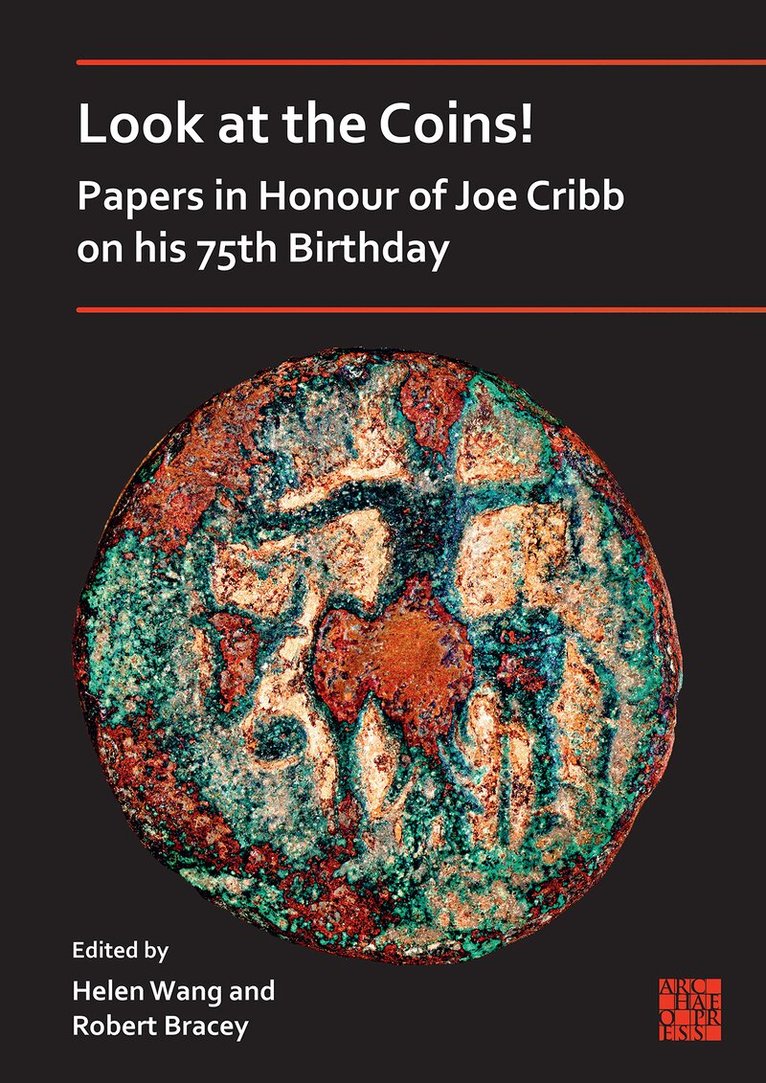
The twenty-four contributions in Look at the Coins! reflect the vast scope of Joe Cribb’s interests, including Asian numismatics, museology, poetry and art. The papers are arranged geographically, then chronologically or thematically. The first seven papers look at coins, charms and silver currencies in or from China: Chinese coin-shaped charms, Han dynasty gold unearthed in the Tomb of the Marquis of Haihun, Jiangxi, silver in the history of Chinese currency, a metallurgical and historical study of Song dynasty coins, the Department of Iron Coins at Dongtangzi Hutong in Beijing and the only known annotated plan of a Chinese mint, the six million dollars in silver of the Canton Ransom, and a hoard of Chinese coins found in Turkey. One paper focuses on the coins and medals of the two Pahlavi Shahs of Iran. Nine papers look at finds from ancient Central Asia and Afghanistan: coins of South Soghd in the first two centuries AD, the identity of the rider on Indo-Greek coins, the phonology of Greek names in Kharoṣṭhī script, questions of identity and interpretation in Gandharan reliefs, first-century AD coins in stūpa deposits and the beginning of the Buddhist relic cult in Afghanistan, a hoard of Kushan gold coins from Swabi, Gandhāran Jātakas, Avadānas and Pūrvayogas, Indian imitations of Kushan coins, and a new gold coin of Vasudeva I. Four papers relate to India: Roman coins found in India, ‘Heraṇika’ in the inscriptions of the Western Deccan (c. 200 BC–300), the peck and shroff marks of sixteenth-century North India, and Henry Ernest Stapleton and the coin collection in the Heberden Coin Room, Ashmolean Museum, Oxford. Two papers relate to South East Asia: one revisits the Stamford Raffles’ Collections, and the other discusses a hybrid pendant found in Thailand. The last contribution celebrates some of Joe’s less well-known interests: poetry, art medals and art photography.