Robert C. Palmer - Böcker
Visar alla böcker från författaren Robert C. Palmer. Handla med fri frakt och snabb leverans.
6 produkter
6 produkter
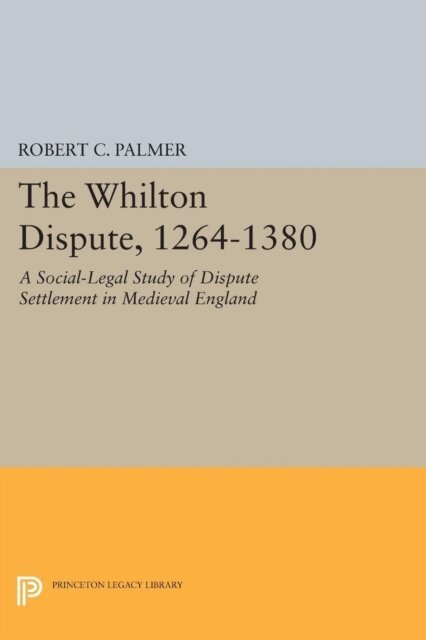
Whilton Dispute, 1264-1380
A Social-Legal Study of Dispute Settlement in Medieval England
Häftad, Engelska, 2014
421 kr
Skickas inom 7-10 vardagar
Robert C. Palmer examines the Whilton dispute, an intrafamilial, multigenerational contest over a large estate that continued, primarily in the courts, from 1264until 1380. Originally published in 1984. The Princeton Legacy Library uses the latest print-on-demand technology to again make available previously out-of-print books from the distinguished backlist of Princeton University Press. These editions preserve the original texts of these important books while presenting them in durable paperback and hardcover editions. The goal of the Princeton Legacy Library is to vastly increase access to the rich scholarly heritage found in the thousands of books published by Princeton University Press since its founding in 1905.
Whilton Dispute, 1264-1380
A Social-Legal Study of Dispute Settlement in Medieval England
Inbunden, Engelska, 2016
1 825 kr
Skickas inom 3-6 vardagar
Robert C. Palmer examines the Whilton dispute, an intrafamilial, multigenerational contest over a large estate that continued, primarily in the courts, from 1264until 1380. Originally published in 1984. The Princeton Legacy Library uses the latest print-on-demand technology to again make available previously out-of-print books from the distinguished backlist of Princeton University Press. These editions preserve the original texts of these important books while presenting them in durable paperback and hardcover editions. The goal of the Princeton Legacy Library is to vastly increase access to the rich scholarly heritage found in the thousands of books published by Princeton University Press since its founding in 1905.

618 kr
Skickas inom 7-10 vardagar
The first monograph on English medieval county courts, this book provides a major revision of traditional conceptions of the character of these courts and the organization of English society from the twelfth to the fourteenth century. THe county courts have been considered courts of custom dominated by local knights unskilled in the law. By analyzing county peronnel and their role of the courts, Robert C. Palmer shows that these courts were, on the contrary, clearly professional and controlled by the magnates through their lawyers. Nevertheless, as the author demonstrates by his study of the process of jurisdictional change, the county courts were increasingly relegated to lesser roles by changes meant to assure justice to county litigants, while the king's court became the normal court of original jurisdiction for most important cases.Professor Palmer appraoches his subject through the study of original records of litigation. Some of his primary sources were unkown until now (the county court year book reports and the writ file records) and some (the king's court plea rolls of Edward I, the unedited Cheshire plea rolls, and the early close rolls) had not previously been so closely examined for evidence on the county courts.In this ambitious work the author has shown how the king's courts and the county and local courts were linekd by personnel and procedure and how legal innovations and other circumstances broke down these links. What emerges is an enlightening study of legal and constitutional change.Robert C. Palmer is a Junior Fellow of the Michigan Society of Fellows at the University of Michigan Law School.Originally published in 1982.The Princeton Legacy Library uses the latest print-on-demand technology to again make available previously out-of-print books from the distinguished backlist of Princeton University Press. These editions preserve the original texts of these important books while presenting them in durable paperback and hardcover editions. The goal of the Princeton Legacy Library is to vastly increase access to the rich scholarly heritage found in the thousands of books published by Princeton University Press since its founding in 1905.
2 801 kr
Skickas inom 3-6 vardagar
The first monograph on English medieval county courts, this book provides a major revision of traditional conceptions of the character of these courts and the organization of English society from the twelfth to the fourteenth century. THe county courts have been considered courts of custom dominated by local knights unskilled in the law. By analyzing county peronnel and their role of the courts, Robert C. Palmer shows that these courts were, on the contrary, clearly professional and controlled by the magnates through their lawyers. Nevertheless, as the author demonstrates by his study of the process of jurisdictional change, the county courts were increasingly relegated to lesser roles by changes meant to assure justice to county litigants, while the king's court became the normal court of original jurisdiction for most important cases.Professor Palmer appraoches his subject through the study of original records of litigation. Some of his primary sources were unkown until now (the county court year book reports and the writ file records) and some (the king's court plea rolls of Edward I, the unedited Cheshire plea rolls, and the early close rolls) had not previously been so closely examined for evidence on the county courts.In this ambitious work the author has shown how the king's courts and the county and local courts were linekd by personnel and procedure and how legal innovations and other circumstances broke down these links. What emerges is an enlightening study of legal and constitutional change.Robert C. Palmer is a Junior Fellow of the Michigan Society of Fellows at the University of Michigan Law School.Originally published in 1982.The Princeton Legacy Library uses the latest print-on-demand technology to again make available previously out-of-print books from the distinguished backlist of Princeton University Press. These editions preserve the original texts of these important books while presenting them in durable paperback and hardcover editions. The goal of the Princeton Legacy Library is to vastly increase access to the rich scholarly heritage found in the thousands of books published by Princeton University Press since its founding in 1905.
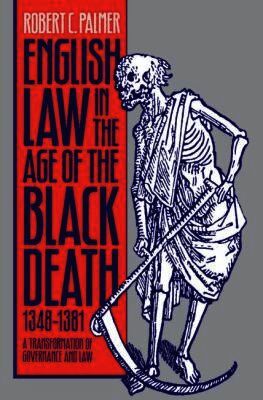
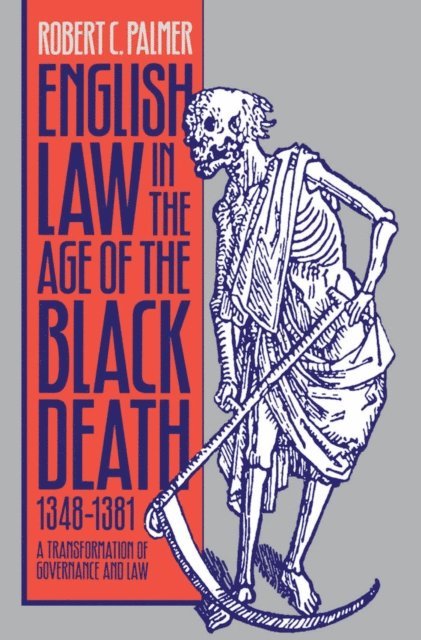
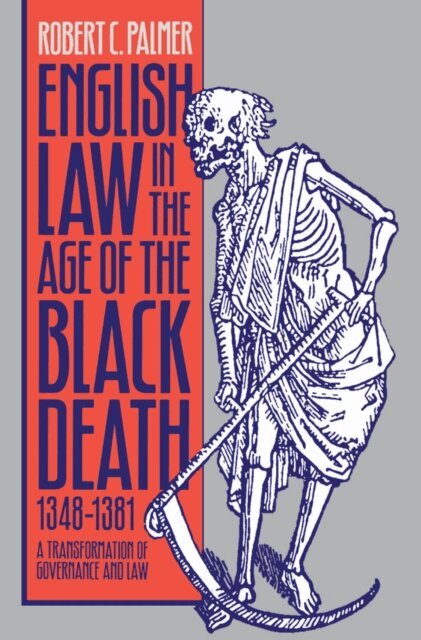
English Law in the Age of the Black Death, 1348-1381
A Transformation of Governance and Law
Häftad, Engelska, 2001
902 kr
Skickas inom 10-15 vardagar
Robert Palmer's pathbreaking study shows how the Black Death triggered massive changes in both governance and law in fourteenth-century England, establishing the mechanisms by which the law adapted to social needs for centuries thereafter. The Black Death killed one-third of the English population between 1348 and 1351. To preserve traditional society, the king's government aggressively implemented new punitive legal remedies as a mechanism for social control. This attempt to shore up traditional society in fact transformed it. English governance now legitimately extended to routine regulation of all workers, from shepherds to innkeepers, smiths, and doctors. The new cohesiveness of the ecclesiastical and lay upper orders, the increase in subject matter jurisdictions, the growth of the chancellor's court, and the acceptance of coercive contractual remedies made the Black Death in England a transformative experience for law and for governance. Palmer's book, based on all of the available legal records, establishes a genuinely new interpretation and chronology of these important legal changes.
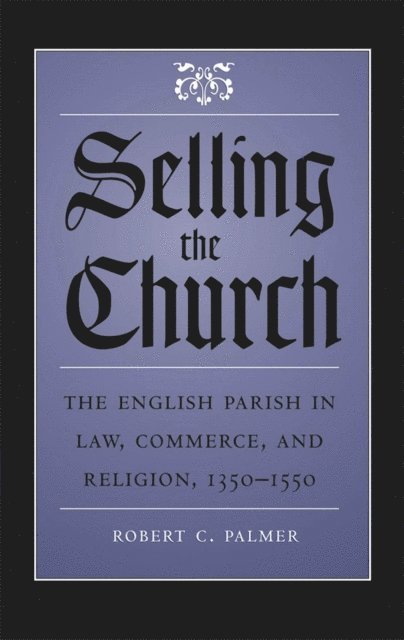
Selling the Church
The English Parish in Law, Commerce, and Religion, 1350-1550
Häftad, Engelska, 2014
489 kr
Skickas inom 10-15 vardagar
In the years of expanding state authority following the Black Death, English common law permitted the leasing of parishes by their rectors and vicars, who then pursued interests elsewhere and left the parish in the control of lay lessees. But a series of statutes enacted by Henry VIII between 1529 and 1540 effectively reduced such clerical absenteeism. Robert Palmer examines this transformation of the English parish and argues that it was an important part of the English Reformation.Palmer analyzes an extensive set of data drawn from common law records to reveal a vigorous and effective effort by the laity to enforce the new statutes. Motivated by both economic and traditional ideals, the litigants made the commercial activities of leaseholding and buying for resale and profit the exclusive domain of the laity and acquired the power to regulate the clergy. According to Palmer, these parish-level reformations presaged and complemented other initiatives of the crown that have long been considered central to the reign of Henry VIII.