Robert E. Innis - Böcker
Visar alla böcker från författaren Robert E. Innis. Handla med fri frakt och snabb leverans.
9 produkter
9 produkter
316 kr
Skickas inom 10-15 vardagar
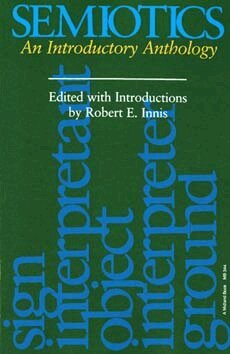
" . . . fifteen texts which are essential reading for anyone interested in semiotics . . . This collection will surely become a standard text for those who teach semiotics, aesthetics or philosophy of language." —International Philosophical QuarterlyThis volume presents the classic statements in semiotics and touches on a vast set of problems and themes—philosophical, aesthetic, literary, cultural, biological, and anthropological.
258 kr
Skickas inom 7-10 vardagar
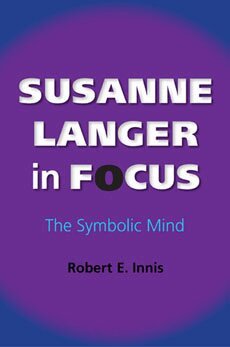
Susanne Langer (1895—1985) was one of American philosophy's most distinctive thinkers. Her philosophy was a deep exploration of human life as a continuous process of meaning-making through symbolic forms. Here, Robert E. Innis brings readers closer to Langer's precise and nuanced account of the symbolic mind. Innis shows how Langer's thought spans the sciences, aesthetics, psychology, religion, education, and music, and where it touches on concerns that were brought forward by American pragmatists such as John Dewey and William James. Innis reveals Langer's intense focus on making meaning clear as he covers her entire philosophical career. Highlighting what is of permanent value to American philosophy in Langer's work, he determines exactly what her positions were and why she proposed them. Readers will find a keen appreciation for and critical appraisal of Langer's unique philosophical vision.
502 kr
Skickas inom 5-8 vardagar
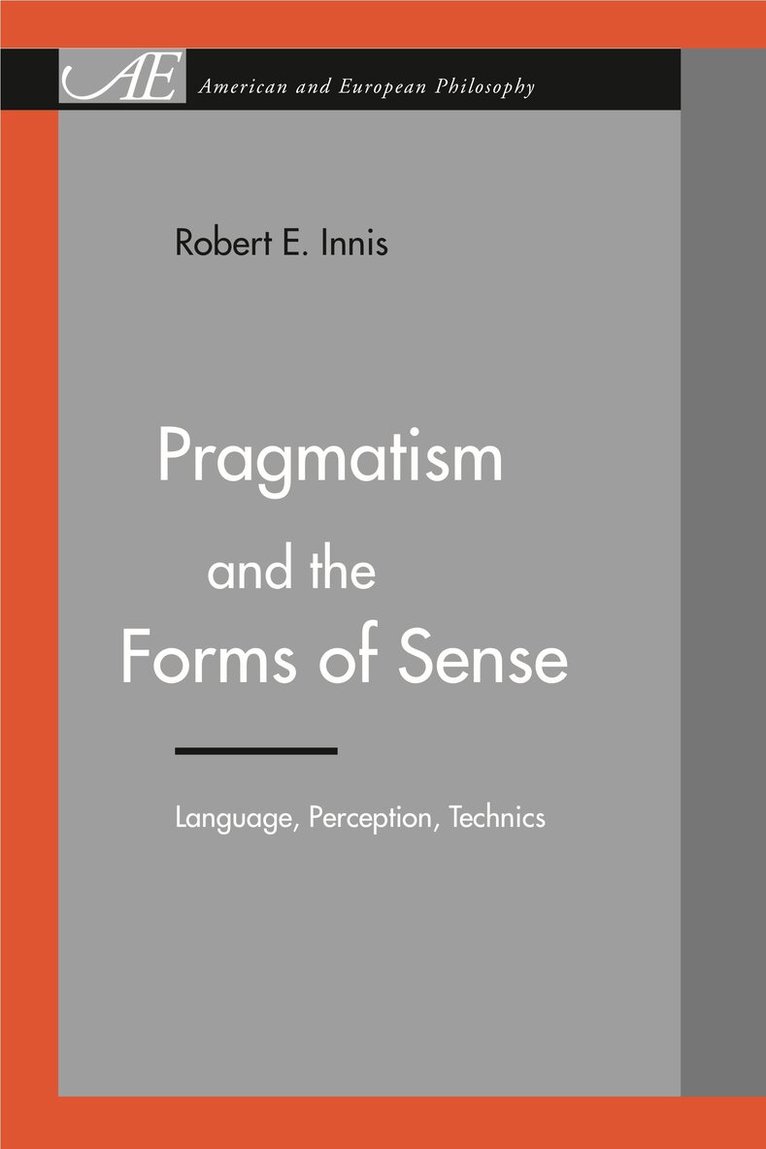
Making sense of the world around us is a process involving both semiotic and material mediation—the use of signs and sign systems (preeminently language) and various kinds of tools (technics). As we use them, we experience them subjectively as extensions of our bodily selves and objectively as instruments for accessing the world with which we interact. Emphasizing this bipolar nature of language and technics, understood as intertwined "forms of sense," Robert Innis studies the multiple ways in which they are rooted in and transform human perceptual structures in both their individual and social dimensions. The book foregrounds and is organized around the notion of "semiotic embodiment." Language and technics are viewed as "probes" upon which we rely, in which we are embodied, and that themselves embody and structure our primary modes of encountering the world. While making an important substantive contribution to present debates about the "biasing" of perception by language and technics, Innis also seeks to provide a methodological model of how complementary analytical resources from American pragmatist and various European traditions can be deployed fruitfully in the pursuit of new insights into the phenomenon of meaning-making.
1 039 kr
Skickas inom 10-15 vardagar
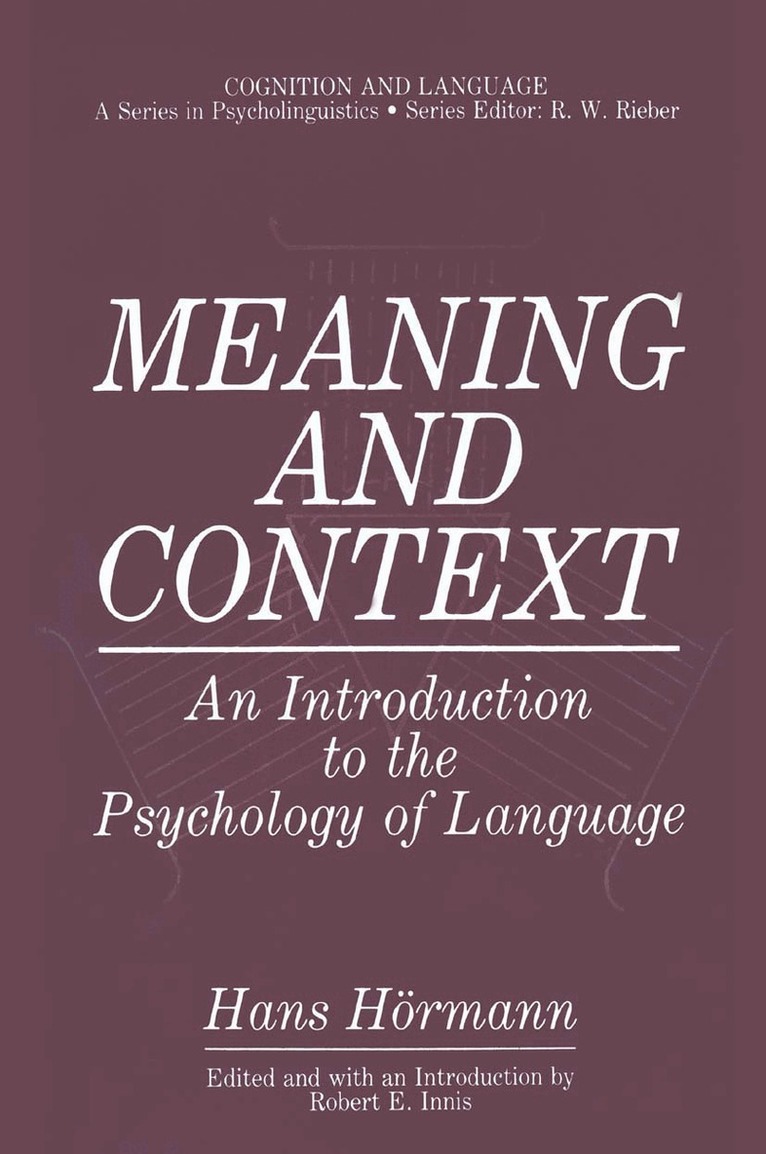
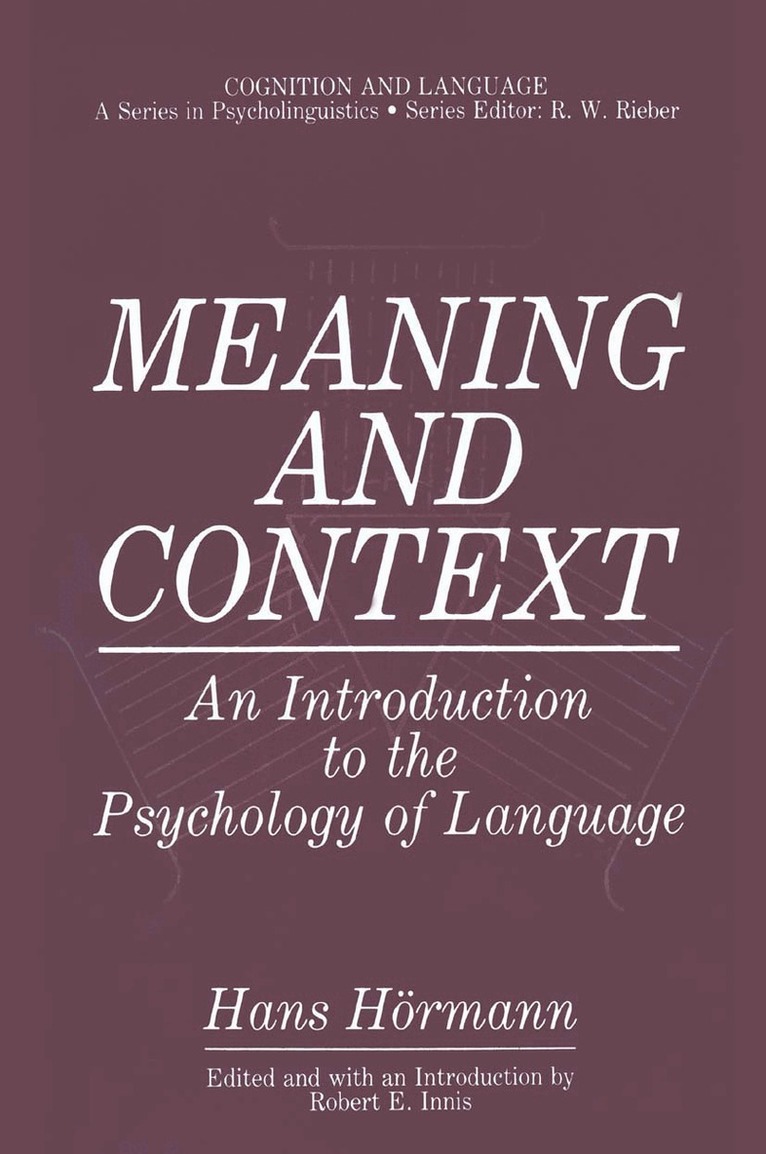
At the time of his death Hans Hormann, then Professor of Psy- chology at the Ruhr University, Bochum, West Germany, was pre- paring an English language version of his Eirifilhrung in die Psycholinguistik. The goal of this book, in both the German and English editions, was to present in compact and readily accessi- ble form the essentials of his approach to the psychology of lan- guage. Basing his work upon the materials treated at length and in depth in two previous comprehensive and more technical works, Psycholinguistics: An Introduction to Research and Theo- ry and To Mean-To Understand, Hormann had made a selection of themes and problems suitable for beginners and for those who wanted a convenient introduction to the specific framework with- in which Hormann thought psycholinguistics was to be pursued. The result is a remarkably clear, succinct, and provocative account of central issues and options of the psychology of lan- guage, that broad and not strictly delimited part of psychology that takes as its domain the multiform conditions, processes, and structures involved in the acqUisition, development, production, and grasp of linguistic meaning.Hormann's approach is admit- tedly contentious and goes directly against a great deal of Anglo- American psycholinguistics. In particular, it radically devalues the relevance of certain types of theoretical linguistics, prin- Cipally, though not exclusively, Chomskyan, for the psychology of vii viii PREFACE language.
1 039 kr
Skickas inom 10-15 vardagar
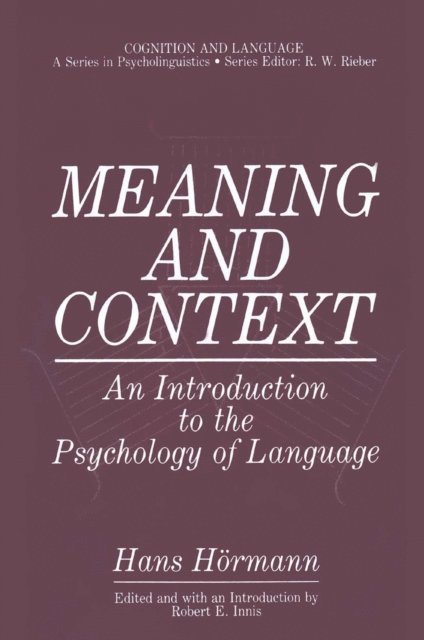
At the time of his death Hans Hormann, then Professor of Psy- chology at the Ruhr University, Bochum, West Germany, was pre- paring an English language version of his Eirifilhrung in die Psycholinguistik. The goal of this book, in both the German and English editions, was to present in compact and readily accessi- ble form the essentials of his approach to the psychology of lan- guage. Basing his work upon the materials treated at length and in depth in two previous comprehensive and more technical works, Psycholinguistics: An Introduction to Research and Theo- ry and To Mean-To Understand, Hormann had made a selection of themes and problems suitable for beginners and for those who wanted a convenient introduction to the specific framework with- in which Hormann thought psycholinguistics was to be pursued. The result is a remarkably clear, succinct, and provocative account of central issues and options of the psychology of lan- guage, that broad and not strictly delimited part of psychology that takes as its domain the multiform conditions, processes, and structures involved in the acqUisition, development, production, and grasp of linguistic meaning.Hormann's approach is admit- tedly contentious and goes directly against a great deal of Anglo- American psycholinguistics. In particular, it radically devalues the relevance of certain types of theoretical linguistics, prin- Cipally, though not exclusively, Chomskyan, for the psychology of vii viii PREFACE language.
Dimensions of Aesthetic Encounters
Perception, Interpretation, and the Signs of Art
Häftad, Engelska, 2022
353 kr
Skickas
A novel fusing of multiple approaches and range of examples exploring the dimensions, objects, and import of aesthetic encounters.We encounter in our lives things and situations that elicit from us special forms of attention. They affect and inform us in various ways, drawing us in and holding us in their grasp or turning us away. Works of art of all sorts, and nature in its myriad manifestations, exemplify these luring and repelling qualities and potencies. Dimensions of Aesthetic Encounters explores central perceptual, interpretative, and semiotic dimensions of these encounters, combining a wide range of examples and intellectual resources from pragmatist, hermeneutical, and semiotic frameworks. Practicing a kind of "method of rotation" Robert E. Innis breaks down barriers in aesthetic theory and shows their complementary powers. Recurring themes link each chapter, throwing a powerful light on aesthetic encounters by foregrounding such pivotal notions as play, fundedness and the role of memory, the defining quality of an artwork, energies of objects, potencies, rhythm, form, presentational abstraction, medium, symbolization, intuition, role of the body, and the non-argumentative nature of art.
Dimensions of Aesthetic Encounters
Perception, Interpretation, and the Signs of Art
Inbunden, Engelska, 2022
1 456 kr
Skickas inom 3-6 vardagar
A novel fusing of multiple approaches and range of examples exploring the dimensions, objects, and import of aesthetic encounters.We encounter in our lives things and situations that elicit from us special forms of attention. They affect and inform us in various ways, drawing us in and holding us in their grasp or turning us away. Works of art of all sorts, and nature in its myriad manifestations, exemplify these luring and repelling qualities and potencies. Dimensions of Aesthetic Encounters explores central perceptual, interpretative, and semiotic dimensions of these encounters, combining a wide range of examples and intellectual resources from pragmatist, hermeneutical, and semiotic frameworks. Practicing a kind of "method of rotation" Robert E. Innis breaks down barriers in aesthetic theory and shows their complementary powers. Recurring themes link each chapter, throwing a powerful light on aesthetic encounters by foregrounding such pivotal notions as play, fundedness and the role of memory, the defining quality of an artwork, energies of objects, potencies, rhythm, form, presentational abstraction, medium, symbolization, intuition, role of the body, and the non-argumentative nature of art.
538 kr
Skickas inom 10-15 vardagar
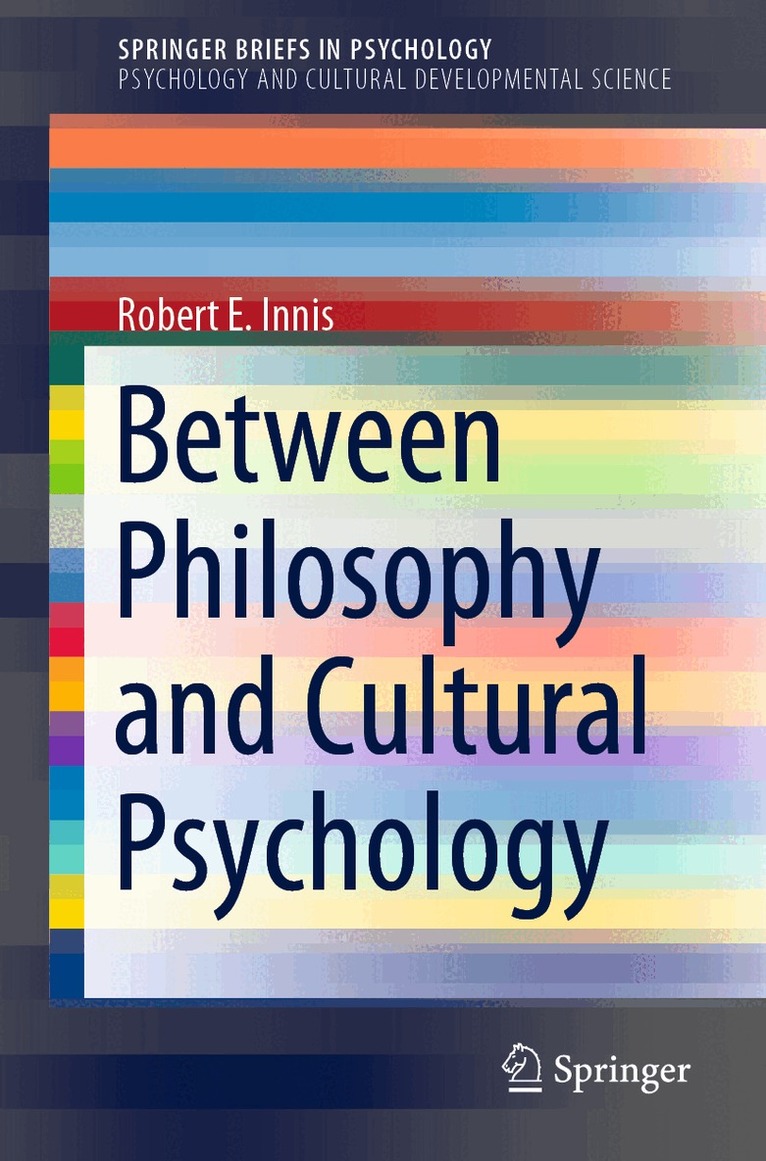
This Brief provides an in-depth discussion of five major points of intersection between philosophy and cultural psychology. The first chapter frames central analytical and normative threads, foregrounding the focal notion of thresholds of sense. The second chapter explores the nature of contexts, situations, and backgrounds of meaning-making following the lead of John Dewey, Ben-Ami Scharfstein, and Gernot Böhme. Chapter three examines the complementary analytical power of the semiotic resources developed in the work of Peirce, Bühler, and Cassirer. Chapter four shows the heuristic fertility and psychological bearing of Susanne Langer's feeling-based aesthetic model of minding. The final chapter establishes affectivation as the inescapable consequence of human beings giving life to themselves by giving life to signs. The Brief concludes with three commentaries from leading researchers in the area. The chapters weave together interlocking themes: thenature of embodied perception, the variety of contexts and semiotic frameworks and their schematization of thresholds of meaning-making, the role of art and theories of imagination both in cultural psychology and in philosophy, and the centrality of feeling in all forms of meaning-making. Between Philosophy and Cultural Psychology will be of interest to cognitive and cultural psychologists as well as researchers and upper-graduate students in philosophy and related psychology fields.
1 098 kr
Tillfälligt slut
A multifaceted and novel examination of core problematic contexts and pathways of life and how we locate and orient ourselves in them.What does it mean to actively or reflectively locate oneself in the life contexts in which one finds oneself? Locating One's Life explores from various angles striking exemplifications of how locating one’s life can be understood as a form of reflection and as a concrete action of existential placement. It is something we do by our actions and decisions as well as by our recognition or understanding of the multiple problematic situations and their consequences that we find ourselves faced with or suffering from in our lives. These situations range from deathbed or late-life recollections of one’s life course to finding ways to situate oneself in the mysterious totality of the clashing cosmic powers and overwhelming beauty of the universe into which we ultimately disappear. Such themes are linked in a sequence of accessible chapters that challenge and enable each of us to locate our own lives in light of the existential lessons they take up: accepting approaching death or old age by bringing one’s life to mind in memory, practicing, Stoic fashion, how to face the present with its unavoidable or even fatal demands, the enriching dislocating nature of travel, being or staying healthy as a soulful form of existential balance, the distinctively human forms of hunger and eating, and other contexts of life, including our religious practices of self-placement in the universe as the ultimate context of all contexts.