Robert F. Berkhofer III - Böcker
Visar alla böcker från författaren Robert F. Berkhofer III. Handla med fri frakt och snabb leverans.
5 produkter
5 produkter
2 160 kr
Skickas inom 10-15 vardagar
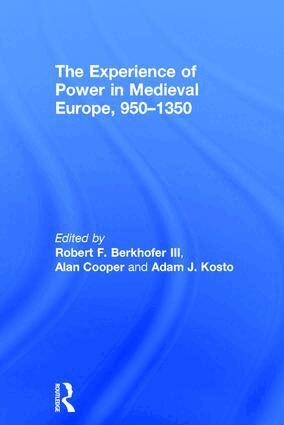
Taking their inspiration from the work of Thomas N. Bisson, to whom the book is dedicated, the contributors to this volume explore the experience of power in medieval Europe: the experience of those who held power, those who helped them wield it, and those who felt its effects. The seventeen essays in the collection, which range geographically from England in the north to Castile in the south, and chronologically from the tenth century to the fourteenth, address a series of specific topics in institutional, social, religious, cultural, and intellectual history. Taken together, they present three distinct ways of discussing power in a medieval historical context: uses of power, relations of power, and discourses of power. The collection thus examines not only the operational and social aspects of power, but also power as a contested category within the medieval world. The Experience of Power suggests new and fruitful ways of understanding and studying power in the Middle Ages.
835 kr
Skickas inom 10-15 vardagar
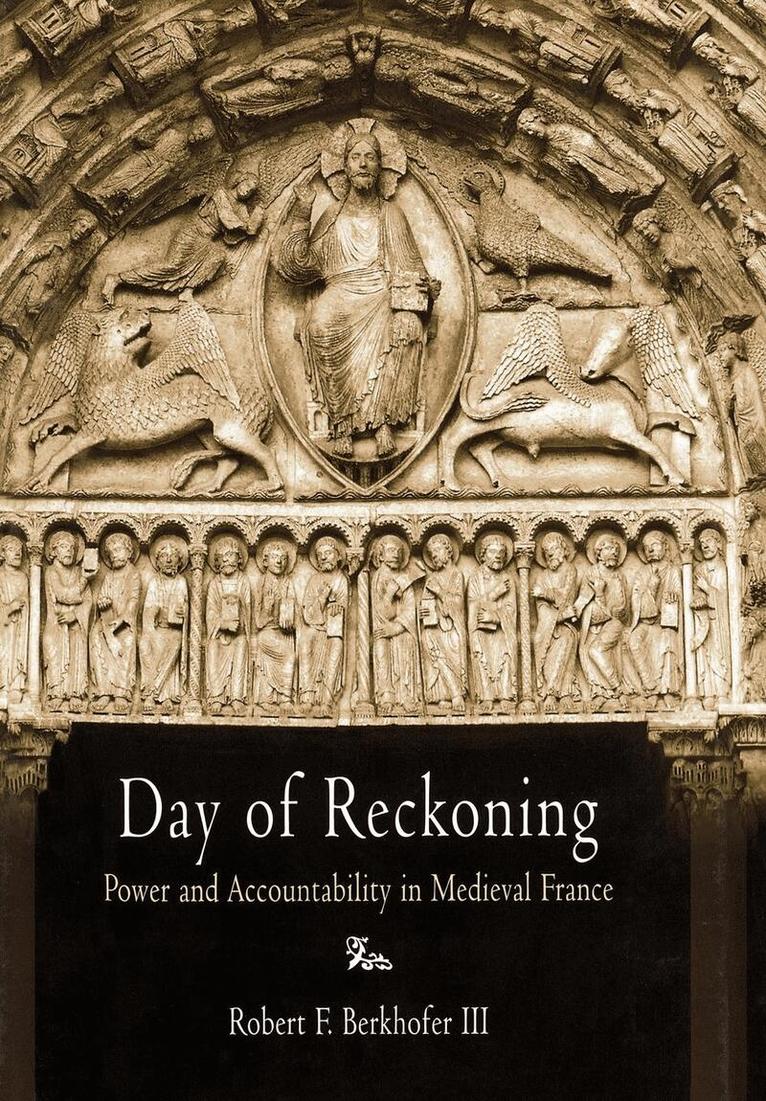
Day of Reckoning: Power and Accountability in Medieval France applies recent approaches to literacy, legal studies, memory, ritual, and the manorial economy to reexamine the transformation of medieval power. Highlighting the relationship of archives and power, it draws on the rich documentary sources of five of the largest Benedictine monasteries in northern France and Flanders, with comparisons to others, over a period of nearly four centuries.The book opens up new perspectives on important problems of power, in particular the idea and practice of accountability. In a violent society, medieval lords tried to delegate power rather than share it-to get their men to prosecute justice or raise money legitimately, rather than through extortion and pillage. Robert F. Berkhofer III explains how subordinates were held accountable by abbots administering the extensive holdings of Saint-Bertin, Saint-Denis, Saint-Germain-des-PrÉs, Saint-PÈre-de-Chartres, and Saint-Vaast-d'Arras. As the abbots began to discipline their agents and monitor their conduct, the "day of reckoning" took on new meaning, as customary meeting days were used to hold agents accountable. By 1200, written and unwritten techniques of rule developed in the monasteries had moved into the secular world; in these practices lay the origins of administration, bureaucratic power, and governance, all hallmarks of the modern state.
Salvation and the Savage
An Analysis of Protestant Missions and American Indian Response, 1787-1862
Häftad, Engelska, 2014
358 kr
Skickas inom 3-6 vardagar
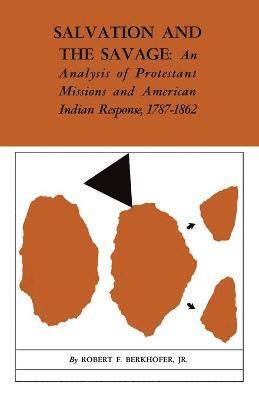
The great, pre-Civil War attempt of Protestant missionaries to Christianize Native Americans is found by Robert F. Berkofer, Jr. to be a significant point of contact with enduring lessons for American thought. The irony displayed by this relationship, he says, did not really lie in the disparity between Anglo-Saxon ideals and the actual treatment of first peoples but in the failure of all, including the missions, to see that both sides had ultimately behaved according to their cultural values.Using the records of missions to sixteen tribes in various regions of the United States, Berkofer has carefully followed the hopeful efforts of sixty-five years. The ultimate outcome, when the Civil War brought most of the missions to an end, was only a nominal conversion of Native Americans, despite the unflagging optimism of missionaries struggling against cultural barriers.
Del 1 - Medieval Documentary Cultures
Forgeries and Historical Writing in England, France, and Flanders, 900-1200
Inbunden, Engelska, 2022
1 200 kr
Skickas inom 7-10 vardagar
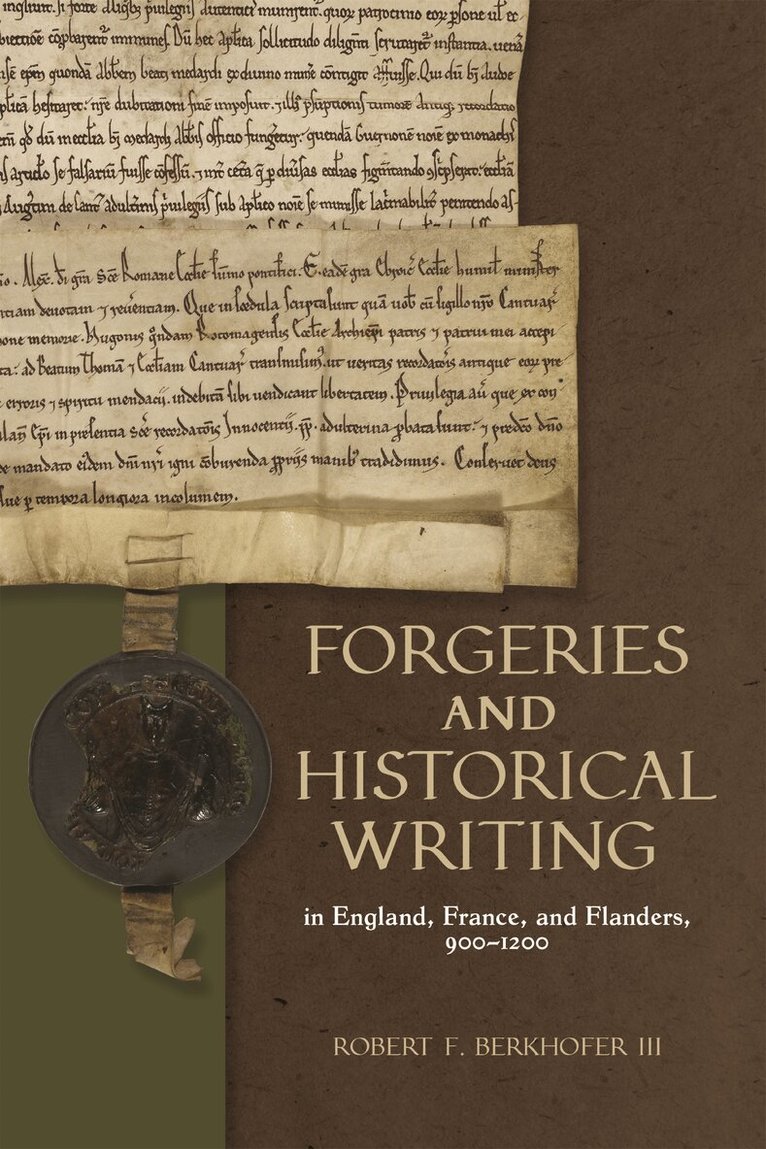
A close analysis of forgeries and historical writings at Saint Peter's, Ghent; Saint-Denis near Paris; and Christ Church, Canterbury, offering valuable access to why medieval people often rewrote their pasts.What modern scholars call "forgeries" (be they texts, seals, coins, or relics) flourished in the central Middle Ages. Although lying was considered wrong throughout the period, such condemnation apparently did not extend to forgeries. Rewriting documents was especially common among monks, who exploited their mastery of writing to reshape their records. Monastic scribes frequently rewrote their archives, using charters, letters, and narratives, to create new usable pasts for claiming lands and privileges in their present or future. Such imagined histories could also be deployed to "reform" their community or reshape its relationship with lay and ecclesiastical authorities. Although these creative rewritings were forgeries, they still can be valuable evidence of medieval mentalities. While forgeries cannot easily be used to reconstruct what did happen, forgeries embedded in historical narratives show what their composers believed should have happened and thus they offer valuable access to why medieval people rewrote their pasts.This book offers close analysis of three monastic archives over the long eleventh century: Saint Peter's, Ghent; Saint-Denis near Paris; and Christ Church, Canterbury. These foci provide the basis for contextualizing key shifts in documentary culture in the twelfth century across Europe. Overall, the book argues that connections between monastic forgeries and historical writing in the tenth through twelfth centuries reveal attempts to reshape reality. Both sought to rewrite the past and thereby promote monks' interests in their present or future.
Del 1 - Medieval Documentary Cultures
Forgeries and Historical Writing in England, France, and Flanders, 900-1200
Häftad, Engelska, 2026
603 kr
Skickas inom 10-15 vardagar
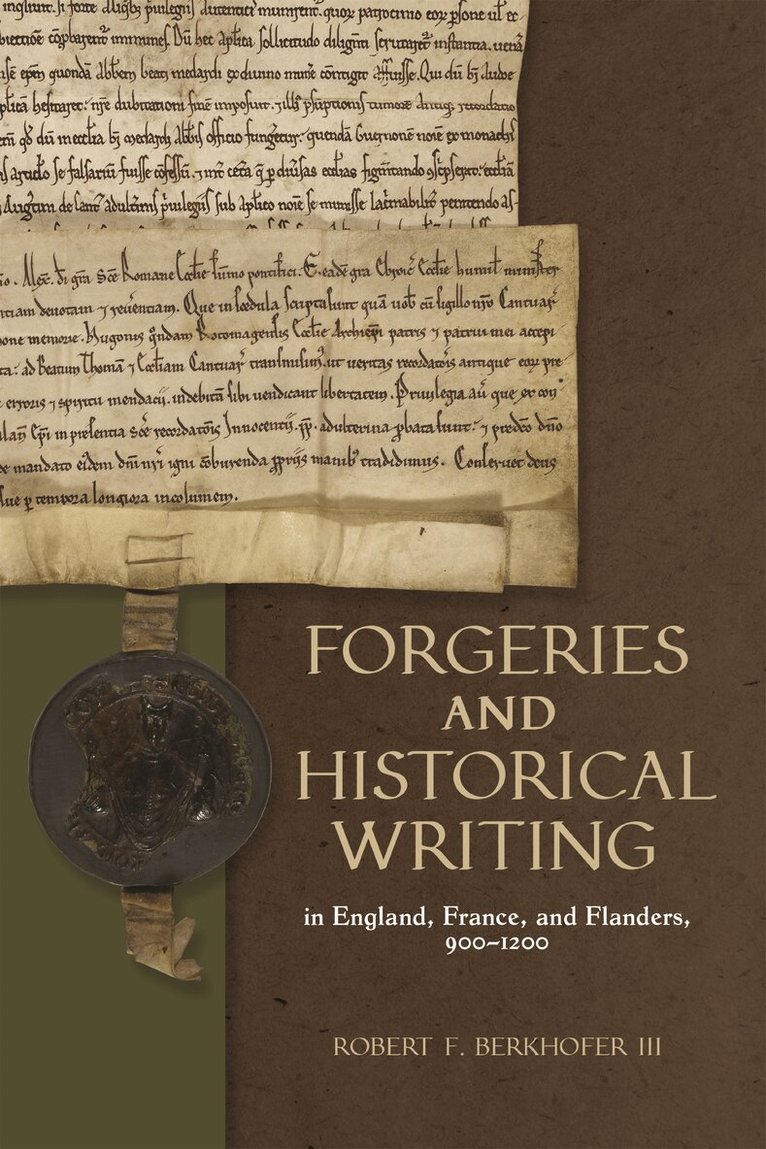
A close analysis of forgeries and historical writings at Saint Peter's, Ghent; Saint-Denis near Paris; and Christ Church, Canterbury, offering valuable access to why medieval people often rewrote their pasts.What modern scholars call "forgeries" (be they texts, seals, coins, or relics) flourished in the central Middle Ages. Although lying was considered wrong throughout the period, such condemnation apparently did not extend to forgeries. Rewriting documents was especially common among monks, who exploited their mastery of writing to reshape their records. Monastic scribes frequently rewrote their archives, using charters, letters, and narratives, to create new usable pasts for claiming lands and privileges in their present or future. Such imagined histories could also be deployed to "reform" their community or reshape its relationship with lay and ecclesiastical authorities. Although these creative rewritings were forgeries, they still can be valuable evidence of medieval mentalities. While forgeries cannot easily be used to reconstruct what did happen, forgeries embedded in historical narratives show what their composers believed should have happened and thus they offer valuable access to why medieval people rewrote their pasts.This book offers close analysis of three monastic archives over the long eleventh century: Saint Peter's, Ghent; Saint-Denis near Paris; and Christ Church, Canterbury. These foci provide the basis for contextualizing key shifts in documentary culture in the twelfth century across Europe. Overall, the book argues that connections between monastic forgeries and historical writing in the tenth through twelfth centuries reveal attempts to reshape reality. Both sought to rewrite the past and thereby promote monks' interests in their present or future.