Robert Greenberg – författare
Visar alla böcker från författaren Robert Greenberg. Handla med fri frakt och snabb leverans.
11 produkter
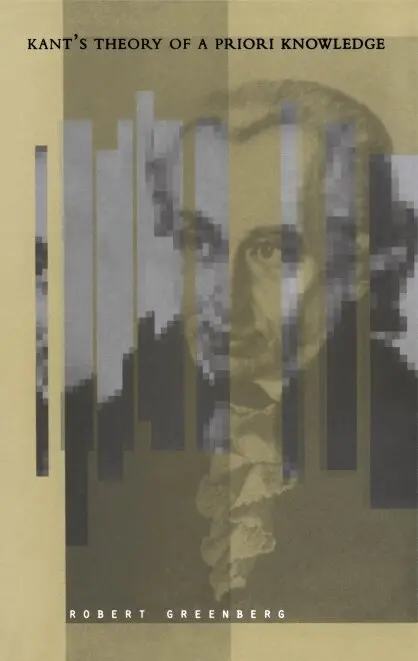
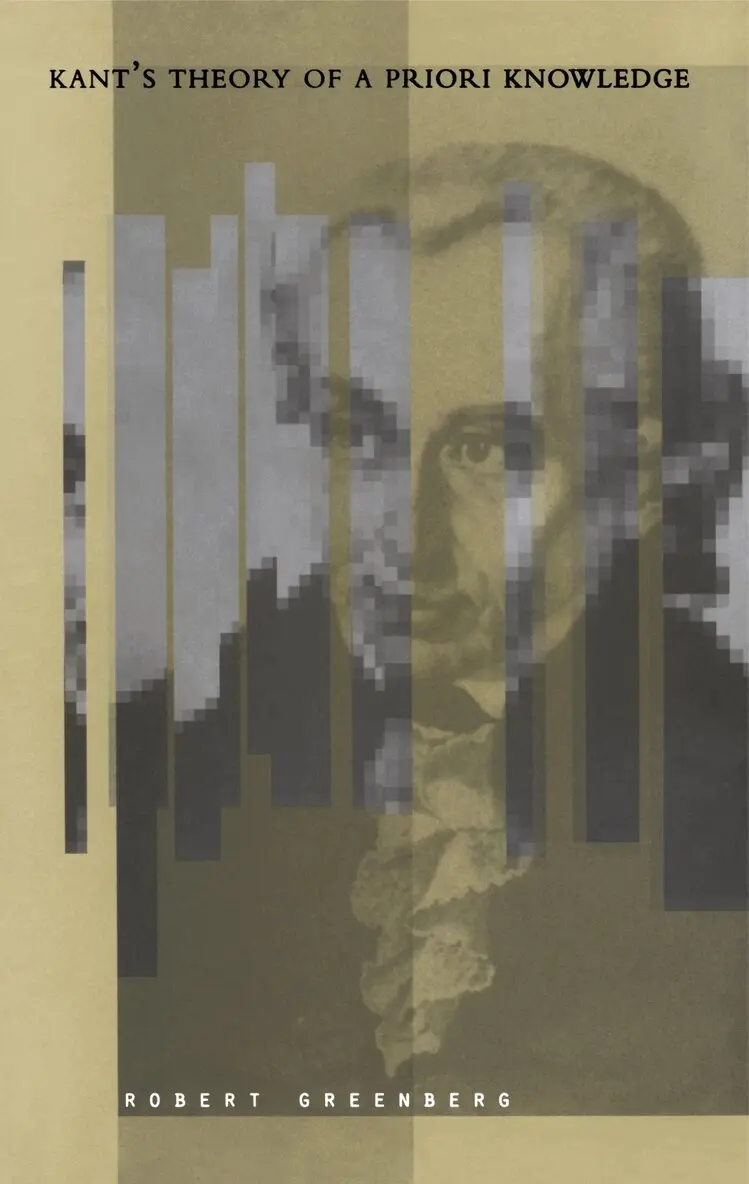
Kant's Theory of A Priori Knowledge
Häftad, 2002
527 kr
Lägg i varukorg
The prevailing interpretation of Kant’s First Critique in Anglo-American philosophy views his theory of a priori knowledge as basically a theory about the possibility of empirical knowledge (or experience), or the a priori conditions for that possibility (the representations of space and time and …
How to Listen to Great Music
A Guide to Its History, Culture, and Heart
Häftad, 2011
316 kr
Lägg i varukorg
The perfect music gift from one of the most trusted names in continuing education. Learn how to better appreciate music in this guide that will unlock the knowledge you need to understand “the most abstract and sublime of all the arts.” Whether you're listening in a concert hall or on your iPod, …
How to Listen to Great Music
A Guide to Its History, Culture, and Heart
E-bok, 2011
161 kr
Lägg i varukorg
From one of the most trusted names in continuing education — the knowledge you need to unlock "the most abstract and sublime of all the arts." Whether you''re listening in a concert hall or on your iPod, concert music has the power to move you. The right knowledge can deepen the ability of this …
Greeblies
E-bok, 2006
136 kr
Lägg i varukorg
Bobby and Georgia live in a normal house with their mum and their dad and their pet dog, Rory. But in that house, there''s a whole world going on that they know nothing about . . . the world of the greeblies! Greeblies like Hemi the bedbug, Spritzer the dust mite, Darren the blowfly and Nick the …
Real Existence, Ideal Necessity
Kant's Compromise, and the Modalities without the Compromise
Inbunden, 2008
1791 kr
Lägg i varukorg
Analytic philosophy has leveled many challenges to Kant’s ascription of necessary properties and relations to objects in his Critique of Pure Reason. Some of these challenges can be answered, it is argued here, largely in terms of techniques belonging to analytic philosophy itself, in particular, …
Real Existence, Ideal Necessity
Kant''s Compromise, and the Modalities without the Compromise
E-bok, 2008
1772 kr
Lägg i varukorg
Analytic philosophy has leveled many challenges to Kant’s ascription of necessary properties and relations to objects in his Critique of Pure Reason . Some of these challenges can be answered, it is argued here, largely in terms of techniques belonging to analytic philosophy itself, in particular, …
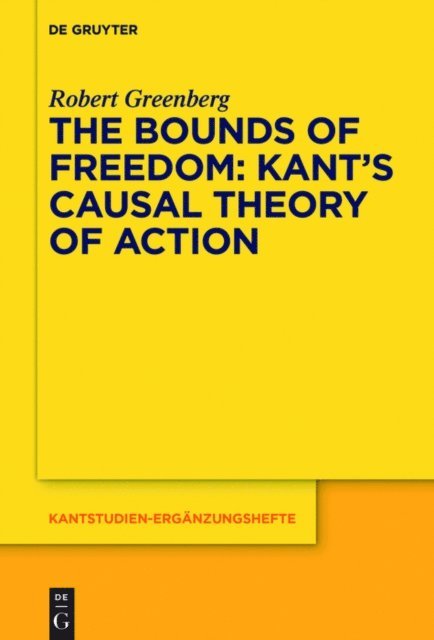
Bounds of Freedom: Kant's Causal Theory of Action
E-bok, 2016
1448 kr
Lägg i varukorg
This monograph is a new interpretation of Kant’s àtemporal conception of the causality of the freedom of the will. The interpretation is based on an analysis of Kant’s primary conception of an action, viz., as a causal consequence of the will. The analysis in turn is based on H. P. Grice’s causal …
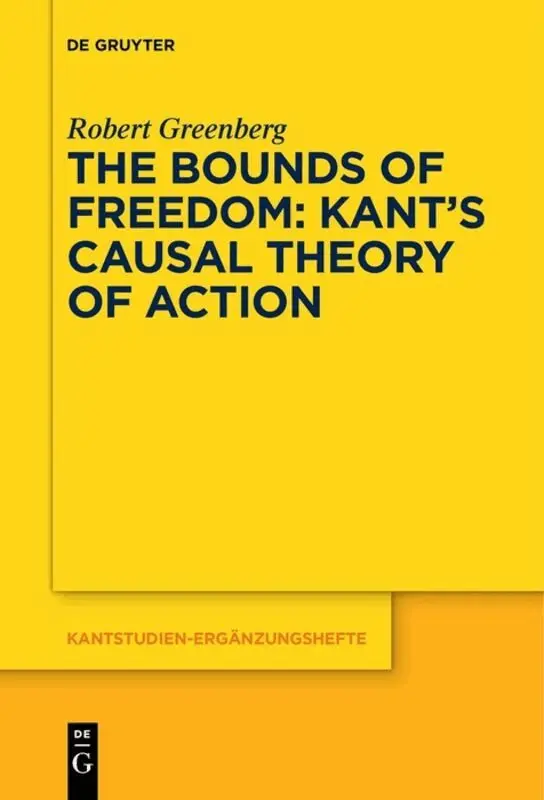
Bounds of Freedom: Kant's Causal Theory of Action
E-bok, 2016
1448 kr
Lägg i varukorg
This monograph is a new interpretation of Kant’s àtemporal conception of the causality of the freedom of the will. The interpretation is based on an analysis of Kant’s primary conception of an action, viz., as a causal consequence of the will. The analysis in turn is based on H. P. Grice’s causal …
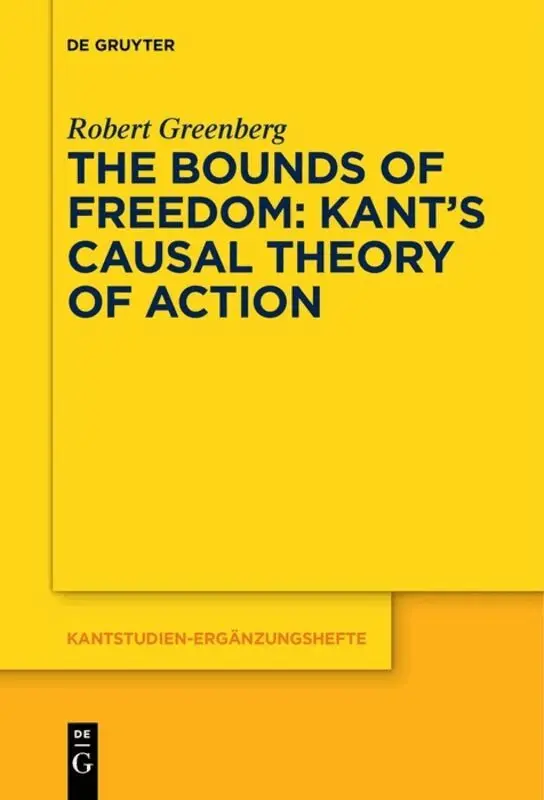
Bounds of Freedom: Kant’s Causal Theory of Action
Inbunden, 2016
1432 kr
Lägg i varukorg
No detailed description available for "The Bounds of Freedom: Kant’s Causal Theory of Action".
Bounds of Freedom: Kant’s Causal Theory of Action
Häftad, 2018
286 kr
Lägg i varukorg
This monograph is a new interpretation of Kant’s àtemporal conception of the causality of the freedom of the will. The interpretation is based on an analysis of Kant’s primary conception of an action, viz., as a causal consequence of the will. The analysis in turn is based on H. P. Grice’s causal …
Kant's Theory of A Priori Knowledge
Inbunden, 2001
765 kr
Tillfälligt slut
The prevailing interpretation of Kant’s First Critique in Anglo-American philosophy views his theory of a priori knowledge as basically a theory about the possibility of empirical knowledge (or experience), or the a priori conditions for that possibility (the representations of space and time and …