Robert H. Greene - Böcker
Visar alla böcker från författaren Robert H. Greene. Handla med fri frakt och snabb leverans.
2 produkter
2 produkter
572 kr
Skickas inom 5-8 vardagar
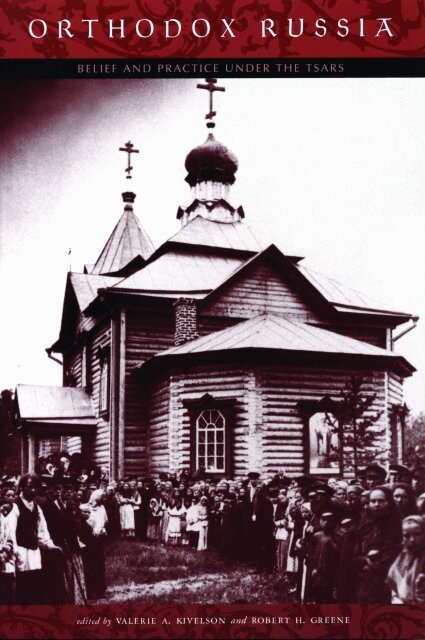
Orthodox Christianity came to Russia from Byzantium in 988, and in the ensuing centuries it has become such a fixture of the Russian cultural landscape that any discussion of Russian character or history inevitably must take its influence into account. Orthodox Russia is a timely volume that brings together some of the best contemporary scholarship on Russian Orthodox beliefs and practices covering a broad historical period—from the Muscovite era through the immediate aftermath of the Bolshevik Revolution of 1917. Studies of Russian Orthodoxy have typically focused on doctrinal controversies or institutional developments. Orthodox Russia concentrates on lived religious experience—how Orthodoxy touched the lives of a wide variety of subjects of the Russian state, from clerics awaiting the Apocalypse in the fifteenth century and nuns adapting to the attacks on organized religion under the Soviets to unlettered military servitors at the court of Ivan the Terrible and workers, peasants, and soldiers in the last years of the imperial regime. Melding traditionally distinct approaches, the volume allows us to see Orthodoxy not as a static set of rigidly applied rules and dictates but as a lived, adaptive, and flexible system.Orthodox Russia offers a much-needed, up-to-date general survey of the subject, one made possible by the opening of archives in Russia after 1991. Contributors include Laura Engelstein, Michael S. Flier, Daniel H. Kaiser, Nadieszda Kizenko, Eve Levin, Gary Marker, Daniel Rowland, Vera Shevzov, Thomas N. Tentler, Isolde Thyrêt, William G. Wagner, and Paul W. Werth.
459 kr
Skickas inom 10-15 vardagar
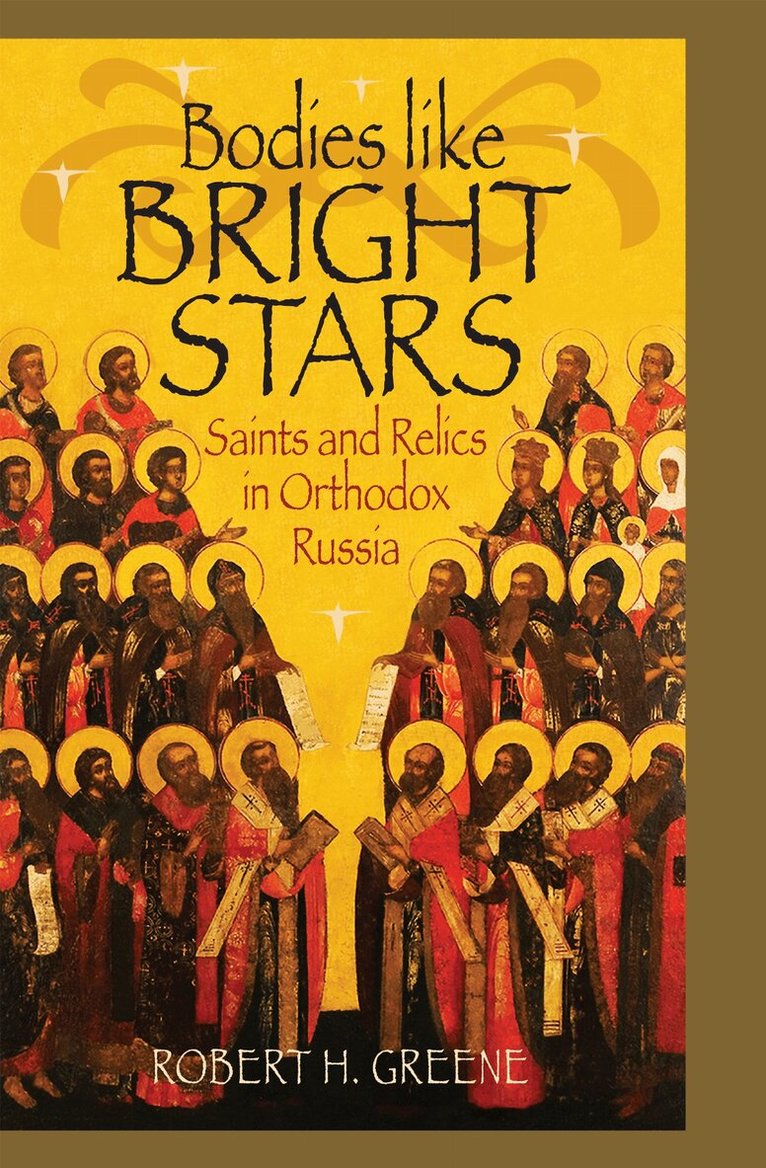
While Russian Orthodox theologians celebrated saints as paragons of virtue and piety whose lives were to be emulated in the search for salvation, ordinary believers routinely sought the assistance of the holy dead for commonplace and earthly matters. The Orthodox faithful were more likely to pray to the saints for help in the everyday concerns of health and home than for salvation. Evidence from miracle stories, devotional literature, parish records, diocesan reports, religious newspapers and magazines, and archival documents demonstrates how Orthodox men and women cultivated direct and literally hands-on relationships with their heavenly intercessors by visiting saintly shrines, touching and kissing miracle-working relics, and making pledges to repay the saints for miracles rendered.Exploring patterns of popular devotion to the cult of the saints in both late imperial and early Soviet Russia, Greene argues for an interpretation of Orthodoxy as a proactive faith grounded in the needs and realities of everyday life. Bodies like Bright Stars makes two significant contributions to the fields of Russian history and religious studies. First, it straddles the customary historiographical dividing line of 1917, illustrating how the devotional practices associated with the cult of the saints evolved from the mid-nineteenth century to the end of the first decade of Soviet power. Greene shows that it was the adaptability of the cult of the saints that allowed Orthodoxy to remain relevant amid great political, social, and economic change. Secondly, the book underscores the role of materiality in Russian Orthodox religious practices and emphasizes what anthropologists of religion have described as the sacrality of place.Bodies like Bright Stars, the first book in NIU Press' Orthodox Christian Studies Series, will be of interest to Russian historians, anthropologists, and scholars of religion. Written in a clear and lively style, the book is suitable for both survey courses and advanced courses in Russian history and will also appeal to general readers of religious studies.