Robert H. Vorlicky - Böcker
Visar alla böcker från författaren Robert H. Vorlicky. Handla med fri frakt och snabb leverans.
5 produkter
5 produkter
545 kr
Skickas inom 7-10 vardagar
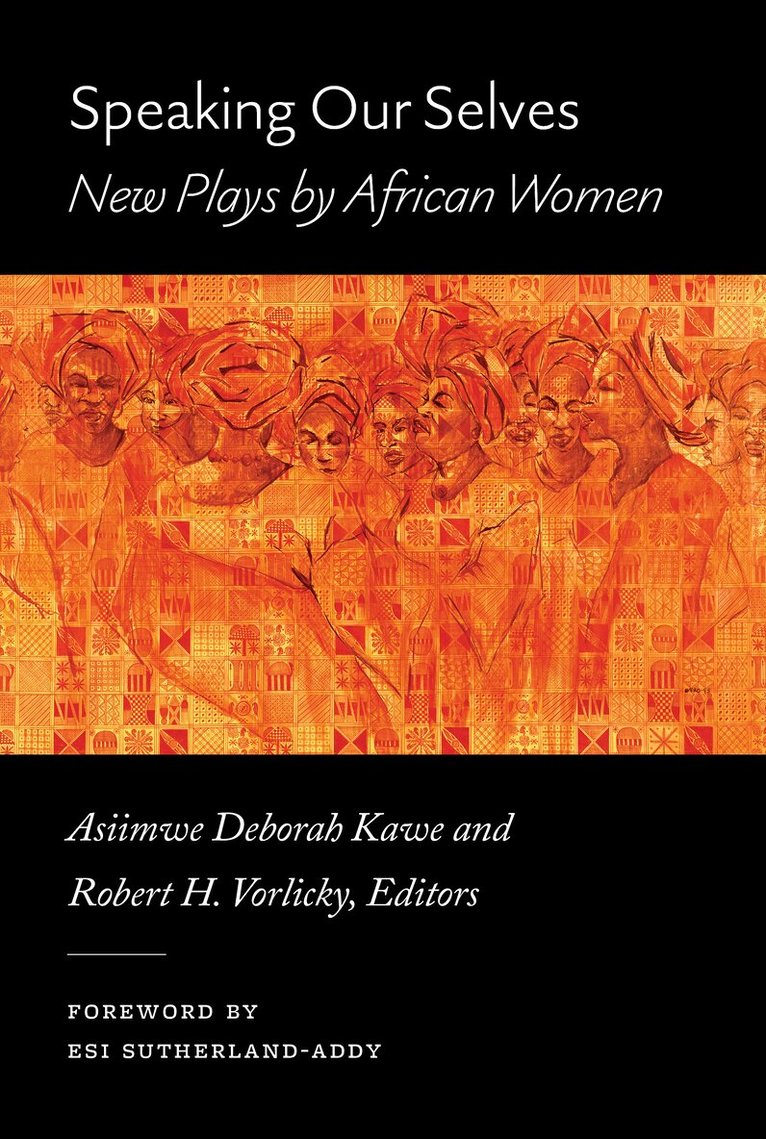
Speaking Our Selves brings together eight remarkable plays by women writers from the under-represented African countries of Tanzania, Mozambique, Ethiopia, Mali, Burundi, Benin, and Sudan, plus a play by award-winning Ugandan playwright and volume coeditor Asiimwe Kawe. Four of the plays are translated into English from Kiswahili, French, or Kirundi and French, while most of the plays preserve African indigenous languages, including Runyankore, Lusoga, Mina, Fon, Bambara, Luganda, Kiswahili, and Kirundi. Although the plays are united in presenting women as central figures who own their voices, they also represent a rich diversity of story-telling. Each unique dramaturgy is rooted in African forms of story-telling that occasionally merge with recognizable Western forms to create hybrid, dramatic forms. These hybrid methods emphasize the striking ways in which African women writers continue to experiment with form, moving beyond Western-influenced dramaturgy if and when it jeopardizes their authentic ways of artistic expression and creation through language, movement, and music, centered in African Cosmology.The plays within Speaking Our Selves confront a range of ideas and issues, including women embracing the potential of agency in often contested subject positions; confronting their historical object positions in worlds of devastating patriarchal authority; resisting toxic masculinity and persistent, oppressive binaries of gender roles; finding power in communities of women; increasing their acumen in financial, business, and economic spheres; facing tensions between traditional religious tenets and efforts toward secularization; living with perpetual acts of violence toward their bodies; and the rising mental health issues among girls and women across the continent. Readers and audiences are challenged by these plays not to be passive witnesses by observing from safe vantage points, but rather to be active participants in the stories being told.
414 kr
Skickas inom 7-10 vardagar
In the first comprehensive study of plays written for male characters only, Robert Vorlicky offers a new theory that links cultural codes governing gender and the conventions determining dramatic form. Act Like a Manlooks at a range of plays, including those by O'Neill, Albee, Mamet, Baraka, and Rabe as well as new works by Philip Kan Gotanda, Alonzo Lamont, and Robin Swados, to examine how dialogue within these works reflects the social codes of male behavior and inhibits individualization among men. Plays in which women are absent are often characterized by the location of a male "other"—a female presence who distances himself from the dominant, impersonal masculine ethos and thereby becomes a facilitator of personal communication. The potential authority of this figure is so powerful that its presence becomes the primary determinant of the quality of men's interaction and of the range of male subjectivities possible. This formulation becomes the basis of an alternative theory of American dramatic construction, one that challenges traditional dramaturgical notions of realism. The book will appeal to scholars and students interested in drama, gender, race, sexuality, and American culture, as well as playwrights, teachers of playwrights, and artistic directors. It includes an extensive bibliography of more than four hundred male-cast plays and monodramas, the first such compilation and one that points to further research into a previously unexplored area.
414 kr
Skickas inom 7-10 vardagar
In the Fall of 1992, Millennium Approaches, the first part of Tony Kushner's Angels in America, won England's prestigious Evening Standard award as the season's Best Play. By the Spring of 1993, Millennium had come to Broadway and won its highest honor, the Tony Award for Best Play, and the distinguished Pulitzer Prize for drama as well. Through its epic theatrical panorama of the intimate and political dynamics that arise when individuals, histories, and cultures intersect, Millennium captured the imagination and the conscience of all who saw it. Its ability to deeply move the audience in personal, communal, and political ways was admirably (and astoundingly) matched by the subsequent production of the play's second part, Perestroika, which brought Kushner yet another Evening Standard award and Tony Award for Best Play (1994). Tony Kushner has, almost overnight, become the premier American male playwright to "represent" the 1990s, as David Mamet and August Wilson dominated critical attention in the 1980s. The phenomenally positive response to Angels in America was matched by the equally enthusiastic reception of its young, politically engaged playwright, who impressed journalists and scholars with his eloquent intellect, wit, and moral convictions. Kushner spoke for a younger generation of American artists and activists whose art is intimately connected to social vision and "revolutionary" possibilities in the public and private sectors. His role as a generational (read "national," "liberal," "socialist," "Jewish," "queer") spokesman has provided him with a public platform from which to address concerns that lie at the center of national debate. In a short time Kushner has captured and retained a nation's fascination, and his opinions are widely sought out on a wide range of topics. And, most often, the platform from which Kushner expresses his ideas is the personal interview, in which he boldly confronts Americans to rethink, even to reinvent, themselves as the Millennium approaches. Tony Kushner in Conversation is the first book to compile Kushner's most significant interviews of the past decade, tracing his career from its early years to his maturing artistic and political visions. The collection includes pieces that first appeared in an amazingly broad range of periodicals as well as interviews not previously published, such as his appearance on PBS on The Charlie Rose Show. In addition to Angels in America, Tony Kushner is author of Slavs! and is currently finishing work on Henry Box Brown, scheduled to have its world premiere at the Royal National Theatre in the summer of 1997. Robert Vorlicky is Associate Professor of Drama at Tisch School of the Arts, New York University.
313 kr
Skickas inom 7-10 vardagar
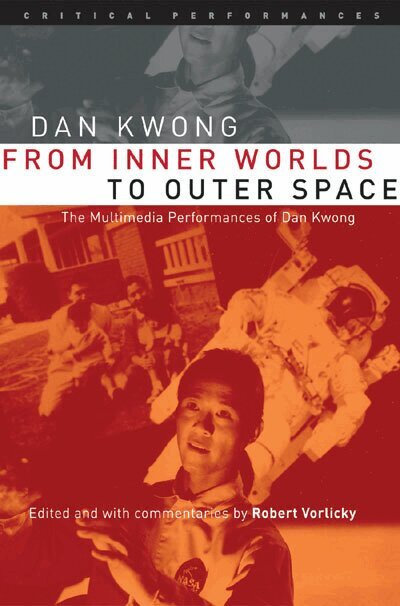
Praise for Dan Kwong:"Somehow, Kwong has held onto his sense of childlike wonder about the cosmos, and that awe informs his free-wheeling and uproarious performance."-Asian Week"He weaves striking, multi-focus stage pictures around simple monologues about his Chinese and Japanese grandfathers, ironic accounts of his own childhood, and litanies of the trials facing Asian American males."-L.A. Times"Saturated with high-spirited enthusiasm . . . a refreshingly forthright approach to his often dark material."-Chicago Tribune"Kwong's humor is warm and loving . . . it stems from a delightfully twisted taste for the absurdity of human behavior. . . . Be prepared to laugh, to be moved, and to fall in love with a performer."-L.A. ReaderDan Kwong's performances delve into the complexities of growing up as a working-class Chinese-Japanese-American male in L.A., land of Hollywood and Disney. Kwong's remarkable performances, a potent array of multimedia effects and athletic physicalization, investigate questions of identity and the intersecting effects of race, culture, class, gender, and sexuality. From Inner Worlds to Outer Space brings together Kwong's scripts with illuminating commentary by critic Robert Vorlicky. The book includes interviews that reveal Kwong's personal and artistic influences, his evolution as an artist, and his philosophical and technical approach to art-making.
1 440 kr
Skickas inom 7-10 vardagar
Speaking Our Selves brings together eight remarkable plays by women writers from the under-represented African countries of Tanzania, Mozambique, Ethiopia, Mali, Burundi, Benin, and Sudan, plus a play by award-winning Ugandan playwright and volume coeditor Asiimwe Kawe. Four of the plays are translated into English from Kiswahili, French, or Kirundi and French, while most of the plays preserve African indigenous languages, including Runyankore, Lusoga, Mina, Fon, Bambara, Luganda, Kiswahili, and Kirundi. Although the plays are united in presenting women as central figures who own their voices, they also represent a rich diversity of story-telling. Each unique dramaturgy is rooted in African forms of story-telling that occasionally merge with recognizable Western forms to create hybrid, dramatic forms. These hybrid methods emphasize the striking ways in which African women writers continue to experiment with form, moving beyond Western-influenced dramaturgy if and when it jeopardizes their authentic ways of artistic expression and creation through language, movement, and music, centered in African Cosmology.The plays within Speaking Our Selves confront a range of ideas and issues, including women embracing the potential of agency in often contested subject positions; confronting their historical object positions in worlds of devastating patriarchal authority; resisting toxic masculinity and persistent, oppressive binaries of gender roles; finding power in communities of women; increasing their acumen in financial, business, and economic spheres; facing tensions between traditional religious tenets and efforts toward secularization; living with perpetual acts of violence toward their bodies; and the rising mental health issues among girls and women across the continent. Readers and audiences are challenged by these plays not to be passive witnesses by observing from safe vantage points, but rather to be active participants in the stories being told.