Robert Hymes - Böcker
Visar alla böcker från författaren Robert Hymes. Handla med fri frakt och snabb leverans.
4 produkter
4 produkter
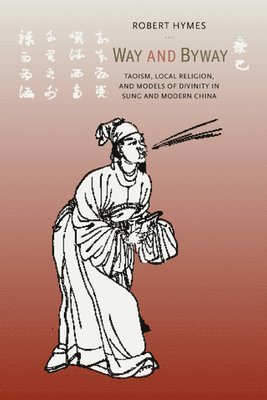
Way and Byway
Taoism, Local Religion, and Models of Divinity in Sung and Modern China
Häftad, Engelska, 2002
650 kr
Skickas inom 3-6 vardagar
Using a combination of newly mined Sung sources and modern ethnography, Robert Hymes addresses questions that have perplexed China scholars in recent years. Were Chinese gods celestial officials, governing the fate and fortunes of their worshippers as China's own bureaucracy governed their worldly lives? Or were they personal beings, patrons or parents or guardians, offering protection in exchange for reverence and sacrifice? To answer these questions Hymes examines the professional exorcist sects and rising Immortals' cults of the Sung dynasty alongside ritual practices in contemporary Taiwan and Hong Kong, as well as miracle tales, liturgies, spirit law codes, devotional poetry, and sacred geographies of the eleventh through thirteenth centuries. Drawing upon historical and anthropological evidence, he argues that two contrasting and contending models informed how the Chinese saw and see their gods. These models were used separately or in creative combination to articulate widely varying religious standpoints and competing ideas of both secular and divine power.Whether gods were bureaucrats or personal protectors depended, and still depends, says Hymes, on who worships them, in what setting, and for what purposes.
Del 16 - Studies on China
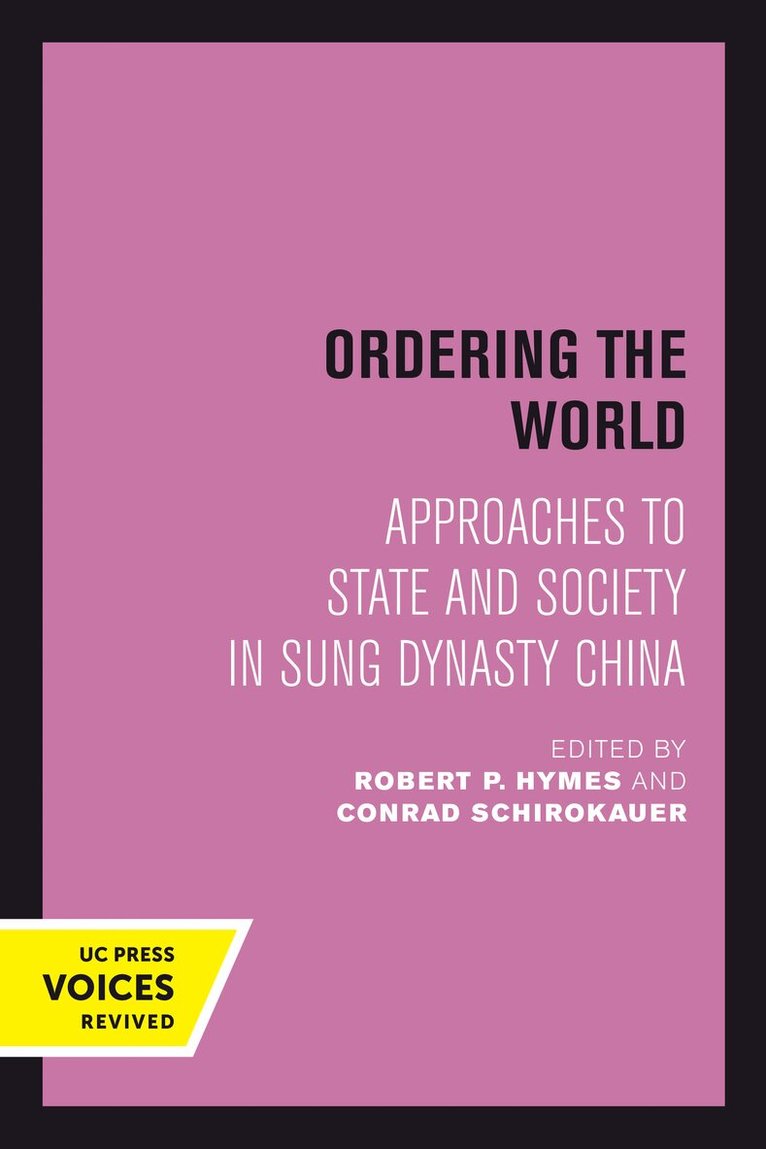
Ordering the World
Approaches to State and Society in Sung Dynasty China
Häftad, Engelska, 2018
414 kr
Skickas inom 7-10 vardagar
The Sung Dynasty (960–1278) was a time of vast changes and new challenges in China. The growth of the urban and rural economics, population increase, the emergence of an educated elite, political and intellectual ferment, and threats from hostile neighbors are some of the forces that shaped the age. How did Sung statesmen and thinkers view the relation of state and society and the role of political action in solving society’s ills? The essays in Ordering the World explore contemporary ideas underlying policies, programs, and institutions of the period and examine attitudes toward history and sources of authority. Their findings have important implications for our understanding of the neo-Confucian movement in Sung history and of the Sung in the history of Chinese ideas about politics and social action. Contents:Introduction by Conrad Schirokauer and Robert P. Hymes“Su Hsun’s Pragmatic Statecraft,” by George Hatch“State Power and Economic Activism during the New Policies, 1068–1085,” by Paul J. Smith“Government, Society, and State,” by Peter K. Bol“Chu Hsi’s Sense of History,” by Conrad Schirokauer“Community and Welfare,” by Richard von Glahn“Charitable Estates as an Aspect of Statecraft in Southern Sung China,” by Linda Walton“Moral Duty and Self-Regulating Process in Southern Sung Views of Famine Relief,” by Robert P. Hymes“The Historian as Critic,” by John W. Chaffee“Wei Liao-weng’s Thwarted Statecraft,” by James T. C. Liu“Chen Te-hsiu and Statecraft,” by Wm. Theodore de BaryThis title is part of UC Press's Voices Revived program, which commemorates University of California Press’s mission to seek out and cultivate the brightest minds and give them voice, reach, and impact. Drawing on a backlist dating to 1893, Voices Revived makes high-quality, peer-reviewed scholarship accessible once again using print-on-demand technology. This title was originally published in 1993.
Del 16 - Studies on China
Ordering the World
Approaches to State and Society in Sung Dynasty China
Inbunden, Engelska, 2024
1 513 kr
Skickas inom 3-6 vardagar
The Sung Dynasty (960–1278) was a time of vast changes and new challenges in China. The growth of the urban and rural economics, population increase, the emergence of an educated elite, political and intellectual ferment, and threats from hostile neighbors are some of the forces that shaped the age. How did Sung statesmen and thinkers view the relation of state and society and the role of political action in solving society’s ills? The essays in Ordering the World explore contemporary ideas underlying policies, programs, and institutions of the period and examine attitudes toward history and sources of authority. Their findings have important implications for our understanding of the neo-Confucian movement in Sung history and of the Sung in the history of Chinese ideas about politics and social action. Contents:Introduction by Conrad Schirokauer and Robert P. Hymes“Su Hsun’s Pragmatic Statecraft,” by George Hatch“State Power and Economic Activism during the New Policies, 1068–1085,” by Paul J. Smith“Government, Society, and State,” by Peter K. Bol“Chu Hsi’s Sense of History,” by Conrad Schirokauer“Community and Welfare,” by Richard von Glahn“Charitable Estates as an Aspect of Statecraft in Southern Sung China,” by Linda Walton“Moral Duty and Self-Regulating Process in Southern Sung Views of Famine Relief,” by Robert P. Hymes“The Historian as Critic,” by John W. Chaffee“Wei Liao-weng’s Thwarted Statecraft,” by James T. C. Liu“Chen Te-hsiu and Statecraft,” by Wm. Theodore de BaryThis title is part of UC Press's Voices Revived program, which commemorates University of California Press’s mission to seek out and cultivate the brightest minds and give them voice, reach, and impact. Drawing on a backlist dating to 1893, Voices Revived makes high-quality, peer-reviewed scholarship accessible once again using print-on-demand technology. This title was originally published in 1993.
1 498 kr
Skickas inom 7-10 vardagar
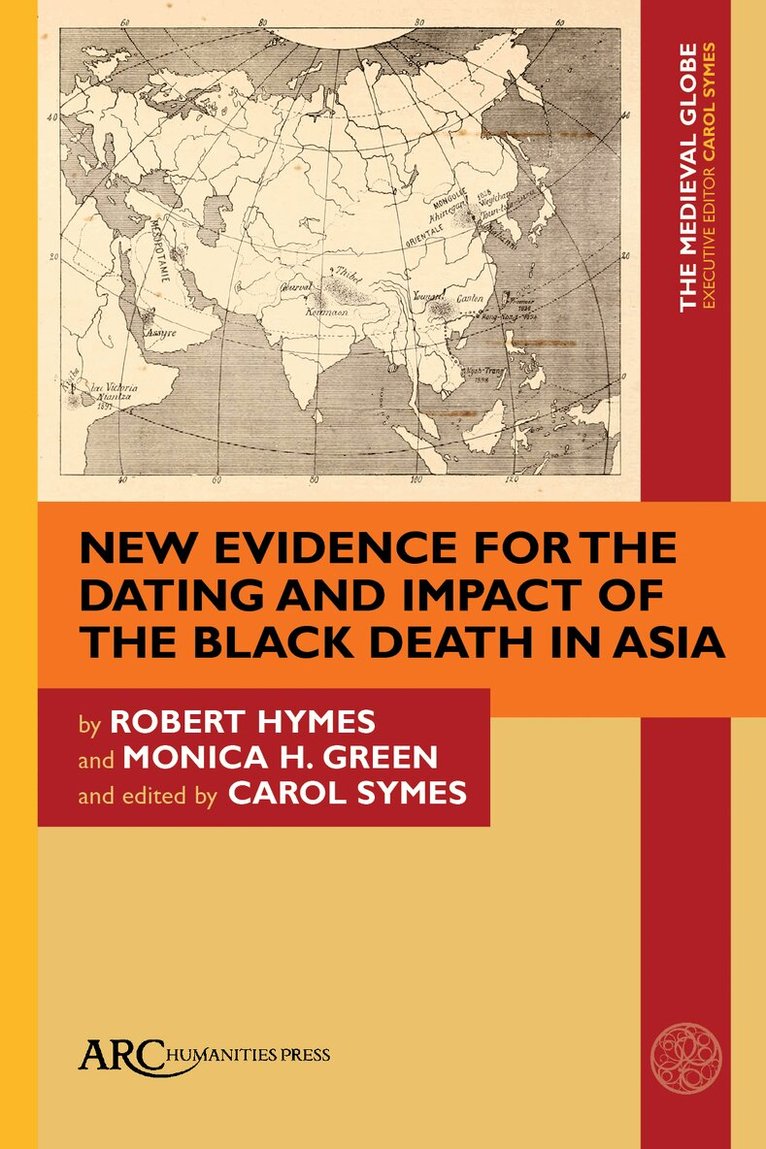
Since 2014, when The Medieval Globe first presented the latest interdisciplinary scholarship on the Black Death as a global pandemic, the pace and intensity of research has intensified. This follow-up volume features two extended essays laying out evidence that the Second Plague Pandemic was already ravaging China by the second quarter of the thirteenth century—over a century before it made its appearance in the greater Mediterranean region.In a core contribution, Robert Hymes presents an extensive analysis of Chinese medical texts, showing that physicians were adapting their terminology and treatments to the emergence of a virulent new disease: plague. In an overarching essay, Monica H. Green summarizes the current state of our knowledge about the timing and expanse of the Black Death, showing how combined evidence from genetics and a reconstructed documentary record can create a coherent new narrative of one of the largest, and longest, pandemics in history.