Robert Isaacson - Böcker
Visar alla böcker från författaren Robert Isaacson. Handla med fri frakt och snabb leverans.
6 produkter
6 produkter
881 kr
Skickas inom 10-15 vardagar
881 kr
Skickas inom 10-15 vardagar
1 064 kr
Skickas inom 10-15 vardagar
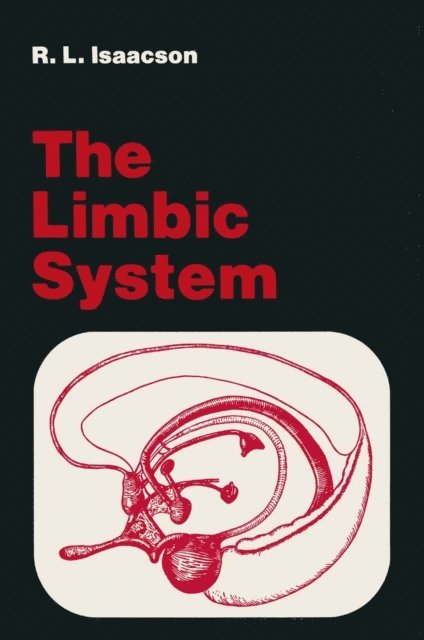
While this book is intended to be an introduction to the neuroanatomy of the limbic system and to studies of the behavior of animals in which the limbic system is stimulated or damaged, it is primarily intended for advanced students of brain-behavior relationships. I have assumed the reader to have some under standing of the structure of the brain, of basic neurophysiology, and of modern behavioral techniques. It has been written for students in graduate programs in psychobiology, physiological psychology, and the neurosciences, but it also should be of interest to some medical students and to others with catholic interests in the biology of behavior. In the first chapter, I review the structure of the limbic system and in subsequent chapters consider the behavioral effects of lesions and stimulation of components of the limbic system. Supplement information derived from recording the electrical signals of the brain is included where it seems appropriate. The final chapter presents a perspective of the limbic system related to brain stem mechanisms and the neocortex. Understanding the behavioral contributions of the limbic system presupposes under standing how the limbic system interacts with other systems of the brain. v Preface vi Even though there is only one chapter overtly devoted to theoretical issues. various biases of mine influence all chapters. Anyone reading the book with a critical attitude will soon be aware of them. I would like to alert the reader to some of them ahead of time.
1 064 kr
Skickas inom 10-15 vardagar
These books are the result of a conviction held by the editors, authors, and publisher that the time is appropriate for assembling in one place information about functions of the hippocampus derived from many varied lines of research. Because of the explosion of research into the anatomy, physiology, chemistry, and behavioral aspects of the hip pocampus, some means of synthesis of the results from these lines of research was called for. We first thought of a conference. In fact, officials in the National Institute of Mental Health suggested we organize such a conference on the hippocampus, but after a few tentative steps in this direction, interest at the federallevel waned, probably due to the decreases in federal support for research in the basic health sciences so keenly feit in recent years. However, the editors also had co me to the view that conferences are mainly valuabIe to the participants. The broad range of students (of all ages) of brain behavior relations do not profit from conference proceedings unless the proceedings are subsequently published. Furthermore, conferences dealing with the functional character of organ systems approached from many points of view are most successful after participants have become acquainted with each other's work. Therefore, we believe that a book is the best format for disseminating information, and that its publication can be the stimulus for many future conferences.
536 kr
Skickas inom 10-15 vardagar
These books are the result of a conviction held by the editors, authors, and publisher that the time is appropriate for assembling in one place information about functions of the hippocampus derived from many varied lines of research. Because of the explosion of research into the anatomy, physiology, chemistry, and behavioral aspects of the hip pocampus, some means of synthesis of the results from these lines of research was called for. We first thought of a conference. In fact, officials in the National Institute of Mental Health suggested we organize such a conference on the hippocampus, but after a few tentative steps in this direction, interest at the federal level waned, probably due to the decreases in federal support for research in the basic health sciences so keenly felt in recent years. However, the editors also had come to the view that conferences are mainly valuable to the participants. The broad range of students (of all ages) of brain behavior relations do not profit from conference proceedings unless the proceedings are subsequently published. Furthermore, conferences dealing with the functional character of organ systems approached from many points of view are most successful after participants have become acquainted with each other's work. Therefore, we believe that a book is the best format for disseminating information, and that its publication can be the stimulus for many future conferences.
536 kr
Skickas inom 10-15 vardagar
107 with treatments that affect the arousal of the animals is also implied on the basis of the behavioral changes induced in the lesioned animals by amphetamine administration and by changes in the motivational circumstances under which the animals are tested. Studies of the effects of cingulate lesions in the rat have involved the production of midline cortical damage. Unfortunately, as reported in the previous chapter, the midline cortex of the rat is not comparable to the midline cortex of other animals as defined on the basis of the fibers it receives from the thalamus. In addition, lesions of the midline cortex, whether in the rat or in other species, are likely to interfere with fibers of the neural systems in or near it. These include the cingulum bundle and the supracallosal fibers of the fornix. Norepi nephrine-containing fibers also pass through this region in or near the cingulum bundle. These fibers ascend through the anterior dor solateral septal area and turn up and back to pass through the midline regions and innervate the entire medial cortex (Morrison, Molliver, & Grzanna, 1979). Lesions in this area reduce the norepinephrine distribution throughout the rostrocaudal extent of the medial cortex. A similar problem results from destruction to the anterior cortical regions. Lesions in that region could reduce the norepinephrine sup plies of the entire dorsolateral cortex.