Robert J. Cook - Böcker
Visar alla böcker från författaren Robert J. Cook. Handla med fri frakt och snabb leverans.
5 produkter
5 produkter
323 kr
Skickas inom 10-15 vardagar
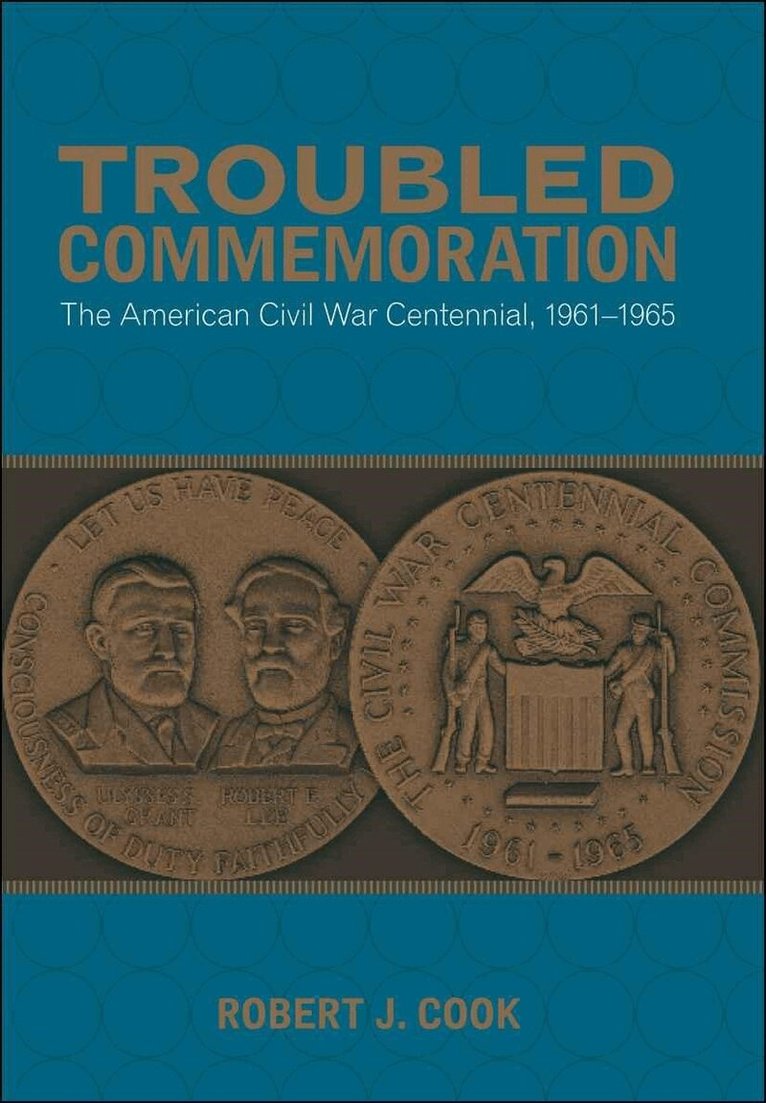
In 1957, Congress voted to set up the United States Civil War Centennial Commission. A federally funded agency within the Department of the Interior, the commission's charge was to oversee preparations to commemorate the one-hundredth anniversary of the central event in the Republic's history. Politicians hoped that a formal program of activities to mark the centennial of the Civil War would both bolster American patriotism at the height of the cold war and increase tourism in the South. Almost overnight, however, the patriotic pageant that organisers envisioned was transformed into a struggle over the historical memory of the Civil War and the injustices of racism. In Troubled Commemoration, Robert J. Cook recounts the planning, organisation, and ultimate failure of this controversial event and reveals how the broad-based public history extravaganza was derailed by its appearance during the decisive phase of the civil rights movement. Cook shows how the centennial provoked widespread alarm among many African Americans, white liberals, and cold warriors because the national commission failed to prevent southern whites from commemorating the Civil War in a racially exclusive fashion. The public outcry followed embarrassing attempts to mark secession, the attack on Fort Sumter, and the South's victory at First Manassas, and prompted backlash against the celebration, causing the emotional scars left by the war to resurface. Cook convincingly demonstrates that both segregationists and their opponents used the controversy that surrounded the commemoration to their own advantage. Southern whites initially embraced the centennial as a weapon in their fight to save racial segregation, while African Americans and liberal whites tried to transform the event into a celebration of black emancipation. Forced to quickly reorganise the commission, the Kennedy administration replaced the conservative leadership team with historians, including Allan Nevins and a young James I. Robertson, Jr., who labored to rescue the centennial by promoting a more soberly considered view of the nation's past. Though the commemoration survived, Cook illustrates that white southerners quickly lost interest in the event as it began to coincide with the years of Confederate defeat, and the original vision of celebrating America's triumph over division and strife was lost. The first comprehensive analysis of the U.S. Civil War Centennial, Troubled Commemoration masterfully depicts the episode as an essential window into the political, social, and cultural conflicts of America in the 1960s and confirms that it has much to tell us about the development of the modern South.
620 kr
Skickas inom 5-8 vardagar
436 kr
Tillfälligt slut
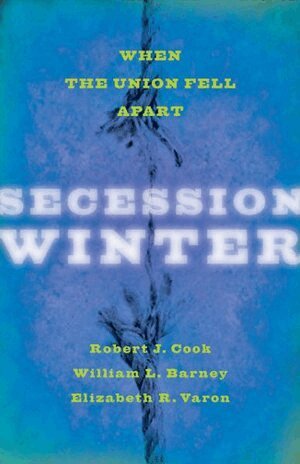
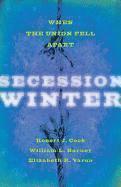
Politicians and opinion leaders on both sides of the Mason-Dixon line struggled to formulate coherent responses to the secession of the deep South states. The Confederate attack on Fort Sumter in mid-April 1861 triggered civil war and the loss of four upper South states from the Union. The essays by three senior historians in "Secession Winter" explore the robust debates that preceded these events. For five months in the winter of 1860-1861, Americans did not know for certain that civil war was upon them. Some hoped for a compromise; others wanted a fight. Many struggled to understand what was happening to their country. Robert J. Cook, William L. Barney, and Elizabeth R. Varon take approaches to this period that combine political, economic, and social-cultural lines of analysis. Rather than focus on whether civil war was inevitable, they look at the political process of secession and find multiple internal divisions-political parties, whites and nonwhites, elites and masses, men and women. Even individual northerners and southerners suffered inner conflicts.The authors include the voices of Unionists and Whig party moderates who had much to lose and upcountry folk who owned no slaves and did not particularly like those who did. Barney contends that white southerners were driven to secede by anxiety and guilt over slavery. Varon takes a new look at Robert E. Lee's decision to join the Confederacy. Cook argues that both northern and southern politicians claimed the rightness of their cause by constructing selective narratives of historical grievances. "Secession Winter" explores the fact of contingency and reminds readers and students that nothing was foreordained.
288 kr
Skickas inom 7-10 vardagar
Politicians and opinion leaders on both sides of the Mason-Dixon line struggled to formulate coherent responses to the secession of the deep South states. The Confederate attack on Fort Sumter in mid-April 1861 triggered civil war and the loss of four upper South states from the Union. The essays by three senior historians in "Secession Winter" explore the robust debates that preceded these events. For five months in the winter of 1860-1861, Americans did not know for certain that civil war was upon them. Some hoped for a compromise; others wanted a fight. Many struggled to understand what was happening to their country. Robert J. Cook, William L. Barney, and Elizabeth R. Varon take approaches to this period that combine political, economic, and social-cultural lines of analysis. Rather than focus on whether civil war was inevitable, they look at the political process of secession and find multiple internal divisions-political parties, whites and nonwhites, elites and masses, men and women. Even individual northerners and southerners suffered inner conflicts.The authors include the voices of Unionists and Whig party moderates who had much to lose and upcountry folk who owned no slaves and did not particularly like those who did. Barney contends that white southerners were driven to secede by anxiety and guilt over slavery. Varon takes a new look at Robert E. Lee's decision to join the Confederacy. Cook argues that both northern and southern politicians claimed the rightness of their cause by constructing selective narratives of historical grievances. "Secession Winter" explores the fact of contingency and reminds readers and students that nothing was foreordained.
309 kr
Skickas inom 7-10 vardagar
At a cost of at least 800,000 lives, the Civil War preserved the Union, aborted the breakaway Confederacy, and liberated a race of slaves. Civil War Memories is the first comprehensive account of how and why Americans have selectively remembered, and forgotten, this watershed conflict since its conclusion in 1865. Drawing on an array of textual and visual sources as well as a wide range of modern scholarship on Civil War memory, Robert J. Cook charts the construction of four dominant narratives by the ordinary men and women, as well as the statesmen and generals, who lived through the struggle and its tumultuous aftermath. Part One explains why the Yankee victors' memory of the "War of the Rebellion" drove political conflict into the 1890s, then waned with the passing of the soldiers who had saved the republic.It also touches on the leading role southern white women played in the development of the racially segregated South's "Lost Cause"; explores why, by the beginning of the twentieth century, the majority of Americans had embraced a powerful reconciliatory memory of the Civil War; and details the failed efforts to connect an emancipationist reading of the conflict to the fading cause of civil rights. Part Two demonstrates the Civil War's capacity to thrill twentieth-century Americans in movies such as The Birth of a Nation and Gone with the Wind. It also reveals the war's vital connection to the black freedom struggle in the modern era. Finally, Cook argues that the massacre of African American parishioners in Charleston in June 2015 highlighted the continuing relevance of the Civil War by triggering intense nationwide controversy over the place of Confederate symbols in the United States. Written in vigorous prose for a wide audience and designed to inform popular debate on the relevance of the Civil War to the racial politics of modern America, Civil War Memories is required reading for informed Americans today.