
Robert J. Dobie - Böcker
Visar alla böcker från författaren Robert J. Dobie. Handla med fri frakt och snabb leverans.
3 produkter
3 produkter
422 kr
Skickas inom 10-15 vardagar
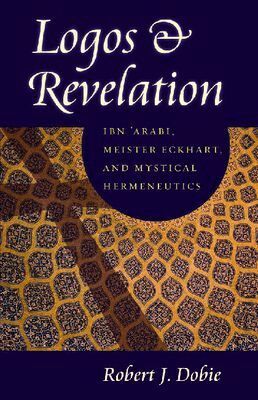
What is 'mysticism' and, most importantly, how do the great mystical writers understand it? ""Logos and Revelation"" seeks to answer this question by looking closely at the writings of two of the most prominent medieval mystical writers: the Muslim, Ibn 'Arabi (1165-1240) and the Christian, Meister Eckhart (1260-1328). Through his careful examination of the writings of these men, Robert J. Dobie discovers that mystical reflection and experience are intrinsically and essentially tied to the 'mystical' or 'hidden sense' of the sacred text. Mystical reflection and experience are, therefore, at their roots interpretive or hermeneutical: the attempt by the mystical exegete to uncover through 'imaginative reading' or philosophical analysis the inner meaning of revelation. What emerges is a theology of the Word (logos, verbum, ratio, kalima) in which it is the task of the mystical exegete to appropriate inwardly the divine Word that speaks in and through both the sacred text and all creation. What the mystical writer discovers is an increasingly fitting harmony between the text of revelation, properly interpreted and understood, and the inner dynamic of the soul's reaching out beyond itself toward the transcendent. In contrast to modern notions of the phenomenon, Dobie argues that mystical reading is not about cultivating extraordinary personal experiences. Nor does it take readers doctrinally outside of, or beyond, religious traditions. Rather, mystical reading and listening should take us deeper into the sacred text and sacred tradition. Most strikingly, strong analogies emerge between how Christians and Muslims appropriate inwardly this divine Word, which forms a real and solid basis for interfaith dialog founded on a mutual listening to the divine logos.
Thinking Through Revelation
Islamic, Jewish, and Christian Philosophy in the Middle Ages
Häftad, Engelska, 2018
363 kr
Skickas inom 7-10 vardagar
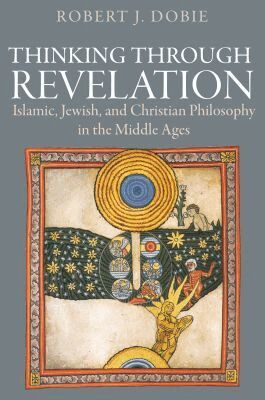
Navigating the seemingly competing claims of human reason and divine revelation to truth is without a doubt one of the central problems of medieval philosophy. Medieval thinkers argued a whole gamut of positions on the proper relation of religious faith to human reason. Thinking Through Revelation attempts to ask deeper questions: what possibilities for philosophical thought did divine revelation open up for medieval thinkers? How did the contents of the sacred scriptures of Judaism, Christianity, and Islam put into question established philosophical assumptions? But most fundamentally, how did not merely the content of the sacred books but the very mode in which revelation itself is understood to come to us – as a book ""sent down"" from on high, as a covenant between God and his people, or as incarnate person - create or foreclose possibilities for the resolution of the philosophical problems that the Abrahamic revelations themselves raised? Robert Dobie explores these questions by looking in detail at the thought of three of the most important philosopher-theologians of the Middle Ages: Averroes, Moses Maimonides, and Thomas Aquinas, each working within the Islamic, Jewish, and Christian traditions respectively. Of particular interest are two questions central to medieval thought: in what sense is the world ""created"" and what is the proper nature and ontological status of the human intellect? These two problems took on such importance in this period, this book argues, because they forced medieval philosophers and theologians to confront the degree to which the revelation they considered authoritative made possible their resolution. Thus, these medieval thinkers show thinkers today what possibilities are available for navigating the age-old question of the proper relation between faith and reason in a world where questions of the rationality of religious faith – especially from an inter-faith perspective – are not diminishing but increasing in importance.
362 kr
Skickas inom 10-15 vardagar
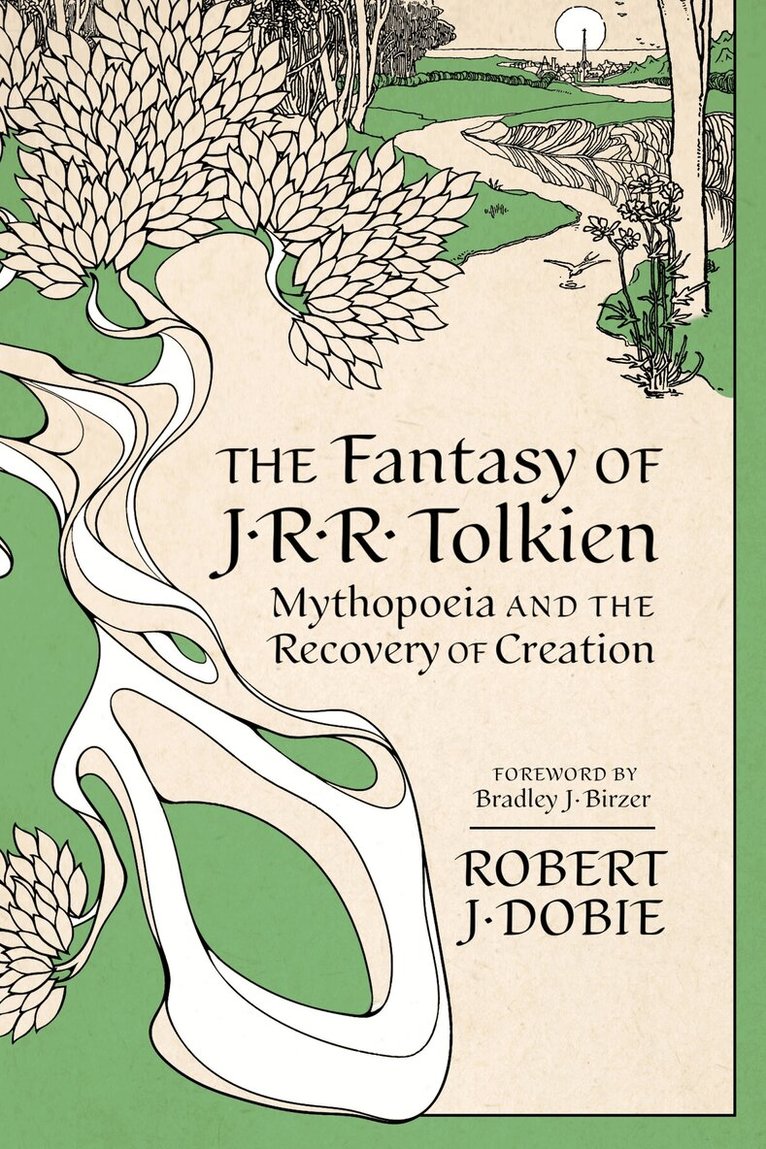
At the heart of Tolkienian fantasy is "recovery," a "cleaning of the windows" of our perception that we may learn to see the world again in all its strange and bewildering beauty. And, for Tolkien, to recover the world anew is to recover a sense of the world as a meaningful act of creation by a living and loving Creator. How does Tolkien accomplish this? Through "sub-creation" or mythopoeia, the "fashioning of myth." For it is in creating an imaginary world ourselves through poetry, fairy-story and myth that we come to "see" our "primary world" as itself an act of creation. In short, mythopoetic creation, far from being "lies breathed through silver," uncovers for us the truth of our world as a story of creation.This book is the first sustained attempt to show not only the centrality of recovery to Tolkien's fantasy but the way in which his fantasy affects that primal recovery in every reader. In doing so, this book not only reveals the marvelous philosophical and theological riches that underlie Tolkien's fantasy but shows how his mythopoetic fiction allows the recovery and enactment of these riches in our own lives. In these pages we learn how Tolkien's fantasy addresses fundamental problems such as the relation of language to reality, the nature of evil, the distinction between time and eternity and its relation to death and immortality, the paradox of necessity and free will in human action and the grounds for providential hope in a "happy ending." Indeed, The Fantasy of J.R.R. Tolkien shows how for Tolkien fantasy has within itself a healing power through which intellectual, moral and existential paradoxes are resolved and our intellectual and perceptual faculties are made whole again so that they may participate with renewed vigour in the life-giving work of creation of every sort.